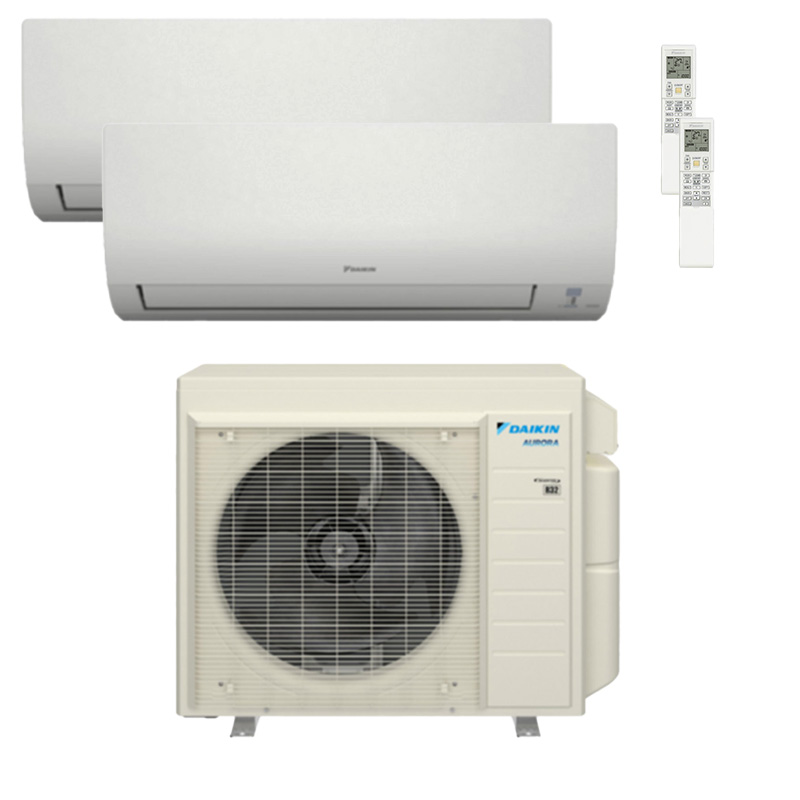
Daikin 18000 BTU 21 SEER2 R32 2 Zone Mini Split AC Heat Pump Wall Mount System
View on AC Direct see your lowest price →Check current price on AC Direct →
Key features
- 21 SEER2 efficiency rating, upper tier for residential mini splits
- 18,000 BTU total system capacity across two independent wall-mount zones
- R-32 refrigerant with lower global warming potential than R-410A
- Variable-speed inverter compressor for continuous capacity modulation
- Independent thermostat control in each of the two zones
- 12-year parts warranty available with registration within 60 days of installation
About this system
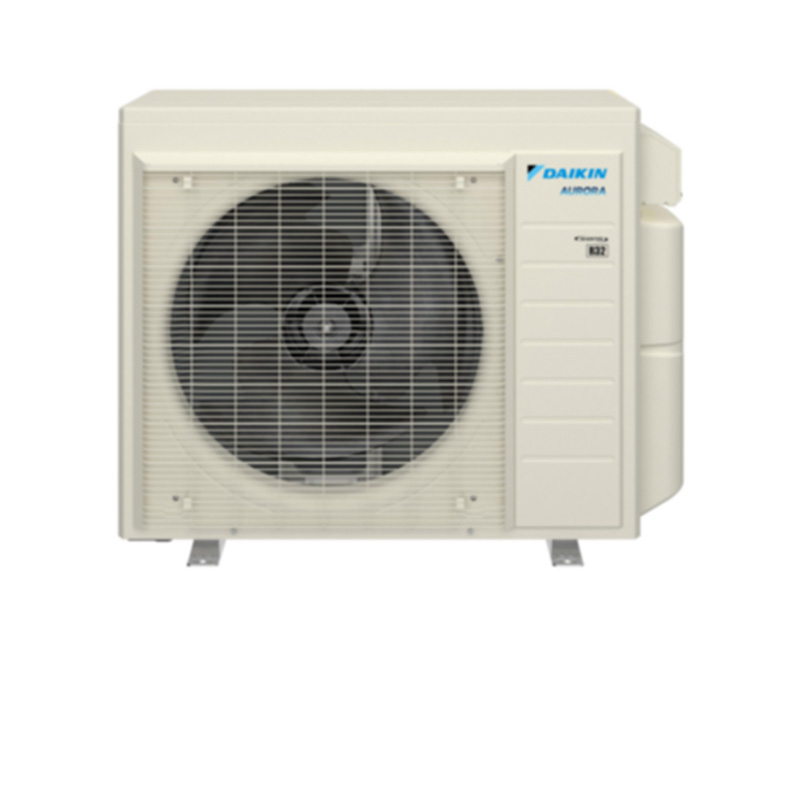
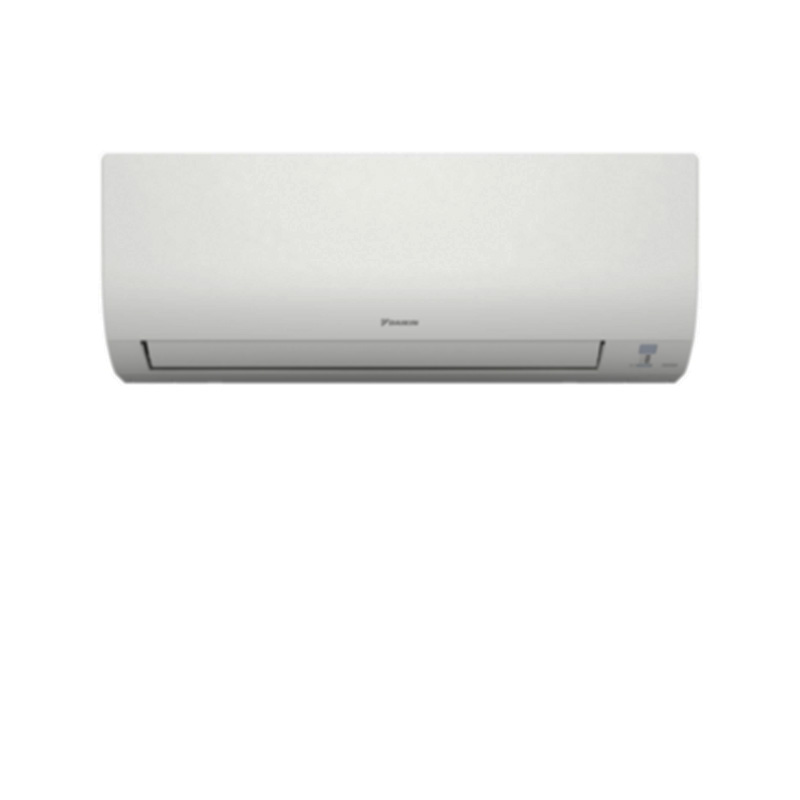
The Daikin 18,000 BTU 21 SEER2 two-zone mini split system pairs a single outdoor condenser with two indoor wall-mount air handlers, making it a practical fit for households that want independent temperature control in two rooms without running ductwork. At 18,000 BTU total capacity, this is best suited to two smaller spaces, typically a pair of bedrooms, a bedroom and a home office, or similar rooms in the 300 to 600 square foot range each, depending on ceiling height, insulation, and climate. The system should not be treated as a whole-home solution for larger layouts.
The 21 SEER2 rating places this unit in the upper tier of residential mini split efficiency. SEER2 is the updated federal testing standard that reflects real-world static pressure more accurately than the older SEER metric, so a 21 SEER2 rating represents genuinely strong seasonal efficiency and translates to meaningfully lower operating costs compared to standard-efficiency alternatives. The system uses R-32 refrigerant, which carries a lower global warming potential than the R-410A still found in many competing systems, and R-32 also improves heat transfer efficiency slightly. Variable-speed inverter-driven compression is standard across Daikin mini splits at this tier, allowing the system to modulate output continuously rather than cycling on and off, which supports both comfort and efficiency.
Daikin is the world’s largest HVAC manufacturer, and its mini split lineup is engineered to a high build standard with multi-region heating capability. This two-zone configuration does add installation complexity compared to a single-zone system, since refrigerant line sets, electrical circuits, and condensate drains must be run to two separate locations. Buyers who are not already committed to a multi-zone layout should confirm that both rooms genuinely need independent control before choosing this over a single-zone unit of equivalent capacity.
This Daikin two-zone system delivers genuinely high efficiency and real zoning flexibility from a manufacturer with a strong long-term durability reputation, but the premium price, documented issues with electronic control boards and parts support, and the complexity of a multi-zone installation mean it is best suited to buyers who have done their homework and are committed to professional installation. It is a strong technical product with real service-side trade-offs that should not be overlooked.
Overall score is the average of the five ratings above.
What we like
- 21 SEER2 efficiency is among the highest available in residential multi-zone mini splits
- Two independent zones allow different temperatures in different rooms simultaneously
- R-32 refrigerant has a lower environmental footprint than R-410A alternatives
- Daikin is consistently rated by Consumer Reports and HVAC experts as one of the longer-lasting brands
- Inverter-driven compressor reduces temperature swings and avoids constant on-off cycling
Trade-offs
- Electronic control board and circuit board failures are the most frequently documented hardware complaint, sometimes resulting in error codes or an unresponsive system
- Parts availability and warranty claim handling draw consistent complaints, with some owners reporting long wait times for replacement components
- Multi-zone installation is more complex and more expensive than a single-zone setup, requiring two sets of line runs and electrical circuits
- Daikin sits at the premium end of the price range, and the two-zone configuration adds further cost over single-zone alternatives
What homeowners and pros say about Daikin
Among homeowners, Daikin mini splits earn praise for quiet operation and consistent cooling and heating performance over many years, and HVAC professionals frequently cite the brand when discussing units they expect to still be running a decade or more after installation. Consumer Reports and independent HVAC experts place Daikin among the longer-lasting residential brands, which reflects well on the core mechanical build. On the other side, PissedConsumer scores for Daikin sit at roughly 1.4 out of 5, a figure drawn from a complaint-heavy channel and a relatively small number of reviews, but the recurring themes in those reviews are consistent: difficulty getting parts in a timely manner, circuit board and electronic control failures that leave systems throwing error codes or going unresponsive, and frustrating warranty claim experiences. These are not isolated edge cases but documented patterns that repeat across multiple sources.
For this specific two-zone wall-mount system, the feedback that matters most centers on a few specific failure modes. Electronic control board errors are the most commonly cited hardware problem, and when they occur on a multi-zone system the impact affects both rooms simultaneously. Some owners also report compressors losing cooling capacity or failing before the expected service life, and units that develop rattling or humming on start and stop cycles over time. Parts availability complaints are especially pointed for Daikin, with some technicians noting that sourcing specific boards or sensors can take longer than with some competing brands. For buyers who accept these risks and prioritize long-run efficiency and build quality, Daikin remains a credible choice, but going in with a qualified local technician who knows the product is not optional, it is essential.
Sources: PissedConsumer Daikin reviews, AHRI Directory of Certified Product Performance, U.S. DOE appliance and equipment efficiency standards, Daikin product specifications.
What it costs to run
At 21 SEER2, cooling this 18000 BTU system for a typical 1200-hour cooling season at the U.S. average electricity rate of $0.17/kWh works out to roughly $175 per year in cooling, about $99 less per year than a minimum-efficiency 13.4 SEER2 unit of the same size. Your real cost depends on your climate and local rate.
Method: (18,000 BTU/hr ÷ 21 SEER2) × 1200 hours ÷ 1000 × $0.17/kWh. Rate source: U.S. EIA average; cooling hours: moderate-climate estimate.
How it compares
| Brand | Comparable model | SEER2 | Stage | Price position |
|---|---|---|---|---|
| Daikin | 18,000 BTU 21 SEER2 2-Zone Wall Mount (this system) | 21 | Variable | Premium segment |
| Mitsubishi | MSZ-GL / MXZ-2C20 2-Zone Series | 18-20 | Variable | Similar to slightly higher than this system depending on configuration |
| Fujitsu | AOU18RGLX Halcyon 2-Zone Series | 20 | Variable | Comparable to slightly below this system |
| LG | LMU180HHV Multi F 2-Zone Series | 19-20 | Variable | Generally below this system at similar efficiency |
Competitor rows are comparable single-stage units at similar efficiency; price is relative position, not a quote.
Questions about this system
Can both zones run at different temperatures at the same time, or does one override the other?
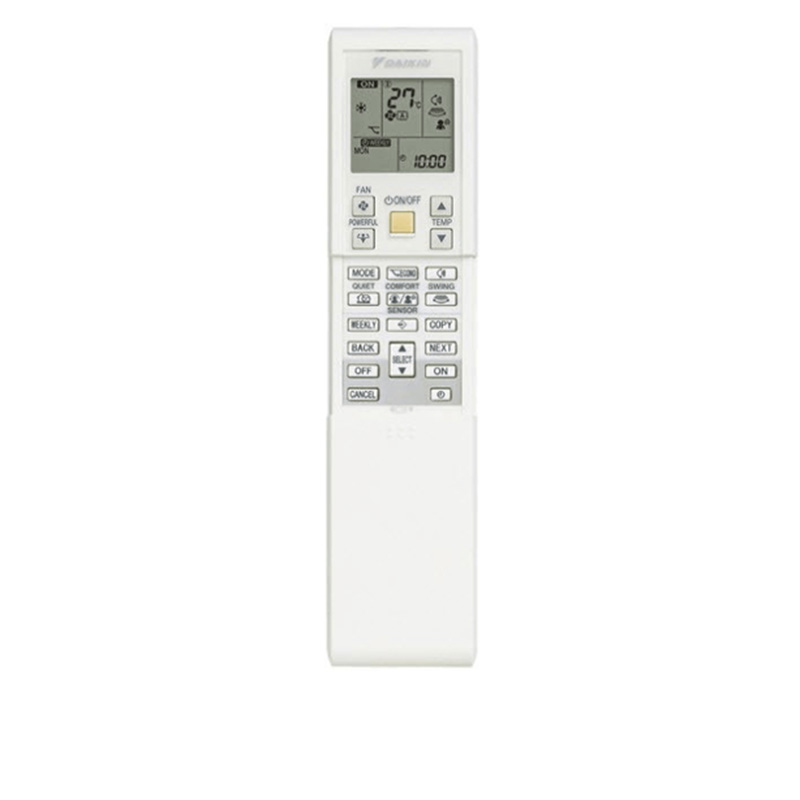
Yes, each indoor air handler operates independently with its own remote and set point, so one room can be set to 68°F while the other runs at 74°F simultaneously. The outdoor unit modulates to meet both demands at once.
What happens if I miss the 60-day registration window for the 12-year parts warranty?
If you do not register within 60 days of installation, the warranty typically defaults to a shorter period, commonly around five years on parts. Registration should be done promptly after the installer completes the job, and you should keep your installation paperwork as proof of date.
Is R-32 refrigerant safe, and will technicians in my area be able to service it?
R-32 is mildly flammable but has been used safely in residential mini splits worldwide for years and is increasingly common in the U.S. market. Most certified HVAC technicians can handle it, but it is worth confirming with local contractors before purchasing, especially in rural areas where it may be less familiar.
The documented complaint about circuit board failures concerns me. How common is it really?
Electronic control board issues are the most frequently cited hardware problem in Daikin mini split complaints, and they can leave the system throwing error codes or not responding at all. That said, Daikin is also consistently rated by Consumer Reports and HVAC professionals as one of the longer-lasting brands overall, suggesting these failures are not universal. Having a local technician who is familiar with Daikin diagnostics matters a great deal if a board issue does arise.
How many BTUs should each zone get, and is 18,000 BTU total enough for two average bedrooms?
Typical residential mini splits in this configuration split capacity between the two handlers, often in combinations like 9,000 and 9,000 or 12,000 and 6,000 BTU. Two average bedrooms of roughly 150 to 300 square feet each in a well-insulated home are often manageable at 9,000 BTU per zone, but a proper Manual J load calculation by your installer is the only reliable way to confirm the system is sized correctly for your specific rooms and climate.
Specifications
| Efficiency | 21 SEER2 |
| Furnace output | 18000 BTU |
| Refrigerant | R-32 |