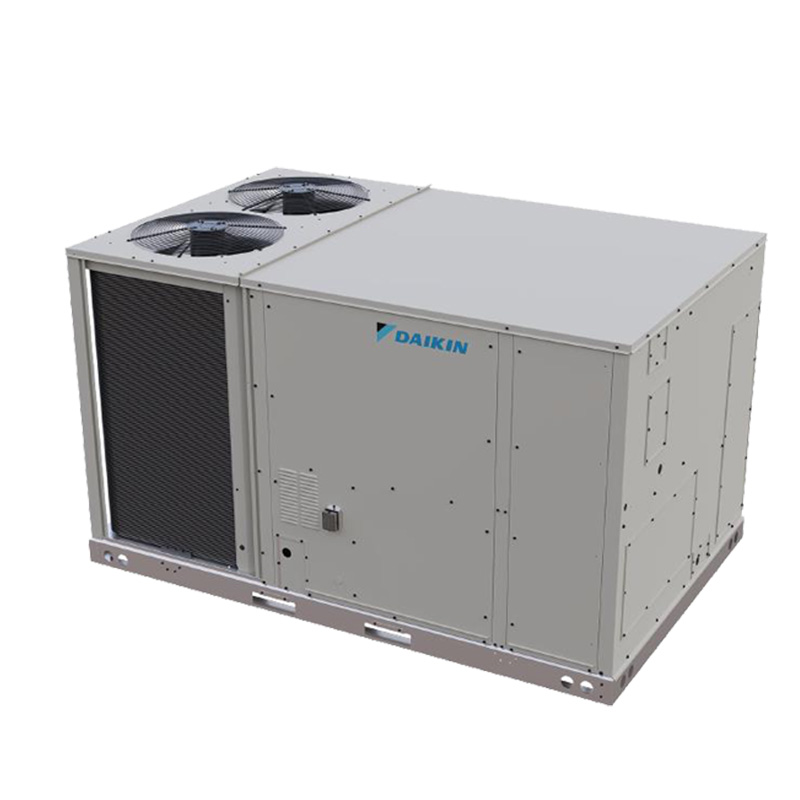
Daikin 12.5 Ton AC And 180000 BTU Gas/Electric Commercial Package Unit – 14.2 SEER2, Two Stage, 81% AFUE, R32
View on AC Direct see your lowest price →Check current price on AC Direct →
Key features
- 12.5-ton / 180,000 BTU cooling capacity in a single self-contained package unit
- Two-stage compressor for reduced short-cycling and improved humidity control
- 81% AFUE gas heat section eliminates need for a separate furnace or air handler
- 14.2 SEER2 efficiency rating meets current federal commercial minimums
- R-32 refrigerant with lower global warming potential than R-410A
- 12-year parts warranty available with registration within 60 days of installation
About this system
The Daikin 12.5-ton commercial package unit is a rooftop or ground-mount gas/electric system built for medium-to-large commercial spaces: retail buildings, warehouses, schools, restaurants, and light industrial facilities that need a single self-contained unit handling both heating and cooling from one cabinet. At 180,000 BTU of cooling and an 81% AFUE gas furnace section, it covers substantial square footage without requiring a separate indoor air handler or furnace, which simplifies mechanical rooms and rooftop penetrations considerably.
The 14.2 SEER2 efficiency rating meets current federal minimum standards for commercial package equipment but does not exceed them by a meaningful margin. Buyers choosing this unit are prioritizing capacity, the two-stage compressor, and Daikin’s build quality over top-tier efficiency. The two-stage operation is a real benefit at this size: the system can run at reduced capacity during mild weather, which cuts short-cycling, improves humidity control, and softens the load spikes on a building’s electrical service. The R-32 refrigerant charge is a forward-looking choice, carrying a lower global warming potential than R-410A and aligning the unit with expected regulatory direction.
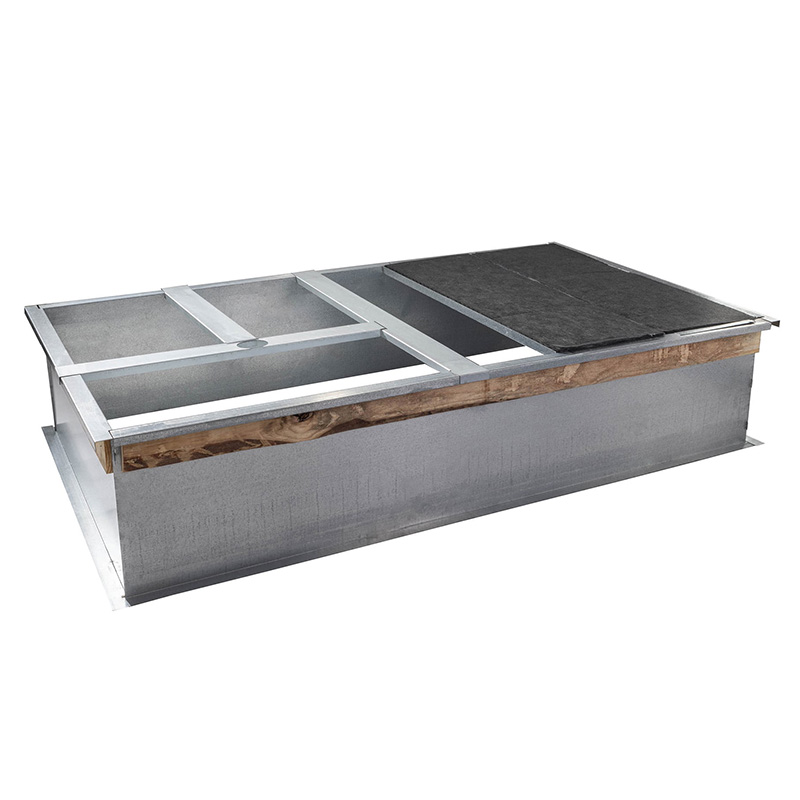
This is fundamentally a commercial procurer’s product. It requires a licensed commercial HVAC contractor for installation, a proper structural curb or pad, gas line sizing, and three-phase electrical service in most configurations. Facility managers and commercial contractors who want a single-source unit from a globally dominant manufacturer and can work within Daikin’s parts and service network will find it fits a clear need. Buyers who expect fast over-the-counter parts availability or straightforward DIY service should look carefully at support realities before committing.
This Daikin commercial package unit delivers genuine two-stage capacity and a solid build pedigree at a size that suits mid-size commercial applications well. The 14.2 SEER2 and 81% AFUE are baseline-compliant rather than exceptional, so the case for it rests on Daikin's documented long-term durability and the convenience of a self-contained gas/electric cabinet. Buyers should go in clear-eyed about Daikin's parts availability frustrations and the importance of registering the warranty promptly.
Overall score is the average of the five ratings above.
What we like
- Two-stage compressor improves part-load efficiency and humidity control versus single-stage alternatives
- Self-contained gas/electric package simplifies installation by eliminating a separate indoor unit
- R-32 refrigerant aligns with current and expected low-GWP regulatory trends
- Daikin's global manufacturing scale and build quality correlate with above-average equipment lifespan per industry experts
- 12-year parts warranty is competitive for the commercial package segment when registration is completed on time
Trade-offs
- 14.2 SEER2 and 81% AFUE are minimum-compliant figures; high-runtime facilities will see better operating cost returns from higher-efficiency alternatives
- Parts availability and warranty claim handling are consistent pain points in documented Daikin owner feedback
- Electronic control boards and circuit boards are the most frequently cited failure mode, and sourcing replacements can involve significant lead times
- Compressor noise and vibration issues have been noted over time, which matters on occupied rooftops or noise-sensitive commercial spaces
What homeowners and pros say about Daikin
Among commercial HVAC professionals, Daikin occupies an interesting position: respected for the physical durability and longevity of its equipment while consistently drawing criticism on the service and parts side. Industry reviewers and sources like Consumer Reports place Daikin among the longer-lasting brands for overall equipment lifespan, which matters considerably for a 12.5-ton commercial investment. The documented failure modes to know going in are electronic control and circuit board errors, which are the most commonly reported issue and can leave a system throwing error codes or unresponsive; compressor degradation over time; and increasing mechanical noise, particularly rattling or humming on startup and shutdown cycles. These are not universal outcomes, but they appear with enough frequency in technician and owner feedback to warrant a solid preventive maintenance plan and a clear relationship with a Daikin-authorized commercial service provider before the unit is ever commissioned.
On complaint-skewed channels like PissedConsumer, Daikin scores around 1.4 out of 5, though that platform captures a self-selected group of frustrated buyers rather than a representative sample. The grievances that dominate those reviews center on parts delays and warranty claim difficulties rather than catastrophic equipment failure, which tracks with the broader picture: the hardware tends to run, but getting factory support when something goes wrong can be a slow process. For a commercial facility manager, the practical takeaway is to source a local contractor with genuine Daikin commercial experience, keep a log of installation and registration dates, and budget for periodic board and controls inspection as part of scheduled maintenance rather than waiting for an error code to surface during peak season.
Sources: PissedConsumer Daikin reviews, AHRI Directory of Certified Product Performance, U.S. DOE appliance and equipment efficiency standards, Daikin product specifications.
What it costs to run
At 14.2 SEER2, cooling this 12.5-ton system for a typical 1200-hour cooling season at the U.S. average electricity rate of $0.17/kWh works out to roughly $2155 per year in cooling, about $129 less per year than a minimum-efficiency 13.4 SEER2 unit of the same size. Your real cost depends on your climate and local rate.
Method: (150,000 BTU/hr ÷ 14.2 SEER2) × 1200 hours ÷ 1000 × $0.17/kWh. Rate source: U.S. EIA average; cooling hours: moderate-climate estimate.
How it compares
| Brand | Comparable model | SEER2 | Stage | Price position |
|---|---|---|---|---|
| Daikin | 12.5-Ton Gas/Electric Commercial Package Unit (this system) | 14.2 | Two-stage | Value pick |
| Carrier | 48/50XC WeatherMaker Commercial Package Unit | 14.0-15.0 | Two-stage | Comparable to slightly higher, with broader regional parts availability |
| Trane | Precedent PKG Series Commercial Rooftop | 14.0-15.0 | Two-stage | Comparable to moderately higher, with strong national service network |
| Lennox | LGH/LCH Commercial Package Unit | 14.0-16.0 | Two-stage to variable | Comparable at base efficiency tiers; premium pricing at higher-efficiency configurations |
Competitor rows are comparable single-stage units at similar efficiency; price is relative position, not a quote.
Questions about this system
Does this unit require three-phase power, and what electrical service do I need?
Most 12.5-ton commercial package units in this class are configured for three-phase power, which is standard in commercial buildings but not always present in older or smaller structures. Confirm the exact voltage and phase requirements with your electrical contractor before purchasing, and budget for service upgrades if your building currently has only single-phase supply.
What does the 60-day warranty registration requirement mean in practice?
Daikin's 12-year parts warranty is conditional on registering the unit within 60 days of installation. If registration is missed, coverage typically reverts to a shorter base warranty. Make sure your installing contractor provides the model and serial number immediately after startup so you can complete registration through Daikin's online portal before the window closes.
How much square footage will 12.5 tons realistically condition?
As a rough guide, commercial spaces in moderate climates run around 400-600 square feet per ton, putting 12.5 tons in the 5,000-7,500 square foot range for well-insulated buildings. High-ceiling warehouses, kitchens, or buildings with large glass exposure will need a proper Manual J-equivalent commercial load calculation to confirm sizing rather than relying on rules of thumb.
What are the most common things that go wrong with Daikin commercial package units?
Based on documented owner and technician feedback, electronic control board and circuit board failures are the most frequently cited issue, sometimes causing error codes or complete unresponsiveness. Compressor degradation and loss of cooling capacity have also been reported, along with increasing noise from vibration and rattling on start and stop cycles. Parts procurement and warranty processing are the service-side complaints that appear most consistently.
Is R-32 refrigerant harder to service than R-410A in a commercial setting?
R-32 is increasingly common in commercial equipment and is handled with the same recovery and recharge equipment as R-410A, though technicians need to be aware it is mildly flammable (A2L classification) and follow updated handling procedures. Most commercial HVAC contractors in urban and suburban markets are already familiar with R-32 servicing, but it is worth confirming your service contractor has the correct equipment and certifications before the first scheduled maintenance visit.
Specifications
| Cooling capacity | 12.5 Ton |
| Efficiency | 14.2 SEER2 |
| Furnace output | 180000 BTU |
| Furnace efficiency | 81% AFUE |
| Refrigerant | R-32 |