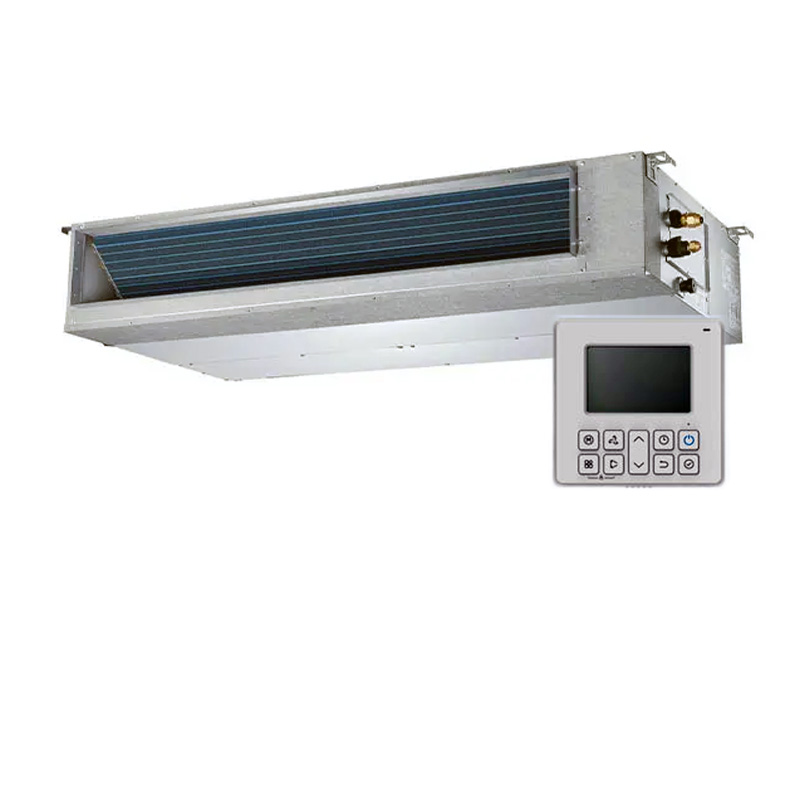
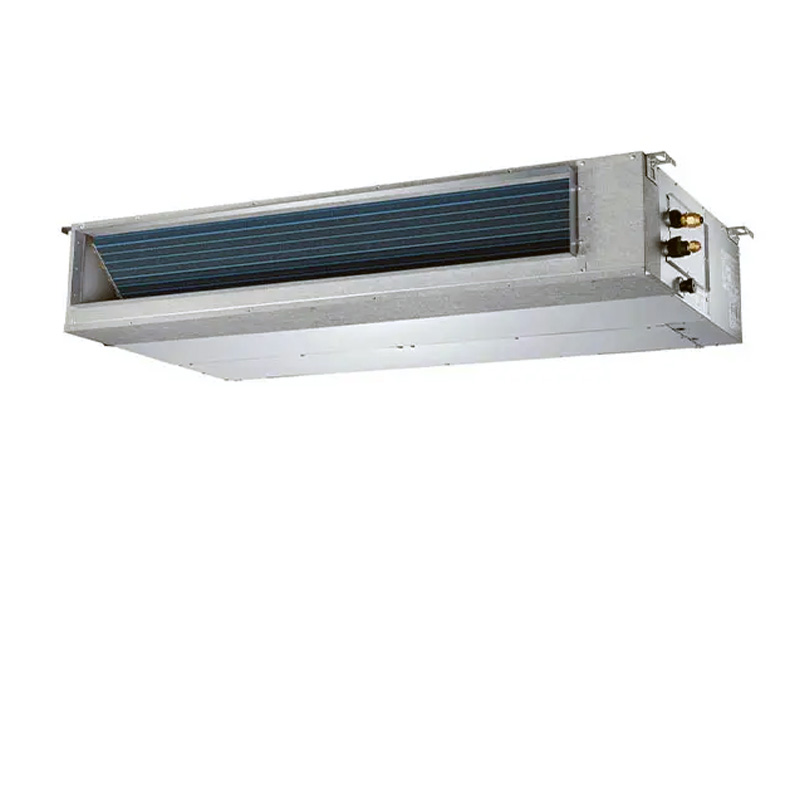
ACiQ 24000 BTU Mini Split Concealed Duct Indoor Air Handler | R454B (ACIQ-24CD-HH-MC)
View on AC Direct see your lowest price →Check current price on AC Direct →
Key features
- 24,000 BTU concealed duct configuration for hidden ceiling or soffit installation
- R-454B refrigerant with lower global-warming potential than R-410A
- Inverter-driven variable-speed operation for modulating capacity and steady zone temperatures
- Compatible with short duct runs to distribute air without exposed wall or ceiling cassettes
- Sold factory-direct with no dealer markup, undercutting comparable name-brand units on price
- 12-year parts warranty included without requiring dealer registration
About this system
The ACiQ 24,000 BTU Concealed Duct Mini Split Indoor Air Handler (ACIQ-24CD-HH-MC) is designed for homeowners and contractors who want the slim footprint of a ductless mini split but prefer to distribute conditioned air through short duct runs rather than a wall-mounted cassette. That makes it a strong fit for finished basements, open-plan additions, boutique commercial spaces, or any zone where exposed wall units are either impractical or unwanted. The concealed duct configuration hides behind a ceiling panel or inside a soffit, with only a small grille visible in the finished space.
This unit runs on R-454B refrigerant, a lower-global-warming-potential alternative that is becoming the new baseline as the industry moves away from R-410A under updated EPA regulations. At 24,000 BTU it covers roughly 1,000 to 1,400 square feet depending on insulation, ceiling height, and climate zone, though a proper Manual J load calculation should always be the deciding factor. The system pairs with a compatible ACiQ outdoor unit and uses inverter-driven variable-speed compressor technology, so it modulates capacity rather than cycling on and off, which generally means steadier temperatures and lower operating noise than single-stage equipment.
The ACiQ 24,000 BTU Concealed Duct Handler delivers genuine variable-speed technology and a strong 12-year warranty at a price point that name brands rarely match for this configuration. The trade-off is a newer brand with limited long-term reliability data and a service model that puts more responsibility on the owner to find qualified independent contractors. Buyers who prioritize upfront savings and can tolerate some uncertainty around long-term support will find it a compelling option; those who want an established service network and independently verified reliability data should weigh the premium alternatives seriously.
Overall score is the average of the five ratings above.
What we like
- Concealed duct design allows conditioned air distribution without visible wall cassettes
- Variable-speed inverter technology provides more precise temperature control than single-stage units
- R-454B refrigerant positions the system for regulatory compliance as R-410A is phased out
- 12-year parts warranty ships standard without dealer markup or registration hoops
- Factory-direct pricing undercuts comparable units from Mitsubishi, Daikin, and Fujitsu by a meaningful margin
Trade-offs
- Consumer Reports has not yet assigned a reliability score due to insufficient long-term field data
- The actual manufacturer is undisclosed, making parts cross-referencing and service history harder to verify
- No factory-authorized dealer network means finding qualified installation and warranty service falls to the owner
- Long-term compressor and coil durability in concealed duct applications remains unproven given the brand's short track record
What homeowners and pros say about ACiQ
Early owner feedback on ACiQ equipment generally focuses on three positives: quiet operation once installed, consistent temperature control from the variable-speed inverter, and a support team that owners describe as responsive when questions arise. Consumer Reports has not yet ranked ACiQ because the brand is too new to have accumulated the long-term field data the organization requires before assigning reliability scores, so positive early reviews should be weighed with that caveat in mind. For a concealed duct application specifically, the concerns most relevant to this product involve the undisclosed manufacturing origin, which makes it harder to cross-reference parts availability or service history compared to a brand like Mitsubishi or Fujitsu where the supply chain is well established and independent.
The documented failure modes worth knowing before buying any ACiQ system include the general uncertainty around long-term compressor lifespan given limited multi-year data, the challenge of locating coil leak history across different climates and installation types, and the service model reality that no factory-trained dealer network exists to dispatch technicians quickly. For a concealed duct unit installed inside a ceiling, a refrigerant leak or coil issue is more disruptive to access than a wall-mounted cassette would be, which raises the stakes on that last point. The 12-year parts warranty is genuinely strong for a value brand and provides meaningful coverage if you do the work of finding and coordinating qualified service on your end.
Sources: Consumer Reports heat pump ratings, HVACDirect on the ACiQ brand, AHRI Directory of Certified Product Performance, U.S. DOE appliance and equipment efficiency standards.
How it compares
| Brand | Comparable model | SEER2 | Stage | Price position |
|---|---|---|---|---|
| ACiQ | ACIQ-24CD-HH-MC Concealed Duct | Not published for indoor handler alone | Variable | Value pick |
| Mitsubishi | SVZ-KP24NA Concealed Duct | Varies by matched outdoor unit, typically 18+ SEER2 in matched system | Variable | Significantly higher than ACiQ |
| Daikin | FDMQ-Series Concealed Duct | Varies by matched outdoor unit, typically 17-19 SEER2 in matched system | Variable | Moderately to significantly higher than ACiQ |
| Fujitsu | ARUF24RLF Concealed Duct | Varies by matched outdoor unit, typically 18+ SEER2 in matched system | Variable | Moderately higher than ACiQ |
Competitor rows are comparable single-stage units at similar efficiency; price is relative position, not a quote.
Questions about this system
Does this air handler require a specific ACiQ outdoor unit, or can I match it with another brand?
The ACIQ-24CD-HH-MC is engineered to pair with compatible ACiQ outdoor condensing units that also use R-454B refrigerant. Mixing it with a different brand's outdoor unit is not supported and will void the warranty, since inverter systems require matched communication protocols between the indoor and outdoor sections.
How much static pressure can this concealed duct handler handle, and how long can the duct runs be?
Concealed duct mini splits are designed for low-static, short-run duct systems rather than whole-home trunk-and-branch layouts. Typical maximum external static pressure is in the 0.2 to 0.4 inches of water column range, which limits total duct length and the number of outlets. You should confirm the exact static pressure rating from the ACiQ specification sheet before designing your duct layout.
Since ACiQ is sold direct, who services it if something goes wrong under the 12-year warranty?
ACiQ's warranty is supported through independent licensed HVAC contractors rather than a branded dealer network. In practice this means you arrange service yourself, submit documentation to ACiQ for covered parts, and may pay labor out of pocket since the warranty covers parts but not labor costs. Confirming the process directly with ACiQ before purchase is worth the time.
Is R-454B refrigerant widely available, and can any HVAC technician work with it?
R-454B is an A2L mildly flammable refrigerant, which means technicians need specific training and some updated equipment to handle it safely compared to R-410A. Availability is growing as the industry transitions, but in some regions finding a contractor already equipped and certified for A2L refrigerants may require extra searching, especially for service calls in the near term.
What size space will 24,000 BTU actually condition, and how do I know if this is the right capacity?
A rough rule of thumb puts 24,000 BTU at approximately 1,000 to 1,400 square feet, but actual sizing depends heavily on insulation levels, window area, ceiling height, climate zone, and duct losses inherent to a ducted configuration. The only reliable way to confirm capacity is a Manual J heat load calculation performed by your installer before equipment is ordered.
Specifications
| Furnace output | 24000 BTU |
| Refrigerant | R-454B |