ACiQ 2 Ton Heat Pump AC Condenser | 18.1 SEER2 High Efficiency Inverter R454B (ACIQ-24-EHPD)
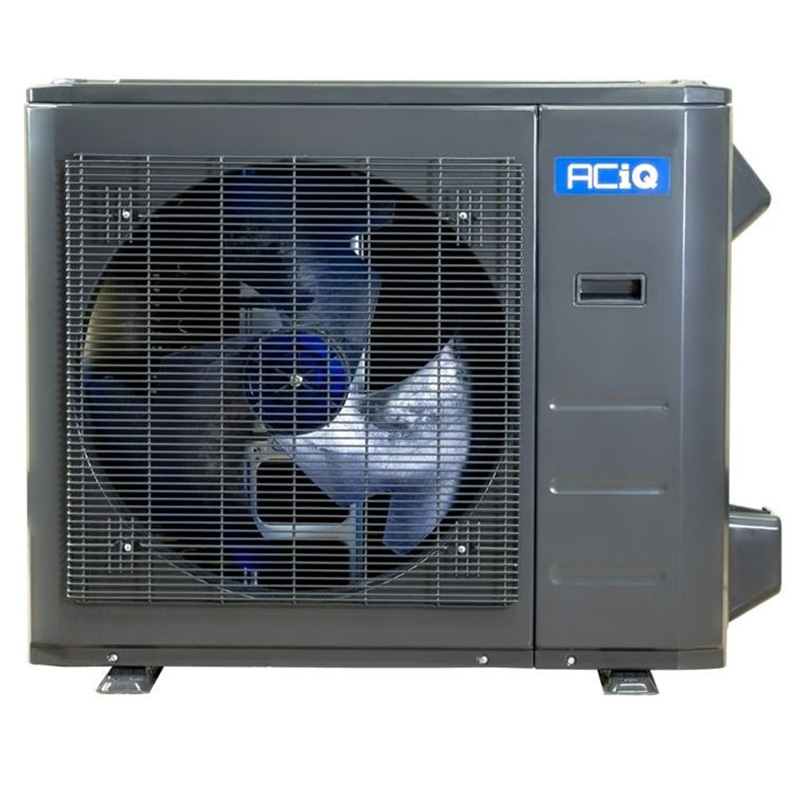
View on AC Direct see your lowest price →Check current price on AC Direct →
Key features
- 18.1 SEER2 variable-speed inverter compressor for continuous capacity modulation
- R-454B refrigerant, lower global-warming-potential and compliant with current EPA rules
- 2-ton capacity suited for smaller or well-insulated residential spaces
- 12-year parts warranty included without dealer markup or registration fees
- Heat pump configuration provides both heating and cooling from a single outdoor unit
- Sold direct through AC Direct, bypassing dealer markup that inflates name-brand pricing
About this system
The ACiQ 2-Ton 18.1 SEER2 Inverter Heat Pump Condenser (ACIQ-24-EHPD) is a variable-speed, refrigerant-forward unit designed for homeowners who want high-efficiency heating and cooling without paying the premium attached to major nameplate brands. At 2 tons, it is sized for smaller homes, well-insulated spaces, or individual zones in the range of roughly 800 to 1,200 square feet, depending on your climate and building envelope. The inverter-driven compressor modulates output continuously rather than cycling on and off, which keeps indoor temperatures steady, reduces humidity spikes, and cuts energy consumption compared to single-stage or two-stage alternatives at the same tonnage.
The unit runs on R-454B, a lower-GWP refrigerant that is part of the industry-wide shift away from R-410A under current EPA regulations. That is a forward-looking specification, meaning the system is compliant with rules already in effect and will not require a refrigerant swap down the road. The 18.1 SEER2 rating places it firmly in the high-efficiency tier, well above the federal minimum for most climate regions, and competitive with premium-brand units that carry significantly higher price tags. This condenser ships as part of a split system and requires a compatible air handler or coil, so buyers need to confirm matched-system compatibility before purchasing.
The ACIQ-24-EHPD delivers genuinely high efficiency and a strong warranty at a price point that undercuts comparable inverter heat pumps from Carrier, Trane, and Lennox by a meaningful margin. The trade-off is that the brand is new enough that long-term reliability data is still thin, and the direct-to-consumer model means finding a knowledgeable local service tech can take more legwork than it would with a dealer-backed brand. For cost-conscious buyers comfortable with that uncertainty, it is a compelling option; for those who prioritize a proven track record above all else, patience or a name brand may be worth the extra cost.
Overall score is the average of the five ratings above.
What we like
- 18.1 SEER2 is a legitimately high-efficiency rating, not a marginal step above minimum
- R-454B refrigerant is future-proof under current EPA low-GWP transition rules
- 12-year parts warranty ships with the unit at no extra registration cost or dealer fee
- Inverter compressor keeps temperatures and humidity more stable than single-stage units
- Direct-sale pricing undercuts equivalent-efficiency name-brand units by a significant margin
Trade-offs
- No Consumer Reports reliability ranking yet due to insufficient long-term field data
- Actual manufacturer is undisclosed, which complicates cross-referencing parts and service history
- No dedicated dealer network, so finding a contractor familiar with ACiQ equipment requires extra vetting
- Brand is relatively new, meaning owner communities and independent repair resources are still thin
What homeowners and pros say about ACiQ
Early owner feedback on ACiQ equipment, including the inverter heat pump line, trends positive on the metrics that matter most in the first year or two of ownership: quiet operation, consistent temperature control, and a support team that responds when something comes up. Those themes show up across Google dealer reviews and owner forums, and they align with what you would expect from a variable-speed inverter system designed to run at partial load most of the time rather than hammering on and off. What owners and pros are candid about, however, is the uncertainty that comes with a newer brand: Consumer Reports has not yet accumulated enough long-term data to assign ACiQ a reliability score, so there is no independent benchmark for how these compressors, coils, and control boards hold up at the five- or ten-year mark.
On the contractor side, the reaction is mixed in ways that are specific to how ACiQ goes to market. Because the actual manufacturer behind the equipment is not publicly disclosed, technicians who want to cross-reference a part number or pull up a service history on a similar platform cannot do so as easily as they can with a Carrier or Trane unit. The documented friction points that come up in trade discussions are not unique failure modes tied to ACiQ specifically, but rather the general vulnerabilities of any inverter-based heat pump: control boards and inverter modules that can be expensive to replace, refrigerant circuit integrity over time, and compressor longevity in systems that are not installed and commissioned correctly. The direct-to-consumer model removes dealer markup, which is a real financial advantage, but it also means the installer you hire has no brand relationship or factory support line to lean on if something unusual comes up during commissioning.
Sources: Consumer Reports heat pump ratings, HVACDirect on the ACiQ brand, AHRI Directory of Certified Product Performance, U.S. DOE appliance and equipment efficiency standards.
What it costs to run
At 18.1 SEER2, cooling this 2-ton system for a typical 1200-hour cooling season at the U.S. average electricity rate of $0.17/kWh works out to roughly $270 per year in cooling, about $95 less per year than a minimum-efficiency 13.4 SEER2 unit of the same size. Your real cost depends on your climate and local rate.
Method: (24,000 BTU/hr ÷ 18.1 SEER2) × 1200 hours ÷ 1000 × $0.17/kWh. Rate source: U.S. EIA average; cooling hours: moderate-climate estimate.
How it compares
| Brand | Comparable model | SEER2 | Stage | Price position |
|---|---|---|---|---|
| ACiQ | ACIQ-24-EHPD | 18.1 | Variable | Value pick |
| Carrier | Infinity 24 (25VNA4) | 18.0+ | Variable | Significantly higher, typically installed through dealer network with markup |
| Trane | XV18 (4TWV8) | 18.0+ | Variable | Premium priced, higher than ACiQ with dealer installation cost built in |
| Lennox | Signature XP21 | 17.5-18.0 range | Variable | Premium priced, among the highest cost options in this efficiency tier |
Competitor rows are comparable single-stage units at similar efficiency; price is relative position, not a quote.
Questions about this system
Does the 12-year warranty require professional installation or registration to be valid?
ACiQ's 12-year parts warranty is one of the selling points of the direct-to-consumer model and does not carry the dealer-registration requirement that inflates costs with some name brands. That said, you should read the warranty terms carefully before purchase, because most HVAC warranties still require installation by a licensed HVAC contractor and may require refrigerant work to meet EPA Section 608 certification rules. Installation by an unlicensed person would void coverage on virtually any residential heat pump.
Will any HVAC contractor work on an ACiQ unit, or will techs refuse to service it because it is not a brand they sell?
Most licensed HVAC technicians can service any refrigerant-based split system regardless of brand, since the mechanical principles are the same. The practical complication is that ACiQ is newer and some contractors are unfamiliar with it, and because the original manufacturer is not publicly disclosed, cross-referencing parts can take longer than with a Carrier or Trane unit. Calling ahead to confirm a contractor has worked on ACiQ or is willing to do so before scheduling is good practice.
What air handler or coil does this condenser need to be paired with for the system to qualify for the stated SEER2 rating?
Heat pump efficiency ratings are certified for specific matched combinations of outdoor unit and indoor coil or air handler. You need to verify that the indoor equipment you plan to use is listed as a matched system with this condenser in AHRI certification data. Using a mismatched coil can reduce efficiency, affect warranty coverage, and in some cases cause operational problems. ACiQ's product support team can confirm compatible pairings if the documentation is not clear.
R-454B is not R-410A. Will this affect what refrigerant I need for future service calls, and is it easy to find?
R-454B is a mildly flammable (A2L class) refrigerant and requires technicians who are certified to handle it and equipment designed for it. It is increasingly available as the industry transitions away from R-410A, but it is not yet as universally stocked as R-410A was at peak. Confirm your local contractors have R-454B on hand and are A2L-certified before committing to this unit, especially in rural or smaller markets where supply may lag.
How does 18.1 SEER2 translate to real energy savings compared to my older unit?
SEER2 testing uses more demanding conditions than the older SEER standard, so an 18.1 SEER2 unit is meaningfully more efficient than its number might suggest relative to older SEER ratings. Compared to a 10-year-old 13 SEER unit, you could see cooling-season energy use cut by roughly 25 to 35 percent, though actual savings depend on your climate, usage hours, duct condition, and home insulation. An energy auditor or HVAC contractor can run a Manual J and load calculation to give you a more precise estimate for your specific home.
Specifications
| Cooling capacity | 2 Ton |
| Efficiency | 18.1 SEER2 |
| Refrigerant | R-454B |