ACiQ 2.5 Ton Heat Pump AC Condenser | 17 SEER2 High Efficiency Inverter R454B (ACIQ-30-EHPD)
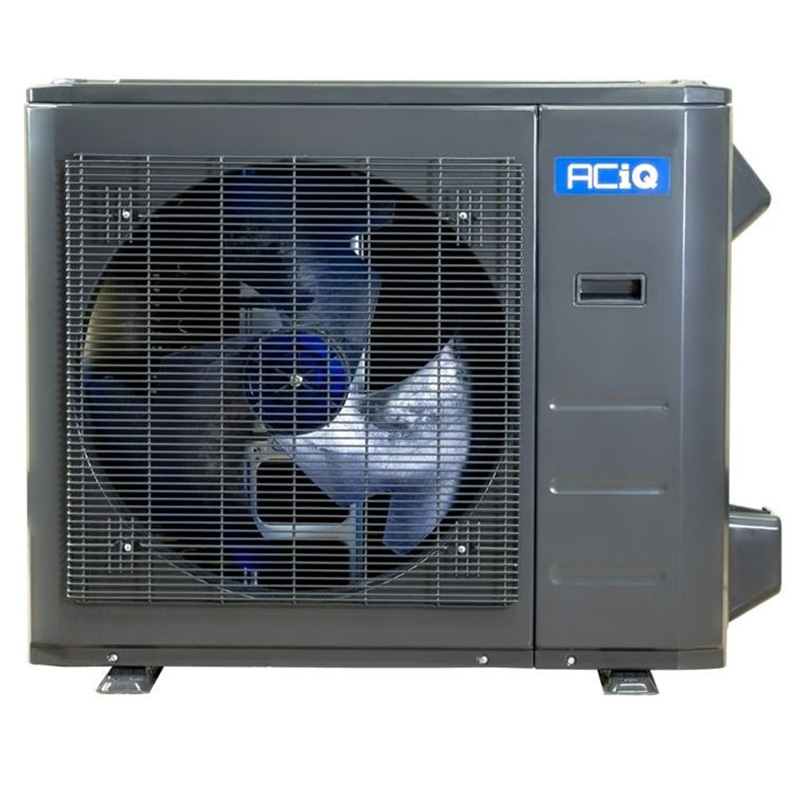
View on AC Direct see your lowest price →Check current price on AC Direct →
Key features
- 17 SEER2 inverter-driven compressor for variable-capacity operation
- R-454B refrigerant, lower GWP than R-410A and compliant with current regulations
- 2.5-ton (approximately 30,000 BTU/h) cooling and heating capacity
- 12-year parts warranty included, no dealer markup required
- Factory-direct pricing through AC Direct undercuts comparable name-brand units
- Variable-speed operation reduces sound output and start-up electrical draw
About this system
The ACiQ 2.5-ton 17 SEER2 inverter heat pump condenser (ACIQ-30-EHPD) is a variable-speed, R-454B-refrigerant system sized for homes in the roughly 1,200-to-1,600-square-foot range, depending on climate zone and insulation quality. At 17 SEER2, it clears the current federal minimum by a meaningful margin and lands in the upper-mid efficiency tier, where you get real energy savings without paying the premium associated with 20-plus SEER2 systems. The inverter compressor modulates its output continuously rather than cycling on and off at full speed, which reduces temperature swings, lowers noise levels, and eases the electrical demand on startup.
R-454B is a lower-global-warming-potential refrigerant that replaces R-410A across the industry, so this unit is already aligned with where residential HVAC is headed. That matters for long-term parts availability and regulatory compliance. The system is sold factory-direct through AC Direct, which removes dealer markup and is a key reason the price sits below name-brand competitors at the same efficiency tier. It will need to be paired with a compatible air handler or furnace coil and a properly sized refrigerant line set; because it ships direct, you will be sourcing installation through an independent contractor rather than a brand-certified dealer network, which is worth factoring into your planning.
The ACiQ ACIQ-30-EHPD delivers a genuinely competitive efficiency rating and inverter technology at a price that is hard to match from legacy brands. The trade-off is a shorter track record than Carrier or Trane, an undisclosed manufacturer that complicates parts cross-referencing, and an install experience that depends entirely on the independent contractor you hire. For cost-conscious buyers who do their homework on installation, it is a solid choice; for buyers who prioritize brand accountability and long-term data, the uncertainty is real.
Overall score is the average of the five ratings above.
What we like
- 17 SEER2 places it well above minimum efficiency requirements for meaningful utility savings
- Inverter compressor provides quieter, more even comfort than single-stage alternatives
- 12-year parts warranty is competitive with or better than many dealer-sold name brands
- R-454B refrigerant future-proofs the system against ongoing R-410A phase-out
- Factory-direct pricing removes dealer markup, often resulting in lower all-in cost
Trade-offs
- Undisclosed manufacturer makes cross-referencing parts and service records harder than with a named brand
- No brand-certified dealer network means installation quality depends entirely on the contractor you find
- Consumer Reports has not yet ranked ACiQ due to insufficient long-term field data
- Inverter and variable-speed systems generally carry higher repair complexity and parts costs if a failure occurs outside warranty
What homeowners and pros say about ACiQ
Homeowners who have installed ACiQ systems consistently highlight quiet operation and prompt support from AC Direct as standout positives in early ownership, and the factory-direct pricing model draws strong word-of-mouth from buyers who compared installed quotes against name-brand alternatives. That said, independent long-term reliability data is genuinely thin: Consumer Reports has not yet ranked the brand due to insufficient field history, so the picture of how these units hold up at the five-to-ten-year mark is still forming. HVAC technicians in online trade forums note that the undisclosed OEM relationship creates occasional friction when sourcing parts, since they cannot simply pull up a Carrier or ICP parts diagram and cross-reference components by a known family name.
The failure modes most worth watching in variable-speed inverter systems of this class are capacitor degradation, refrigerant coil integrity over time, and long-term compressor reliability under variable-load cycling. None of these have been specifically documented as patterns in ACiQ units yet, which reflects both the brand’s relative newness and the limited independent service data available. Contractors who work on direct-sold equipment generally advise buyers to budget for the possibility that warranty service logistics require more coordination on the homeowner’s end compared to a brand with a local dealer infrastructure, and to choose an installer who is already familiar with inverter-driven systems rather than treating this as a straightforward single-stage swap.
Sources: Consumer Reports heat pump ratings, HVACDirect on the ACiQ brand, AHRI Directory of Certified Product Performance, U.S. DOE appliance and equipment efficiency standards.
What it costs to run
At 17 SEER2, cooling this 2.5-ton system for a typical 1200-hour cooling season at the U.S. average electricity rate of $0.17/kWh works out to roughly $360 per year in cooling, about $97 less per year than a minimum-efficiency 13.4 SEER2 unit of the same size. Your real cost depends on your climate and local rate.
Method: (30,000 BTU/hr ÷ 17 SEER2) × 1200 hours ÷ 1000 × $0.17/kWh. Rate source: U.S. EIA average; cooling hours: moderate-climate estimate.
How it compares
| Brand | Comparable model | SEER2 | Stage | Price position |
|---|---|---|---|---|
| ACiQ | ACIQ-30-EHPD | 17 | Variable / Inverter | Value pick |
| Carrier | Performance 17 (25VPB) | 17 | Variable | Notably higher, with dealer installation markup |
| Trane | XR17 | 17 | Two-stage | Higher, sold and installed through Trane dealer network |
| Lennox | Merit 16ACX / ML17XC1 | 17 | Single-stage | Comparable to Carrier, includes dealer pricing |
Competitor rows are comparable single-stage units at similar efficiency; price is relative position, not a quote.
Questions about this system
What air handler or furnace coil is compatible with the ACIQ-30-EHPD?
ACiQ sells matched air handlers designed to work with this condenser, and using a matched indoor unit is the surest way to achieve the rated 17 SEER2 efficiency and preserve the warranty. You can pair it with a compatible third-party air handler or coil, but you should confirm the AHRI-certified combination before purchase, since a mismatched indoor unit can reduce efficiency and potentially void coverage.
Who actually manufactures ACiQ equipment, and does it matter for parts?
ACiQ is AC Direct's house brand and the actual OEM manufacturer is not publicly disclosed, though forum discussion points toward the ICP and Carrier family without confirmation. This matters practically because an independent technician cannot easily cross-reference the unit to a sister-brand parts catalog the way they could with a clearly labeled Carrier or Heil unit, which can slow down sourcing if a component needs replacement outside of warranty.
Is R-454B refrigerant harder to service than R-410A?
R-454B is mildly flammable (A2L classification), which means technicians need specific certification and equipment to handle it safely. Most licensed HVAC contractors are already being trained on A2L refrigerants as the industry transitions, but it is worth confirming your installer is current before booking the job.
How does the 12-year warranty work if I bought direct and there is no dealer?
ACiQ's 12-year parts warranty is registered directly with AC Direct rather than through a dealer, and warranty claims are handled by contacting the company and dispatching an independent service contractor. This works fine in practice for many owners, but the absence of a local dealer relationship means you are responsible for finding a qualified technician yourself rather than calling a brand service line.
Will a 2.5-ton unit be the right size for my home?
Ton sizing should always be based on a Manual J load calculation performed by your installer, not on square footage alone, because ceiling height, insulation, window area, and climate zone all affect the result significantly. A 2.5-ton system is commonly installed in homes in the 1,200-to-1,600-square-foot range in moderate climates, but an oversized or undersized unit will hurt both comfort and efficiency regardless of how good the equipment is.
Specifications
| Cooling capacity | 2.5 Ton |
| Efficiency | 17 SEER2 |
| Refrigerant | R-454B |