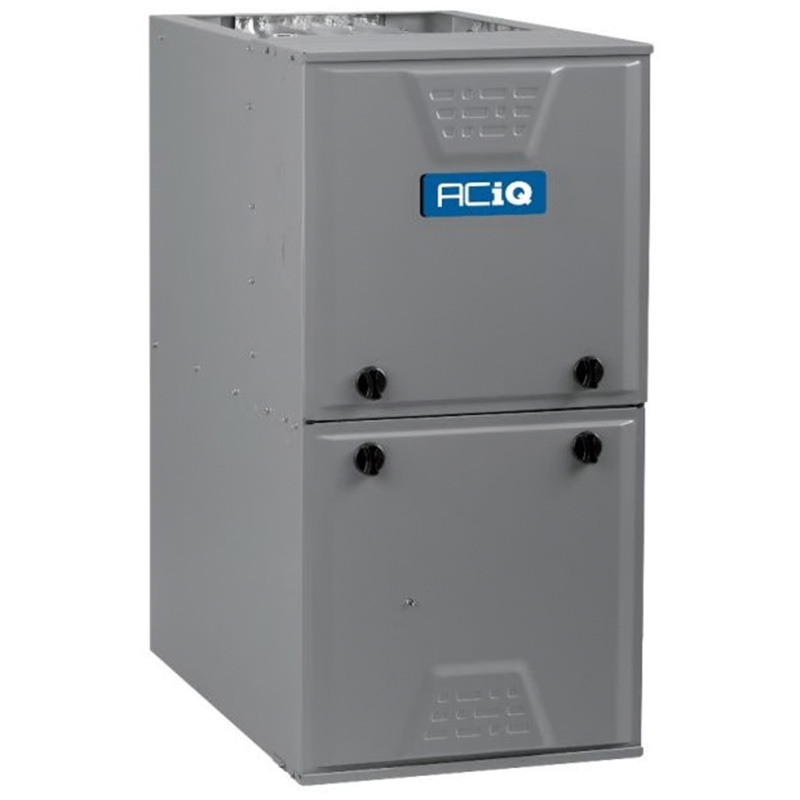
ACiQ 120000 BTU 96% AFUE Gas Furnace | Variable Speed Two Stage Multi-Positional Communicating | R454B Compliant (G96CTN1202422B)
View on AC Direct see your lowest price →Check current price on AC Direct →
Key features
- 96% AFUE two-stage gas valve for high-efficiency, lower-cost heating
- Variable-speed ECM blower motor for quiet, even airflow and lower electricity draw
- Multi-positional cabinet supports upflow, downflow, and horizontal installation
- Communicating controls for system-level diagnostics with matched ACiQ equipment
- 120,000 BTU output sized for large homes in cold climates
- R-454B ready for pairing with compliant next-generation cooling equipment
About this system
The ACiQ G96CTN1202422B is a 120,000 BTU, 96% AFUE two-stage, variable-speed gas furnace designed for larger homes in cold-climate regions where heating loads demand serious output. At 96% AFUE, nearly all the fuel combusted becomes usable heat, placing this unit in the upper efficiency tier for gas furnaces and qualifying it for many utility rebate programs. The two-stage gas valve pairs with a variable-speed ECM blower motor, which means the furnace runs at a lower stage the majority of the time, cycling less aggressively, distributing heat more evenly, and running quieter than single-stage equipment of comparable output.
The multi-positional cabinet allows installation in upflow, downflow, or horizontal orientations, giving contractors flexibility in tight mechanical rooms or attic installations. The communicating control board is designed to work within a matched ACiQ system, enabling more precise diagnostics and coordination with compatible thermostats and air handlers. R-454B refrigerant compliance on the label refers to the system’s readiness to pair with next-generation cooling equipment rather than to the furnace itself, which burns gas. This unit is best suited to homes above roughly 2,500 square feet in cold climates, or any structure where a contractor’s Manual J load calculation lands in the 100,000 to 120,000 BTU range.
The ACiQ G96CTN1202422B delivers genuine upper-tier furnace specs at a price that undercuts comparable Carrier or Trane equipment, making it a serious option for cost-conscious buyers who can find a qualified independent installer. The unknown manufacturer lineage and thin long-term reliability data are real unknowns that buyers should weigh honestly against the savings.
Overall score is the average of the five ratings above.
What we like
- 96% AFUE places it among the most efficient gas furnaces available, reducing monthly heating bills
- Variable-speed ECM motor lowers electricity consumption and runs noticeably quieter than PSC-motor alternatives
- Two-stage operation means most run hours happen at the lower, quieter stage rather than full blast
- Multi-positional cabinet simplifies installation across a wide range of mechanical room configurations
- 12-year parts warranty ships standard without dealer markup, matching or exceeding many name-brand coverage terms
Trade-offs
- The actual manufacturer is undisclosed, making it harder for technicians to cross-reference parts, service bulletins, or long-term failure data
- Sold direct rather than through a dealer network, so finding a contractor already familiar with the brand takes more effort
- Consumer Reports has not yet assigned a reliability score due to insufficient long-term data, leaving buyers without an independent benchmark
- Communicating controls tie you more tightly to the ACiQ ecosystem, which can complicate future thermostat or air handler swaps
What homeowners and pros say about ACiQ
Early owners of ACiQ furnaces and air handlers report quieter-than-expected operation and generally positive first-season experiences, and the brand’s customer support is cited as responsive in early owner forums. However, Consumer Reports does not yet rank ACiQ because the brand is too new to have generated the long-term reliability data that scoring requires, which means independent verification of durability is simply not available yet. That gap is not a condemnation, but it is a real unknown a buyer should acknowledge rather than dismiss.
HVAC professionals who have installed ACiQ equipment tend to note that the hardware feels familiar and well-built, which feeds the forum speculation about an ICP or Carrier family connection, though nothing is confirmed. The practical friction point raised by contractors is the undisclosed manufacturer lineage: when a technician encounters an unfamiliar failure mode on this furnace, they cannot easily cross-reference it against a known OEM’s service history or parts supersession database the way they can with a Carrier or Trane unit. Service through independent contractors rather than a branded dealer network also means the quality of your installation and warranty-period support depends heavily on which contractor you choose, so vetting your installer is more important here than it would be with a brand that has a tightly managed dealer program.
Sources: Consumer Reports heat pump ratings, HVACDirect on the ACiQ brand, AHRI Directory of Certified Product Performance, U.S. DOE appliance and equipment efficiency standards.
How it compares
| Brand | Comparable model | SEER2 | Stage | Price position |
|---|---|---|---|---|
| ACiQ | G96CTN1202422B | N/A (furnace only) | Two-stage | Value pick |
| Carrier | Performance 96 (59TP6) | N/A (furnace only) | Two-stage | Moderately higher through dealer network |
| Trane | S9V2 (XR96) | N/A (furnace only) | Two-stage | Moderately higher through dealer network |
| Lennox | ML296V | N/A (furnace only) | Two-stage variable-speed | Noticeably higher through dealer network |
Competitor rows are comparable single-stage units at similar efficiency; price is relative position, not a quote.
Questions about this system
Who actually manufactures this furnace, and does it matter for parts availability?
ACiQ is AC Direct's house brand and the underlying manufacturer is not publicly disclosed, though forum discussion points toward the ICP and Carrier family without confirmation. It matters in practice because a technician troubleshooting a failure cannot easily cross-reference parts or service history against a known OEM database, which can slow repairs if a contractor is unfamiliar with the product line.
Does the 120,000 BTU rating mean this furnace is right for my house?
Not necessarily. Oversizing a furnace causes short cycling, uneven temperatures, and added wear on the heat exchanger. You should have a contractor run a Manual J load calculation for your specific home before assuming a 120,000 BTU unit is the correct size, even for a large house.
How does the two-stage operation actually affect comfort and energy bills?
The furnace runs at its lower stage the majority of the time, which means longer, gentler heating cycles rather than short blasts at full capacity. This tends to produce more even temperatures room to room, reduces temperature swings, and burns less gas per hour during moderate weather.
The listing mentions R-454B compliance. Does that mean this furnace uses refrigerant?
No. Gas furnaces do not use refrigerant. The R-454B notation means the furnace is rated and tested for use alongside air conditioning equipment that uses R-454B refrigerant, which is the newer low-GWP refrigerant replacing R-410A in split systems. It is a system-compatibility designation, not a furnace-specific feature.
What does the communicating control board require, and can I use any thermostat?
The communicating board is designed to operate within a matched ACiQ communicating system, which enables enhanced diagnostics and coordinated operation. Standard non-communicating thermostats can typically still control basic functions, but you lose the system-level diagnostic benefits. Confirm thermostat compatibility with your installer before purchasing a separate thermostat.
Specifications
| Furnace output | 120000 BTU |
| Furnace efficiency | 96% AFUE |
| Refrigerant | R-454B |