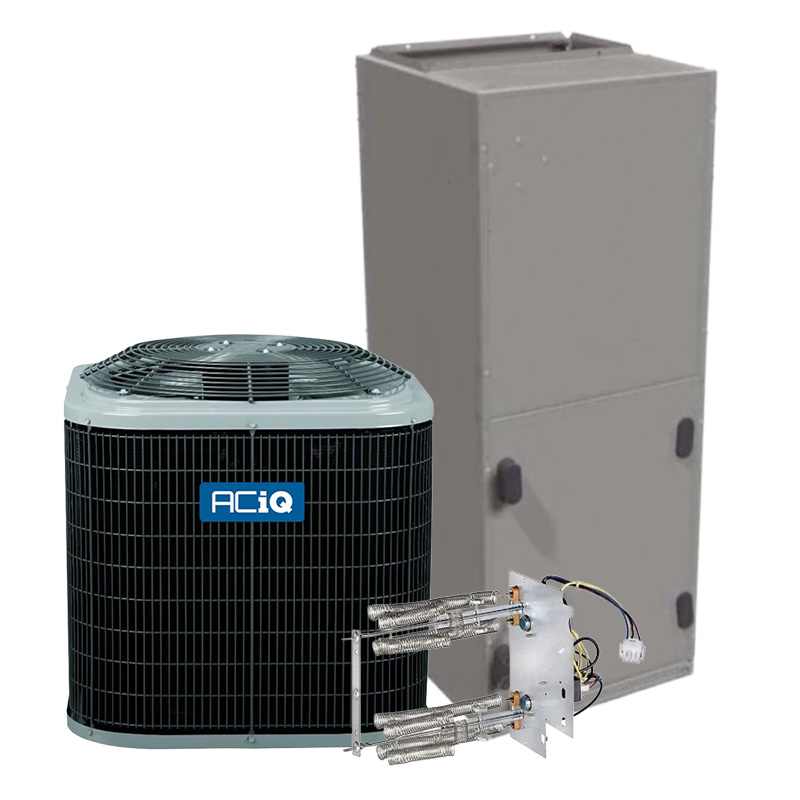
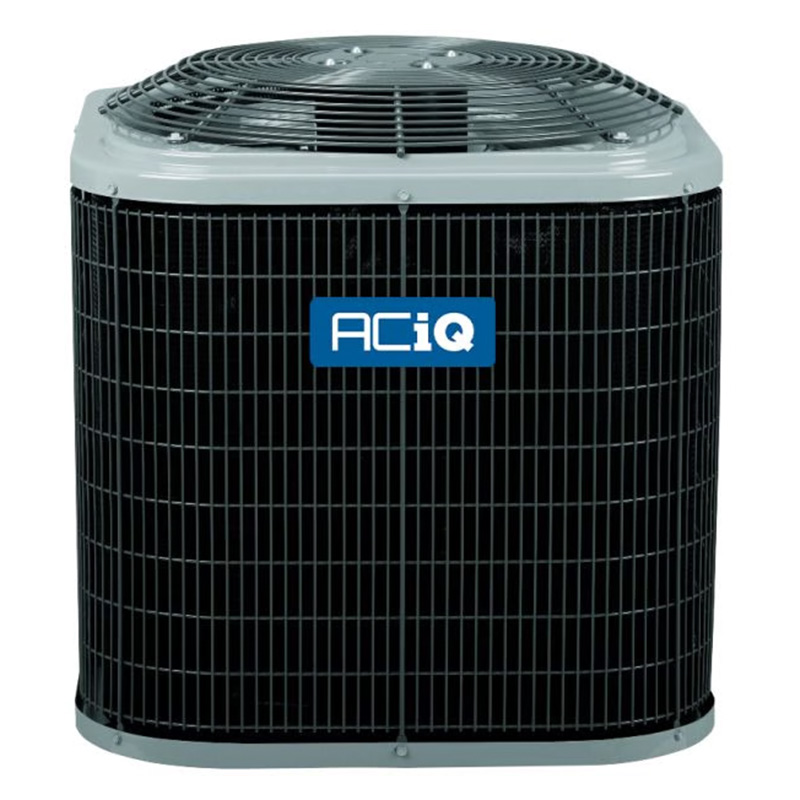
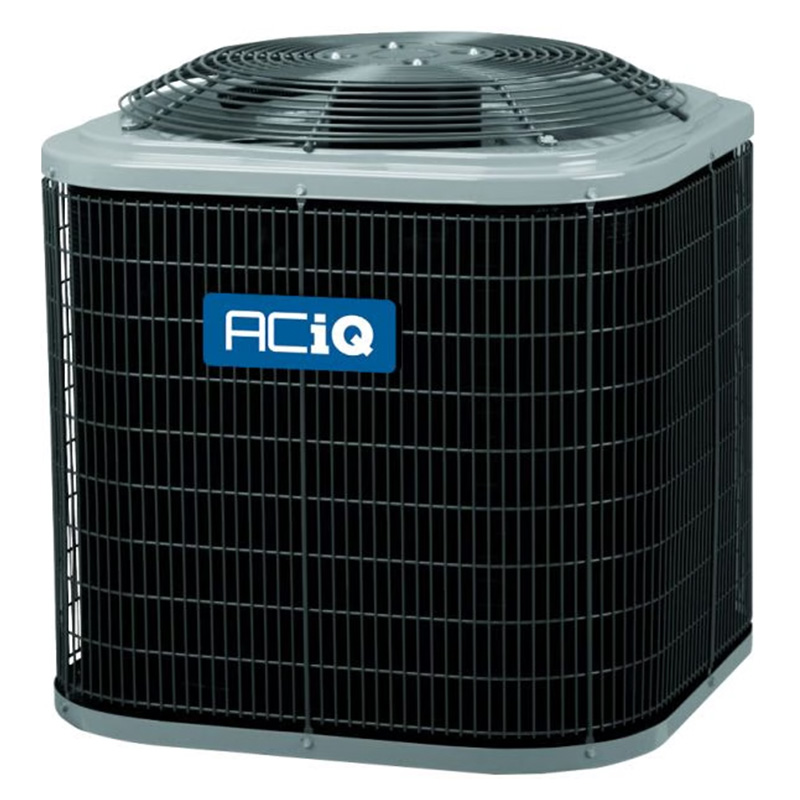
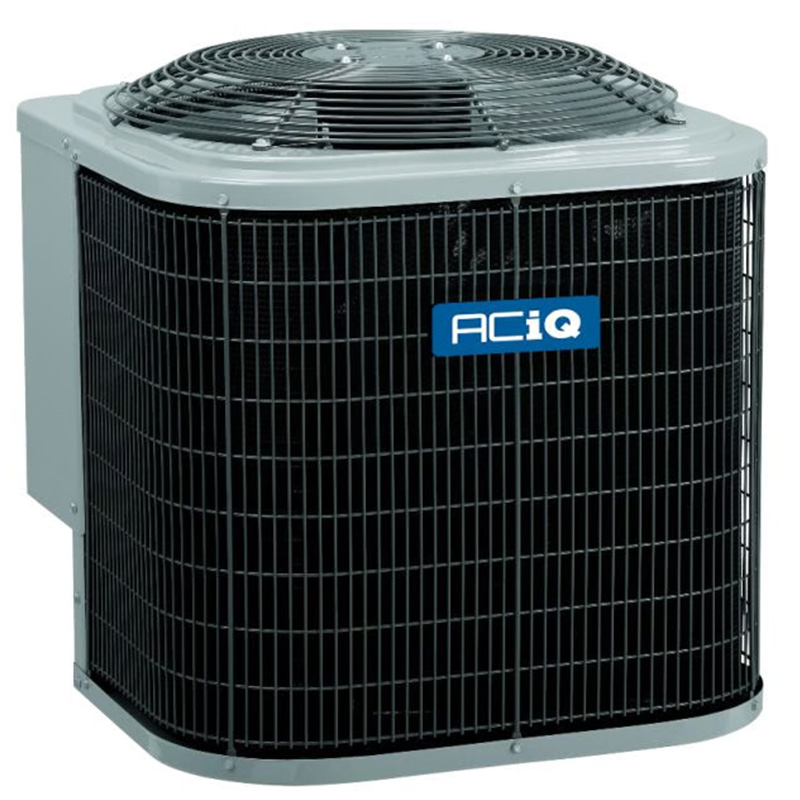
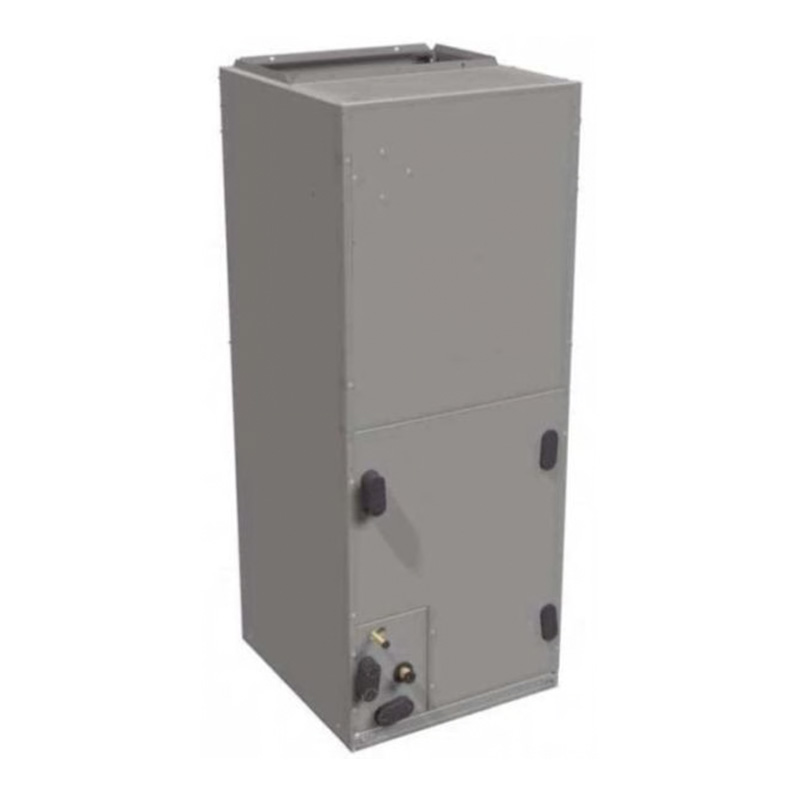
ACiQ 3.5 Ton Air Conditioning With Electric Heat System | 15.2 SEER2 AC | 21" Wide Multi-Positional Modular Air Handler | R454B
View on AC Direct see your lowest price →Check current price on AC Direct →
Key features
- 15.2 SEER2 efficiency rating, meeting current federal minimums for most U.S. climate zones
- R-454B refrigerant, compliant with current EPA low-GWP regulations replacing R-410A
- 21-inch-wide multi-positional air handler supports upflow, downflow, and horizontal installation
- Modular electric heat strips integrated into the air handler, no separate furnace required
- Sold factory-direct through AC Direct, no dealer markup on the 12-year warranty
- 12-year parts warranty included without dealer registration or additional fee
About this system
The ACiQ 3.5-ton, 15.2 SEER2 air conditioning system with electric heat is built around a multi-positional modular air handler that can be installed in upflow, downflow, or horizontal configurations, making it a practical choice for homes where duct routing or mechanical room layout rules out a fixed-orientation unit. At 3.5 tons it is sized for roughly 1,600 to 2,100 square feet of conditioned space, though actual sizing depends heavily on insulation quality, ceiling height, window area, and climate zone. The electric heat strips integrated into the air handler eliminate the need for a separate furnace, which keeps the system compact and the installation straightforward in climates where winter heating loads are moderate.
The outdoor unit runs on R-454B, the low-global-warming-potential refrigerant that is replacing R-410A across the industry following new EPA regulations. At 15.2 SEER2 the system clears the federal minimum efficiency standard for most U.S. climate zones and sits in the entry-level tier of mid-efficiency equipment. It will cost noticeably less to operate than an older R-22 or early R-410A system rated below 13 SEER2, but it will not match the utility savings of a 17 SEER2 or higher variable-speed system. ACiQ sells direct through AC Direct, cutting out dealer markup and passing that saving to the buyer, which is the central value proposition of the brand.
The ACiQ 3.5-ton electric heat system is a competitively priced option for mid-size homes in mild-to-moderate heating climates where a dedicated furnace is not necessary, and the multi-positional air handler adds real installation flexibility. At 15.2 SEER2 it is not a high-efficiency system, and the brand's short track record means long-term reliability is still an open question that buyers should weigh honestly against the upfront savings.
Overall score is the average of the five ratings above.
What we like
- Factory-direct pricing undercuts comparably rated Carrier, Trane, and Lennox equipment by a meaningful margin
- 12-year parts warranty ships with the unit at no extra cost, with no dealer registration required
- Multi-positional air handler accommodates tight or unusually configured mechanical spaces
- R-454B refrigerant is current-generation and will not face the phase-down pressure that R-410A now faces
- Early owner feedback consistently notes quiet outdoor unit operation and responsive ACiQ customer support
Trade-offs
- 15.2 SEER2 is entry-level mid-efficiency; monthly operating costs will be higher than a 17-plus SEER2 variable-speed system over the equipment's life
- The actual manufacturer is not publicly disclosed, which makes independent parts sourcing and service-history research harder than with a fully transparent name brand
- No factory dealer network means you must source and vet your own licensed HVAC contractor, which adds friction and can complicate warranty service
- Consumer Reports has not yet assigned a reliability score due to insufficient long-term data, so buyers are accepting more uncertainty than with an established rated brand
What homeowners and pros say about ACiQ
Homeowners who have installed ACiQ systems report quiet outdoor unit operation and generally smooth startup experiences, and ACiQ’s direct-sale support team draws consistent praise for responsiveness when questions arise during installation. That said, the brand is new enough that Consumer Reports has not yet accumulated sufficient long-term data to assign a reliability score, which is a real gap compared to Carrier, Trane, or Lennox equipment with decades of tracked performance. Forum discussions occasionally surface concerns about the undisclosed manufacturer: if a component fails outside warranty and a contractor needs to cross-reference a part number or consult a service bulletin, the lack of a transparent brand lineage creates extra work that would not exist with a fully named OEM.
On the contractor side, HVAC professionals who have worked on ACiQ equipment tend to find it straightforward to install and similar in construction to other mid-tier ducted systems, but some note that the direct-sale model means they are often meeting the equipment for the first time on the job rather than having prior factory training. The specific failure modes to keep in mind with any newer value brand in this class include capacitor degradation in high-runtime climates, refrigerant coil integrity over multi-year cycles, and compressor longevity beyond the ten-year mark, none of which have yet generated substantial ACiQ-specific data. The 12-year parts warranty provides meaningful protection against those scenarios, but the labor cost of any repair is always out of pocket, so factoring that into the total cost of ownership comparison against a dealer-installed name brand is worthwhile before buying.
Sources: Consumer Reports heat pump ratings, HVACDirect on the ACiQ brand, AHRI Directory of Certified Product Performance, U.S. DOE appliance and equipment efficiency standards.
What it costs to run
At 15.2 SEER2, cooling this 3.5-ton system for a typical 1200-hour cooling season at the U.S. average electricity rate of $0.17/kWh works out to roughly $564 per year in cooling, about $75 less per year than a minimum-efficiency 13.4 SEER2 unit of the same size. Your real cost depends on your climate and local rate.
Method: (42,000 BTU/hr ÷ 15.2 SEER2) × 1200 hours ÷ 1000 × $0.17/kWh. Rate source: U.S. EIA average; cooling hours: moderate-climate estimate.
How it compares
| Brand | Comparable model | SEER2 | Stage | Price position |
|---|---|---|---|---|
| ACiQ | 3.5-Ton 15.2 SEER2 Electric Heat Split System | 15.2 | Single-stage | Value pick |
| Carrier | Comfort 24ACC636 (3-ton) / CA16 series | 15.2 | Single-stage | Moderately higher through dealer network |
| Trane | XR15 series | 15.0–16.0 | Single-stage | Moderately to significantly higher through dealer network |
| Lennox | Merit ML15XC1 series | 15.5 | Single-stage | Moderately higher through dealer network |
Competitor rows are comparable single-stage units at similar efficiency; price is relative position, not a quote.
Questions about this system
Is 3.5 tons the right size for my house, or should I go up to 4 tons?
Tonnage should be determined by a Manual J load calculation, not square footage alone. A 3.5-ton unit is roughly appropriate for 1,600 to 2,100 square feet in an average-insulated home in a moderate climate, but a house with poor insulation, large west-facing windows, or a very hot climate may need more capacity. Oversizing leads to short-cycling and humidity problems, so have a contractor run the numbers before ordering.
What size electric heat strips do I need with this air handler?
Electric heat strips are sized in kilowatts (typically 5 kW, 10 kW, 15 kW, or 20 kW) based on your climate's design heating load, not the cooling tonnage. In mild climates a 10 kW strip set is often adequate for a home sized for 3.5-ton cooling, but colder regions may need 15 kW or more. Confirm the correct strip size with your contractor or with ACiQ's technical support before you order.
Can any licensed HVAC contractor install this, or does it have to be an ACiQ-authorized technician?
Any licensed HVAC contractor can install the system, and ACiQ does not require an authorized dealer. You will want to confirm that the installer is EPA 608-certified to handle R-454B refrigerant and is familiar with the multi-positional air handler configuration you plan to use. Because there is no factory dealer network, finding and vetting the installer is your responsibility.
How does the 12-year warranty work when the system is bought direct and not through a dealer?
ACiQ includes the 12-year parts warranty with purchase through AC Direct and does not require dealer registration to activate it. If a covered component fails, you file the claim through ACiQ and pay a contractor to perform the repair; the replacement part is covered but labor is not. Because warranty service is handled through independent contractors rather than a dealer network, getting repairs done quickly depends on finding a local tech willing to work on the brand.
Why does this system use R-454B instead of R-410A, and does that affect servicing?
R-454B is a next-generation refrigerant with a significantly lower global warming potential than R-410A, and new EPA regulations are pushing the HVAC industry away from R-410A. Practically speaking, R-454B requires EPA 608 certification to handle just as R-410A does, but it is mildly flammable (A2L classification), so contractors must follow updated safety handling procedures. Service equipment and recovery machines may need to be compatible with A2L refrigerants, which is worth confirming with your installer before scheduling any future service calls.
Specifications
| Cooling capacity | 3.5 Ton |
| Efficiency | 15.2 SEER2 |
| Refrigerant | R-454B |