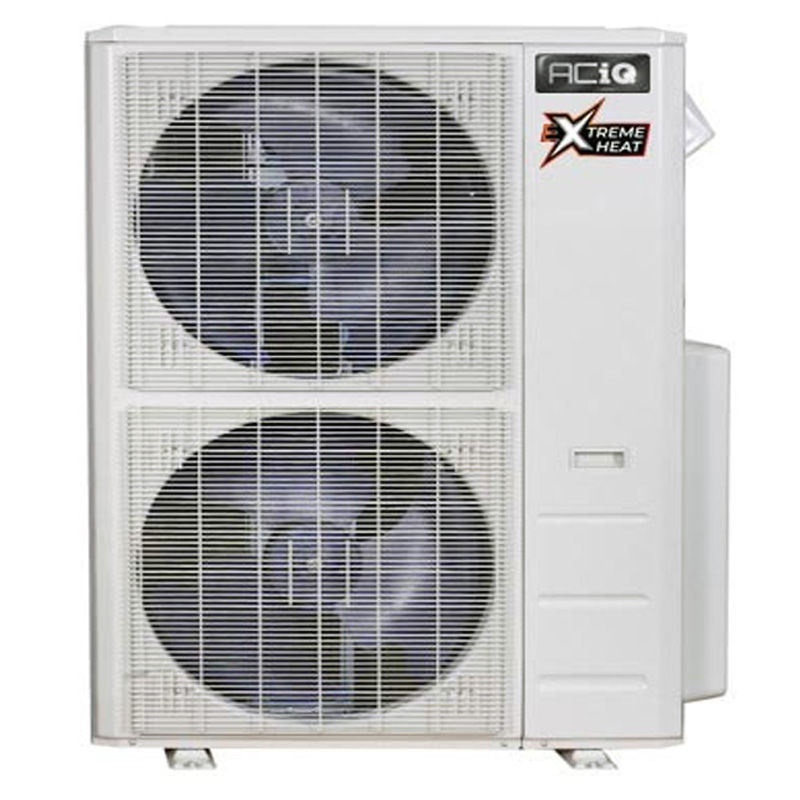
ACiQ 6 Zone / Room 55000 BTU Mini Split Heat Pump AC Outdoor Condenser | 22.2 SEER2 | Heats Down To -22°F & Beyond | R454B (ACIQ-55Z-HH-M6C)
View on AC Direct see your lowest price →Check current price on AC Direct →
Key features
- 55,000 BTU six-zone outdoor condenser with variable-speed inverter compressor
- 22.2 SEER2 high-efficiency rating for significant long-term energy savings
- Cold-climate heat pump operation rated to -22°F for primary heating in harsh winters
- R-454B low-GWP refrigerant, compliant with current and upcoming EPA regulations
- 12-year parts and compressor warranty included without dealer markup
- Compatible with mixed indoor unit configurations (wall-mount, cassette, ducted)
About this system
The ACiQ ACIQ-55Z-HH-M6C is a 55,000 BTU outdoor condenser designed to anchor a six-zone ductless mini-split system, making it a strong candidate for larger homes, multi-unit buildings, or commercial spaces where independent room-by-room climate control is a priority. At 22.2 SEER2, it sits firmly in the high-efficiency tier, and its cold-climate heat pump rating down to -22°F means it can serve as a primary heating source in northern states where older heat pumps would fall back on strip heat long before temperatures bottomed out. The system runs on R-454B refrigerant, a lower-global-warming-potential replacement for R-410A that is increasingly required by new EPA regulations, so this unit is positioned for long-term regulatory compliance.
This condenser pairs with six independently controlled indoor air handlers, which can be a mix of wall-mount, ceiling cassette, or ducted units depending on how the installer configures the system. That flexibility is genuinely useful in retrofits where running a single duct trunk is impractical. The inverter-driven variable-speed compressor modulates output continuously rather than cycling on and off, which reduces energy spikes, keeps temperatures more stable in each zone, and contributes to the low operating noise ACiQ owners frequently note. The trade-off for all this capability is installation complexity: six refrigerant line sets, six drain lines, and six electrical connections require a skilled multi-zone installer, and the commissioning process is more involved than a simple single-zone system.
The ACiQ 6-zone 55,000 BTU condenser delivers genuine high-efficiency, cold-climate performance at a price that undercuts established brands by a meaningful margin, making it an attractive option for budget-conscious buyers who are comfortable with the trade-offs of a newer, direct-sold brand. The 22.2 SEER2 rating and -22°F heating floor are real competitive strengths, and the 12-year warranty provides reasonable long-term coverage. The honest caveat is that independent long-term reliability data is still limited, and the undisclosed manufacturer and direct-sales model can complicate service if something goes wrong.
Overall score is the average of the five ratings above.
What we like
- 22.2 SEER2 efficiency is competitive with top-tier name brands at a lower purchase price
- Rated heating operation to -22°F makes this viable as a primary heat source in cold climates
- 12-year warranty is included upfront without requiring dealer registration or markup
- Variable-speed inverter compressor provides quieter operation and more stable zone temperatures
- R-454B refrigerant future-proofs the system against near-term regulatory phase-outs
Trade-offs
- Long-term reliability is unproven; Consumer Reports does not yet rank ACiQ due to insufficient data
- The undisclosed manufacturer makes parts cross-referencing and independent service history harder to verify
- No dealer network means finding a trained service technician requires extra vetting on your part
- Six-zone installation is complex and expensive regardless of equipment brand, narrowing the cost advantage
What homeowners and pros say about ACiQ
Early owner feedback on ACiQ equipment, including multi-zone systems, clusters around three consistent themes: quieter-than-expected operation, solid cooling and heating performance out of the box, and a support team that responds when problems arise. These impressions come from owners who are still within the first one to three years of ownership, which is an important qualifier. Consumer Reports has not yet ranked ACiQ because the brand is too new to have the volume of long-term field data that their reliability scoring requires, and that absence is a genuine gap rather than a red flag. Google and dealer-sourced reviews skew positive, but they naturally underrepresent the full service lifecycle of a system that can run for fifteen or twenty years.
HVAC professionals who have installed ACiQ equipment note that the inverter technology performs as specified and that the units commission without unusual difficulty. The friction points they identify align with the brand’s direct-sales structure: because there is no disclosed OEM and no factory dealer network, a technician arriving at a service call cannot fall back on manufacturer-trained support or easily cross-reference components against a parent brand’s parts database. Specific failure modes that have surfaced in early service reports include questions about long-term compressor lifespan under heavy cold-climate cycling, refrigerant coil integrity over time, and capacitor durability, though none of these have been documented at a scale that distinguishes ACiQ from other newer market entrants. The honest summary from the field is that the equipment looks promising but deserves a few more years of broad deployment before its reliability tier can be stated with confidence.
Sources: Consumer Reports heat pump ratings, HVACDirect on the ACiQ brand, AHRI Directory of Certified Product Performance, U.S. DOE appliance and equipment efficiency standards.
What it costs to run
At 22.2 SEER2, cooling this 55000 BTU system for a typical 1200-hour cooling season at the U.S. average electricity rate of $0.17/kWh works out to roughly $505 per year in cooling, about $332 less per year than a minimum-efficiency 13.4 SEER2 unit of the same size. Your real cost depends on your climate and local rate.
Method: (55,000 BTU/hr ÷ 22.2 SEER2) × 1200 hours ÷ 1000 × $0.17/kWh. Rate source: U.S. EIA average; cooling hours: moderate-climate estimate.
How it compares
| Brand | Comparable model | SEER2 | Stage | Price position |
|---|---|---|---|---|
| ACiQ | ACIQ-55Z-HH-M6C | 22.2 | Variable | Value pick |
| Mitsubishi | MXZ-6C112NAHZ2 (MXZ H2i Series) | ~20.5 | Variable | Significantly higher than ACiQ |
| Daikin | 4MXS36TVJU (4MXS Series, scaled to 6-zone via branch box) | ~19.0 | Variable | Higher than ACiQ |
| Fujitsu | AOU48RLXFZ1 (XLTZ Series multi-zone) | ~21.0 | Variable | Higher than ACiQ |
Competitor rows are comparable single-stage units at similar efficiency; price is relative position, not a quote.
Questions about this system
Can this condenser actually heat my home when outdoor temperatures drop below 0°F, or does it need backup heat?
ACiQ rates this unit for heating operation down to -22°F, which puts it in the same cold-climate heat pump category as purpose-built units from Mitsubishi and Daikin. Heating capacity does decrease as temperatures fall, so for very large homes in consistently extreme climates, sizing with a professional load calculation is important. A backup heat source is always worth considering for worst-case nights, but the rated floor is credible for most northern U.S. climates.
Do all six indoor zones have to run at the same time, or can I just run one or two?
Individual zones operate independently, so you can run one, two, or any combination of the six air handlers while the others stay off. The variable-speed compressor modulates its output to match the load of however many zones are active, which keeps efficiency high even when only partial capacity is needed.
Who actually manufactures ACiQ equipment, and does it matter for parts and repairs?
ACiQ is AC Direct's house brand and the actual OEM manufacturer has not been publicly disclosed. Forum speculation points toward the ICP and Carrier family, but this is unconfirmed. It matters practically because an independent technician cannot easily cross-reference parts against a known manufacturer's catalog, which can slow down repairs compared to a brand with a transparent supply chain and factory-trained dealer network.
What does the 12-year warranty actually cover, and are there registration requirements?
ACiQ includes a 12-year warranty on parts and the compressor, and because the brand sells direct without dealer markup, this coverage comes included rather than requiring a contractor to register it. You should still read the warranty document carefully for conditions around who performs installation and service, as most manufacturer warranties require licensed HVAC installation to remain valid.
Is R-454B refrigerant going to be easy to find and service in the future?
R-454B is a next-generation refrigerant with a significantly lower global warming potential than R-410A, and it is being adopted broadly as regulators phase down high-GWP refrigerants under recent EPA rules. Availability is growing as more manufacturers adopt it, and choosing a system using it now avoids the supply and cost pressure that R-410A systems will face as that refrigerant is phased out. Technicians do need specific handling certifications, so confirm your installer is equipped for it.
Specifications
| Efficiency | 22.2 SEER2 |
| Furnace output | 55000 BTU |
| Refrigerant | R-454B |