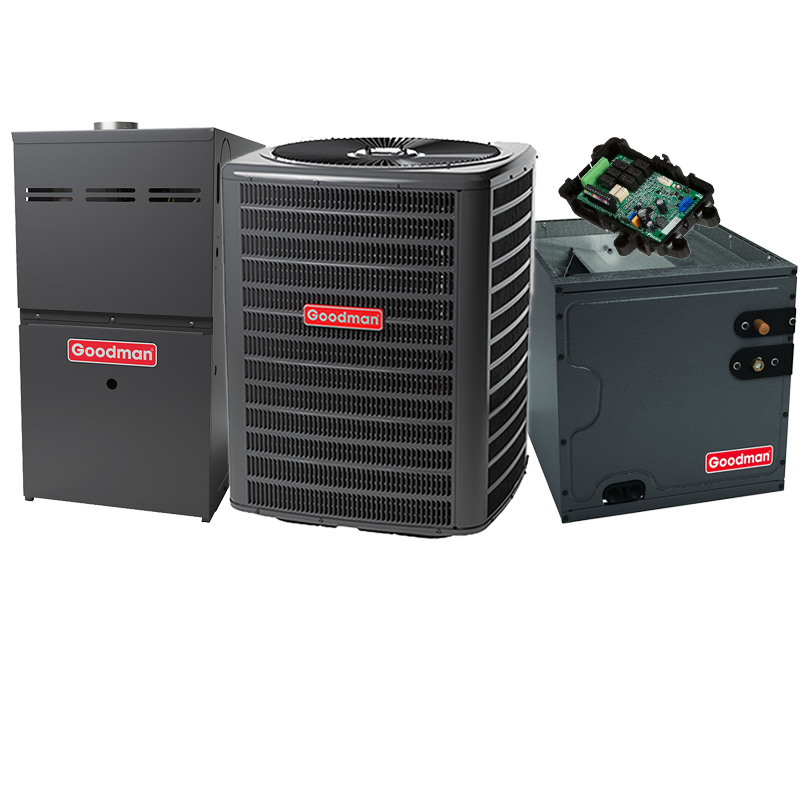
Goodman 2 Ton 14 SEER2 80000 BTU 80% Two-Stage Gas Furnace With R32 Air Conditioner Condenser And Coil System – Upflow
View on AC Direct see your lowest price →Check current price on AC Direct →
Key features
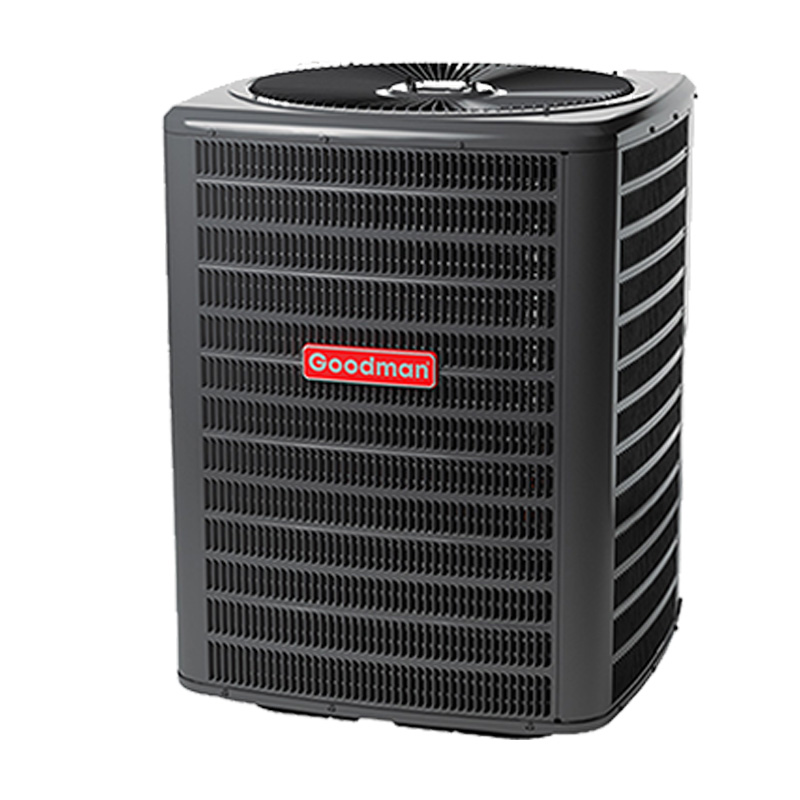
- 2-ton R-32 condenser rated at 14 SEER2, meeting federal minimums for northern climate zones
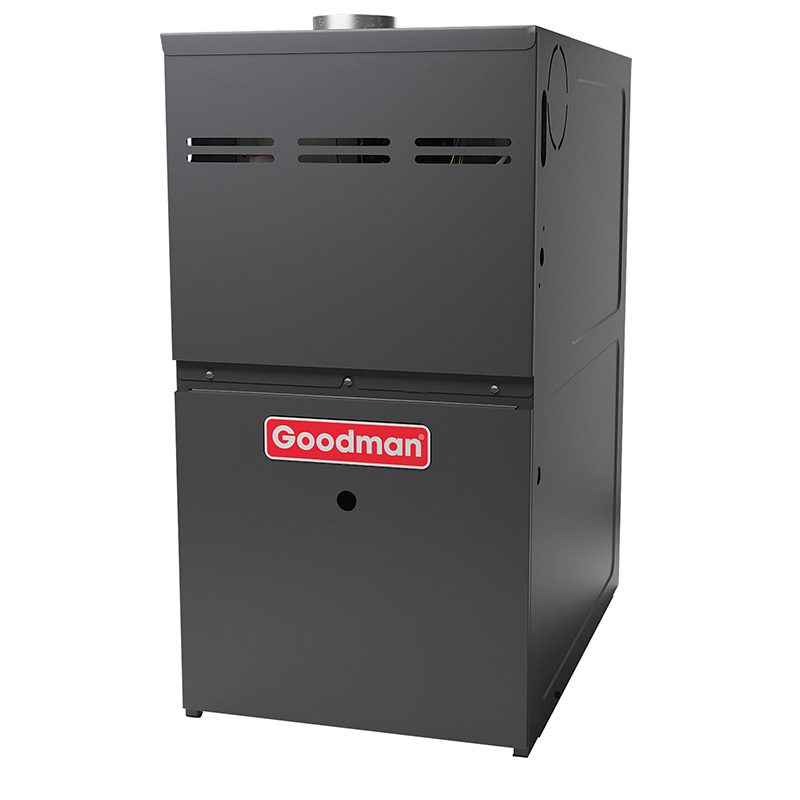
- 80,000 BTU two-stage gas furnace runs at reduced capacity on mild days to limit temperature swings
- 80% AFUE rating converts four out of five BTUs of gas into usable heat
- Upflow configuration designed for basement or closet installs with overhead duct systems
- R-32 refrigerant replaces R-410A with a lower global-warming potential and improving parts availability
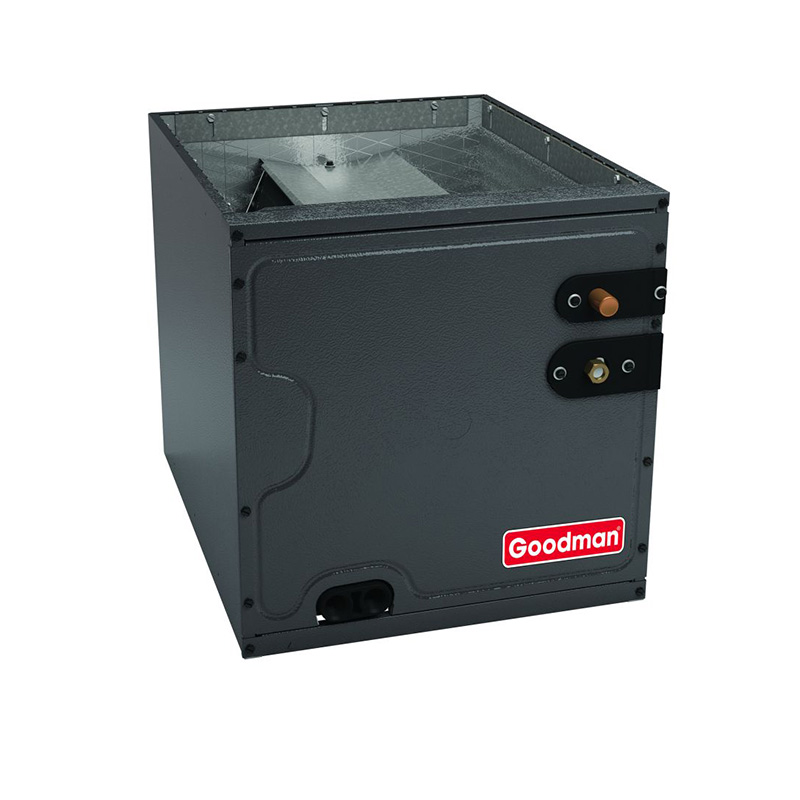
- Matched coil included, simplifying compatibility and supporting warranty registration
About this system
This Goodman upflow bundle pairs a 2-ton, 14 SEER2 R-32 air conditioner condenser and matching coil with an 80,000 BTU, 80% AFUE two-stage gas furnace. The package is sized for homes roughly in the 900-to-1,300 square-foot range depending on climate, insulation, and layout, and the upflow configuration means the furnace sits at floor level and pushes conditioned air upward through overhead ductwork, the most common arrangement in basements and utility closets across the Midwest and Northeast.
The two-stage furnace is a meaningful upgrade over single-stage models: it runs at a lower firing rate on mild days, which reduces temperature swings, lowers fuel consumption compared to a unit that only knows full blast, and cuts cycling noise. The 14 SEER2 rating sits right at the federal minimum threshold for most northern U.S. climate zones, so buyers chasing lower utility bills or utility rebates will want to weigh whether a 16 or 18 SEER2 system would recoup the price difference over time. R-32 refrigerant has a lower global-warming potential than R-410A and is becoming the new industry standard, which is a practical plus for long-term serviceability as R-410A supplies tighten.
Goodman builds this system at its Houston, Texas facility and backs it with a registered parts warranty. It is a workable choice for budget-conscious homeowners replacing aging equipment in straightforward upflow applications, provided the installing contractor is thorough with refrigerant charge and electrical connections, since those two items account for most of the early-life problems reported across Goodman’s product line.
This Goodman bundle delivers a functional, code-compliant two-stage heating and cooling system at a price that is hard to argue with for budget-focused replacements in smaller homes. The two-stage furnace adds real comfort value over single-stage alternatives, though the 14 SEER2 efficiency floor and Goodman's documented mid-life repair frequency mean buyers should weigh total cost of ownership, not just the sticker price. Install quality is not a footnote here, it is genuinely the deciding factor in how this system performs and how long it lasts.
Overall score is the average of the five ratings above.
What we like
- Price typically runs 15 to 25 percent below comparable Trane, Carrier, and Lennox bundles
- Two-stage furnace operation reduces temperature swings and lowers gas use on shoulder-season days
- R-32 refrigerant is forward-compatible as the industry moves away from R-410A
- Matched coil and condenser are pre-engineered together, simplifying setup and warranty registration
- Replacement parts, including the commonly needed dual-run capacitor, are widely stocked and inexpensive
Trade-offs
- 14 SEER2 is the federal minimum for northern zones and will not qualify for many utility rebates or Inflation Reduction Act tax credits that require higher efficiency
- 80% AFUE means 20% of gas is vented as exhaust, a real gap versus 95%-plus condensing furnaces in colder climates
- Compressor longevity averages 10 to 14 years against 15 to 20 years for premium brands, and evaporator coil leaks appear in a meaningful share of owner reports
- A minority of owners report refrigerant leaks within the first year, typically tied to install or charge issues rather than factory defects, which underlines the dependence on contractor quality
What homeowners and pros say about Goodman
Owners and HVAC pros who discuss Goodman equipment online tend to land in two camps, and the split is visible in the ratings gap between the brand’s roughly 2.5 out of 5 on ConsumerAffairs and its approximately 3.8 out of 5 across Google dealer reviews. The ConsumerAffairs channel skews toward people who have had problems, and the recurring theme there is repair bills that start climbing around year seven, which lines up with documented failure patterns: dual-run capacitors going out (a manageable $300 to $600 fix), evaporator coil leaks that are more disruptive, and compressor lifespans that tend to land in the 10-to-14-year window rather than the 15-to-20 years more commonly associated with Trane, Carrier, or Lennox equipment. The Google dealer scores are more balanced, and affordability is consistently the most praised attribute.
HVAC technicians tend to be pragmatic about Goodman. The consensus in trade forums is that the equipment is serviceable when installed correctly, and that caveat carries real weight with this brand specifically. Technicians repeatedly point to refrigerant charge and electrical connections as the make-or-break variables, and the minority of owners who report refrigerant leaks in year one almost always have an install or charge issue at the root rather than a factory defect. For this particular two-stage furnace and 14 SEER2 bundle, pros generally say it fits the budget-replacement niche well and that the two-stage furnace is a genuine comfort improvement over single-stage alternatives at the same price point, but they caution buyers in cold climates to reconsider the 80% AFUE rating and anyone staying in their home long-term to factor potential mid-life repair costs into the comparison with premium brands.
Sources: ConsumerAffairs Goodman owner reviews, AHRI Directory of Certified Product Performance, U.S. DOE appliance and equipment efficiency standards, Goodman product specification sheets.
What it costs to run
At 14 SEER2, cooling this 2-ton system for a typical 1200-hour cooling season at the U.S. average electricity rate of $0.17/kWh works out to roughly $350 per year in cooling, about $15 less per year than a minimum-efficiency 13.4 SEER2 unit of the same size. Your real cost depends on your climate and local rate.
Method: (24,000 BTU/hr ÷ 14 SEER2) × 1200 hours ÷ 1000 × $0.17/kWh. Rate source: U.S. EIA average; cooling hours: moderate-climate estimate.
How it compares
| Brand | Comparable model | SEER2 | Stage | Price position |
|---|---|---|---|---|
| Goodman | 2T 14 SEER2 / 80K BTU 80% Two-Stage Bundle (this system) | 14 | Two-stage furnace, single-stage condenser | Value pick |
| Carrier | Performance 14 / 58MVC two-stage furnace bundle | 14 | Two-stage furnace, single-stage condenser | Roughly 15 to 20 percent more than this Goodman bundle |
| Trane | XR14c / S8X2 two-stage furnace bundle | 14-15 | Two-stage furnace, single-stage condenser | Roughly 20 to 25 percent more than this Goodman bundle |
| Lennox | Merit ML14XC1 / ML196E two-stage furnace bundle | 14 | Two-stage furnace, single-stage condenser | Roughly 20 to 25 percent more than this Goodman bundle |
Competitor rows are comparable single-stage units at similar efficiency; price is relative position, not a quote.
Questions about this system
Does this system qualify for the federal Inflation Reduction Act tax credit or common utility rebates?
Probably not as configured. The IRA heat pump credit requires a heat pump, not a gas furnace and AC split system, and most utility efficiency rebates for central AC require 15 or 16 SEER2 or higher. Check your utility's current program, but at 14 SEER2 this bundle will fall short of most rebate thresholds.
Why does the furnace show 80% AFUE instead of 95% or higher, and does that matter in a cold climate?
An 80% AFUE furnace vents combustion gases through a standard metal flue rather than a PVC condensing exhaust, which makes retrofits into existing chimneys straightforward. In climates with long, cold heating seasons, the 15-point AFUE gap versus a 95% condensing unit can translate to a noticeable difference in annual gas costs, so homeowners in heating-dominated zones should run the numbers before settling on 80%.
What is the most likely repair this system will need, and roughly what does it cost?
Dual-run capacitors are the most commonly reported failure point across Goodman equipment and are generally a quick, low-cost fix in the $300 to $600 range including labor. Evaporator coil leaks and compressor failures are more expensive and tend to show up later in the system's life, which is consistent with the repair-cost complaints that cluster around year 7 and beyond in owner feedback.
Can I install this myself to save on labor costs?
Legally, no for the refrigerant side. EPA Section 608 certification is required to handle R-32, and most municipalities require a licensed HVAC contractor for the gas furnace connection and a permit for the full system. Beyond compliance, Goodman's own data and technician feedback consistently show that improper charge and electrical connections are the root cause of most early-life failures, so professional installation is not optional if you want the warranty and reliable operation.
Is the matching coil included in this bundle, or do I need to buy it separately?
Yes, the coil is included in this upflow bundle. Using the matched coil matters because it is what allows you to register the full parts warranty and ensures the refrigerant circuit is engineered to work together. Installing a mismatched coil from another brand can void coverage and reduce efficiency.
Specifications
| Cooling capacity | 2 Ton |
| Efficiency | 14 SEER2 |
| Furnace output | 80000 BTU |
| Configuration | Upflow |
| Refrigerant | R-32 |