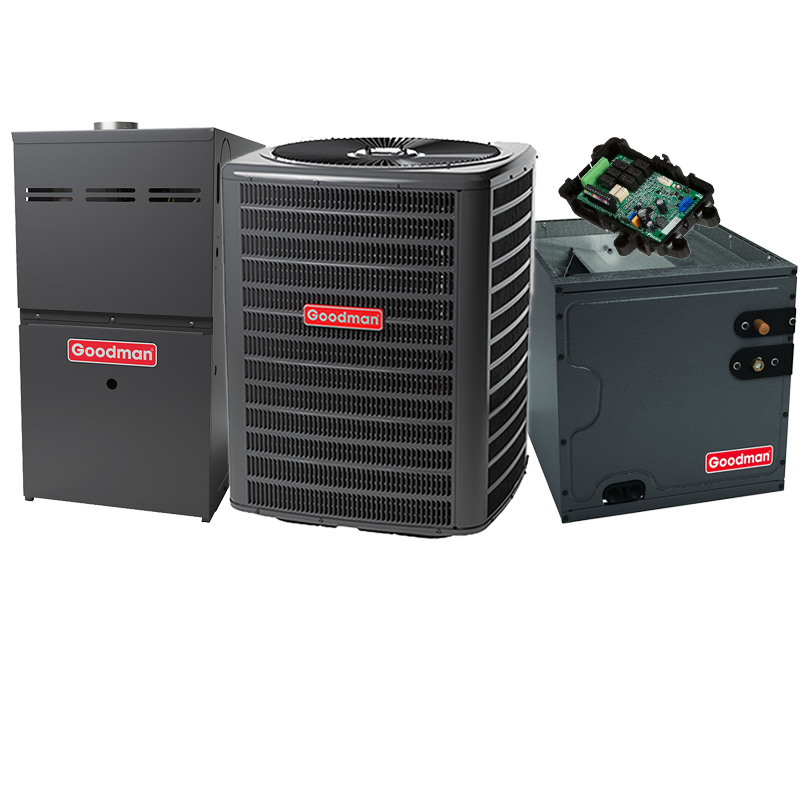
Goodman 3 Ton 14 SEER2 80000 BTU 80% Two-Stage Gas Furnace With R32 Air Conditioner Condenser And Coil System – Upflow
View on AC Direct see your lowest price →Check current price on AC Direct →
Key features
- 3-ton cooling capacity with 14 SEER2 efficiency rating
- 80,000 BTU two-stage gas furnace at 80% AFUE
- R-32 refrigerant with lower global warming potential than R-410A
- Upflow configuration for basement or closet installations with overhead ductwork
- Matched coil and condenser sold as a system for verified efficiency ratings
- Two-stage heating reduces temperature swings and cycling noise versus single-stage
About this system
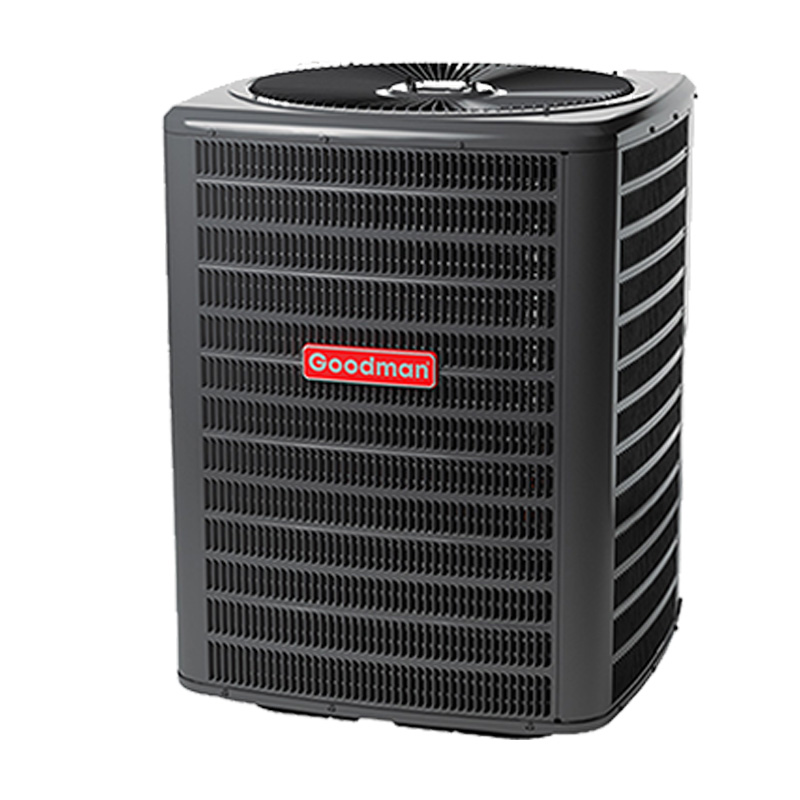
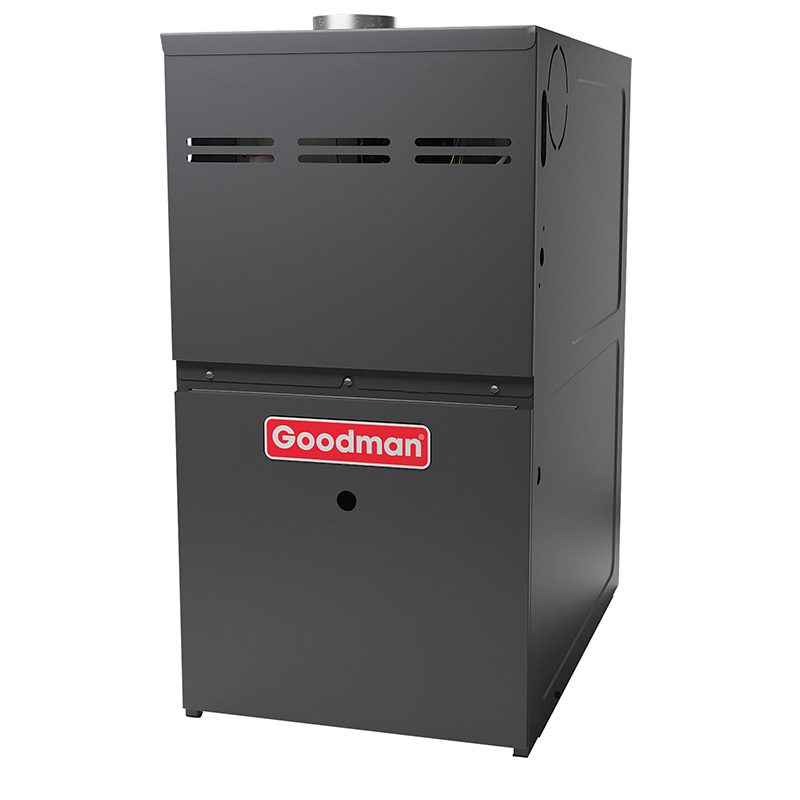
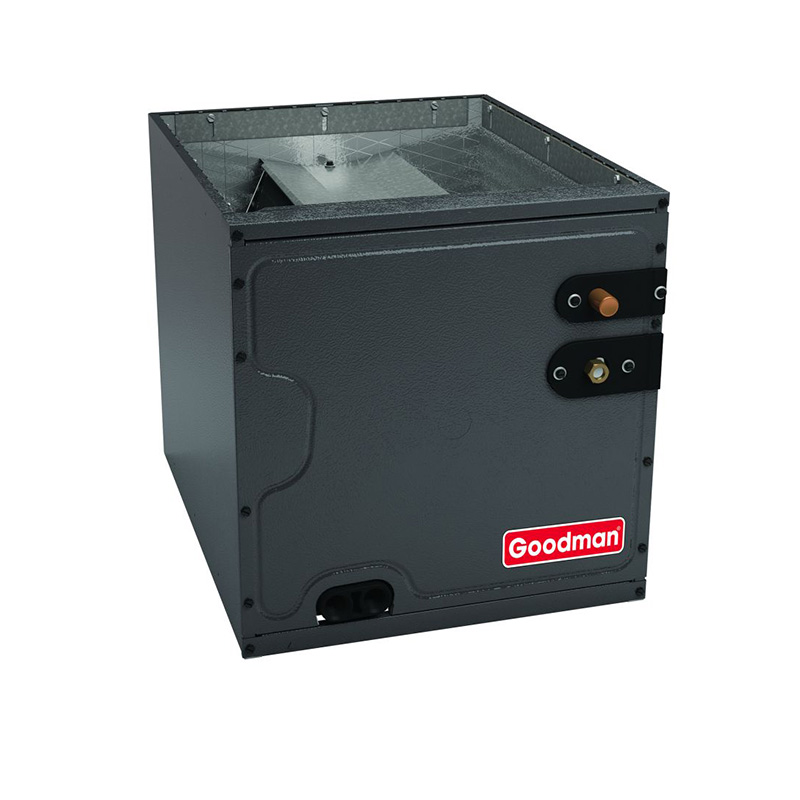
This Goodman upflow system pairs a 3-ton, 14 SEER2 air conditioner condenser with a matched evaporator coil and an 80,000 BTU, 80% AFUE two-stage gas furnace. That two-stage furnace is a meaningful upgrade over single-stage units: it runs on a lower firing rate most of the time, which means steadier indoor temperatures, quieter cycling, and marginally better fuel use than a single-stage 80% furnace would deliver. The R-32 refrigerant is a newer, lower-global-warming-potential option that is becoming the industry standard and gives the system some longevity from a regulatory standpoint.
At 14 SEER2 the cooling efficiency is the federal minimum for most U.S. climate regions, so this is not a high-efficiency system in the modern sense. Homeowners in mild climates or those replacing aging equipment on a tight budget will find it serviceable; homeowners in Texas, Arizona, or Florida who run their AC six or more months a year should price out 16 SEER2 or higher options before committing, since the operating cost difference compounds quickly. The upflow configuration suits homes with basement or closet furnace installations where supply air rises into the ductwork above the unit, which is the most common setup in the northern and central United States.
This Goodman bundle delivers a functional, code-compliant split system at a price point 15 to 25 percent below comparable Carrier, Trane, or Lennox packages, making it a reasonable choice for budget-conscious buyers who have a skilled installer. The 14 SEER2 efficiency is the regulatory floor rather than a selling point, and Goodman's documented repair history after year seven means buyers should budget for maintenance and factor in the extended warranty option.
Overall score is the average of the five ratings above.
What we like
- Substantially lower upfront cost than Carrier, Trane, or Lennox equivalents
- Two-stage furnace improves comfort and reduces temperature swings versus single-stage
- R-32 refrigerant is future-friendly and avoids R-410A phase-out concerns
- Matched coil-and-condenser combination qualifies for verified SEER2 rating
- Wide dealer network makes parts and service broadly available
Trade-offs
- 14 SEER2 is minimum federal efficiency; operating costs will be higher than 16+ SEER2 systems in hot climates
- Compressor lifespan averages 10 to 14 years versus 15 to 20 years for premium brands
- Dual-run capacitor failures and evaporator coil leaks are the most commonly reported repair issues
- A minority of owners report refrigerant leaks within the first year, typically linked to installation quality
What homeowners and pros say about Goodman
Homeowners who purchase Goodman equipment tend to split along a familiar line. Those who had a careful, experienced installer often report years of unremarkable, reliable service and point to the lower purchase price as a clear win. Those who ran into problems cite repair bills that arrived sooner than expected, and that pattern is visible in Goodman’s ConsumerAffairs score of roughly 2.5 out of 5, a channel that skews toward complaints but where the recurring theme is costs climbing noticeably after year seven. On Google dealer review pages, where satisfied customers also weigh in, Goodman averages around 3.8 out of 5, with affordability consistently cited as the reason buyers chose it.
HVAC technicians generally describe Goodman as serviceable equipment whose longevity depends heavily on the quality of the installation and how consistently it is maintained. The dual-run capacitor is the part most commonly brought up in service calls, a relatively inexpensive fix but one that tends to recur. Evaporator coil leaks show up with enough frequency in owner reviews to be worth noting, and compressor lifespan on Goodman units tends to fall in the 10 to 14 year range, shorter than the 15 to 20 years more commonly seen on premium brands. A small share of owners also report refrigerant leaks in the first year, which technicians typically attribute to installation or initial charge issues rather than the equipment itself. The honest summary from the field is that Goodman is a capable budget option when installed right and maintained regularly, but it carries more long-term uncertainty than its higher-priced competitors.
Sources: ConsumerAffairs Goodman owner reviews, AHRI Directory of Certified Product Performance, U.S. DOE appliance and equipment efficiency standards, Goodman product specification sheets.
What it costs to run
At 14 SEER2, cooling this 3-ton system for a typical 1200-hour cooling season at the U.S. average electricity rate of $0.17/kWh works out to roughly $525 per year in cooling, about $23 less per year than a minimum-efficiency 13.4 SEER2 unit of the same size. Your real cost depends on your climate and local rate.
Method: (36,000 BTU/hr ÷ 14 SEER2) × 1200 hours ÷ 1000 × $0.17/kWh. Rate source: U.S. EIA average; cooling hours: moderate-climate estimate.
How it compares
| Brand | Comparable model | SEER2 | Stage | Price position |
|---|---|---|---|---|
| Goodman | GSXH503610 / GMVC800804BX / CAPF series | 14 | two-stage | Value pick |
| Carrier | Performance 14 (24ACC636) with 80% two-stage furnace | 14 | two-stage | 15 to 25 percent higher than this Goodman bundle |
| Trane | XR14c condenser with S8X2 two-stage furnace | 14 | two-stage | 15 to 25 percent higher than this Goodman bundle |
| Lennox | Merit ML14XC1 condenser with ML180UH two-stage furnace | 14 | two-stage | Roughly 20 to 30 percent higher than this Goodman bundle |
Competitor rows are comparable single-stage units at similar efficiency; price is relative position, not a quote.
Questions about this system
Is 14 SEER2 going to cost me more to run than a higher-efficiency unit?
Yes. SEER2 is a measure of seasonal cooling efficiency, and 14 is the current federal minimum. A 16 or 18 SEER2 system will use meaningfully less electricity over a hot summer. The payback period depends on your climate, electricity rates, and how many months you cool, but in warm southern states the higher-efficiency option can pay for itself within a few years.
What does the two-stage furnace actually do for me compared to a single-stage?
A two-stage furnace has a low-fire and a high-fire setting. On most days it runs at the lower rate, which keeps temperatures steadier, reduces the blasts of hot air from vents, and cycles the blower less aggressively. It also tends to run quieter. You will not see dramatic fuel savings over an 80% single-stage, but comfort is noticeably better.
Why does this system use R-32 refrigerant, and does that change anything for me?
R-32 is a lower-global-warming-potential refrigerant that is replacing R-410A industry-wide. For you as a homeowner the main practical benefit is that R-32 will remain available and code-compliant as R-410A is phased out, so service costs should stay predictable. Technicians handling R-32 need specific certification, so confirm your installer is up to date before signing a service contract.
What are the most common repairs I should expect on a Goodman system like this?
The most frequently reported failure point is the dual-run capacitor, which typically costs 300 to 600 dollars to replace and is a straightforward repair. Evaporator coil leaks are the second most cited issue in owner reviews. Compressors on Goodman units tend to average 10 to 14 years, so if you plan to stay in your home long-term, budgeting for a compressor replacement or extended warranty makes sense.
Does the upflow configuration work in my home, and can it be converted?
Upflow means the furnace pulls return air in at the bottom and pushes conditioned air up into the supply ductwork above it. This is the standard setup for basements and utility closets where the ductwork runs through the ceiling. Some Goodman air handlers support multiple orientations, but the furnace in this bundle is configured for upflow; converting it requires a different model, so confirm your ductwork layout with your installer before purchasing.
Specifications
| Cooling capacity | 3 Ton |
| Efficiency | 14 SEER2 |
| Furnace output | 80000 BTU |
| Configuration | Upflow |
| Refrigerant | R-32 |