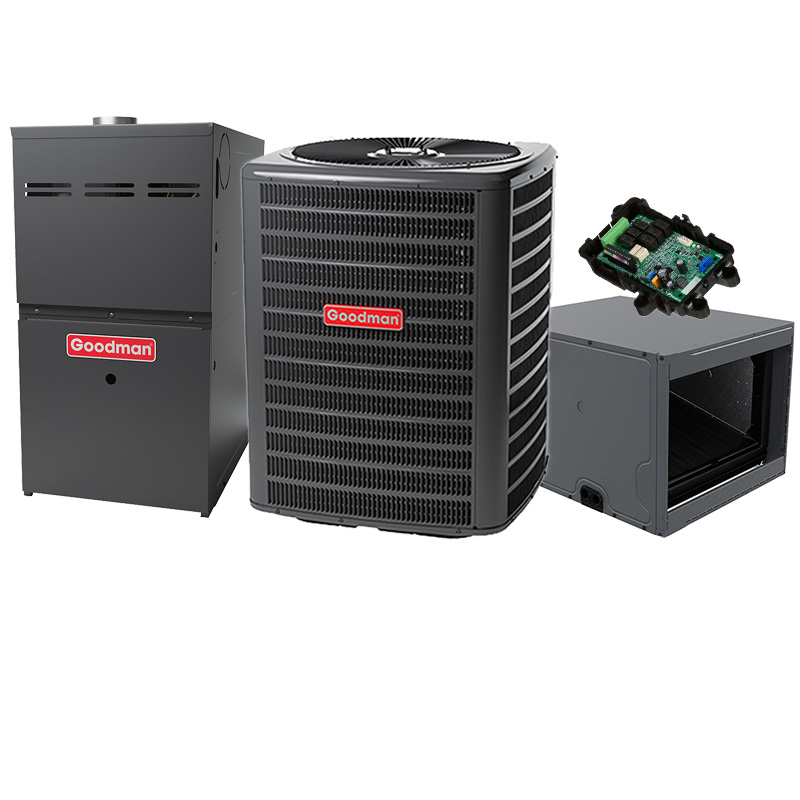
Goodman 1.5 Ton 13.8 SEER2 60000 BTU 80% Two-Stage Gas Furnace With R32 Air Conditioner Condenser And Coil System – Horizontal
View on AC Direct see your lowest price →Check current price on AC Direct →
Key features
- 1.5-ton cooling capacity sized for smaller spaces, 500 to 700 sq ft typical
- 13.8 SEER2 meets current minimum efficiency standards for most U.S. regions
- 60,000 BTU two-stage gas furnace for more consistent heating and reduced short-cycling
- Horizontal configuration designed for attic, crawl-space, or side-discharge installs
- R-32 refrigerant with lower global warming potential than legacy R-410A
- 80% AFUE furnace converts 80 cents of every dollar of gas into usable heat
About this system
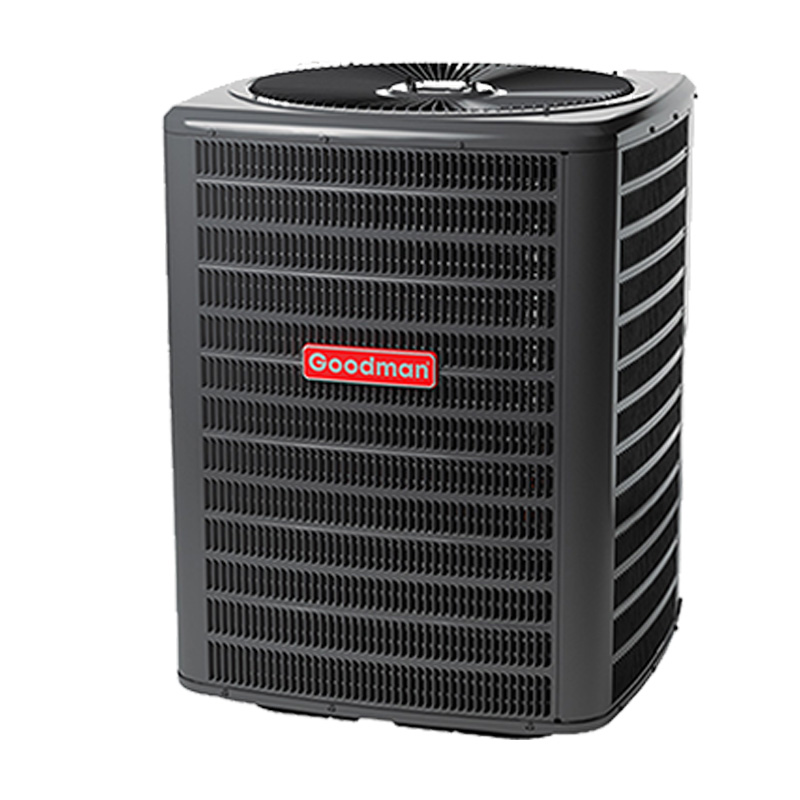
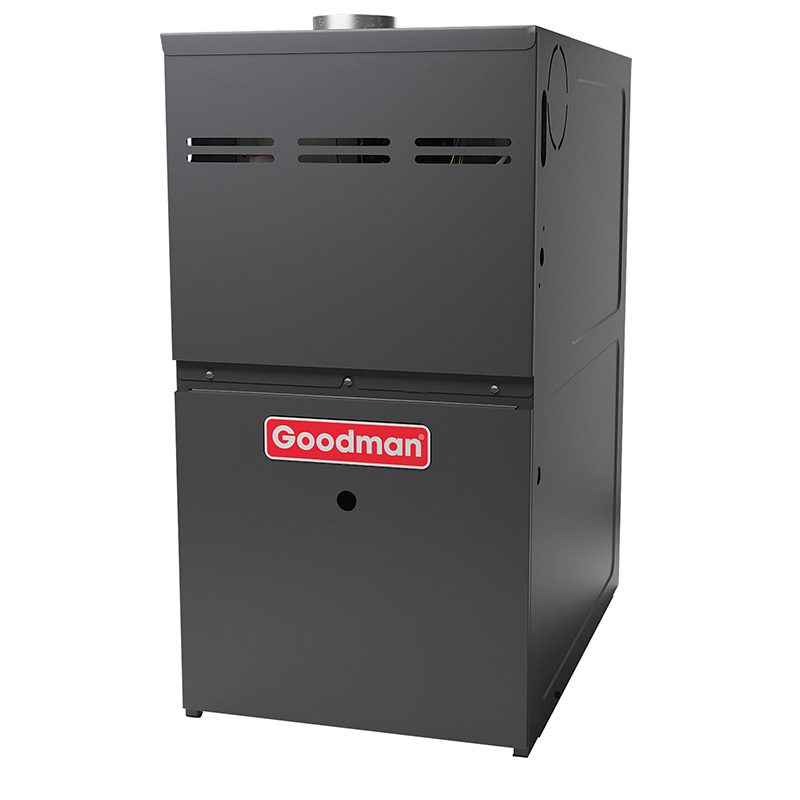
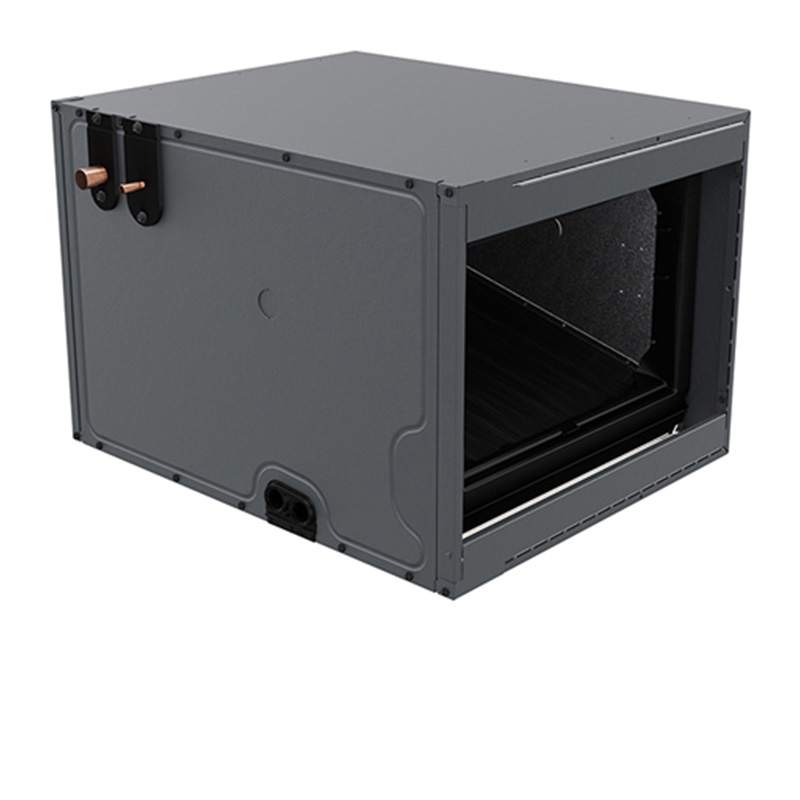
This Goodman system pairs a 1.5-ton R-32 air conditioner condenser and evaporator coil with a 60,000 BTU, 80% AFUE two-stage gas furnace in a horizontal configuration, making it a practical fit for attic or crawl-space installations where upflow or downflow setups simply will not work. At 1.5 tons, the cooling side is sized for smaller homes, condos, or zone additions, typically in the 500 to 700 square foot range depending on your climate, insulation, and window load. The two-stage furnace runs on a lower firing level most of the time, cycling to full output only during the coldest stretches, which smooths out temperature swings and reduces short-cycling compared to a single-stage unit.
The 13.8 SEER2 rating lands squarely in the entry-level efficiency tier under current Department of Energy standards. It will clear minimum regional efficiency requirements in most U.S. climate zones, but it will not earn utility rebates that increasingly favor systems at 15 SEER2 or above. R-32 refrigerant is a meaningful step up from older R-410A units: it has a lower global warming potential and slightly better heat-transfer properties, and the industry as a whole is moving in this direction, which helps with long-term parts and service availability. Buyers who need a code-compliant, budget-conscious horizontal system for a smaller space will find the core specs here workmanlike and appropriate for the application.
This Goodman horizontal system delivers a code-compliant, functional solution for tight-budget buyers who need horizontal installation and are working with a smaller square footage. The two-stage furnace adds real comfort value at this price point, but the 80% AFUE and 13.8 SEER2 ratings mean ongoing energy costs will run higher than a mid-efficiency upgrade, and Goodman's documented repair history past year seven is a real consideration for buyers who plan to stay in a home long-term.
Overall score is the average of the five ratings above.
What we like
- Priced 15 to 25 percent below comparable Trane, Lennox, and Carrier systems
- Two-stage furnace operation reduces temperature swings versus single-stage units at this price tier
- R-32 refrigerant is forward-compatible and has a lower environmental impact than R-410A
- Horizontal cabinet solves attic and crawl-space installation constraints where most systems cannot fit
- Capacitor failures, the most common repair issue, are relatively low-cost to fix at 300 to 600 dollars
Trade-offs
- 80% AFUE is the lowest efficiency tier; a 96% AFUE unit would recover cost difference in fuel savings over time
- 13.8 SEER2 will not qualify for many utility rebate programs that now require 15 SEER2 or higher
- Compressor lifespan averages 10 to 14 years versus 15 to 20 years on premium brands
- Evaporator coil leaks and first-year refrigerant leaks appear in a meaningful share of owner reports, often tied to install quality
What homeowners and pros say about Goodman
Homeowners who have installed Goodman equipment reflect a fairly consistent pattern: satisfaction is highest among buyers who went in with clear eyes about what a value-tier brand delivers and who had the system installed by an experienced technician. On Google dealer review platforms, Goodman equipment averages around 3.8 out of 5 stars across multiple locations, with affordability consistently cited as the main reason buyers chose it. The picture is more mixed on ConsumerAffairs, where the brand averages roughly 2.5 out of 5, with the most common theme being repair costs that start climbing after around year seven. That gap between the two scores reflects the channel: ConsumerAffairs skews toward owners motivated enough by frustration to write a review, while dealer Google scores capture a broader range of experiences. Neither number should be dismissed.
HVAC technicians who work on Goodman units regularly tend to view it as a serviceable budget brand whose longevity depends heavily on how carefully it was installed and commissioned. The dual-run capacitor is the repair call they see most often on these systems, and most describe it as a straightforward, low-cost fix. Evaporator coil leaks come up as a more frustrating and costlier issue in a notable share of service calls. Compressor lifespan is the sharpest contrast with premium brands: Goodman compressors tend to average 10 to 14 years in the field, a gap that matters if you are planning a long-term stay in the home. A minority of owners report refrigerant leaks within the first year, which technicians generally attribute to installation or initial charge issues rather than a factory defect, reinforcing just how much installer quality shapes the ownership experience with this brand.
Sources: ConsumerAffairs Goodman owner reviews, AHRI Directory of Certified Product Performance, U.S. DOE appliance and equipment efficiency standards, Goodman product specification sheets.
What it costs to run
At 13.8 SEER2, cooling this 1.5-ton system for a typical 1200-hour cooling season at the U.S. average electricity rate of $0.17/kWh works out to roughly $266 per year in cooling, about $8 less per year than a minimum-efficiency 13.4 SEER2 unit of the same size. Your real cost depends on your climate and local rate.
Method: (18,000 BTU/hr ÷ 13.8 SEER2) × 1200 hours ÷ 1000 × $0.17/kWh. Rate source: U.S. EIA average; cooling hours: moderate-climate estimate.
How it compares
| Brand | Comparable model | SEER2 | Stage | Price position |
|---|---|---|---|---|
| Goodman | This system (1.5T 13.8 SEER2 60K BTU 80% Two-Stage Horizontal R-32) | 13.8 | Two-stage furnace | Value pick |
| Carrier | Performance Series (24ACC636 / 59TP6) | 14.3 | Two-stage furnace | Typically 15 to 25 percent higher than this Goodman system |
| Trane | XR15 / S8X2 (XR series split system with two-stage furnace) | 14.3 | Two-stage furnace | Typically 20 to 30 percent higher than this Goodman system |
| Lennox | Merit Series (ML14XC1 / ML180UH) | 13.8 | Two-stage furnace | Typically 15 to 25 percent higher than this Goodman system |
Competitor rows are comparable single-stage units at similar efficiency; price is relative position, not a quote.
Questions about this system
Is 1.5 tons enough cooling capacity for my space, and how do I know?
A rough rule of thumb is 400 to 600 square feet per ton in a well-insulated home in a moderate climate, putting 1.5 tons in the 600 to 900 square foot range. However, accurate sizing requires a Manual J load calculation from your installer, because ceiling height, window area, insulation levels, and local climate all shift that number significantly. Oversizing is as problematic as undersizing, leading to short-cycling and humidity issues.
What does the horizontal configuration mean, and is my attic a good place for this system?
Horizontal means the air handler lies on its side and discharges air from the end rather than the bottom or top, which is designed specifically for installations in attic rafters, crawl spaces, or utility closets where vertical clearance is limited. Attic installs work fine mechanically, but your installer should account for attic temperature extremes on equipment longevity and insulate any ductwork in unconditioned attic space to avoid efficiency losses.
What are the most likely repairs I should budget for over 10 years with this Goodman system?
The dual-run capacitor is the most commonly reported failure on Goodman equipment and is relatively inexpensive to repair, typically in the 300 to 600 dollar range. Evaporator coil leaks show up in a meaningful share of owner reviews and can be more costly depending on whether the coil needs replacement. Compressor replacement or system replacement becomes a real consideration around the 10- to 14-year mark based on Goodman's documented average compressor lifespan.
Will this system qualify for federal tax credits or utility rebates?
The federal 25C HVAC tax credit under current IRS guidance requires higher efficiency thresholds than this system meets, so it likely will not qualify for that credit. Many utility rebate programs have also moved their minimum SEER2 bar to 15 or above. Check your specific utility's rebate portal and consult your installer before purchase if rebates factor into your budget.
Does using R-32 refrigerant change how I should handle maintenance or service calls?
R-32 requires technicians who are certified to handle it and who carry the correct recovery equipment, since it is mildly flammable at high concentrations. Most licensed HVAC technicians working with newer equipment are already equipped for R-32, but it is worth confirming with any service company before scheduling a call. On the positive side, R-32 systems are being produced in increasing volume, so parts and refrigerant supply should remain accessible for the foreseeable service life of this system.
Specifications
| Cooling capacity | 1.5 Ton |
| Efficiency | 13.8 SEER2 |
| Furnace output | 60000 BTU |
| Configuration | Horizontal |
| Refrigerant | R-32 |