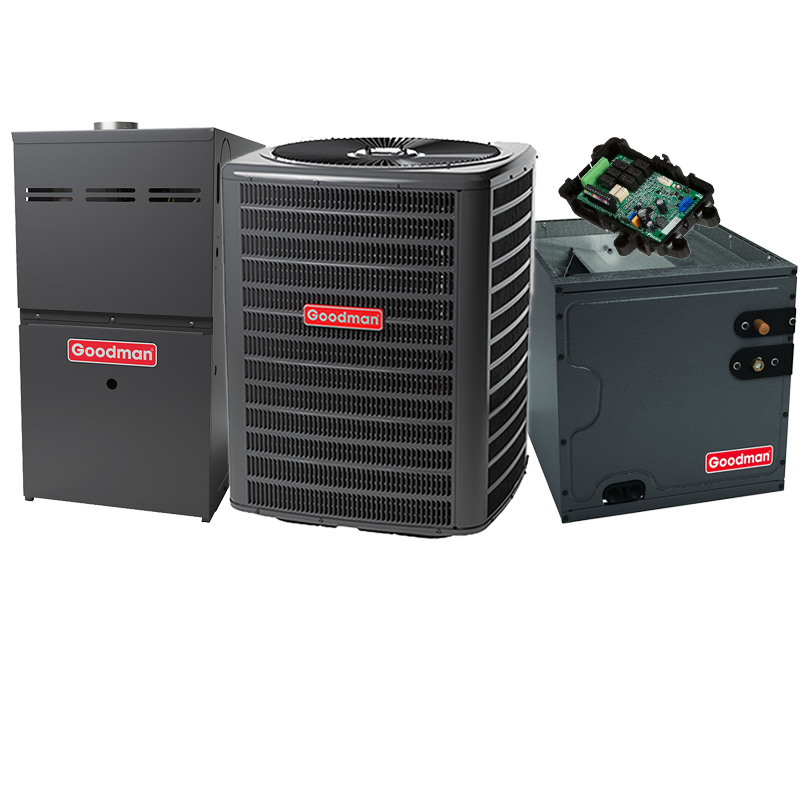
Goodman 2 Ton 14 SEER2 40000 BTU 80% Two-Stage Gas Furnace With R32 Air Conditioner Condenser And Coil System – Upflow
View on AC Direct see your lowest price →Check current price on AC Direct →
Key features
- 14 SEER2 cooling efficiency meets current federal minimum standards
- 40,000 BTU two-stage gas furnace for reduced temperature swings and better humidity control
- R-32 refrigerant with lower global-warming potential than R-410A
- Upflow configuration for basement or ground-floor closet installations with overhead ductwork
- Matched condenser, coil, and furnace sold as a single compatible system
- 2-ton capacity suited to approximately 900 to 1,400 square feet depending on load conditions
About this system
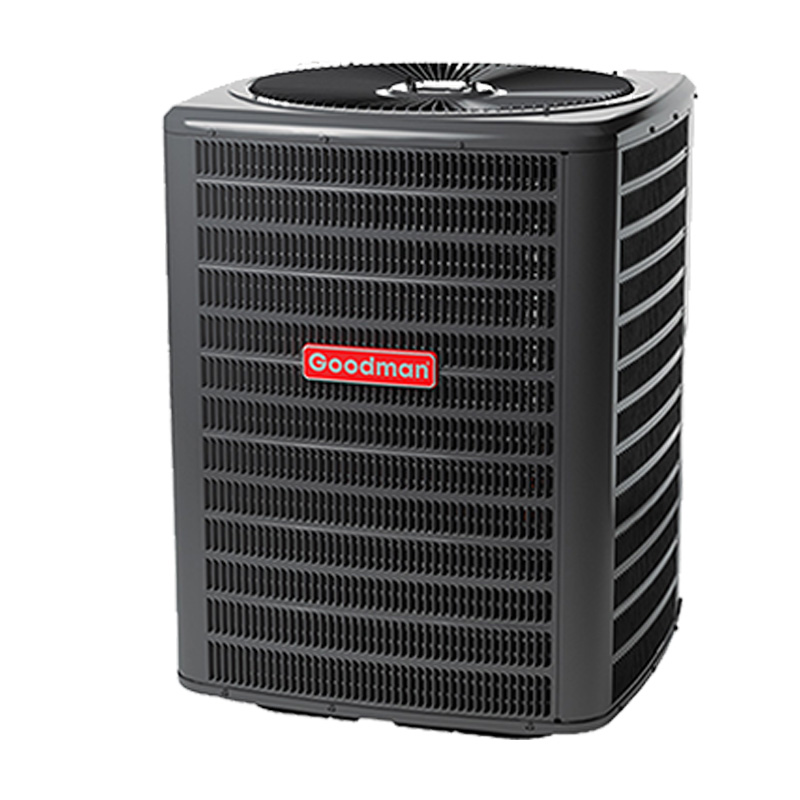
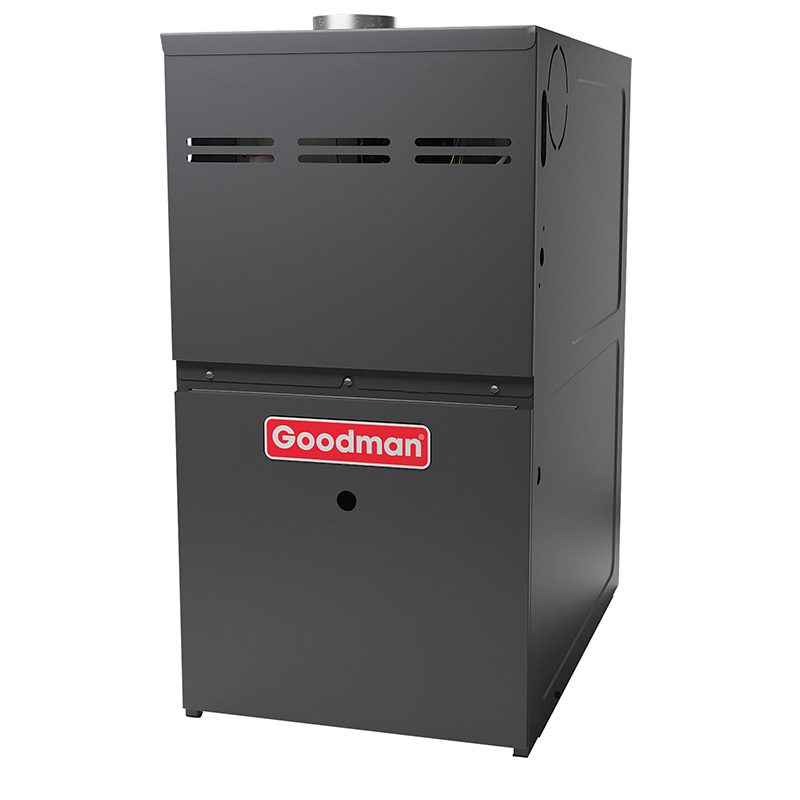
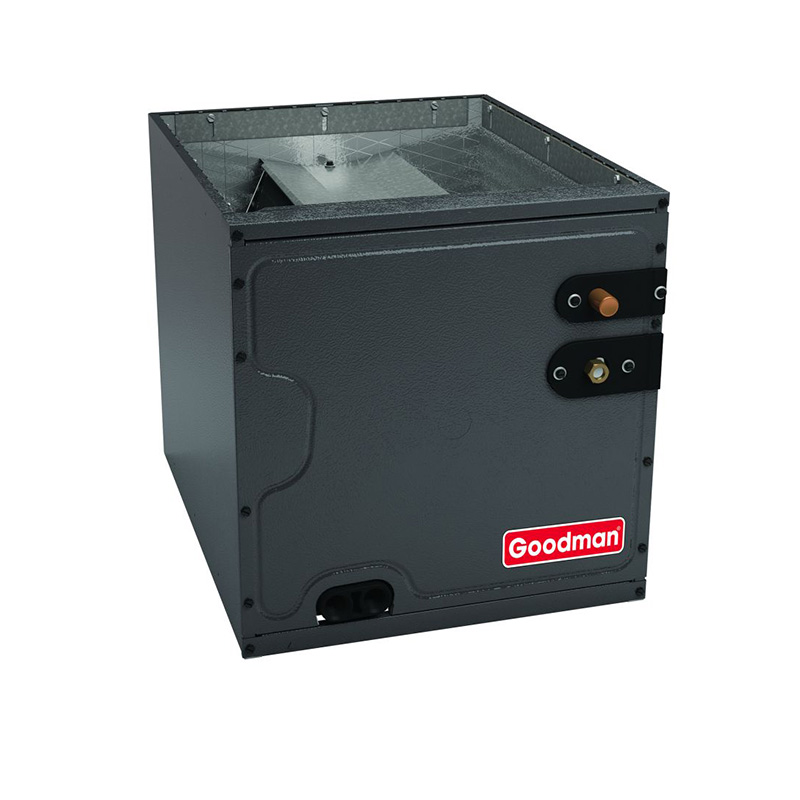
This Goodman upflow system bundles a 2-ton, 14 SEER2 air conditioner condenser, a matched evaporator coil, and a 40,000 BTU two-stage gas furnace into a single purchase. The 14 SEER2 rating sits right at the federal minimum threshold for most U.S. regions, which keeps the equipment cost down but means energy savings over a high-efficiency unit will be modest. The two-stage furnace is the more interesting spec here: running on low fire the majority of the time, it cycles less aggressively than a single-stage unit, which tends to improve humidity control and reduce temperature swings in the living space.
R-32 refrigerant is worth noting for buyers thinking about long-term serviceability. It has a lower global-warming potential than R-410A, and the industry is moving toward it broadly, so finding a technician familiar with it should not be difficult going forward. The upflow configuration suits homes where the furnace sits in a basement or a ground-floor closet and supply air rises through overhead ductwork. Anyone with a horizontal attic installation or a downflow application will need a different coil orientation. At 2 tons, this system is sized for roughly 900 to 1,400 square feet depending on climate, insulation, and ceiling height, and a proper Manual J load calculation before purchase is strongly recommended to confirm the fit.
Goodman positions this package as an accessible entry point for homeowners who want a complete matched system without the premium markup of Trane, Carrier, or Lennox. The trade-off is that longevity and reliability expectations should be set accordingly, and the quality of the installing contractor matters more with this brand than it does with some others.
This Goodman bundle delivers a complete, code-compliant split system at a price point that is hard to match from name-brand competitors, and the two-stage furnace is a genuine comfort upgrade over single-stage equipment at this price. The efficiency rating is baseline rather than impressive, and owners should budget for a capacitor replacement somewhere around years five through eight and keep an eye on the evaporator coil for early signs of refrigerant loss. If your installing contractor is experienced and you are not counting on fifteen-plus years of trouble-free operation, this system offers solid value for the money.
Overall score is the average of the five ratings above.
What we like
- Purchase price runs 15 to 25 percent below comparable Trane, Carrier, and Lennox systems
- Two-stage furnace operation improves comfort and humidity control versus single-stage at a similar cost
- R-32 refrigerant is forward-compatible with where the industry is heading
- Complete matched system reduces compatibility guesswork for the installing technician
- Parts are widely stocked and capacitor repairs, the most common failure, are typically low-cost
Trade-offs
- 14 SEER2 is minimum-efficiency; monthly utility bills will be higher than with a 16 SEER2 or better system
- Compressor lifespan averages 10 to 14 years versus 15 to 20 years for premium brands
- Evaporator coil leaks appear in a meaningful share of owner reviews, and early refrigerant loss has been reported in a minority of first-year installs
- ConsumerAffairs rating of roughly 2.5 out of 5 reflects a pattern of repair costs rising after year seven
What homeowners and pros say about Goodman
Homeowners who chose this Goodman system most often point to upfront affordability as the deciding factor, a sentiment consistent with the Google dealer review average of around 3.8 out of 5 across dealer locations, where cost savings is the praise that comes up most frequently. HVAC technicians who work on Goodman equipment regularly tend to say similar things: the systems install without major surprises, replacement parts are easy to source, and the dual-run capacitor is the component they expect to replace first, typically in the five-to-eight-year range at a cost that usually falls between $300 and $600. That is a manageable repair, and most techs do not flag it as a dealbreaker on an otherwise budget-conscious purchase.
Where the picture gets more complicated is in longer-term ownership. The ConsumerAffairs rating for Goodman sits around 2.5 out of 5, and while that platform skews heavily toward dissatisfied owners, the recurring complaint pattern is meaningful: repair costs that climb after roughly year seven, with evaporator coil leaks and compressor replacements cited more often than on premium brands. Goodman compressors average 10 to 14 years in documented failure data, compared to 15 to 20 years for Trane or Carrier equipment, and a minority of owners report refrigerant loss in the first year, which technicians typically trace to charge or installation issues rather than a factory defect. The consistent professional advice is that a careful, experienced installer closes a significant part of the reliability gap between Goodman and the premium tier, so spending time choosing the right contractor matters at least as much as the equipment choice itself.
Sources: ConsumerAffairs Goodman owner reviews, AHRI Directory of Certified Product Performance, U.S. DOE appliance and equipment efficiency standards, Goodman product specification sheets.
What it costs to run
At 14 SEER2, cooling this 2-ton system for a typical 1200-hour cooling season at the U.S. average electricity rate of $0.17/kWh works out to roughly $350 per year in cooling, about $15 less per year than a minimum-efficiency 13.4 SEER2 unit of the same size. Your real cost depends on your climate and local rate.
Method: (24,000 BTU/hr ÷ 14 SEER2) × 1200 hours ÷ 1000 × $0.17/kWh. Rate source: U.S. EIA average; cooling hours: moderate-climate estimate.
How it compares
| Brand | Comparable model | SEER2 | Stage | Price position |
|---|---|---|---|---|
| Goodman | 2 Ton 14 SEER2 / 40,000 BTU Two-Stage Gas Furnace Upflow System | 14 | Two-stage furnace / single-stage condenser | Value pick |
| Carrier | Performance 14 Series (24ACC4) with 58TP furnace | 14 | Two-stage furnace / single-stage condenser | 15 to 25 percent higher than Goodman |
| Trane | XR14c with S8X2 two-stage furnace | 14 | Two-stage furnace / single-stage condenser | 15 to 25 percent higher than Goodman |
| Lennox | Merit 14ACX with ML180 furnace | 14 | Single-stage furnace / single-stage condenser | Comparable to or slightly above Goodman depending on dealer |
Competitor rows are comparable single-stage units at similar efficiency; price is relative position, not a quote.
Questions about this system
Is 14 SEER2 going to cost me significantly more to run than a higher-efficiency unit?
Compared to a 16 SEER2 system, you can expect to pay roughly 10 to 15 percent more in cooling-season electricity for the same amount of cooling work. Over a full cooling season the dollar difference depends heavily on your local electricity rate and how many hours the system runs, but in hot climates the gap adds up. If your cooling load is modest and your season is short, the payback period on a higher-efficiency unit may be longer than you will own the home.
What does the two-stage furnace actually do differently from a single-stage unit?
A two-stage furnace has a low-fire setting, typically around 65 percent of full capacity, and a high-fire setting at 100 percent. On most winter days it runs on low fire, which means longer, gentler heating cycles rather than short blasts of hot air. This tends to keep temperatures more even across rooms and reduces the humidity swings that single-stage units can cause.
How worried should I be about the evaporator coil leaking?
Coil leaks are a documented pattern in Goodman owner reviews, though not every unit is affected. Having your installer pressure-test the coil at startup and keeping your annual maintenance appointments so a technician can check refrigerant charge each season are the best defenses. If the system is losing cooling capacity or you notice ice on the coil, get it checked promptly rather than waiting.
Does this system work with my existing ductwork and thermostat?
The upflow orientation requires supply air to exit through the top of the furnace into overhead ductwork, so your existing layout needs to match that path. For the thermostat, a two-stage furnace benefits from a compatible two-stage thermostat to take full advantage of the low-fire setting; a basic single-stage thermostat will still work but will default the furnace to single-stage operation.
What is the warranty on this system and what does it actually cover?
Goodman typically offers a 10-year parts warranty on registered systems, which covers components including the compressor, heat exchanger, and coil. Registration must usually be completed within a set window after installation, and the warranty covers parts but not labor, so a repair in year eight, for example, still means paying a technician's time. Verify the specific warranty documents included with this bundle before purchase, as coverage details can vary by component.
Specifications
| Cooling capacity | 2 Ton |
| Efficiency | 14 SEER2 |
| Furnace output | 40000 BTU |
| Configuration | Upflow |
| Refrigerant | R-32 |