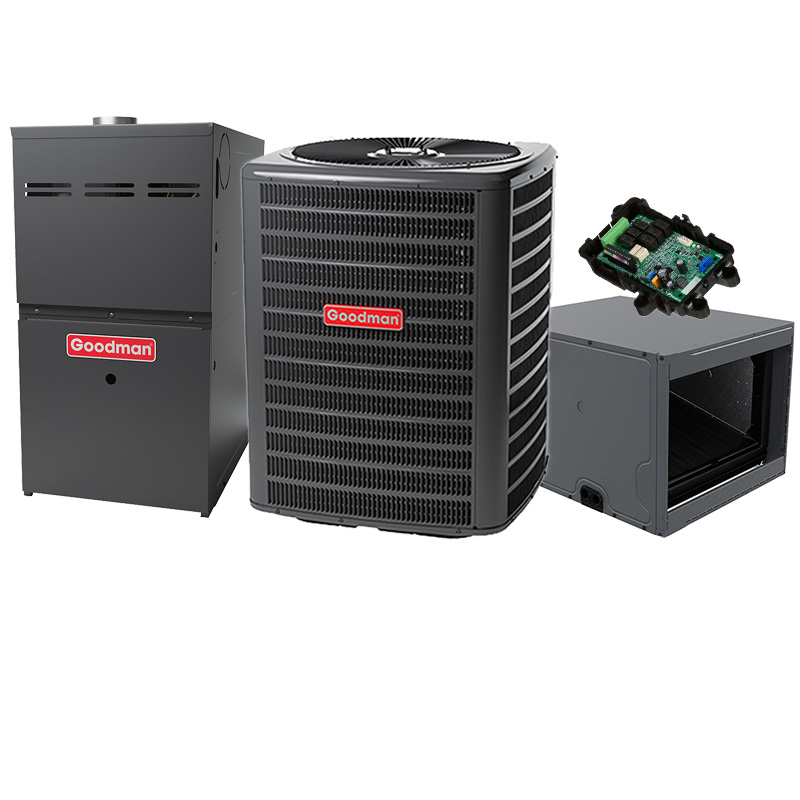
Goodman 2.5 Ton 14 SEER2 80000 BTU 80% Two-Stage Gas Furnace With R32 Air Conditioner Condenser And Coil System – Horizontal
View on AC Direct see your lowest price →Check current price on AC Direct →
Key features
- 2.5-ton cooling capacity paired with 80,000 BTU two-stage gas furnace
- 14 SEER2 efficiency rating meets current federal minimum standards
- Horizontal coil configuration for attic, crawlspace, or side-discharge installs
- R-32 refrigerant with lower global warming potential than R-410A
- Two-stage furnace operation reduces short-cycling on mild days
- 80% AFUE furnace converts four out of five fuel dollars to usable heat
About this system
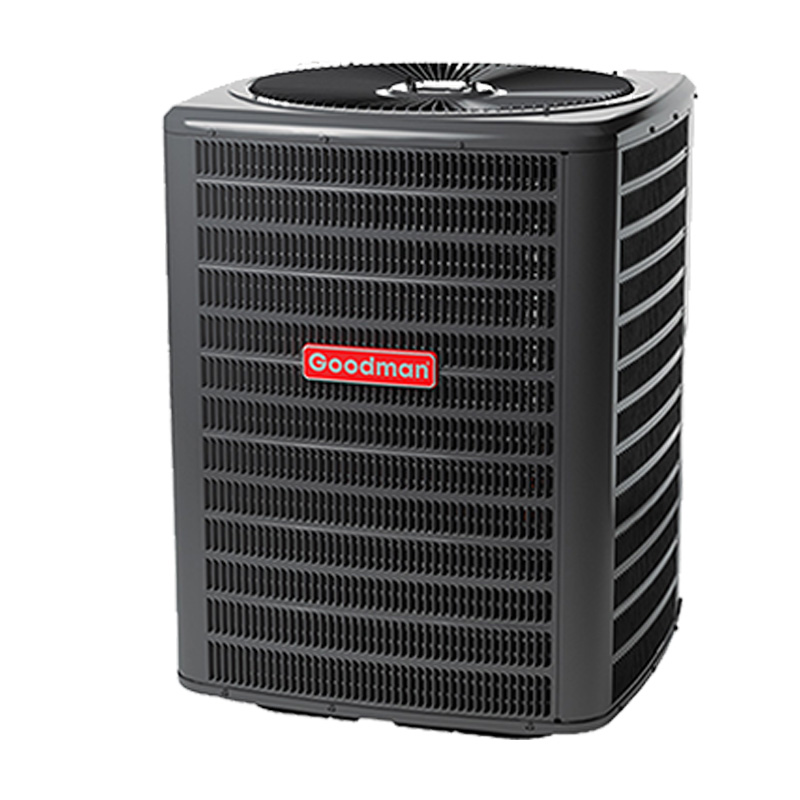
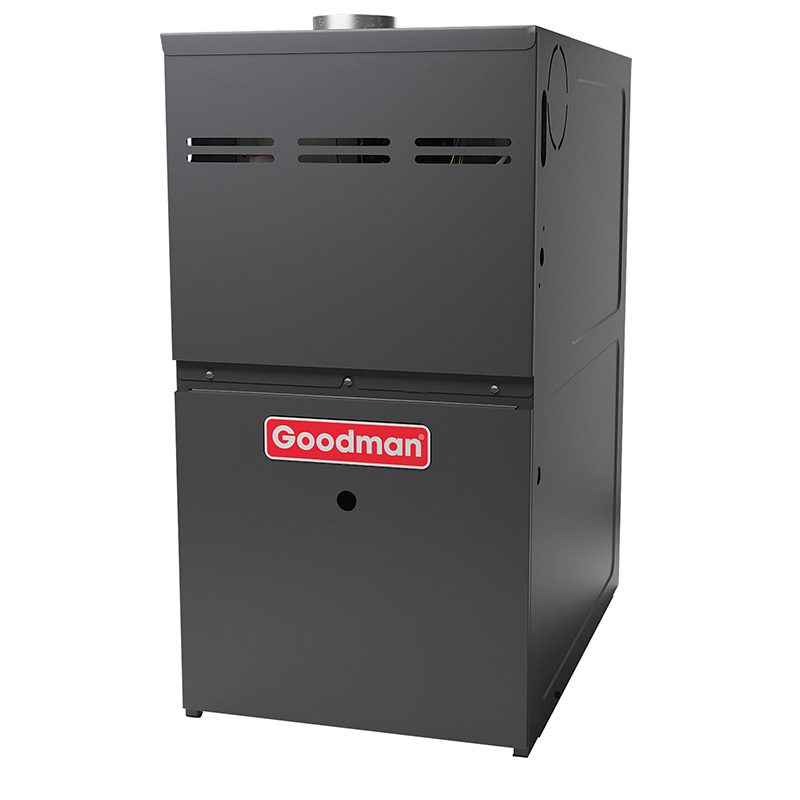
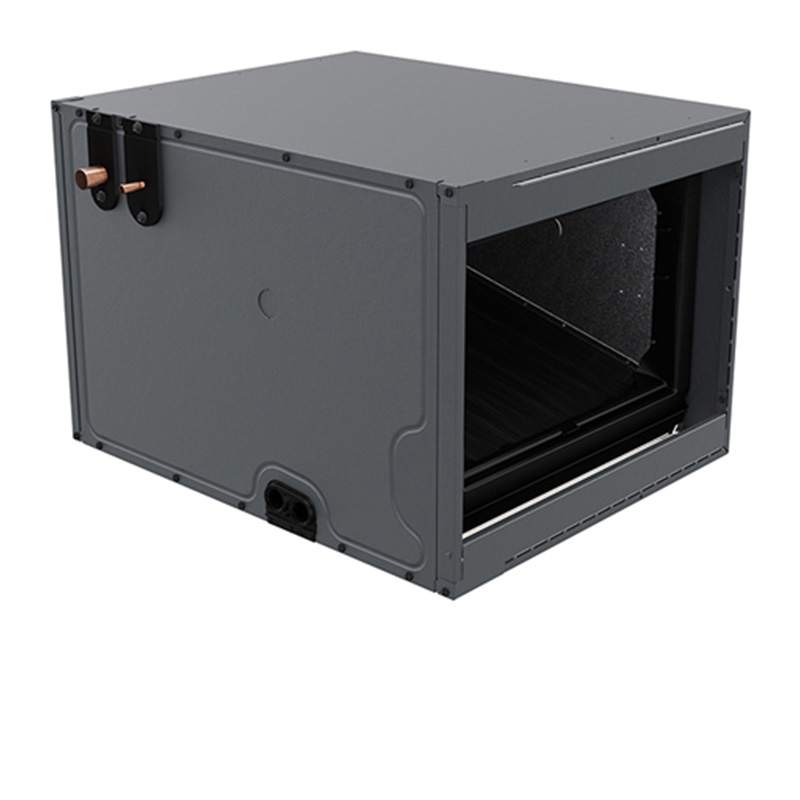
This Goodman system bundles a 2.5-ton R-32 air conditioner condenser, a matching evaporator coil, and an 80,000 BTU 80% AFUE two-stage gas furnace into a horizontal configuration, making it a practical fit for homes where equipment lives in a crawlspace, attic, or on its side in a utility closet. The horizontal coil orientation is the defining spec here: not every home can accommodate a standard upflow or downflow cabinet, so this configuration fills a real need that many all-in-one bundles skip.
The 14 SEER2 efficiency rating sits at the current federal minimum threshold for most U.S. regions, which means operating costs will be average rather than exceptional. The two-stage furnace is a meaningful upgrade over single-stage models because it runs at a lower output setting on milder days, improving comfort and reducing short-cycling rather than hammering full heat every time the thermostat calls. R-32 refrigerant carries a lower global warming potential than the R-410A it replaces and is increasingly the industry standard, so parts and service availability should be strong going forward. Together, this is a functional, code-compliant system suited to budget-conscious buyers in moderate climates who need a horizontal layout and want a slight comfort improvement from the two-stage furnace over the bare minimum.
This system is a cost-effective entry point for homeowners who need a horizontal-configuration replacement or new install and want two-stage furnace comfort without paying a premium brand markup. Performance is solidly average, and long-term cost depends heavily on installation quality and a willingness to address minor repairs as the system ages past year seven. Buyers who plan to own their home for 15 or more years should weigh the lower upfront cost against the possibility of a compressor replacement earlier than they would see with a Trane or Carrier unit.
Overall score is the average of the five ratings above.
What we like
- Priced 15 to 25 percent below comparable Trane, Lennox, and Carrier bundles
- Horizontal coil serves attic and crawlspace applications that upflow systems cannot
- Two-stage furnace improves comfort and reduces temperature swings versus single-stage
- R-32 refrigerant is future-ready with lower environmental impact
- Wide installer network means competitive labor quotes in most metro areas
Trade-offs
- 80% AFUE is the low end of modern efficiency; high-efficiency alternatives run 95% or above
- 14 SEER2 is minimum-tier cooling efficiency, so monthly energy costs will not impress
- Compressor lifespan averages 10 to 14 years versus 15 to 20 for premium brands
- Evaporator coil leaks and dual-run capacitor failures are documented recurring issues, adding service costs after year seven
What homeowners and pros say about Goodman
Goodman earns consistent praise in dealer-facing Google reviews, where it sits around 3.8 out of 5 across hundreds of location-level reviews and affordability is the praise that shows up most often. Homeowners and contractors regularly point to the price gap versus Carrier, Trane, and Lennox as the reason they chose Goodman, especially for rental properties, budget-driven replacements, or situations where the home may be sold within a decade. The two-stage furnace in this specific bundle gets credit from installers for delivering noticeably more even heating than the single-stage models at the same price tier.
The ConsumerAffairs profile is harder to ignore, sitting at roughly 2.5 out of 5 on a platform that skews toward complaint-driven reviews. The recurring pattern there is repair costs climbing after year seven, which lines up with the documented failure modes: dual-run capacitor replacements in the 300 to 600 dollar range are the most common call, evaporator coil leaks account for a meaningful share of complaints, and compressor lifespan averaging 10 to 14 years falls short of the 15 to 20 years owners of premium brands often report. HVAC technicians are consistent on one point: how long a Goodman lasts is more sensitive to installation quality than almost any other brand, so a careful, experienced installer is not optional with this equipment. R-32 refrigerant leaks in the first year, when they occur, are almost always attributed to improper charging at install rather than a factory issue.
Sources: ConsumerAffairs Goodman owner reviews, AHRI Directory of Certified Product Performance, U.S. DOE appliance and equipment efficiency standards, Goodman product specification sheets.
What it costs to run
At 14 SEER2, cooling this 2.5-ton system for a typical 1200-hour cooling season at the U.S. average electricity rate of $0.17/kWh works out to roughly $437 per year in cooling, about $20 less per year than a minimum-efficiency 13.4 SEER2 unit of the same size. Your real cost depends on your climate and local rate.
Method: (30,000 BTU/hr ÷ 14 SEER2) × 1200 hours ÷ 1000 × $0.17/kWh. Rate source: U.S. EIA average; cooling hours: moderate-climate estimate.
How it compares
| Brand | Comparable model | SEER2 | Stage | Price position |
|---|---|---|---|---|
| Goodman | This system (2.5T 14 SEER2 / 80K BTU 80% Two-Stage Horizontal) | 14 | Two-stage furnace / single-stage cooling | Value pick |
| Carrier | Comfort Series (24ACC636 condenser + FV4C coil + 58SB0 furnace, similar capacity) | 14-15 | Single-stage cooling / two-stage furnace options | 15 to 25 percent higher than this Goodman system |
| Trane | S-Series (4SCU14 condenser + CAHB coil + S8X1 furnace, similar capacity) | 14 | Single-stage cooling / two-stage furnace options | Roughly 20 to 30 percent higher than this Goodman system |
| Lennox | Merit Series (14ACX condenser + CH35 coil + ML195 furnace, similar capacity) | 14-15 | Single-stage cooling / two-stage furnace options | Approximately 20 to 25 percent higher than this Goodman system |
Competitor rows are comparable single-stage units at similar efficiency; price is relative position, not a quote.
Questions about this system
Why does this system use a horizontal coil instead of a standard upflow coil?
Horizontal coils are oriented so that airflow moves sideways through the coil rather than upward or downward, which is required when the air handler or furnace is installed on its side in a tight attic or crawlspace. If your existing ductwork runs horizontally from a side-mounted air handler, this configuration is the correct match. Using an upflow coil in a horizontal application would cause condensate drainage problems.
What does the two-stage furnace actually do differently on a warm winter day?
On milder days when the home needs only moderate heat, the furnace runs at its lower stage, which delivers heat more gradually and keeps the blower running longer at lower intensity. This reduces the on-off cycling that can create noticeable hot and cold spots. On very cold days it ramps up to full output. The practical result is more even temperatures room to room compared with a single-stage furnace.
What are the most common repairs I should budget for over a 10-year ownership period?
Dual-run capacitor failures are the most frequently reported issue with Goodman condensers and typically cost 300 to 600 dollars to repair. Evaporator coil leaks appear in a meaningful share of owner reviews and can be more expensive depending on whether the coil needs to be replaced. First-year refrigerant leaks, when they occur, are usually traced to installation rather than a product defect.
Is R-32 refrigerant harder to find or more expensive to service than R-410A?
R-32 is increasingly common as manufacturers phase out R-410A, so technician familiarity and refrigerant availability are growing steadily. One practical note: R-32 is mildly flammable, which means technicians must follow specific handling procedures, but it is not considered dangerous in normal residential use and the additional precautions are well-established in the industry.
Does the 80% AFUE furnace qualify for any federal or utility efficiency rebates?
The federal 25C tax credit program generally requires a furnace to reach 97% AFUE for gas furnaces in most U.S. climate zones to qualify, so this 80% unit is unlikely to earn a federal credit. Many state and utility programs have lower thresholds, so it is worth checking your local utility's website, but do not assume the 80% furnace will generate rebate money without confirming first.
Specifications
| Cooling capacity | 2.5 Ton |
| Efficiency | 14 SEER2 |
| Furnace output | 80000 BTU |
| Configuration | Horizontal |
| Refrigerant | R-32 |