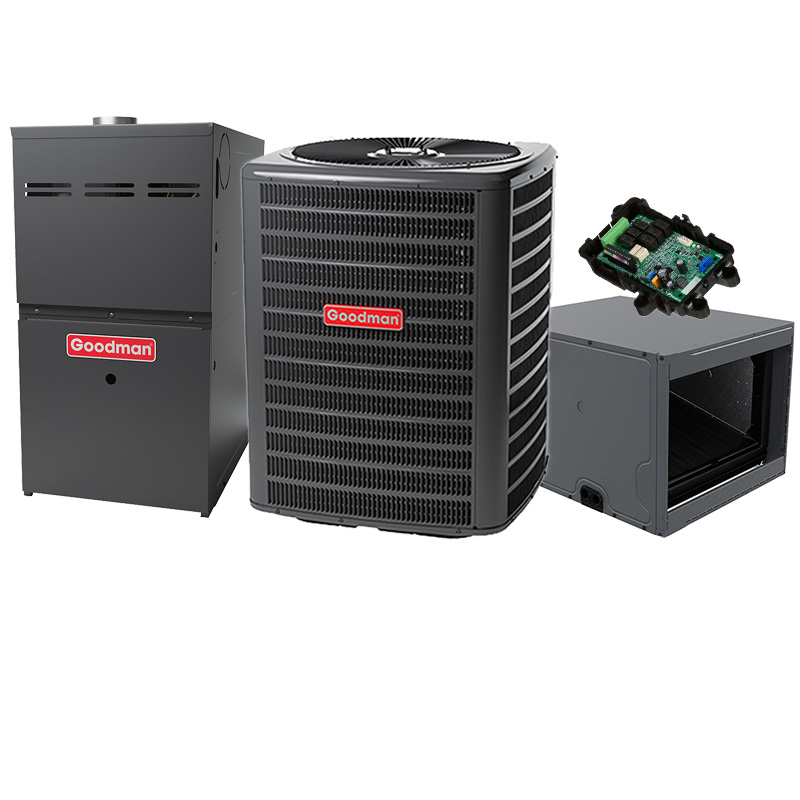
Goodman 3 Ton 14 SEER2 60000 BTU 80% Two-Stage Gas Furnace With R32 Air Conditioner Condenser And Coil System – Horizontal
View on AC Direct see your lowest price →Check current price on AC Direct →
Key features
- 3-ton cooling capacity, rated at 14 SEER2 (federal minimum efficiency tier)
- 60,000 BTU two-stage gas furnace runs at reduced fire for steadier comfort on mild days
- 80% AFUE furnace rating: one-fifth of combustion heat exits through the flue
- Horizontal coil configuration for attic, crawl space, or side-discharge installations
- R-32 refrigerant with lower global-warming potential than legacy R-410A
- Matched coil and condenser sold as a system for straightforward ARI-rated performance
About this system
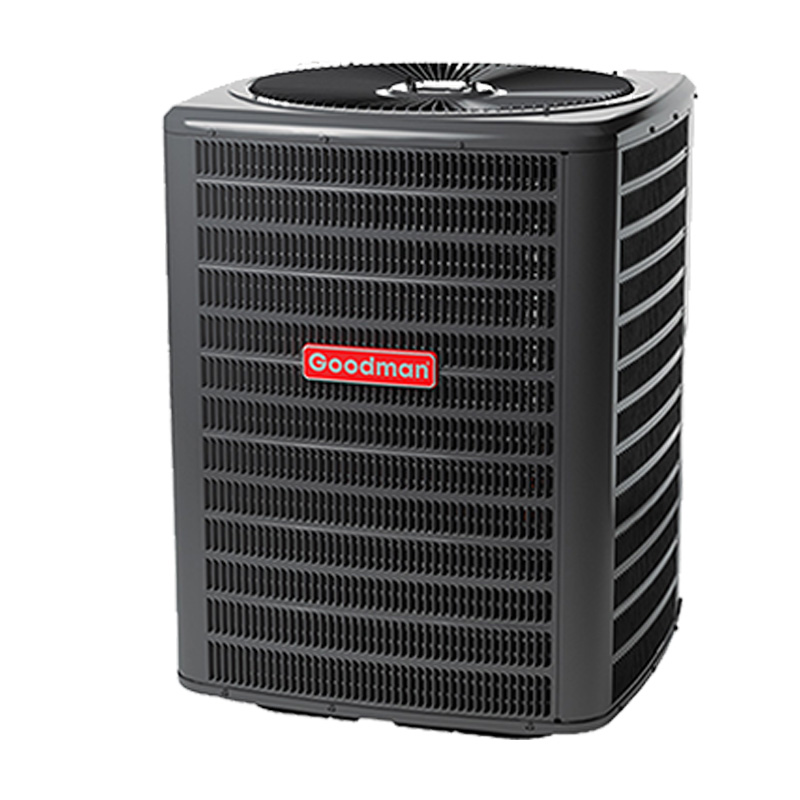
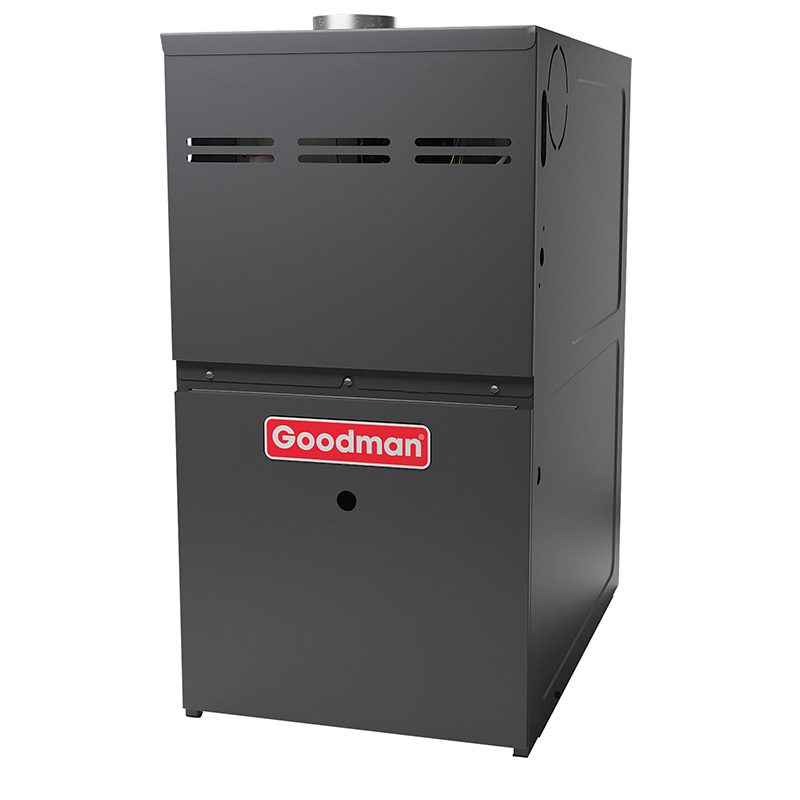
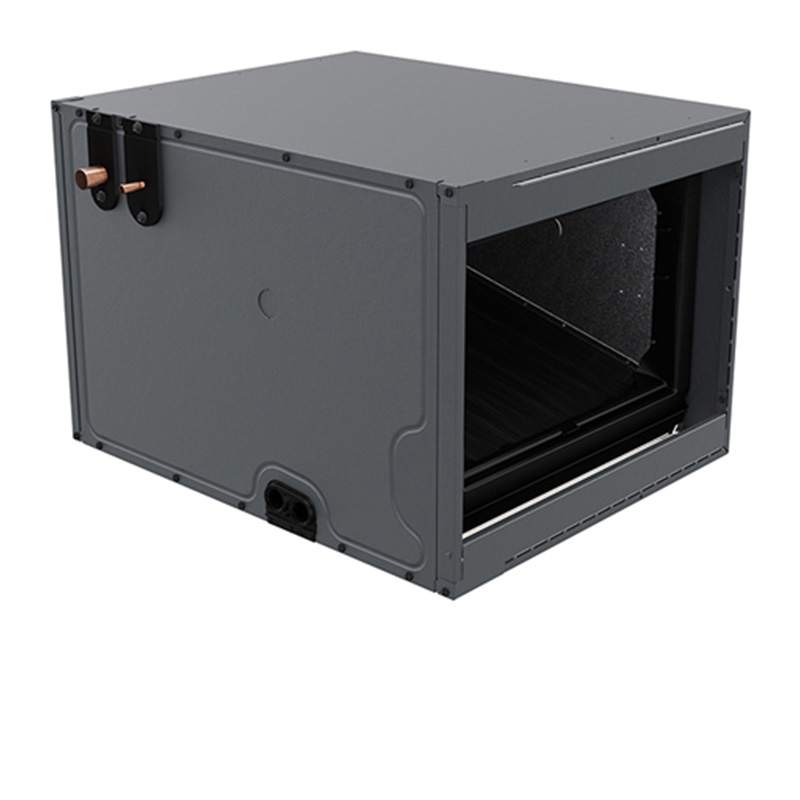
This Goodman bundle pairs a 3-ton, 14 SEER2 R-32 air conditioner condenser and matching evaporator coil with a 60,000 BTU, 80% AFUE two-stage gas furnace in a horizontal configuration. The horizontal coil orientation targets homes where the air handler or furnace sits in a crawl space, attic, or tight mechanical closet that lacks the vertical clearance a standard upflow setup requires. If your existing ductwork feeds from that kind of space, this package avoids the expensive custom fabrication that a mismatched coil orientation would otherwise demand.
The 14 SEER2 rating sits at the federal minimum efficiency floor for most U.S. regions, which keeps the purchase price accessible but means you will not see the operating cost savings that a 16 or 18 SEER2 system produces over time. The two-stage furnace is the more interesting spec here: it runs on a lower firing stage roughly 80 percent of the time, which holds interior temperatures more steadily than a single-stage unit cycling on and off at full blast. R-32 refrigerant has a lower global-warming potential than the R-410A it replaces, and parts availability is growing as the industry shifts toward it. Taken together, this is a functional, entry-level system suited to budget-conscious homeowners who need a horizontal coil and want furnace staging without paying premium brand prices.
This system delivers reliable baseline cooling and more consistent heating comfort than a single-stage furnace at a price point 15 to 25 percent below comparable Trane, Carrier, or Lennox bundles. The 14 SEER2 rating is the floor of current efficiency standards, so long-run energy savings are limited, and Goodman's documented reliability history means budgeting for a capacitor replacement or coil repair somewhere in the system's second decade is realistic planning rather than pessimism. It earns its place for homeowners who need a horizontal coil, face a tight budget, and have a qualified installer they trust.
Overall score is the average of the five ratings above.
What we like
- Priced 15 to 25 percent below comparable Carrier, Trane, and Lennox bundles
- Two-stage furnace reduces temperature swings and short-cycling compared with single-stage units
- Horizontal coil configuration suits attic and crawl-space installations without custom fabrication
- R-32 refrigerant is increasingly supported by technicians and has lower environmental impact than R-410A
- Matched coil and condenser ship together, simplifying ARI capacity verification for permitting
Trade-offs
- 14 SEER2 is the minimum efficiency tier; monthly operating costs will run higher than a 16+ SEER2 system over the life of the equipment
- Dual-run capacitor failures are the most common reported issue, typically appearing after several years of use (repair cost roughly $300 to $600)
- Evaporator coil leaks appear in a meaningful share of owner reports, and compressor lifespan averages 10 to 14 years versus 15 to 20 years for premium brands
- A minority of owners report refrigerant leaks in year one, most often tied to installation quality rather than a factory defect
What homeowners and pros say about Goodman
Homeowners who post about Goodman equipment tend to split along a familiar line. Those who bought primarily on price and had the unit professionally installed by an experienced technician often report years of uneventful operation and praise the lower upfront cost. That sentiment is reflected in Google dealer review scores, which run around 3.8 out of 5 across hundreds of location-level reviews, with affordability appearing as the most consistent compliment. The friction shows up on complaint-heavy channels like ConsumerAffairs, where Goodman sits around 2.5 out of 5, and where the recurring story is repair bills that start to accumulate after roughly year seven. The documented failure modes are specific enough to plan around: dual-run capacitors are the most frequently cited breakdown, a relatively low-cost repair but an annoying one; evaporator coil leaks appear in a meaningful share of long-term owner reports; and compressor lifespan runs on the shorter end of the industry range, averaging 10 to 14 years compared with 15 to 20 for premium brands.
HVAC professionals tend to hold a more measured opinion of Goodman than either its biggest fans or its loudest critics. Technicians who work on a high volume of residential equipment consistently point out that install quality is the dominant variable in how any Goodman unit performs over time, and that a well-installed Goodman routinely outlasts a carelessly installed premium unit. For this horizontal system specifically, pros flag that attic and crawl-space installs introduce additional variables around condensate drainage and refrigerant line routing that amplify the importance of having an experienced installer. The first-year refrigerant leaks reported by a minority of owners almost always trace back to improper charging or flare connections at startup rather than factory defects. The bottom line from the trade is consistent: Goodman gives you a functional system at a lower entry cost, but it rewards careful installation and routine maintenance more than its premium competitors do.
Sources: ConsumerAffairs Goodman owner reviews, AHRI Directory of Certified Product Performance, U.S. DOE appliance and equipment efficiency standards, Goodman product specification sheets.
What it costs to run
At 14 SEER2, cooling this 3-ton system for a typical 1200-hour cooling season at the U.S. average electricity rate of $0.17/kWh works out to roughly $525 per year in cooling, about $23 less per year than a minimum-efficiency 13.4 SEER2 unit of the same size. Your real cost depends on your climate and local rate.
Method: (36,000 BTU/hr ÷ 14 SEER2) × 1200 hours ÷ 1000 × $0.17/kWh. Rate source: U.S. EIA average; cooling hours: moderate-climate estimate.
How it compares
| Brand | Comparable model | SEER2 | Stage | Price position |
|---|---|---|---|---|
| Goodman | This system (3T 14 SEER2 Horizontal Bundle) | 14 | two-stage furnace / single-stage condenser | Value pick |
| Carrier | Performance 14 / 58TP (Comfort series bundle) | 14 | single-stage | Moderate premium over this system, typically 15 to 20 percent higher installed |
| Trane | XR14c / S8X1 bundle | 14 | single-stage | Moderate to significant premium, typically 20 to 25 percent higher installed |
| Lennox | Merit ML14XC1 / SL280 bundle | 14-15 | two-stage furnace / single-stage condenser | Significant premium, typically 25 percent or more above this system installed |
Competitor rows are comparable single-stage units at similar efficiency; price is relative position, not a quote.
Questions about this system
Why does this system use a horizontal coil instead of a standard upflow coil, and can I install an upflow coil instead?
A horizontal coil is oriented so that airflow passes through it sideways, which is necessary when the air handler or furnace lies on its side in an attic or crawl space. You can substitute an upflow coil only if your furnace sits vertically in a basement or closet; using the wrong orientation will cause condensate drainage problems and may void the system's ARI-matched rating.
What does the two-stage furnace actually do differently from a single-stage model, and is it worth the added complexity?
A two-stage furnace fires at a lower capacity (typically around 65 percent) during mild weather and only ramps to full output when the load demands it. This reduces temperature swings, lowers average noise, and can trim gas consumption on shoulder-season days. The trade-off is slightly more complexity in the gas valve and control board, though Goodman two-stage furnaces are widely stocked at distributors so parts are generally available.
What are the most likely repairs I should budget for over the first 15 years?
Based on Goodman's documented failure patterns, a dual-run capacitor replacement is the single most common service call and typically costs $300 to $600 including labor. Evaporator coil leaks show up in a meaningful share of long-term owner reports, which can be a larger expense. Planning a small maintenance reserve each year is a practical approach.
Is 14 SEER2 going to cost me significantly more to run than a higher-efficiency option?
Yes, compared with a 16 SEER2 system of the same size, a 14 SEER2 unit uses roughly 12 to 14 percent more electricity per hour of cooling. Over a full cooling season in a hot climate that gap adds up, so if you plan to stay in the home more than five to seven years, getting quotes on a 16 SEER2 bundle and comparing lifetime cost makes financial sense.
Does the R-32 refrigerant change anything about how the system is serviced compared with my old R-410A equipment?
R-32 requires technicians to use recovery equipment rated for A2L mildly flammable refrigerants and to follow updated EPA handling procedures, so not every service provider in your area may be equipped for it yet. Before installation, confirm your installer and your preferred service company are already certified and tooled for R-32 work.
Specifications
| Cooling capacity | 3 Ton |
| Efficiency | 14 SEER2 |
| Furnace output | 60000 BTU |
| Configuration | Horizontal |
| Refrigerant | R-32 |