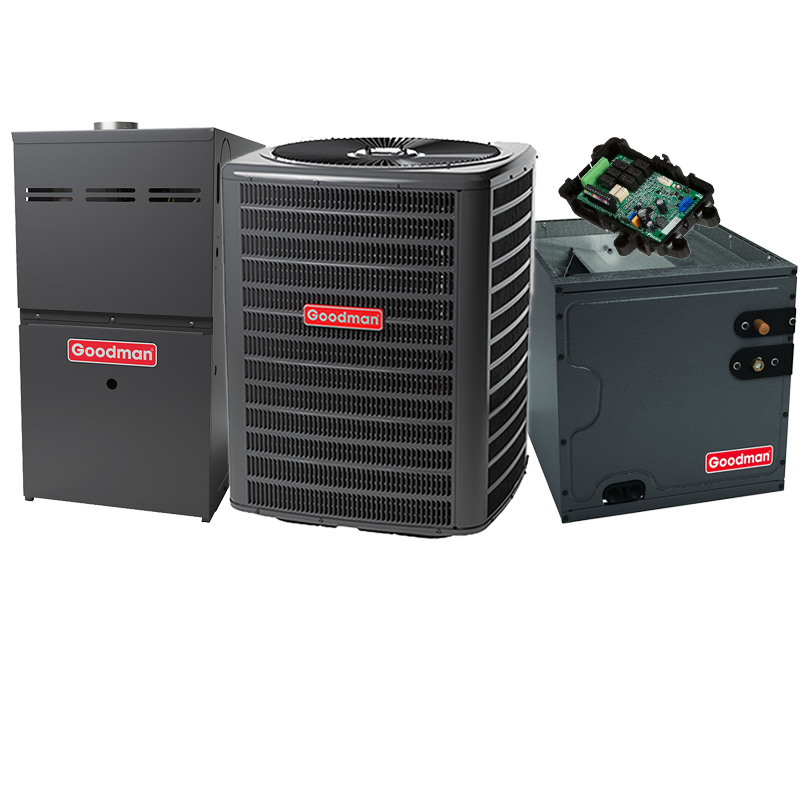
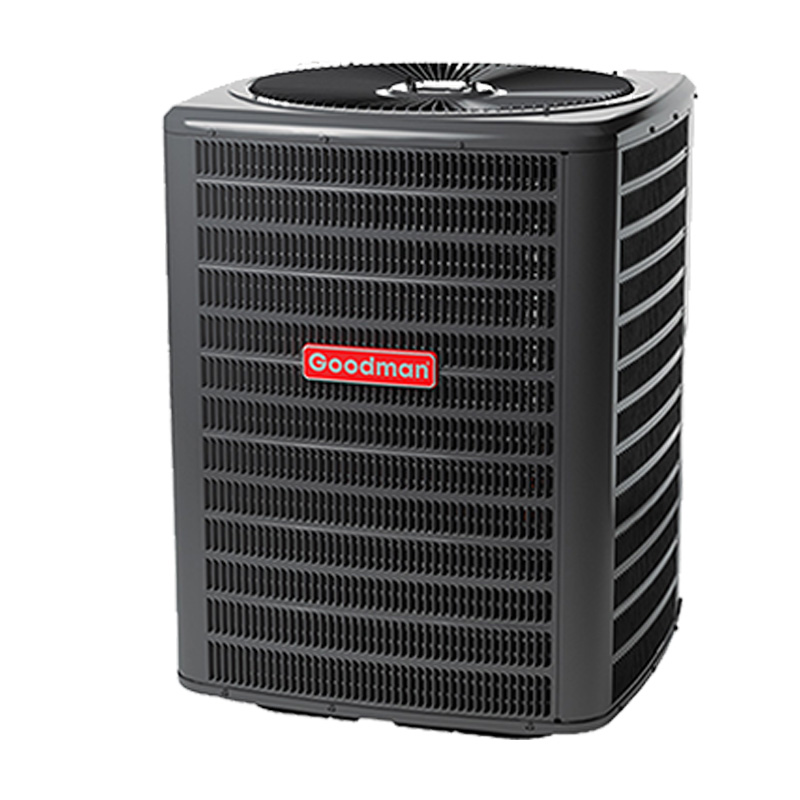
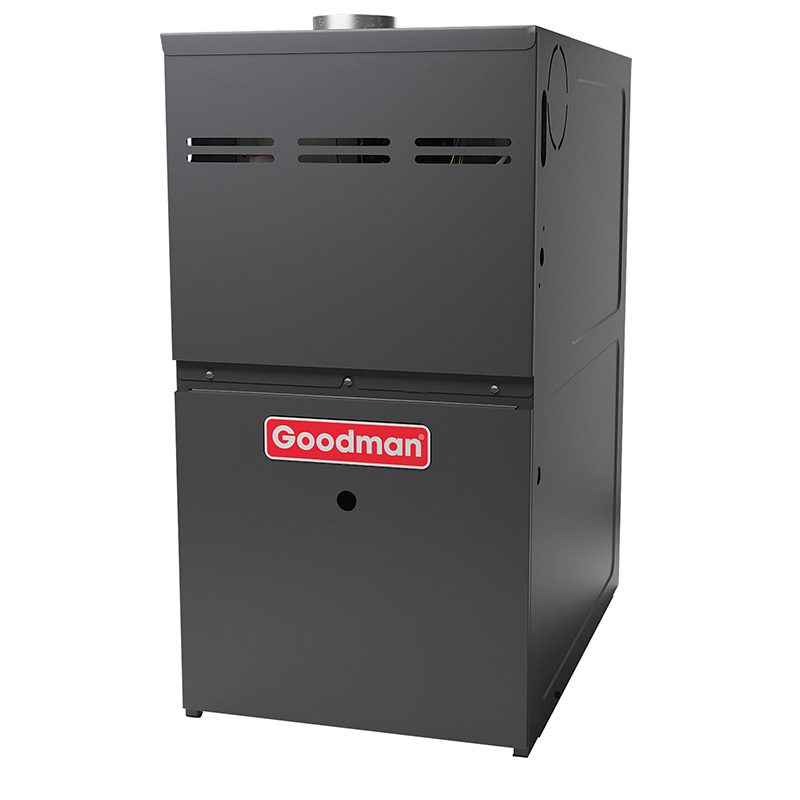
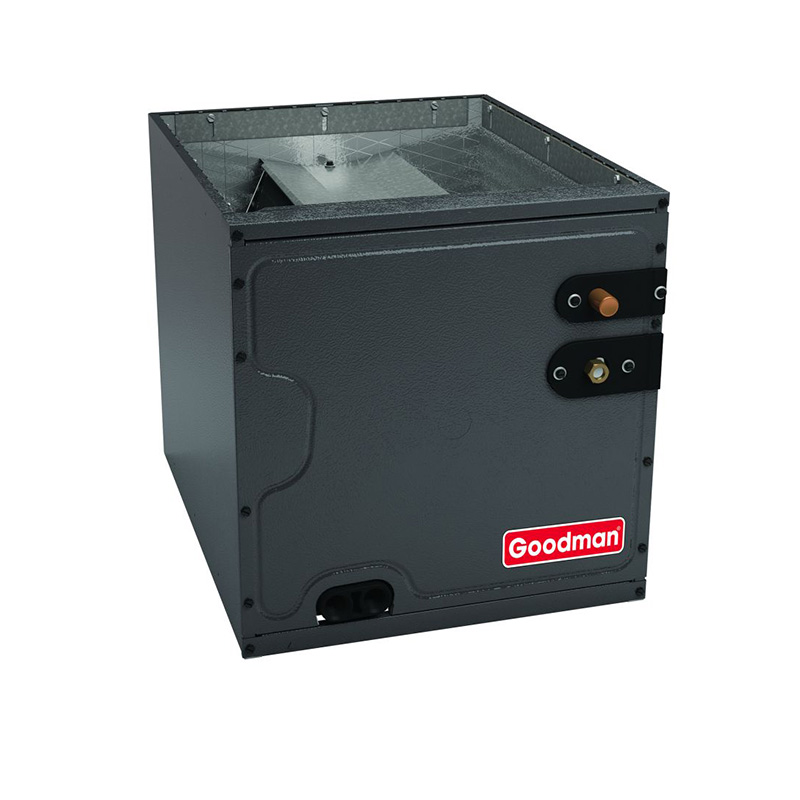
Goodman 3.5 Ton 14 SEER2 80000 BTU 80% Two-Stage Gas Furnace With R32 Air Conditioner Condenser And Coil System – Upflow
View on AC Direct see your lowest price →Check current price on AC Direct →
Key features
- 3.5-ton cooling capacity with 14 SEER2 efficiency rating
- 80,000 BTU two-stage gas furnace at 80% AFUE
- R-32 refrigerant: lower global warming potential than R-410A
- Upflow configuration for basement or closet installations
- Two-stage heating reduces temperature swings and short-cycling
- Matched coil and condenser shipped as a tested, compatible system
About this system
This Goodman upflow system pairs a 3.5-ton, 14 SEER2 air conditioner condenser with a matched evaporator coil and an 80,000 BTU, 80% AFUE two-stage gas furnace, making it a full replacement solution for homes in the 1,800 to 2,400 square foot range with existing upflow duct configurations. The two-stage furnace is a meaningful upgrade over single-stage units: it runs on a lower firing rate during mild weather, which moderates temperature swings and reduces the short-cycling that wears components faster. The 80% AFUE rating means 20 cents of every fuel dollar goes out the flue, so if long-term gas efficiency is a priority, a 96% AFUE system is worth pricing out before committing here.
The R-32 refrigerant charge is a forward-looking spec. R-32 has a lower global warming potential than the R-410A it is replacing across the industry, and it is becoming the standard in new residential equipment. That matters for long-term serviceability: as R-410A is phased down, finding it and paying for it will only get harder. At 14 SEER2, this system meets but does not exceed the federal minimum efficiency standard in most climate zones, so buyers in hot, humid Southern markets who run their air conditioner heavily from May through October may find the modest efficiency premium for a 16 or 17 SEER2 unit pays back within a reasonable timeframe.
Goodman positions itself as a budget-accessible brand, typically running 15 to 25 percent below comparable Trane, Lennox, and Carrier systems. That gap is real, but so is the context: Goodman’s longevity and repair frequency are more sensitive to install quality than premium brands, meaning the contractor you hire matters as much as the equipment itself. This system suits homeowners who want a complete, code-ready upflow package at a lower upfront cost and are comfortable budgeting for the occasional capacitor or coil service call in the back half of the system’s life.
This Goodman bundle delivers a complete upflow heating and cooling system at a price point that is hard to match from Carrier, Trane, or Lennox. The two-stage furnace and R-32 refrigerant are genuine advantages at this price tier, but 80% AFUE and 14 SEER2 are entry-level specs, and the brand's documented repair history means buyers should factor in a service budget beyond the warranty period.
Overall score is the average of the five ratings above.
What we like
- Priced 15 to 25 percent below comparable Carrier, Trane, and Lennox bundles
- Two-stage furnace provides more even heat distribution than single-stage alternatives at this price
- R-32 refrigerant is future-ready as R-410A is phased out industry-wide
- Matched coil and condenser simplify contractor installation and warranty administration
- Upflow configuration covers the most common duct layout found in U.S. homes
Trade-offs
- 80% AFUE leaves real money on the table in cold climates compared to 95 or 96% furnaces
- 14 SEER2 is the regulatory floor in most regions, so operating costs run higher than mid- or high-efficiency alternatives
- Compressor lifespan averages 10 to 14 years versus 15 to 20 for premium brands, a real long-term cost consideration
- Evaporator coil leaks and dual-run capacitor failures are the two most commonly reported repair events, with costs typically rising after year 7
What homeowners and pros say about Goodman
Homeowners and dealers who review Goodman equipment land in two fairly consistent camps. On Google dealer review pages, which aggregate to roughly 3.8 out of 5 stars across hundreds of reviews per location, the most common praise is straightforward: the system works, it was installed for less than competing brands, and the first several years of ownership are largely uneventful. Contractors who work on budget-tier equipment frequently point out that a correctly installed Goodman performs close to spec and that the cost savings at purchase are real. The R-32 refrigerant and two-stage furnace in this particular bundle are features that installers note approvingly, because they signal Goodman is not cutting corners on the components that matter most for comfort and long-term serviceability.
The harder feedback shows up on ConsumerAffairs, where Goodman scores around 2.5 out of 5, a channel that skews toward owners who had problems worth writing about. The recurring pattern in those reviews is that repairs start accumulating after roughly year 7. The two most documented failure points are dual-run capacitors, which are a relatively inexpensive fix in the 300 to 600 dollar range, and evaporator coil leaks, which are more involved and expensive to address. Compressor longevity is another honest trade-off: Goodman compressors tend to average 10 to 14 years compared to 15 to 20 years for premium brands, a gap that matters if you are planning a long ownership horizon. A minority of owners also report refrigerant leaks within the first year, which technicians generally attribute to installation or initial charge errors rather than factory defects, reinforcing the point that who installs this system shapes the outcome as much as the equipment itself.
Sources: ConsumerAffairs Goodman owner reviews, AHRI Directory of Certified Product Performance, U.S. DOE appliance and equipment efficiency standards, Goodman product specification sheets.
What it costs to run
At 14 SEER2, cooling this 3.5-ton system for a typical 1200-hour cooling season at the U.S. average electricity rate of $0.17/kWh works out to roughly $612 per year in cooling, about $27 less per year than a minimum-efficiency 13.4 SEER2 unit of the same size. Your real cost depends on your climate and local rate.
Method: (42,000 BTU/hr ÷ 14 SEER2) × 1200 hours ÷ 1000 × $0.17/kWh. Rate source: U.S. EIA average; cooling hours: moderate-climate estimate.
How it compares
| Brand | Comparable model | SEER2 | Stage | Price position |
|---|---|---|---|---|
| Goodman | 3.5 Ton 14 SEER2 / 80K BTU 80% Two-Stage Upflow Bundle | 14 | Two-stage furnace / single-stage cooling | Value pick |
| Carrier | Performance Series 24ACC636 with 58TP 80% Furnace | 14-15 | Two-stage furnace / single-stage cooling | Typically 20 to 25 percent more than this Goodman bundle |
| Trane | XR14c Condenser with S8X2 80% Gas Furnace | 14 | Two-stage furnace / single-stage cooling | Typically 20 to 30 percent more than this Goodman bundle |
| Lennox | Merit ML14XC1 Condenser with ML80UH Gas Furnace | 14-15 | Two-stage furnace / single-stage cooling | Typically 25 to 35 percent more than this Goodman bundle |
Competitor rows are comparable single-stage units at similar efficiency; price is relative position, not a quote.
Questions about this system
Is 14 SEER2 going to pass inspection in my state, or do I need a higher-efficiency unit?
14 SEER2 meets the federal minimum for most Northern climate regions, but some Southern states (Texas, Louisiana, Florida, and others in the Southeast) require a minimum of 15 SEER2 for new split-system installations. Confirm your local requirement with your contractor or local building department before purchasing.
What does two-stage heating actually do day to day, and is it worth it over a single-stage furnace?
A two-stage furnace fires at a lower capacity, roughly 65 to 70 percent, during milder weather and steps up to full output when temperatures drop sharply. In practice this means fewer on-and-off cycles, more even room temperatures, and less wear on the heat exchanger. For most climates it is a meaningful comfort improvement over single-stage at a similar price point.
What are the most likely repairs on this system, and roughly what do they cost?
Dual-run capacitor failure is the most commonly reported issue on Goodman condensers and typically runs 300 to 600 dollars including labor. Evaporator coil leaks appear in a meaningful share of owner reviews and are more expensive to address. A small minority of owners have reported refrigerant leaks within the first year, which is generally an installation or initial charge issue rather than a equipment defect.
Why does this system use R-32 instead of R-410A, and does that affect service costs?
R-32 is the refrigerant the residential HVAC industry is transitioning to as R-410A is phased down under EPA regulations. R-32 has a lower global warming potential and requires slightly less refrigerant by weight. Most certified HVAC technicians are already trained to handle it, and availability should improve over time as it becomes the standard, making future service calls more straightforward and likely less expensive than R-410A service will be in coming years.
How important is installer quality with a Goodman system, and what should I look for in a contractor?
HVAC technicians consistently identify install quality as the single biggest factor in how long a Goodman system lasts and how reliably it runs. Look for a contractor who will perform a Manual J load calculation to confirm sizing, pull the required permits, and pressure-test the refrigerant lines before startup. Cutting corners on any of those steps is where early refrigerant leaks and shortened compressor life tend to originate.
Specifications
| Cooling capacity | 3.5 Ton |
| Efficiency | 14 SEER2 |
| Furnace output | 80000 BTU |
| Configuration | Upflow |
| Refrigerant | R-32 |