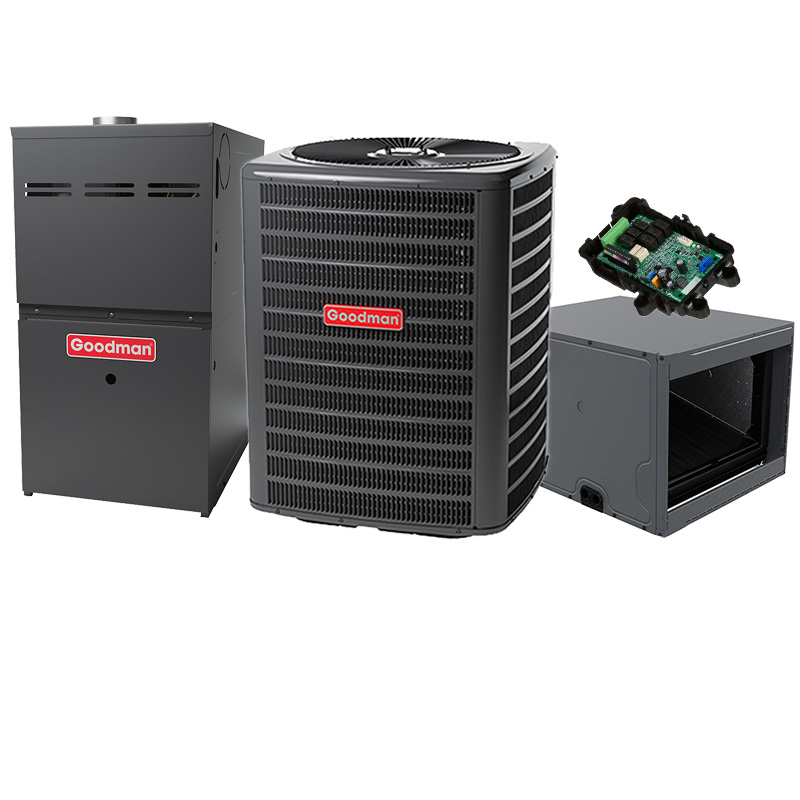
Goodman 3.5 Ton 14 SEER2 80000 BTU 80% Two-Stage Gas Furnace With R32 Air Conditioner Condenser And Coil System – Horizontal
View on AC Direct see your lowest price →Check current price on AC Direct →
Key features
- 3.5-ton cooling capacity suited for mid-to-large homes up to roughly 2,400 sq ft depending on load
- Two-stage gas furnace fires at a lower stage most of the time for steadier temperatures and quieter operation
- 80,000 BTU output at 80% AFUE, recovering 80 cents of heat energy from every dollar of gas burned
- 14 SEER2 efficiency meets current federal minimums for most U.S. regions
- Horizontal cabinet configuration designed for attic, crawl-space, or closet installations with limited vertical clearance
- R-32 refrigerant with lower global-warming potential than legacy R-410A; requires R-32-certified service technicians
About this system
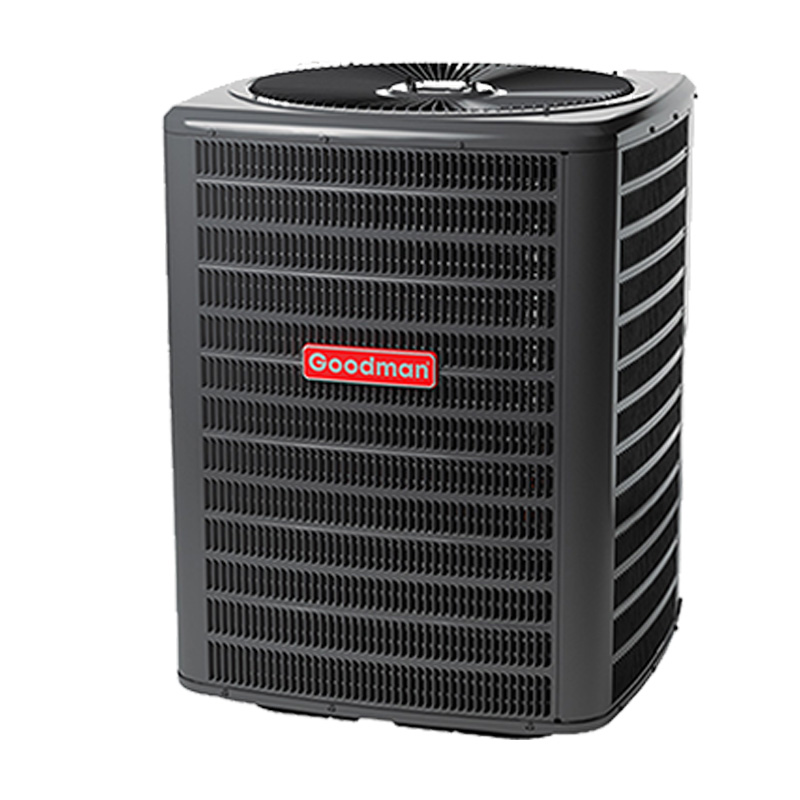
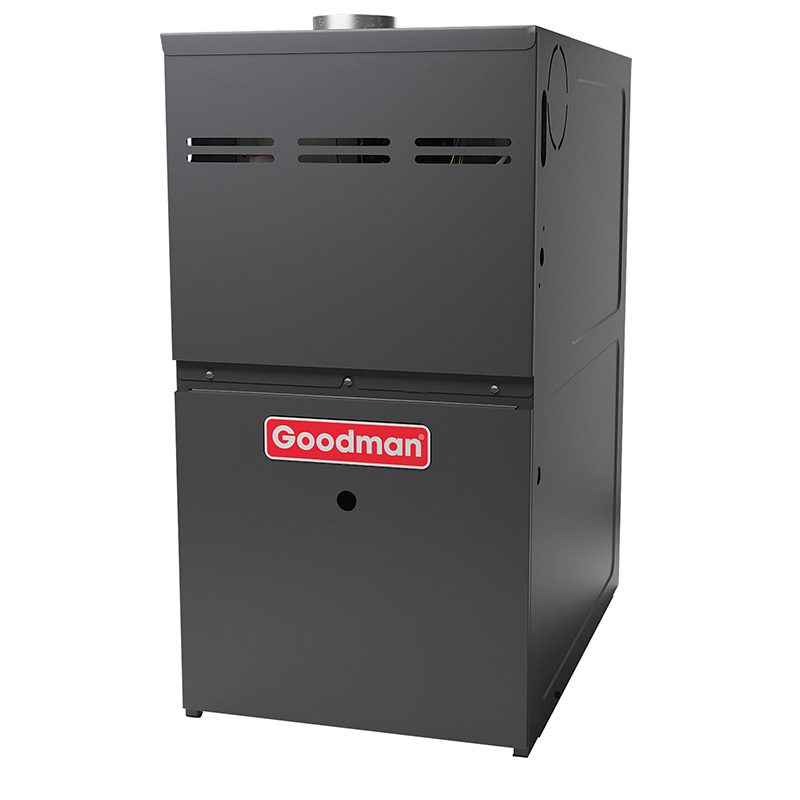
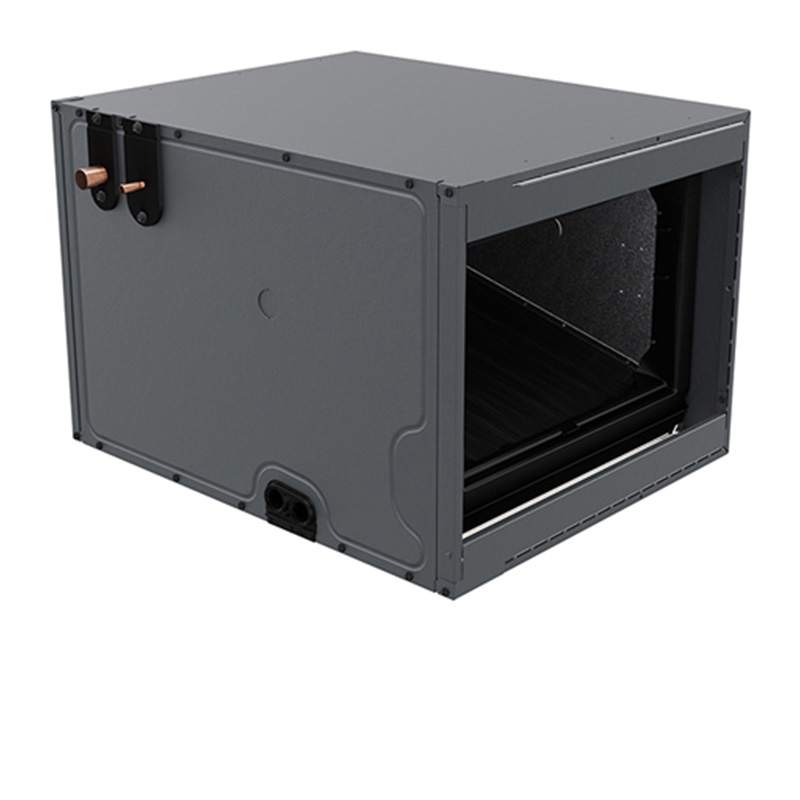
This Goodman bundle pairs a 3.5-ton, 14 SEER2 R-32 air conditioner condenser and matching evaporator coil with an 80,000 BTU, 80% AFUE two-stage gas furnace in a horizontal configuration. The horizontal orientation is purpose-built for attic or crawl-space installations where vertical clearance is limited, making it a practical answer for ranch-style homes, manufactured housing, or additions where a standard upflow furnace simply will not fit. At 3.5 tons of cooling capacity, it is sized for roughly 1,800 to 2,400 square feet depending on local climate, insulation quality, and window load, so a proper Manual J calculation before purchase is worth the effort.
The two-stage furnace is a meaningful step up from single-stage equipment. Running on the lower stage roughly 80 percent of the time means gentler, longer heating cycles that reduce temperature swings, distribute heat more evenly, and run quieter than a furnace that only fires at full blast. The 14 SEER2 efficiency rating meets 2023 federal minimums for most U.S. regions, which keeps the upfront cost in check but means operating costs will be higher than a 16 or 18 SEER2 system over a 15-year lifespan. R-32 refrigerant has a lower global-warming potential than the R-410A it replaces and is becoming the industry standard, which is good for long-term serviceability. Buyers should confirm that their servicing technician is R-32 certified before scheduling a charge or leak repair.
This Goodman horizontal bundle is a cost-effective solution for homeowners who need a horizontal-configuration system and do not want to pay a Carrier or Trane premium for a mid-efficiency setup. The two-stage furnace genuinely adds comfort over single-stage equipment, but buyers should go in knowing that Goodman's long-term reliability sits a step below premium brands and that component failures, particularly capacitors and coil leaks, are documented enough to factor into ownership budgeting. A quality install by an experienced technician is the single biggest variable in how well and how long this system performs.
Overall score is the average of the five ratings above.
What we like
- Priced roughly 15 to 25 percent below comparable Carrier, Trane, and Lennox bundles, reducing the upfront barrier
- Two-stage furnace operation improves comfort and reduces temperature swings compared to single-stage alternatives
- Horizontal configuration is a practical fit for attic and crawl-space installs where few alternatives exist
- R-32 refrigerant is increasingly supported by service technicians and has a better environmental profile than R-410A
- Matching coil and condenser from the same manufacturer reduces compatibility guesswork and supports warranty coverage
Trade-offs
- 14 SEER2 is the minimum efficiency tier; operating costs over 15 years will be noticeably higher than a 16-plus SEER2 system
- Dual-run capacitor failures are the most frequently reported repair, typically appearing after year 5 to 7 and costing 300 to 600 dollars per event
- Evaporator coil leaks appear in a meaningful share of owner reports and can be expensive to address after the warranty period
- Compressor lifespan averages 10 to 14 years versus 15 to 20 years for premium-brand compressors, meaning earlier replacement risk in a long-term ownership scenario
What homeowners and pros say about Goodman
On ConsumerAffairs, Goodman equipment sits at roughly 2.5 out of 5, a score shaped by the platform’s complaint-heavy audience where the recurring theme is repair costs that begin climbing after roughly year 7. Google dealer reviews tell a somewhat different story, averaging around 3.8 out of 5 across hundreds of reviews per location, with affordability cited most often as the reason buyers chose the brand. The gap between those two numbers reflects a real pattern: Goodman tends to satisfy buyers who go in with accurate expectations about a value-tier product, and frustrates those who assumed budget pricing came without reliability trade-offs.
For this specific horizontal bundle, HVAC technicians consistently point to dual-run capacitor failures as the most predictable service call, typically running 300 to 600 dollars and most common in the 5-to-10-year window. Evaporator coil leaks show up in a meaningful portion of owner accounts and can be significantly more costly to repair once the warranty has lapsed. Compressor lifespan on Goodman equipment averages 10 to 14 years in documented owner experience, compared to 15 to 20 years for premium brands, which matters in a long ownership scenario. A minority of first-year owners also report refrigerant leaks, which technicians generally attribute to charge or installation issues rather than a factory defect. The consistent professional advice is that installation quality is the largest single factor in how this equipment performs long-term, which means choosing a licensed, experienced installer carries as much weight as the equipment itself.
Sources: ConsumerAffairs Goodman owner reviews, AHRI Directory of Certified Product Performance, U.S. DOE appliance and equipment efficiency standards, Goodman product specification sheets.
What it costs to run
At 14 SEER2, cooling this 3.5-ton system for a typical 1200-hour cooling season at the U.S. average electricity rate of $0.17/kWh works out to roughly $612 per year in cooling, about $27 less per year than a minimum-efficiency 13.4 SEER2 unit of the same size. Your real cost depends on your climate and local rate.
Method: (42,000 BTU/hr ÷ 14 SEER2) × 1200 hours ÷ 1000 × $0.17/kWh. Rate source: U.S. EIA average; cooling hours: moderate-climate estimate.
How it compares
| Brand | Comparable model | SEER2 | Stage | Price position |
|---|---|---|---|---|
| Goodman | This system: 3.5T 14 SEER2 80K BTU 80% Two-Stage Horizontal Bundle | 14 | Two-stage furnace | Value pick |
| Carrier | Performance Series 14 SEER2 horizontal split system with 80% two-stage gas furnace | 14 | Two-stage furnace | Roughly 15 to 20 percent more than this Goodman bundle |
| Trane | S8X2 series 80% two-stage furnace with XR14 condenser and coil | 14 | Two-stage furnace | Roughly 20 to 25 percent more than this Goodman bundle |
| Lennox | ML14XC1 condenser with SL280 80% two-stage furnace and coil | 14 | Two-stage furnace | Roughly 20 to 25 percent more than this Goodman bundle |
Competitor rows are comparable single-stage units at similar efficiency; price is relative position, not a quote.
Questions about this system
Why does the horizontal configuration matter and can this furnace be installed in any other orientation?
Horizontal furnaces are built to lie on their side, with airflow moving laterally rather than up or down. This cabinet is rated for horizontal installation only, making it appropriate for attics, crawl spaces, or utility closets without vertical room. Installing it in an upflow or downflow position voids the warranty and can create serious safety issues, so confirm your application before ordering.
Is R-32 refrigerant safe and can my current HVAC technician service it?
R-32 is mildly flammable (A2L classification), so it requires technicians with specific R-32 handling certification and compatible recovery equipment. It is not a drop-in swap with R-410A tools. Before purchase, confirm that your preferred service company is already set up for R-32, since not every local contractor has made the transition yet.
What size home is 3.5 tons and 80,000 BTU appropriate for?
A rough rule of thumb puts 3.5 tons at around 1,800 to 2,400 square feet of cooling load, but actual sizing depends heavily on insulation, ceiling height, window area, local climate, and ductwork. The 80,000 BTU furnace is similarly general. A licensed technician should run a Manual J load calculation before the equipment is ordered to make sure neither the cooling nor heating side is oversized or undersized.
What does Goodman's warranty cover on this system and are there conditions attached?
Goodman typically offers a 10-year parts warranty when the system is registered within a set window after installation, dropping to a shorter term on unregistered equipment. Coverage applies to the original owner at the original address and requires installation by a licensed contractor. Review the current warranty document at registration time, since terms can change by production date, and keep all paperwork because Goodman has historically required documentation to process claims.
How much should I budget for repairs over the first 10 years based on what other owners report?
The most common documented repair is a dual-run capacitor failure, typically costing 300 to 600 dollars including labor and usually surfacing somewhere between years 5 and 10. Evaporator coil leaks are less common but more expensive when they do occur. Setting aside 500 to 1,000 dollars in a repair fund after the warranty period is a realistic approach, and pairing the system with a reputable extended service contract is worth pricing out at installation time.
Specifications
| Cooling capacity | 3.5 Ton |
| Efficiency | 14 SEER2 |
| Furnace output | 80000 BTU |
| Configuration | Horizontal |
| Refrigerant | R-32 |