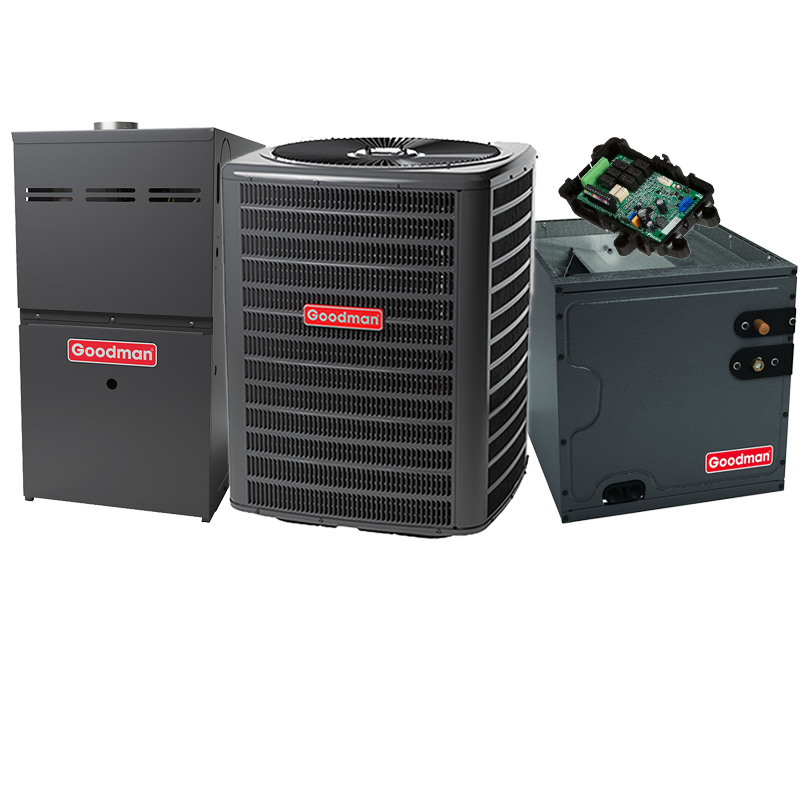
Goodman 4 Ton 14 SEER2 120000 BTU 80% Two-Stage Gas Furnace With R32 Air Conditioner Condenser And Coil System – Upflow
View on AC Direct see your lowest price →Check current price on AC Direct →
Key features
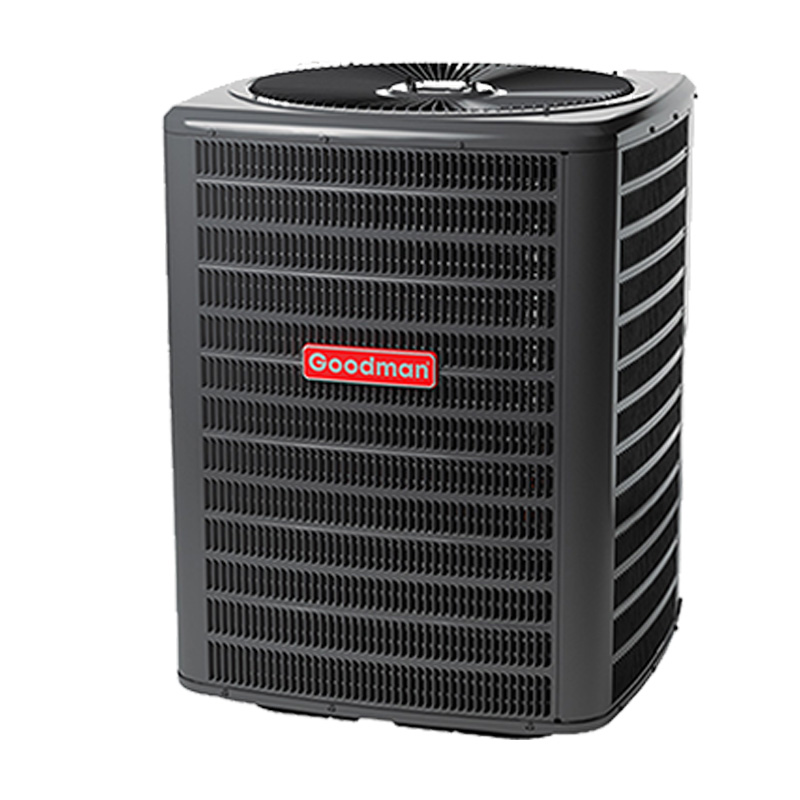
- 4-ton R-32 condenser rated at 14 SEER2 cooling efficiency
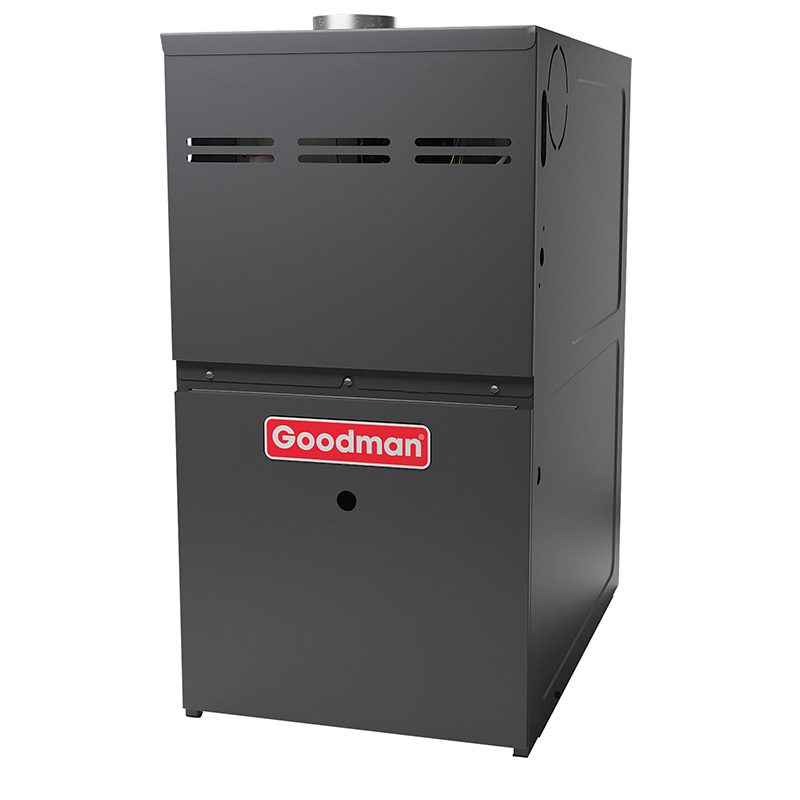
- 120,000 BTU two-stage gas furnace at 80% AFUE heating efficiency
- Upflow air handler orientation for overhead duct systems
- Two-stage heating reduces temperature swings and short-cycling compared to single-stage
- R-32 refrigerant with lower global warming potential than R-410A
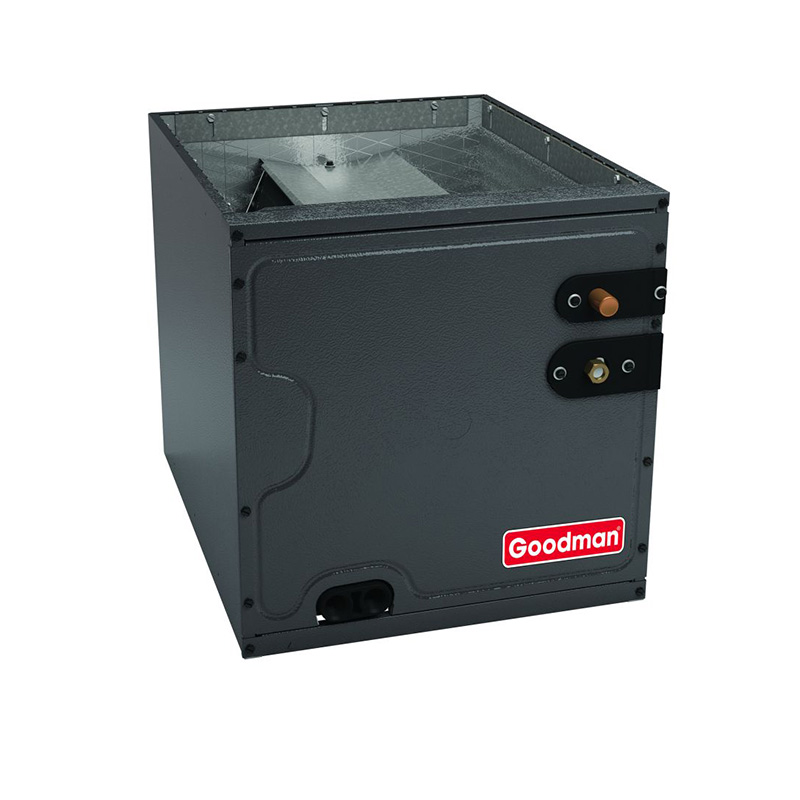
- Matched coil included for a factory-verified, warranty-eligible system combination
About this system
This Goodman system pairs a 4-ton, 14 SEER2 R-32 air conditioner with a 120,000 BTU, 80% AFUE two-stage gas furnace in an upflow configuration. At 14 SEER2, the cooling side sits at the current federal minimum efficiency floor for most U.S. climate zones, which means it meets code but will not deliver the operating-cost savings of a 16 or 18 SEER2 system. The two-stage furnace is a meaningful step up from single-stage: it runs on a lower fire most of the time, cycling on the high stage only when outdoor temperatures drop sharply. That behavior reduces temperature swings, lowers short-cycling noise, and can take a small bite out of heating bills compared to a single-stage 80% unit.
The upflow configuration sends conditioned air upward into supply ducts above the unit, which suits basements, utility rooms, and closets where ductwork runs overhead. The R-32 refrigerant in the condenser is worth noting: R-32 has a lower global warming potential than the R-410A it is replacing across the industry, and its higher energy density can allow slightly more compact heat exchanger design. Practically speaking, it requires technicians who are current on R-32 handling procedures, so confirm your installer is familiar with it before booking. At 4 tons and 120,000 BTU, this is sized for larger homes, typically in the 2,000 to 2,600 square foot range depending on climate, insulation, and local load calculations.
This Goodman bundle is a practical choice for cost-conscious buyers who need a large-capacity system and are working with a tight upfront budget. The two-stage furnace adds real comfort value, but 14 SEER2 cooling is baseline efficiency, and Goodman's track record shows reliability gaps after year 7 that buyers should budget for. It rewards a careful install and routine maintenance more than most premium brands do.
Overall score is the average of the five ratings above.
What we like
- Priced 15 to 25 percent below comparable Carrier, Trane, and Lennox systems
- Two-stage furnace operation improves comfort and reduces short-cycling noise
- Matched system bundle simplifies warranty eligibility and sizing verification
- R-32 refrigerant is the forward-looking industry standard replacing R-410A
- Widely stocked and serviced by independent HVAC contractors across the U.S.
Trade-offs
- 14 SEER2 is the minimum efficiency threshold, so energy savings versus higher-SEER alternatives are limited
- Dual-run capacitors are the most commonly reported failure point, typically around years 5 to 8
- Compressor lifespan averages 10 to 14 years versus 15 to 20 years for premium brands, raising long-term replacement risk
- A minority of owners report refrigerant or evaporator coil leaks, underscoring the importance of a high-quality installation and startup charge verification
What homeowners and pros say about Goodman
On ConsumerAffairs, Goodman sits at roughly 2.5 out of 5, a score shaped by the fact that dissatisfied owners are far more likely to post on that platform than satisfied ones. The recurring theme in those reviews is repair costs that begin climbing after around year 7, with dual-run capacitor failures being the most frequently cited problem. That is actually a relatively inexpensive fix in the 300 to 600 dollar range, but it signals a pattern of component wear that owners should anticipate. More serious documented issues include evaporator coil leaks, which show up across a meaningful share of owner accounts, and compressor lifespans that typically land in the 10 to 14 year window rather than the 15 to 20 years that premium-brand owners more often see. Google dealer reviews tell a somewhat different story, with Goodman dealers averaging around 3.8 out of 5 across locations, where affordability is the most common reason people say they are happy with their purchase.
HVAC technicians who work on Goodman equipment regularly tend to describe it as acceptable hardware that is unusually sensitive to how it is installed and how consistently it is maintained. A rushed installation, an imprecise refrigerant charge, or skipped annual tune-ups can push reliability toward the lower end of what the brand is capable of, while a careful startup and routine service keep it performing closer to the better outcomes owners report. For this specific system, the R-32 refrigerant adds a variable: technicians less familiar with R-32 handling may not set the initial charge as precisely as the system needs, and early refrigerant leaks, though reported by a minority of owners, are often traced back to that startup process. Confirming that your installer has hands-on R-32 experience is not a minor detail with this bundle.
Sources: ConsumerAffairs Goodman owner reviews, AHRI Directory of Certified Product Performance, U.S. DOE appliance and equipment efficiency standards, Goodman product specification sheets.
What it costs to run
At 14 SEER2, cooling this 4-ton system for a typical 1200-hour cooling season at the U.S. average electricity rate of $0.17/kWh works out to roughly $699 per year in cooling, about $32 less per year than a minimum-efficiency 13.4 SEER2 unit of the same size. Your real cost depends on your climate and local rate.
Method: (48,000 BTU/hr ÷ 14 SEER2) × 1200 hours ÷ 1000 × $0.17/kWh. Rate source: U.S. EIA average; cooling hours: moderate-climate estimate.
How it compares
| Brand | Comparable model | SEER2 | Stage | Price position |
|---|---|---|---|---|
| Goodman | 4-Ton 14 SEER2 / 120,000 BTU 80% Two-Stage Bundle (this system) | 14 | Two-stage furnace / standard AC | Value pick |
| Carrier | Performance 14 Series (24ACC4) with 58TP 80% Two-Stage Furnace | 14 | Two-stage furnace / standard AC | Typically 20 to 25 percent more than this Goodman bundle |
| Trane | XR14c Condenser with S8X2 80% Two-Stage Furnace | 14 | Two-stage furnace / standard AC | Typically 20 to 30 percent more than this Goodman bundle |
| Lennox | Merit ML14XC1 Condenser with ML180UH 80% Two-Stage Furnace | 14 | Two-stage furnace / standard AC | Typically 15 to 25 percent more than this Goodman bundle |
Competitor rows are comparable single-stage units at similar efficiency; price is relative position, not a quote.
Questions about this system
Is 14 SEER2 going to cost me significantly more to run than a higher-efficiency system?
Yes, but the gap depends on your climate and electricity rates. A 16 SEER2 system uses roughly 12 percent less electricity for the same cooling output. In a hot climate with high utility rates, that difference can add up to meaningful annual savings. If you are in a mild climate or plan to move within 5 to 7 years, the payback period for a higher-SEER unit may not work in your favor.
Does my installer need any special certification to work with R-32 refrigerant?
Technicians need an EPA 608 certification to handle any refrigerant, which most licensed HVAC pros already hold. R-32 is mildly flammable, which means some jurisdictions have additional handling requirements, and the technician should have specific familiarity with R-32 procedures. Ask your installer directly before scheduling work.
What does the two-stage furnace actually do differently day to day?
On most days the furnace runs at its lower stage, which is quieter, produces a steadier heat output, and cycles less frequently. It only kicks into high fire on the coldest days when demand exceeds what the low stage can supply. Most owners notice fewer hot and cold swings compared to a single-stage furnace.
How long should I expect the compressor to last, and what does that mean for my budget?
Based on Goodman's documented track record, compressors on these systems average roughly 10 to 14 years, compared to 15 to 20 years on premium brands. A replacement compressor plus labor can run into the low thousands of dollars. Keeping up with annual maintenance, particularly coil cleaning and refrigerant charge checks, gives you the best chance of reaching the top of that range.
Is the matched coil in this bundle actually required, or can I reuse my existing coil?
Using the included matched coil is strongly recommended. A mismatched or old coil can reduce system efficiency, void manufacturer warranty coverage, and create refrigerant charge issues since R-32 systems are sized for specific coil configurations. If your existing coil is less than a few years old and is confirmed compatible with R-32 and this tonnage, discuss the specifics with your installer and check Goodman's AHRI certificate for that combination.
Specifications
| Cooling capacity | 4 Ton |
| Efficiency | 14 SEER2 |
| Furnace output | 120000 BTU |
| Configuration | Upflow |
| Refrigerant | R-32 |