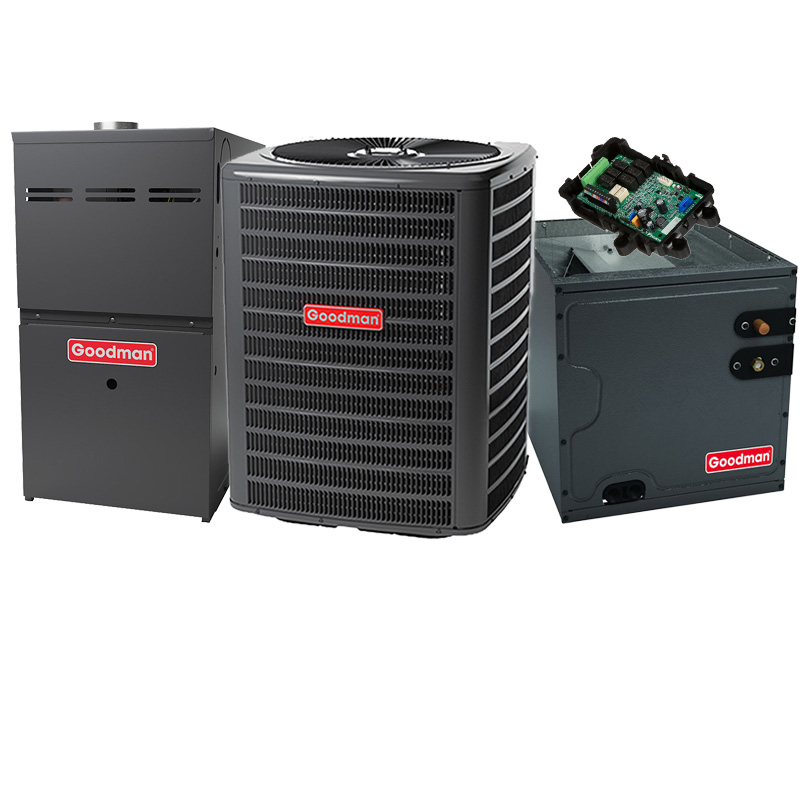
Goodman 5 Ton 13.6 SEER2 100000 BTU 80% Two-Stage Gas Furnace With R32 Air Conditioner Condenser And Coil System – Upflow
View on AC Direct see your lowest price →Check current price on AC Direct →
Key features
- 5-ton capacity with 13.6 SEER2 cooling efficiency, meeting current federal minimums
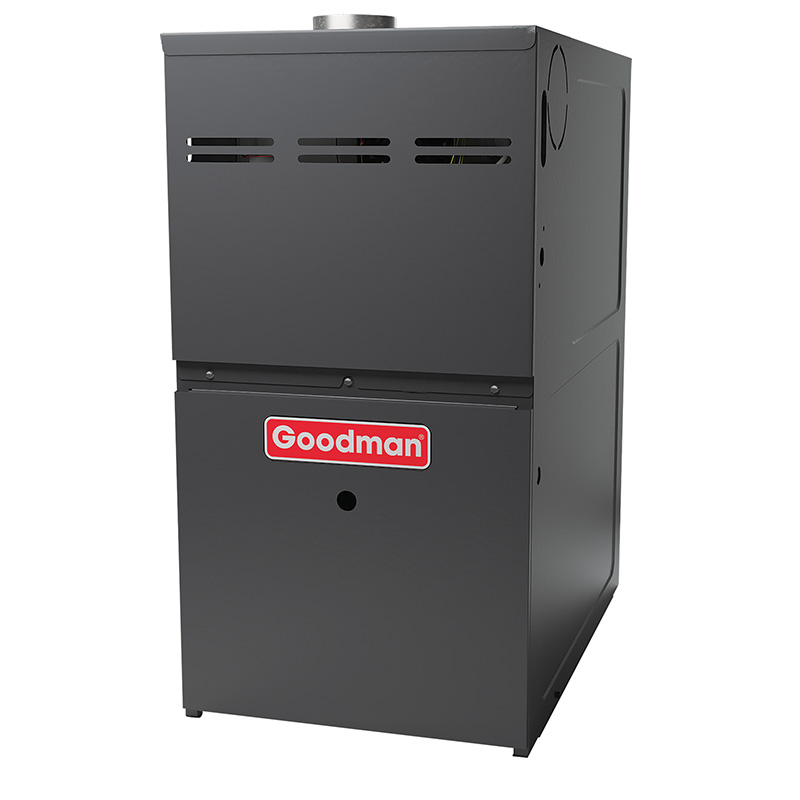
- 100,000 BTU two-stage gas furnace with 80% AFUE for even, quieter heating cycles
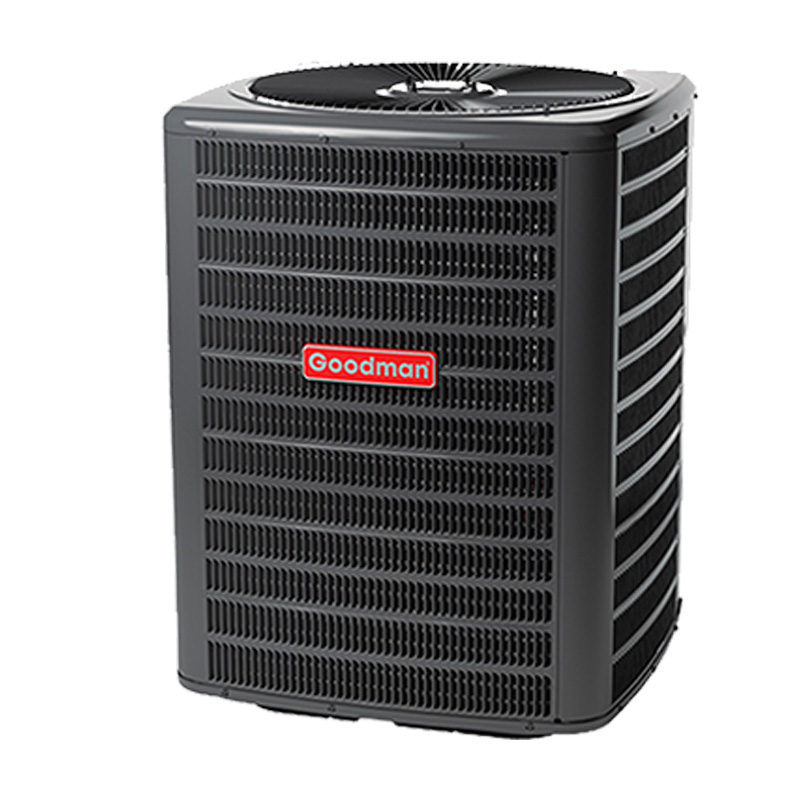
- R-32 refrigerant, which carries roughly two-thirds lower global warming potential than R-410A
- Upflow cabinet orientation designed for basement or closet installs with ceiling ductwork
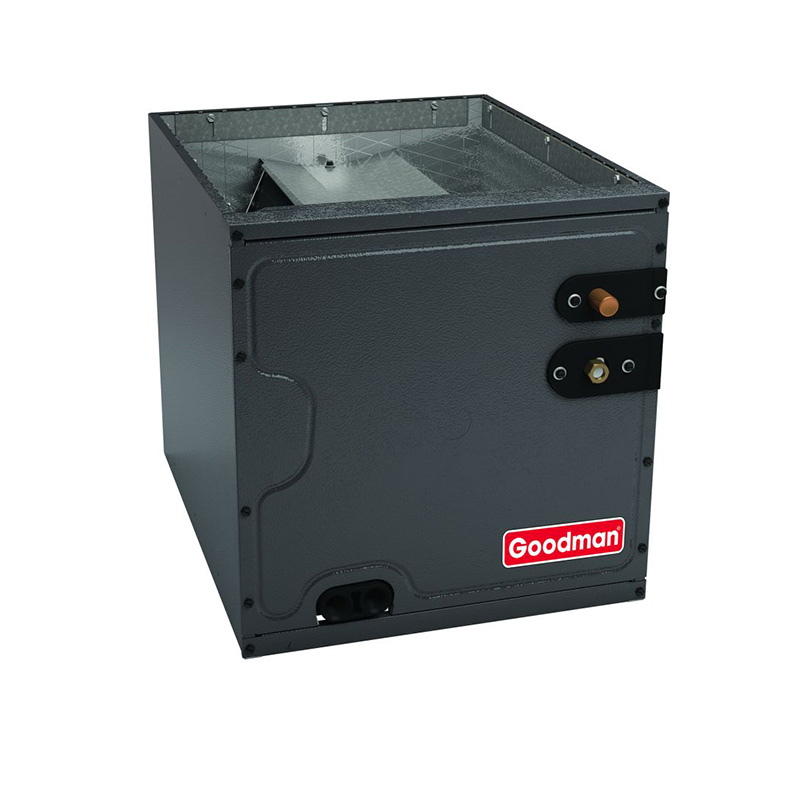
- Matched coil included, reducing compatibility questions and refrigerant charge guesswork
- Goodman factory-matched system eligible for parts and labor warranty registration
About this system
This Goodman bundle pairs a 5-ton R-32 air conditioner condenser and matching evaporator coil with a 100,000 BTU two-stage gas furnace in an upflow configuration. Together they cover larger homes, typically in the 2,500 to 3,500 square foot range depending on local climate and insulation, where a single-stage system would short-cycle or struggle to hold temperature on the hottest and coldest days. The two-stage furnace fires at a reduced capacity most of the time and only ramps to full output during peak demand, which translates to longer, quieter run cycles and more even room temperatures compared to single-stage heating.
At 13.6 SEER2 the cooling side sits at the lower end of today’s efficiency range, just above the federal minimums currently in effect in most regions. It is not a high-efficiency system, but it is a compliant one, and the R-32 refrigerant is a meaningful step forward: R-32 has a global warming potential roughly two-thirds lower than R-410A and is easier to recover and recharge in single-component form. The upflow furnace cabinet moves conditioned air upward through the coil, which makes this layout the right fit for basements, utility closets, or any application where ductwork runs through the ceiling or upper floors. It is not a match for crawl-space or attic installations, which call for downflow or horizontal configurations.
This system delivers a workable, code-compliant heating and cooling solution for large homes at a price point that is meaningfully lower than comparable Carrier, Trane, or Lennox bundles. The two-stage furnace is a genuine comfort upgrade over single-stage heat, and the R-32 refrigerant is a forward-looking spec. The trade-off is a well-documented history of capacitor failures, potential coil leaks, and compressor longevity that typically falls short of premium brands, so budgeting for a service plan or extended warranty is not optional for most owners.
Overall score is the average of the five ratings above.
What we like
- Price is typically 15 to 25 percent below comparable Trane, Lennox, and Carrier systems
- Two-stage furnace operation reduces temperature swings and lowers operating noise on most days
- R-32 refrigerant is easier to service as a single-component refrigerant and has lower environmental impact
- Matched coil included in the bundle removes compatibility guesswork at installation
- Widely serviced: Goodman's large install base means most HVAC contractors are comfortable with it
Trade-offs
- Dual-run capacitors are the most commonly reported failure point and often appear within the first several years of use
- Evaporator coil leaks are documented in a meaningful share of owner reviews, a concern on any matched coil system
- Compressor lifespan averages 10 to 14 years versus 15 to 20 years on premium-brand compressors
- At 13.6 SEER2 this is a baseline-efficiency system; owners with high cooling hours or rising electricity rates will see higher operating costs than they would with a 16-plus SEER2 unit
What homeowners and pros say about Goodman
Homeowners who chose Goodman most often mention the upfront price as the deciding factor, and that tracks with the brand’s position as a value alternative to Trane, Lennox, and Carrier. On Google dealer reviews Goodman earns around 3.8 out of 5 across hundreds of location-based reviews, where affordability and straightforward installation are consistent praise points. The picture on ConsumerAffairs is less generous, sitting at roughly 2.5 out of 5, a score shaped heavily by owners who return to post complaints after repair costs start climbing, most often citing issues that appear after the seven-year mark. The two failure modes that show up most consistently in owner accounts are dual-run capacitor failures, which tend to be a quick and relatively low-cost repair in the 300 to 600 dollar range, and evaporator coil leaks, which are costlier and more disruptive. Compressor longevity is another honest gap: Goodman compressors typically average 10 to 14 years of service, which is noticeably shorter than the 15 to 20 years owners of premium-brand equipment tend to report.
HVAC technicians who work on Goodman regularly point out that the brand’s reputation is inseparable from installation quality. A properly sized, correctly charged, and well-commissioned Goodman system will outperform a carelessly installed premium unit, and a sloppy install of this bundle, including refrigerant charge issues, is one documented reason a small number of owners have reported refrigerant leaks within the first year. For a 5-ton two-stage system at this price point, the practical advice from the field is consistent: get the load calculation done right, use an experienced installer, register the warranty the same day the system goes in, and treat a service agreement as part of the total cost of ownership rather than an optional add-on.
Sources: ConsumerAffairs Goodman owner reviews, AHRI Directory of Certified Product Performance, U.S. DOE appliance and equipment efficiency standards, Goodman product specification sheets.
What it costs to run
At 13.6 SEER2, cooling this 5-ton system for a typical 1200-hour cooling season at the U.S. average electricity rate of $0.17/kWh works out to roughly $900 per year in cooling, about $13 less per year than a minimum-efficiency 13.4 SEER2 unit of the same size. Your real cost depends on your climate and local rate.
Method: (60,000 BTU/hr ÷ 13.6 SEER2) × 1200 hours ÷ 1000 × $0.17/kWh. Rate source: U.S. EIA average; cooling hours: moderate-climate estimate.
How it compares
| Brand | Comparable model | SEER2 | Stage | Price position |
|---|---|---|---|---|
| Goodman | 5 Ton 13.6 SEER2 / 100K BTU 80% Two-Stage Bundle (this system) | 13.6 | Two-stage furnace / single-stage condenser | Value pick |
| Carrier | Performance 13 / 14 Series (24ACC6) with 80% two-stage furnace | 13.4 to 14.3 | Single-stage condenser / two-stage furnace | Typically 15 to 20 percent more than this Goodman bundle |
| Trane | XR14 condenser with S8X2 80% two-stage furnace | 13.8 to 14.3 | Single-stage condenser / two-stage furnace | Typically 20 to 25 percent more than this Goodman bundle |
| Lennox | Merit ML14XC1 condenser with ML196E 80% two-stage furnace | 13.4 to 14.3 | Single-stage condenser / two-stage furnace | Typically 20 to 25 percent more than this Goodman bundle |
Competitor rows are comparable single-stage units at similar efficiency; price is relative position, not a quote.
Questions about this system
Does the 80% AFUE furnace meet current efficiency requirements in my area?
Federal rules have historically allowed 80% AFUE furnaces in warmer southern regions while requiring 90% or higher in most northern states. Requirements vary by state and installation type, so confirm with your installer that an 80% unit is permitted for your specific location before purchasing.
Is R-32 refrigerant safe and easy to service if I need a recharge?
R-32 is mildly flammable and requires technicians with proper certification to handle it, but its single-component makeup means it can be topped off without replacing the entire charge, unlike some blended refrigerants. Most certified HVAC technicians working today are equipped to service R-32 systems.
How likely am I to have a capacitor failure, and what will it cost?
Dual-run capacitor failure is the most commonly reported issue on Goodman equipment and can occur at any point in the system's life. A capacitor replacement typically runs in the 300 to 600 dollar range including a service call, and keeping a service agreement in place makes this a manageable rather than a surprise expense.
What warranty comes with this system, and do I need to register it?
Goodman typically offers a 10-year parts warranty on registered systems, with a shorter coverage period if registration is not completed within the required window after installation. Ask your contractor to confirm registration is completed, because a missed deadline can cut the warranty period significantly.
Will 5 tons actually be right for my house, or should I get a load calculation first?
A proper Manual J load calculation is strongly recommended before committing to a 5-ton system. Oversizing is a common and costly mistake that causes short-cycling, excess humidity, and premature wear; a house that feels like it needs 5 tons based on square footage alone may actually perform better with a 4-ton unit sized correctly for its insulation, windows, and local climate.
Specifications
| Cooling capacity | 5 Ton |
| Efficiency | 13.6 SEER2 |
| Furnace output | 100000 BTU |
| Configuration | Upflow |
| Refrigerant | R-32 |