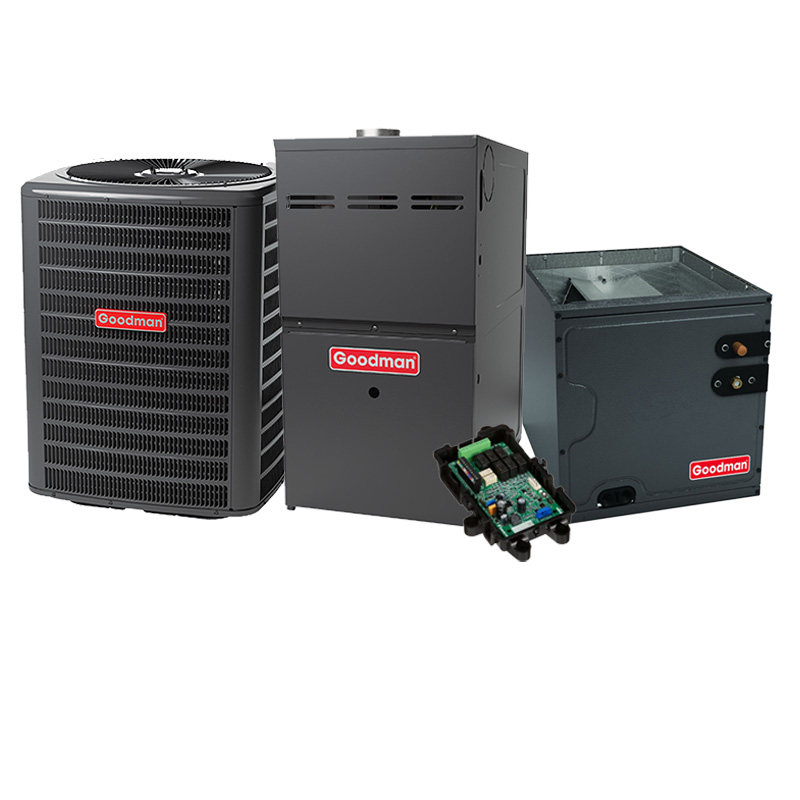
Goodman 3 Ton 14 SEER2 60000 BTU 80% Two-Stage Variable Speed Gas Furnace With R32 AC Condenser And Coil System – Upflow
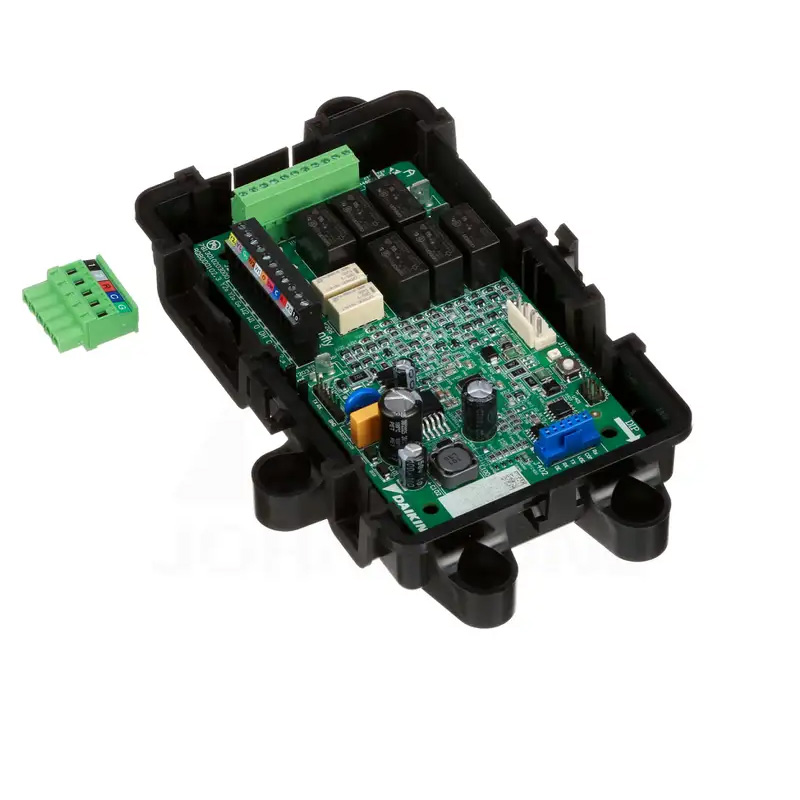
View on AC Direct see your lowest price →Check current price on AC Direct →
Key features
- 3-ton cooling capacity with 14 SEER2 efficiency rating
- 60,000 BTU two-stage gas furnace rated at 80% AFUE
- Variable-speed blower motor for quieter operation and better humidity control
- R-32 refrigerant with lower global warming potential than R-410A
- Upflow configuration designed for overhead duct systems
- Factory-matched condenser, coil, and furnace for simplified ratings compliance
About this system
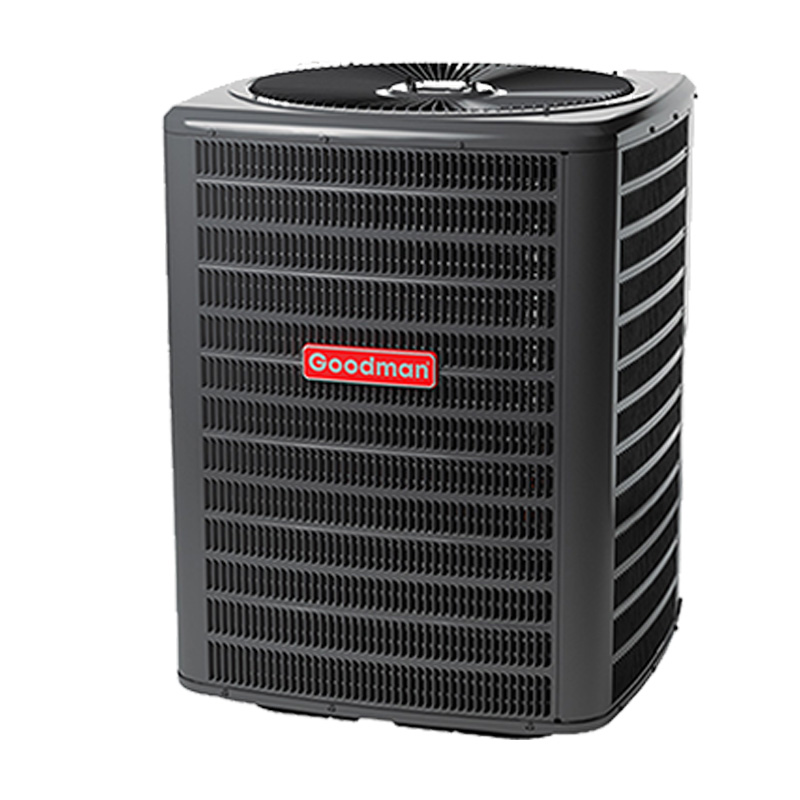
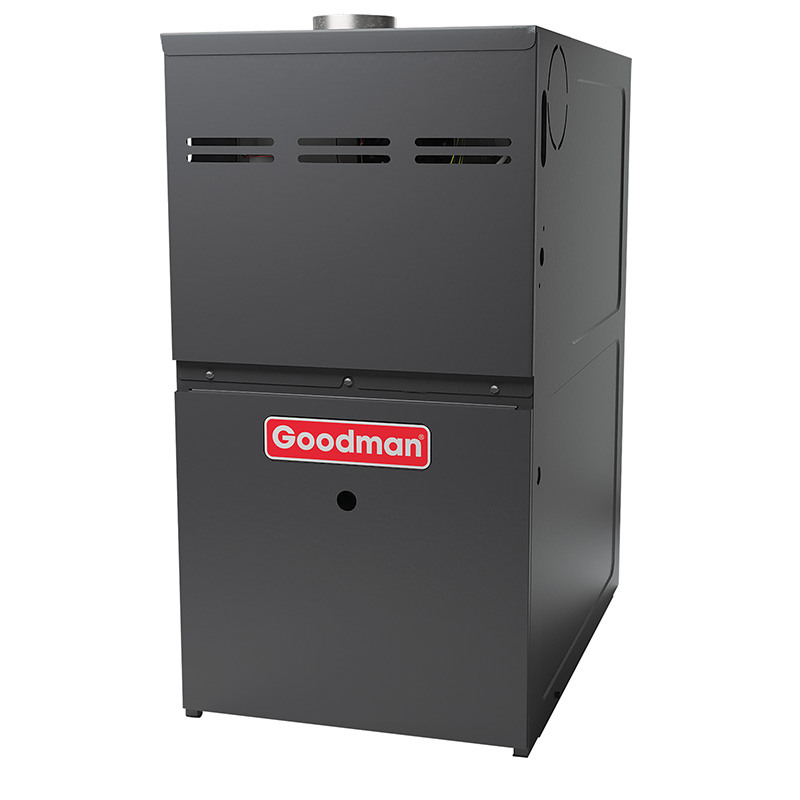
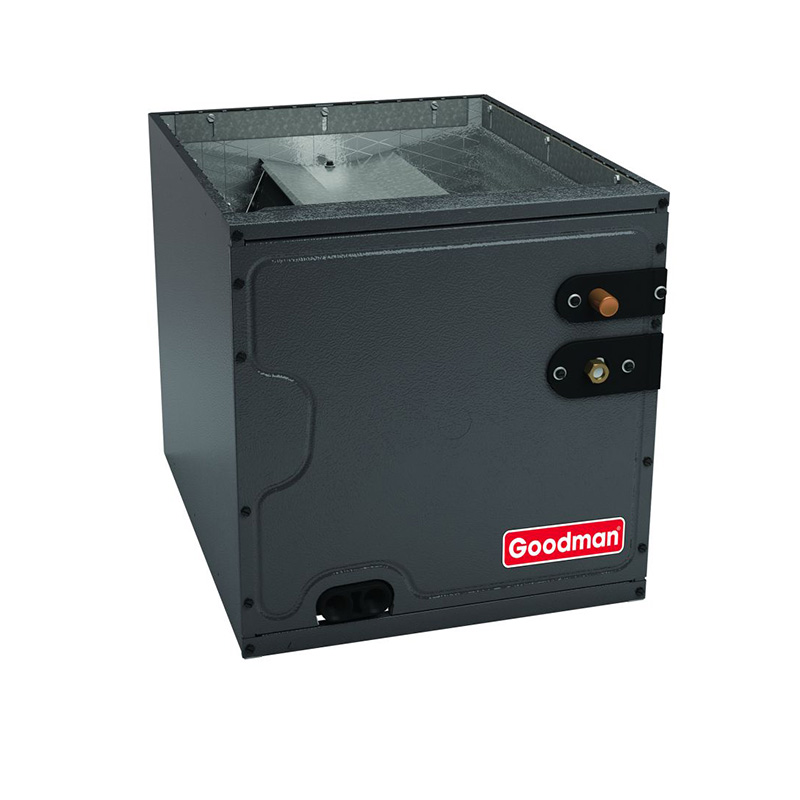
This Goodman upflow system pairs a 3-ton, 14 SEER2 R-32 air conditioner condenser and matched evaporator coil with a 60,000 BTU, 80% AFUE two-stage gas furnace. The two-stage furnace runs at a lower capacity most of the time, firing up to full output only on the coldest days, which reduces temperature swings and avoids the blasting hot-then-cold cycle of single-stage units. The variable-speed air handler moves air more quietly and more efficiently than fixed-speed blowers, and it also improves humidity control in cooling mode by running longer at lower speeds.
The 14 SEER2 rating sits at the federal minimum efficiency threshold for most U.S. climate zones, so this is a code-compliant baseline system rather than a high-efficiency showpiece. R-32 refrigerant has a lower global warming potential than the R-410A it replaces and is increasingly standard in new equipment. The upflow configuration means supply air exits the top of the air handler, making it the right fit for installations where ductwork runs overhead, typically in basements or utility closets. This system is best suited to budget-conscious homeowners in moderate climates who want two-stage comfort at an entry-level price point and plan to stay on top of routine maintenance.
This Goodman system delivers two-stage comfort and variable-speed airflow at a price that undercuts Carrier, Trane, and Lennox by a meaningful margin, making it a reasonable choice for homeowners who prioritize upfront cost over long-term durability. The 80% furnace and 14 SEER2 cooling are entry-level on efficiency, and Goodman's real-world track record shows a higher rate of component issues after year 7 than premium brands. The value equation holds up best when the installation is done right and a maintenance plan is in place.
Overall score is the average of the five ratings above.
What we like
- Two-stage furnace reduces temperature swings compared to single-stage units
- Variable-speed blower improves comfort and humidity management in cooling season
- Priced 15 to 25 percent below comparable Trane, Lennox, and Carrier systems
- R-32 refrigerant is the current industry standard with lower environmental impact
- Factory-matched system simplifies AHRI certification and warranty claims
Trade-offs
- 80% AFUE furnace wastes 20 cents of every fuel dollar, a real cost gap versus 95%+ units in cold climates
- 14 SEER2 is the minimum efficiency threshold, meaning higher utility bills than mid- or high-efficiency alternatives
- Documented history of dual-run capacitor failures and evaporator coil leaks, with repair costs rising after year 7
- Compressor lifespan averages 10 to 14 years versus 15 to 20 years for premium-brand compressors
What homeowners and pros say about Goodman
Homeowners who buy Goodman equipment most often cite the lower upfront price as the deciding factor, and that sentiment is reflected in Google dealer review scores that average around 3.8 out of 5 across hundreds of location-level reviews. The praise is almost always about affordability and reasonable short-term performance. The picture shifts when you look at ConsumerAffairs, where Goodman scores around 2.5 out of 5 on a channel that skews toward people who have had problems. The recurring theme there is repair costs climbing after roughly year 7, which aligns with what HVAC technicians say in trade discussions: Goodman gear can perform reliably in the first several years but tends to need more attention as it ages than equipment from Trane, Carrier, or Lennox.
The specific failure modes that come up repeatedly with Goodman split systems are dual-run capacitor failures, evaporator coil leaks, and compressor longevity that averages 10 to 14 years rather than the 15 to 20 years more typical of premium-brand compressors. Capacitor failures are low-cost nuisances; coil leaks are more disruptive and expensive. A minority of owners have also reported refrigerant leaks within the first year, and technicians generally point to installation quality rather than the equipment itself in those cases. That caveat applies across the board with Goodman: professionals consistently say that installer skill and a proper startup procedure are the single biggest variable in how long one of these systems actually lasts.
Sources: ConsumerAffairs Goodman owner reviews, AHRI Directory of Certified Product Performance, U.S. DOE appliance and equipment efficiency standards, Goodman product specification sheets.
What it costs to run
At 14 SEER2, cooling this 3-ton system for a typical 1200-hour cooling season at the U.S. average electricity rate of $0.17/kWh works out to roughly $525 per year in cooling, about $23 less per year than a minimum-efficiency 13.4 SEER2 unit of the same size. Your real cost depends on your climate and local rate.
Method: (36,000 BTU/hr ÷ 14 SEER2) × 1200 hours ÷ 1000 × $0.17/kWh. Rate source: U.S. EIA average; cooling hours: moderate-climate estimate.
How it compares
| Brand | Comparable model | SEER2 | Stage | Price position |
|---|---|---|---|---|
| Goodman | 3-Ton 14 SEER2 / 60k BTU 80% Two-Stage Variable Speed (this system) | 14 | Two-stage furnace / single-stage condenser | Value pick |
| Carrier | Performance 14 Series (24ACC636) | 14 | Single-stage | Typically 15 to 25 percent above this Goodman system |
| Trane | XR14c | 14 | Single-stage | Typically 20 to 30 percent above this Goodman system |
| Lennox | Merit ML14XC1 | 14 | Single-stage | Typically 20 to 30 percent above this Goodman system |
Competitor rows are comparable single-stage units at similar efficiency; price is relative position, not a quote.
Questions about this system
Why does this furnace have an 80% AFUE rating instead of 90% or higher, and does that matter for my heating bills?
An 80% AFUE furnace vents combustion gases through a flue pipe, which means 20% of the fuel energy exits your home as exhaust heat. In mild climates or homes with existing B-vent flue systems, 80% is a practical and cost-effective choice. In colder northern climates where the furnace runs many hours per day, the gap between 80% and 95% AFUE translates to a noticeable difference in monthly gas bills over time.
What are the most common repairs I should budget for with this Goodman system?
Dual-run capacitors are the most frequently reported failure point across Goodman systems and are relatively inexpensive to fix, typically in the 300 to 600 dollar range for parts and labor. Evaporator coil leaks appear in a meaningful portion of owner reports and are more costly to address. A small number of owners have also reported refrigerant leaks within the first year, which are usually traced to installation or initial charge issues rather than a defect in the equipment itself.
Is R-32 refrigerant harder or more expensive to service than R-410A?
R-32 is increasingly common in new residential equipment, and most licensed HVAC technicians now carry the required certifications and tools to handle it. It is mildly flammable, which means it must be handled by a certified professional, but routine maintenance and recharging costs are broadly similar to R-410A. Availability is not a concern with new equipment, since R-32 is the current industry direction.
What does upflow configuration mean, and how do I know if my home needs it?
Upflow means the furnace pulls return air in from the bottom and discharges conditioned air out the top, where it enters supply ductwork that runs overhead or through the ceiling. This is the standard configuration for systems installed in basements, utility rooms, or closets where the ductwork is above the unit. If your ductwork exits from the bottom or sides of the air handler location, you would need a downflow or horizontal configuration instead.
How does Goodman's warranty compare to Carrier, Trane, and Lennox on this type of system?
Goodman typically offers a 10-year parts warranty on registered equipment, which is competitive with the base warranty tiers offered by Carrier, Trane, and Lennox. The key difference is that premium brands often include longer compressor-specific coverage or extended labor warranties through their dealer networks, whereas Goodman's warranty covers parts only and labor costs fall on the homeowner. Registration within 60 days of installation is required to activate the full 10-year term.
Specifications
| Cooling capacity | 3 Ton |
| Efficiency | 14 SEER2 |
| Furnace output | 60000 BTU |
| Configuration | Upflow |
| Refrigerant | R-32 |