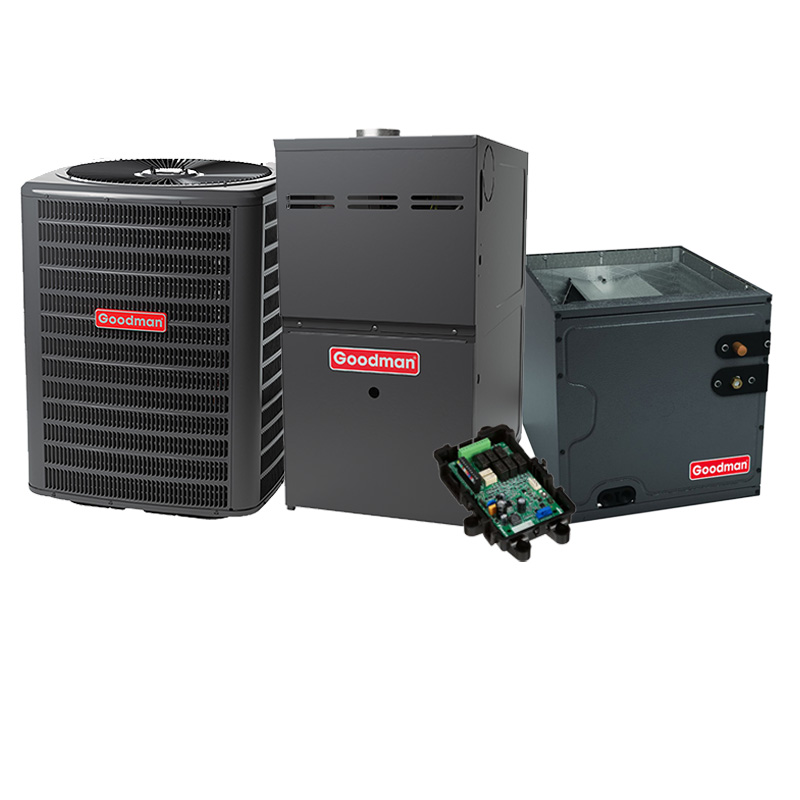
Goodman 3 Ton 14 SEER2 60000 BTU 80% Two-Stage Variable Speed Gas Furnace With R32 AC Condenser And Coil System – Horizontal
View on AC Direct see your lowest price →Check current price on AC Direct →
Key features
- 3-ton, 14 SEER2 R-32 condenser meets current federal minimum efficiency standards
- 60,000 BTU two-stage gas furnace runs at reduced capacity most of the time for steadier temperatures
- Variable-speed ECM blower motor improves humidity control and lowers operating sound
- 80% AFUE mid-efficiency furnace suitable for moderate heating climates
- Horizontal configuration designed for attic or crawlspace installations with limited vertical clearance
- Matched coil and condenser system supports warranty compliance and simplified commissioning
About this system
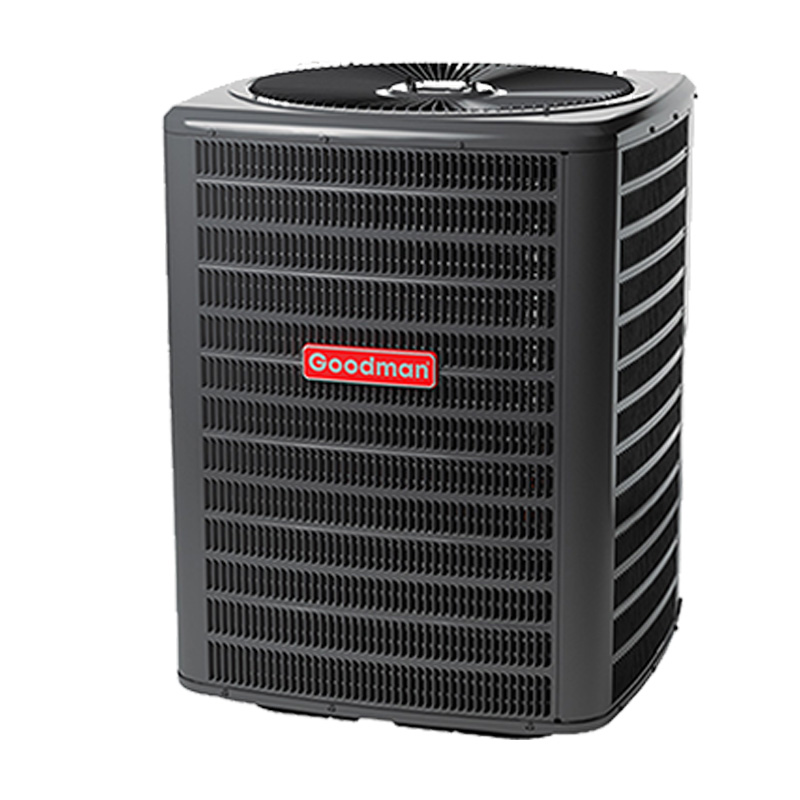
This Goodman horizontal system pairs a 3-ton, 14 SEER2 R-32 air conditioner with a 60,000 BTU, 80% AFUE two-stage variable-speed gas furnace configured for horizontal airflow. The horizontal orientation is specifically built for attic or crawlspace installations where vertical clearance is limited, making it a practical choice for ranch-style homes or additions with tight mechanical spaces. R-32 refrigerant runs at higher pressure than the R-410A it replaces, has a lower global warming potential, and is increasingly the industry standard going forward.
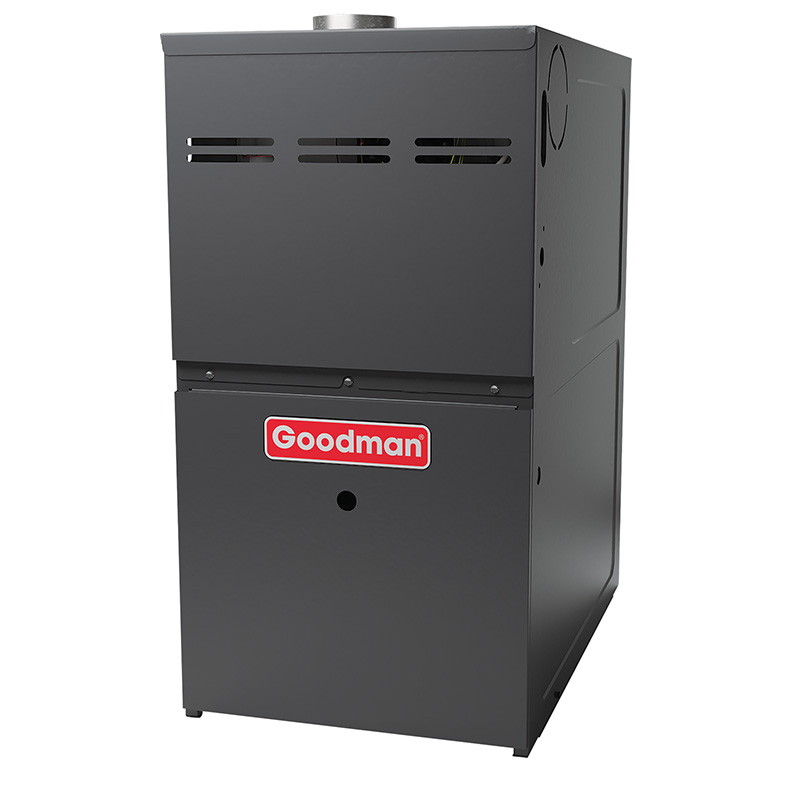
The two-stage furnace is the headline feature here. Rather than running at full blast every cycle, it operates on a lower stage roughly 60 to 70 percent of the time, which smooths out temperature swings, reduces short-cycling noise, and trims gas bills compared to a single-stage unit. The variable-speed ECM blower motor takes that a step further by ramping airflow up and down gradually, improving dehumidification and distributing conditioned air more evenly across the home. At 80% AFUE, the furnace is a mid-efficiency unit, meaning roughly one-fifth of combustion energy exits through the flue rather than heating the home, so homeowners in severe-cold climates who run the furnace heavily may want to weigh a 96% AFUE option before committing.
As a bundled Goodman system, the components are engineered to communicate with each other, which simplifies commissioning and helps protect the warranty. The 14 SEER2 rating satisfies current federal minimum standards in most U.S. regions, though it sits at the lower end of the efficiency range available today. Buyers who prioritize keeping upfront cost down while getting a more comfortable two-stage heating experience will find this system worth serious consideration, provided they use a licensed installer who takes the time to properly size ductwork and verify refrigerant charge.
This Goodman horizontal bundle delivers genuine two-stage comfort at a price that undercuts Trane, Carrier, and Lennox by a meaningful margin. The trade-off is a brand with a documented history of capacitor failures, coil leak reports, and compressors that tend to age out earlier than premium-brand counterparts. It is a reasonable buy when installed by a careful technician and backed by a solid service plan, but buyers should go in with realistic expectations about long-term maintenance costs.
Overall score is the average of the five ratings above.
What we like
- Two-stage furnace operation reduces temperature swings and lowers gas consumption versus single-stage units
- Variable-speed ECM blower improves comfort and dehumidification noticeably
- Horizontal configuration addresses a real installation need that not every bundled system covers
- R-32 refrigerant is the forward-looking industry standard with lower environmental impact
- Priced 15 to 25 percent below comparable systems from Trane, Lennox, and Carrier
Trade-offs
- Dual-run capacitors are the most frequently reported failure point, though usually an inexpensive repair
- Evaporator coil leaks appear in a meaningful share of owner reviews, a known Goodman pattern
- Compressors average 10 to 14 years versus 15 to 20 years typical for premium brands
- 80% AFUE is adequate but not efficient by modern standards; heavy heating climates may see higher annual fuel costs
What homeowners and pros say about Goodman
Homeowners who have lived with Goodman equipment tend to split into two camps. The first group appreciates the lower purchase price and reports years of uneventful service, especially when a thorough installer set the system up correctly from day one. The second group runs into issues after the equipment ages past the seven-year mark, which tracks with the ConsumerAffairs pattern of repair costs climbing in the back half of the system’s life. That platform averages around 2.5 out of 5 stars, and the recurring frustration is not that the system failed outright early, but that parts costs and service calls started adding up sooner than owners expected. Google dealer reviews, which tend to capture a broader and less complaint-skewed sample, land closer to 3.8 out of 5, with affordability and accessibility of parts mentioned frequently as genuine positives.
HVAC technicians are generally candid about Goodman: the hardware is serviceable, but the outcome depends heavily on who puts it in. Dual-run capacitor failures are the most commonly reported repair call, and while the fix typically runs between 300 and 600 dollars, it tends to repeat if the root cause (such as a slightly undersized unit running harder than it should) is not addressed. Evaporator coil leaks show up in a notable share of owner accounts and are worth watching for, particularly as the system ages past eight years. Compressor longevity sits in the 10 to 14 year range on average, which is shorter than the 15 to 20 years that premium-brand compressors typically deliver. A small percentage of owners have also reported refrigerant leaks within the first year, and service technicians consistently trace these back to install or initial charge problems rather than factory defects, which reinforces how much the install experience shapes the long-term outcome with this brand.
Sources: ConsumerAffairs Goodman owner reviews, AHRI Directory of Certified Product Performance, U.S. DOE appliance and equipment efficiency standards, Goodman product specification sheets.
What it costs to run
At 14 SEER2, cooling this 3-ton system for a typical 1200-hour cooling season at the U.S. average electricity rate of $0.17/kWh works out to roughly $525 per year in cooling, about $23 less per year than a minimum-efficiency 13.4 SEER2 unit of the same size. Your real cost depends on your climate and local rate.
Method: (36,000 BTU/hr ÷ 14 SEER2) × 1200 hours ÷ 1000 × $0.17/kWh. Rate source: U.S. EIA average; cooling hours: moderate-climate estimate.
How it compares
| Brand | Comparable model | SEER2 | Stage | Price position |
|---|---|---|---|---|
| Goodman | 3-Ton 14 SEER2 / 60k BTU 80% Two-Stage Variable-Speed Horizontal Bundle | 14 | Two-stage furnace / single-stage condenser | Value pick |
| Carrier | Performance 14 Series (24ACC636) with 58TP furnace | 14 | Two-stage furnace / single-stage condenser | Typically 15 to 22 percent higher than this Goodman bundle |
| Trane | XR14c Condenser with S8X2 80% Two-Stage Furnace | 14 | Two-stage furnace / single-stage condenser | Typically 18 to 25 percent higher than this Goodman bundle |
| Lennox | Merit ML14XC1 Condenser with ML180UH 80% Two-Stage Furnace | 14 | Two-stage furnace / single-stage condenser | Typically 15 to 20 percent higher than this Goodman bundle |
Competitor rows are comparable single-stage units at similar efficiency; price is relative position, not a quote.
Questions about this system
Why does this system need horizontal installation and can it be installed vertically instead?
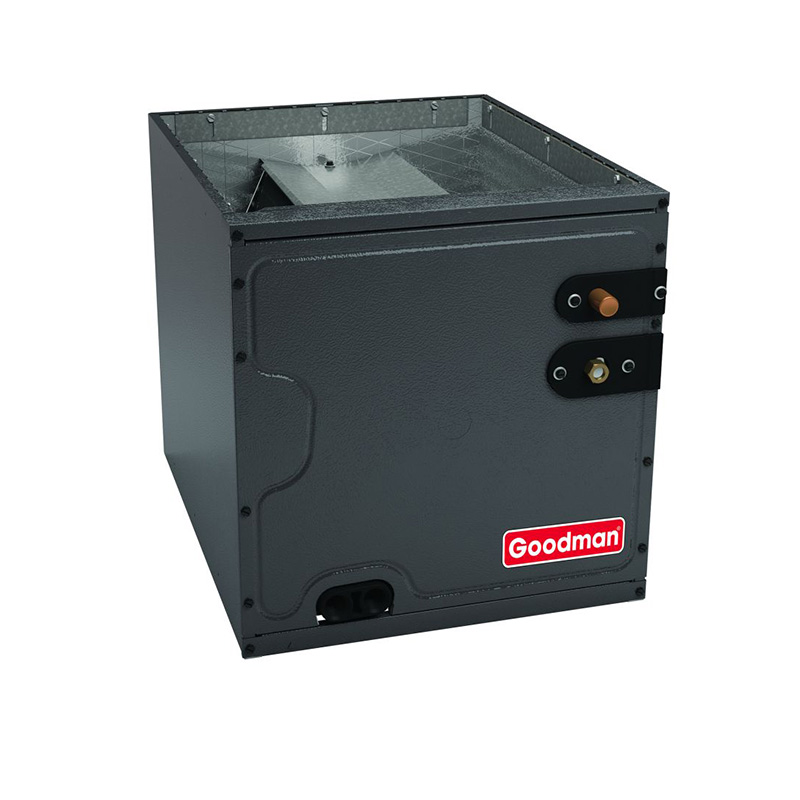
This specific model's air handler and coil are configured for horizontal airflow, meaning they are designed to lie on their side in an attic or crawlspace. Installing a horizontal-configured unit in an upright vertical position is not recommended and will affect drainage and airflow. If you need an upflow or downflow orientation, you would need a differently configured model.
What does R-32 refrigerant mean for me as a homeowner, and is it harder to service?
R-32 is a newer refrigerant that operates at higher pressures than R-410A and has a lower global warming potential. From a homeowner perspective, the main practical difference is that not every technician is yet set up to handle R-32, so confirm your HVAC service company has the proper equipment and certification before scheduling any refrigerant work.
Is 14 SEER2 going to cost me significantly more to run than a higher-efficiency unit?
Compared to a 16 or 18 SEER2 system, a 14 SEER2 unit will use more electricity on cooling cycles, and the difference grows in hot climates with long cooling seasons. For moderate climates or homes that rely more on heating than cooling, the payback period on a higher-efficiency condenser can stretch to 8 to 12 years, so the lower upfront cost often makes sense depending on your local utility rates.
Goodman gets low ratings on some review sites. Should I be concerned about reliability?
Goodman's ConsumerAffairs score sits around 2.5 out of 5, which reflects a complaint-heavy channel and a pattern of repair costs climbing after roughly year seven. Google dealer reviews average around 3.8 out of 5, where affordability is the most common praise. The documented failure points to watch for are dual-run capacitors (usually a low-cost fix), evaporator coil leaks, and compressors that tend to age out in 10 to 14 years rather than the 15 to 20 years seen with premium brands. A preventive maintenance plan and a good installer reduce these risks significantly.
What kind of installer should I look for, and does install quality really matter that much with Goodman?
With Goodman in particular, install quality is widely cited by technicians as the single biggest factor in how long the system lasts. A minority of owners have reported refrigerant leaks within the first year, which is typically an install or charge issue rather than a manufacturing defect. Look for a licensed HVAC contractor who performs a Manual J load calculation, sizes the ductwork properly, and verifies refrigerant charge after installation rather than relying on factory pre-charge alone.
Specifications
| Cooling capacity | 3 Ton |
| Efficiency | 14 SEER2 |
| Furnace output | 60000 BTU |
| Configuration | Horizontal |
| Refrigerant | R-32 |