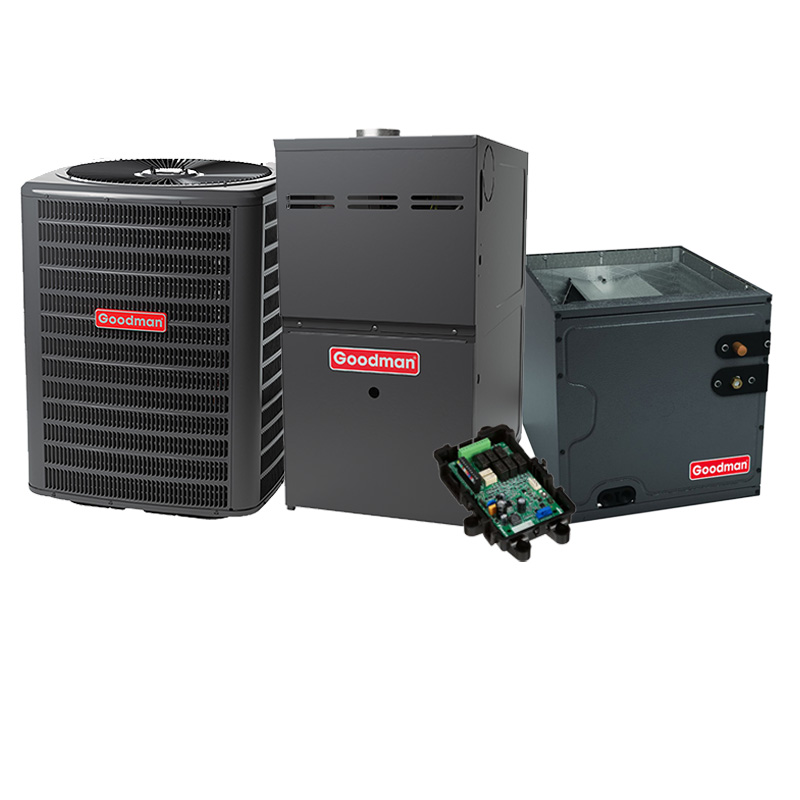
Goodman 3 Ton 14 SEER2 60000 BTU 80% Two-Stage Variable Speed Gas Furnace With R32 AC Condenser And Coil System – Horizontal
View on AC Direct see your lowest price →Check current price on AC Direct →
Key features
- 3-ton cooling capacity with 14 SEER2 efficiency rating
- 60,000 BTU two-stage gas furnace at 80% AFUE
- Variable-speed ECM blower motor for quieter, steadier airflow
- Horizontal cabinet configuration for attic or crawlspace installs
- R-32 refrigerant with lower global warming potential than R-410A
- Two-stage cooling condenser reduces short-cycling and improves humidity control
About this system
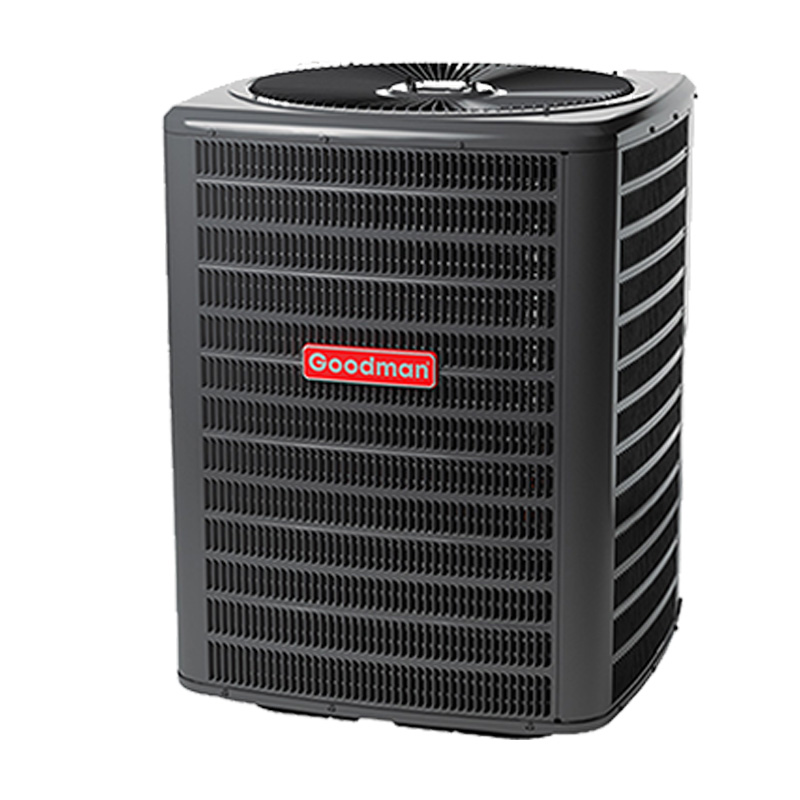
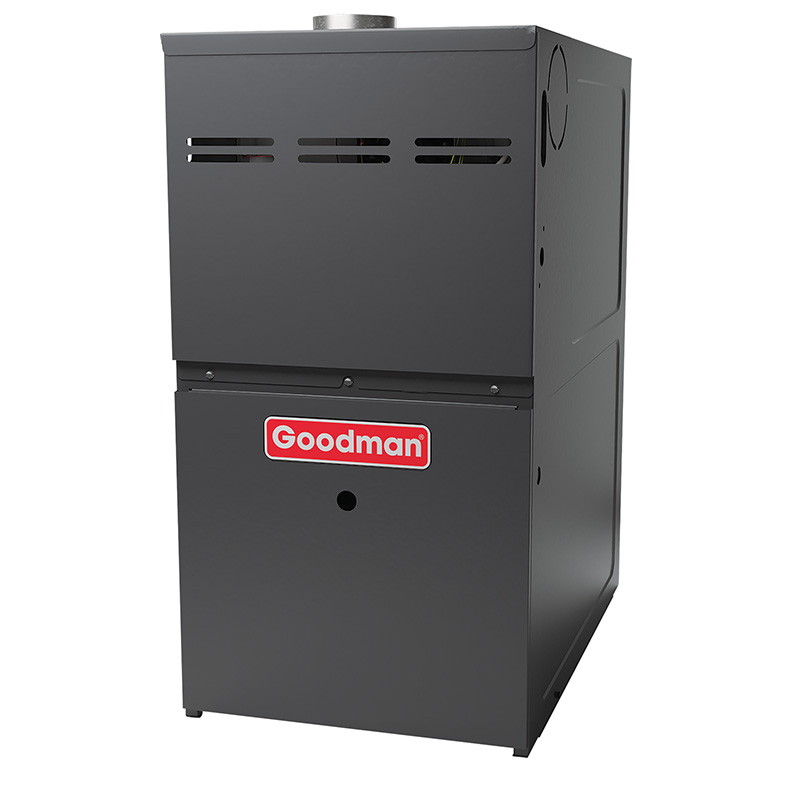
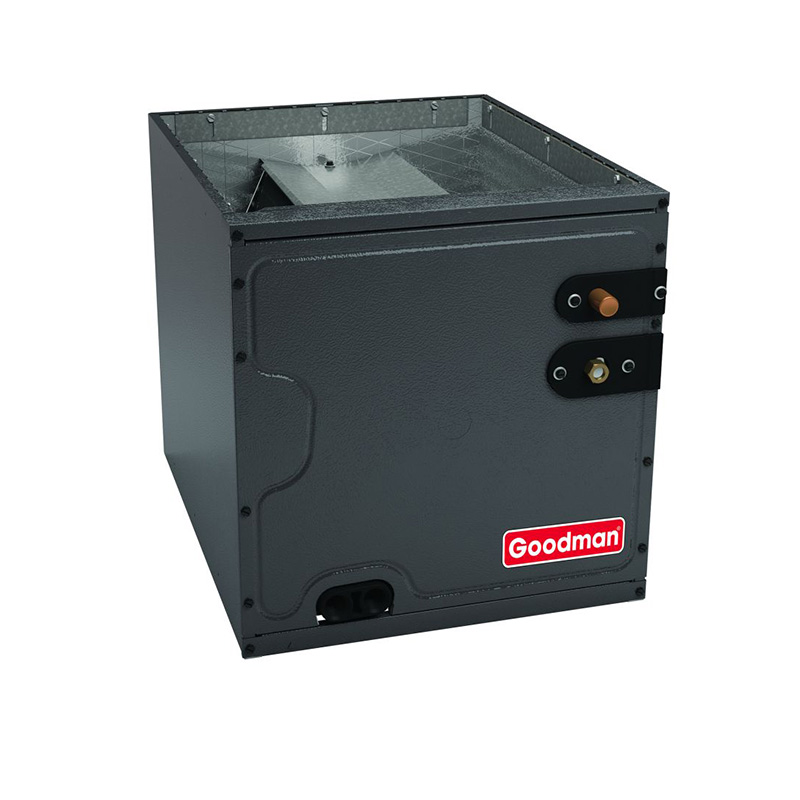
This Goodman system bundles a 3-ton R-32 air conditioning condenser, a matching evaporator coil, and a 60,000 BTU 80% AFUE two-stage variable-speed gas furnace into a horizontal-configuration package aimed at homes where attic or crawlspace installations are the norm. The horizontal cabinet orientation suits tight mechanical spaces that a standard upflow or downflow furnace simply will not fit, making this a practical pick for ranch-style homes, manufactured housing, and additions with low-clearance mechanical areas. The two-stage gas valve and variable-speed blower work together to run at lower capacity most of the time, which moderates temperature swings, cuts short-cycling, and tends to keep humidity in check better than a single-stage system would.
At 14 SEER2, this system clears the federal minimum efficiency standard for most U.S. climate regions and sits at the entry tier of mid-efficiency cooling. That means energy costs will be lower than aging equipment rated below 14 SEER2, but homeowners in hot climates who run AC heavily from May through September may see a meaningful long-term savings difference by stepping up to a 16 or 18 SEER2 system. The R-32 refrigerant is a notable forward-looking detail: R-32 has a lower global warming potential than the R-410A it replaces and is increasingly standard across the industry, so servicing this system five or ten years from now should be straightforward as refrigerant availability improves. The 80% AFUE furnace rating means 20 cents of every heating dollar exits through the flue, which is acceptable in mild-winter regions but falls short of the 96%+ efficiency that colder climates justify.
This Goodman horizontal system is a cost-effective entry point for homeowners who need a horizontal-specific configuration and want two-stage comfort features without paying premium-brand prices. It performs reliably when installed correctly, but owner reviews suggest that long-term costs can climb after year seven, and compressor longevity tends to trail Carrier, Trane, and Lennox benchmarks. It is a reasonable choice for budget-conscious buyers who understand the trade-offs and are willing to invest in a quality installation.
Overall score is the average of the five ratings above.
What we like
- Priced 15 to 25 percent below comparable Carrier, Trane, and Lennox systems
- Two-stage operation and variable-speed blower improve comfort and humidity management over single-stage alternatives
- R-32 refrigerant is industry-forward and should remain accessible for future service
- Horizontal configuration addresses an install need that most standard upflow systems cannot
- Dual-run capacitor failures, the most common repair, are typically a quick, low-cost fix in the $300 to $600 range
Trade-offs
- 80% AFUE furnace is not suitable as a primary heater in cold-winter climates where 90%+ efficiency pays back quickly
- Compressor lifespan averages 10 to 14 years versus 15 to 20 years for premium brands, raising long-term replacement risk
- A minority of owners report refrigerant leaks within the first year, typically tied to install quality or initial refrigerant charge
- ConsumerAffairs reviews average around 2.5 out of 5, with repair costs after year seven as the recurring theme
What homeowners and pros say about Goodman
Homeowners who choose Goodman most often do so because the upfront price is hard to argue with. Google dealer reviews land around 3.8 out of 5 across multiple locations, with affordability and accessible parts as the most consistent praise. The picture on ConsumerAffairs is less favorable, sitting near 2.5 out of 5, where the dominant complaint pattern is repair bills that start accumulating after roughly year seven. That gap between the two sources reflects a real phenomenon: Goodman systems that are installed carefully and maintained on schedule tend to perform adequately for a decade, while systems that receive marginal installs or are ignored until something breaks tend to generate the kind of frustration that ends up in online reviews.
HVAC technicians tend to have a measured view of Goodman. They acknowledge that dual-run capacitor failures are the most routine service call on these units, usually a straightforward repair in the $300 to $600 range. More concerning to pros are evaporator coil leaks, which appear in a meaningful share of owner accounts and require more involved service, and compressor lifespans that tend to average 10 to 14 years rather than the 15 to 20 years that Carrier, Trane, and Lennox compressors more commonly reach. For this specific horizontal system, technicians also flag that install quality is even more critical than usual: a horizontal furnace in an attic or crawlspace is harder to service, so any shortcut on initial refrigerant charge or duct sealing will compound over time. The R-32 refrigerant is generally viewed as a neutral-to-positive change, with no meaningful service complications expected as the transition away from R-410A continues.
Sources: ConsumerAffairs Goodman owner reviews, AHRI Directory of Certified Product Performance, U.S. DOE appliance and equipment efficiency standards, Goodman product specification sheets.
What it costs to run
At 14 SEER2, cooling this 3-ton system for a typical 1200-hour cooling season at the U.S. average electricity rate of $0.17/kWh works out to roughly $525 per year in cooling, about $23 less per year than a minimum-efficiency 13.4 SEER2 unit of the same size. Your real cost depends on your climate and local rate.
Method: (36,000 BTU/hr ÷ 14 SEER2) × 1200 hours ÷ 1000 × $0.17/kWh. Rate source: U.S. EIA average; cooling hours: moderate-climate estimate.
How it compares
| Brand | Comparable model | SEER2 | Stage | Price position |
|---|---|---|---|---|
| Goodman | This system (3T 14 SEER2 Horizontal, Two-Stage, R-32) | 14 | Two-stage | Value pick |
| Carrier | Performance 14 (24ACC6) with two-stage furnace | 14 | Two-stage | Typically 20 to 25 percent more than this Goodman system |
| Trane | XR14 with XV80 two-stage furnace | 14 | Two-stage | Typically 20 to 30 percent more than this Goodman system |
| Lennox | Merit 14ACX with ML180 furnace | 14 | Single-stage cooling, two-stage furnace | Typically 15 to 25 percent more than this Goodman system |
Competitor rows are comparable single-stage units at similar efficiency; price is relative position, not a quote.
Questions about this system
Why is a horizontal furnace configuration harder to find and does it cost more to install?
Horizontal furnaces are built to lie on their side in attics, crawlspaces, or tight utility closets where a vertical cabinet will not fit. They are less common than upflow units, which means fewer HVAC technicians install them regularly and some contractors charge a modest premium for the additional setup complexity. Confirm your installer has horizontal-specific experience before signing a contract.
Is R-32 refrigerant safe and easy to service in this system?
R-32 is mildly flammable but is used safely in residential HVAC equipment worldwide and is handled by certified technicians using standard precautions. It has roughly one-third the global warming potential of R-410A, and as the industry shifts toward R-32, refrigerant availability and service costs should improve over time rather than worsen.
How does 14 SEER2 compare to what I might already have, and will I notice the savings?
If you are replacing a system that is 10 or more years old rated at 10 to 13 SEER, you will likely see a noticeable reduction in cooling energy use. Homeowners in climates with long hot summers will capture more of that savings than those in mild regions with short cooling seasons.
What should I know about the capacitor and coil reliability issues mentioned in Goodman owner reviews?
Dual-run capacitors are the most frequently reported failure point across Goodman systems and usually run $300 to $600 to replace, which is a relatively minor repair. Evaporator coil leaks appear in a meaningful share of reviews and are more disruptive, potentially requiring refrigerant recovery and coil replacement. Ensuring correct installation and refrigerant charge at startup reduces the risk of early coil and refrigerant issues.
Does the two-stage furnace and variable-speed blower actually make a comfort difference in a horizontal install?
Yes, in most cases. The variable-speed ECM blower adjusts airflow to match demand rather than cycling fully on and off, which smooths out temperature swings and can help with humidity. In a horizontal install where duct routing is sometimes less direct, a variable-speed motor also compensates better for static pressure variations than a single-speed unit would.
Specifications
| Cooling capacity | 3 Ton |
| Efficiency | 14 SEER2 |
| Furnace output | 60000 BTU |
| Configuration | Horizontal |
| Refrigerant | R-32 |