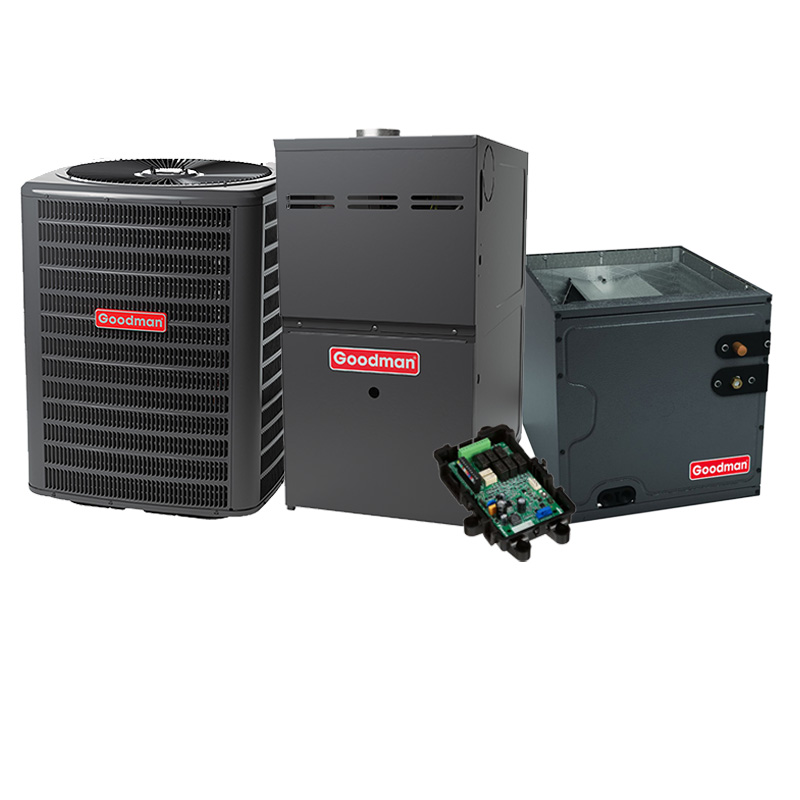
Goodman 3 Ton 14 SEER2 60000 BTU 80% Two-Stage Variable Speed Gas Furnace With R32 AC Condenser And Coil System – Horizontal
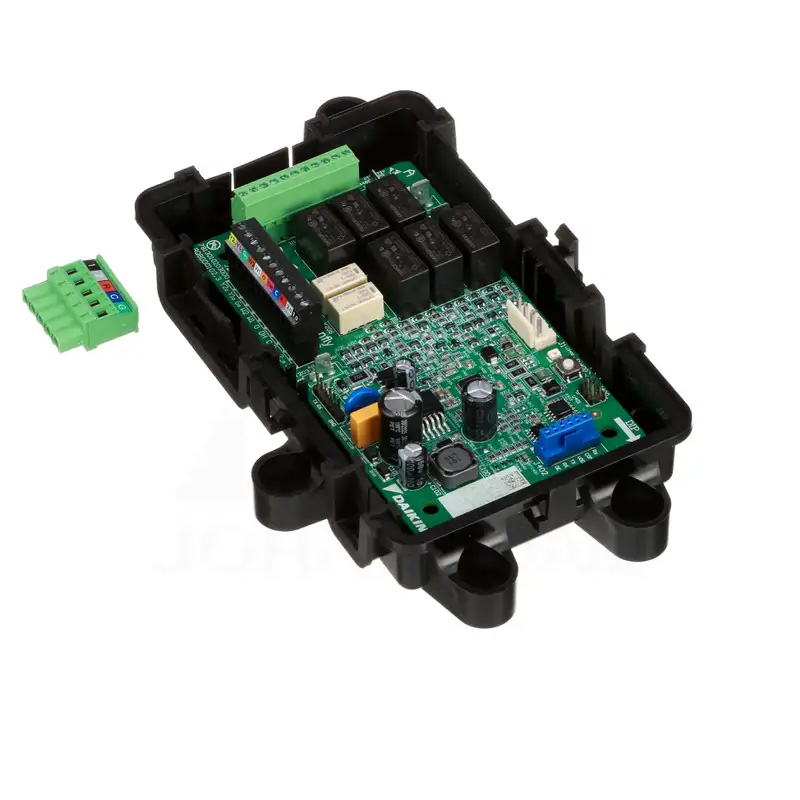
View on AC Direct see your lowest price →Check current price on AC Direct →
Key features
- 14 SEER2 cooling efficiency with R-32 refrigerant (lower GWP than R-410A)
- 60,000 BTU two-stage gas furnace with 80% AFUE for moderate heating efficiency
- Variable-speed ECM blower motor for quieter operation and better humidity control
- Horizontal configuration designed for attic or crawl-space installations
- 3-ton capacity suited to roughly 1,400 to 1,900 square feet depending on climate and load
- Priced approximately 15 to 25 percent below comparable Carrier, Trane, and Lennox systems
About this system
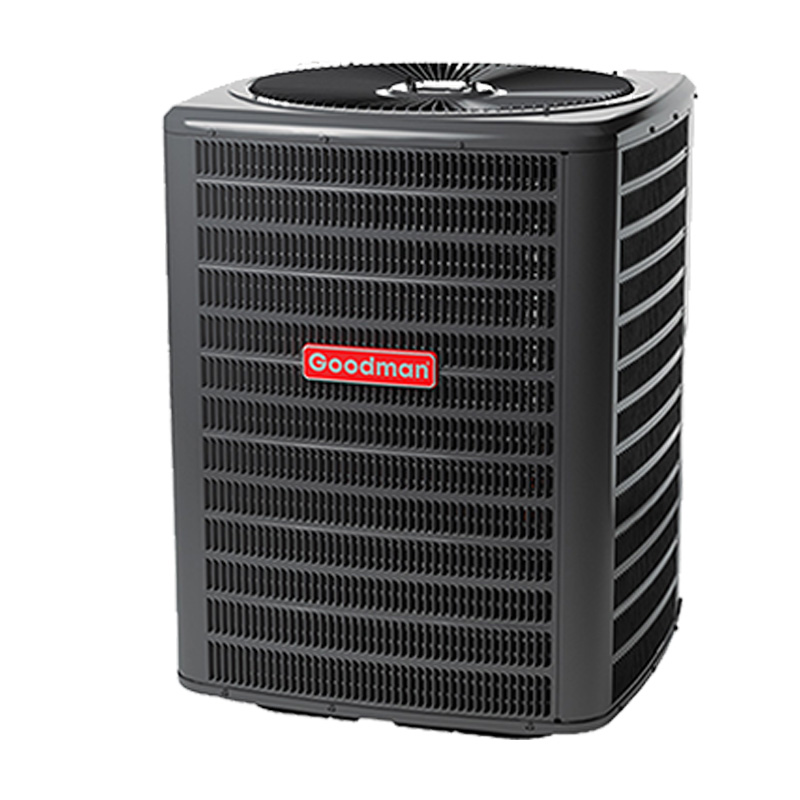
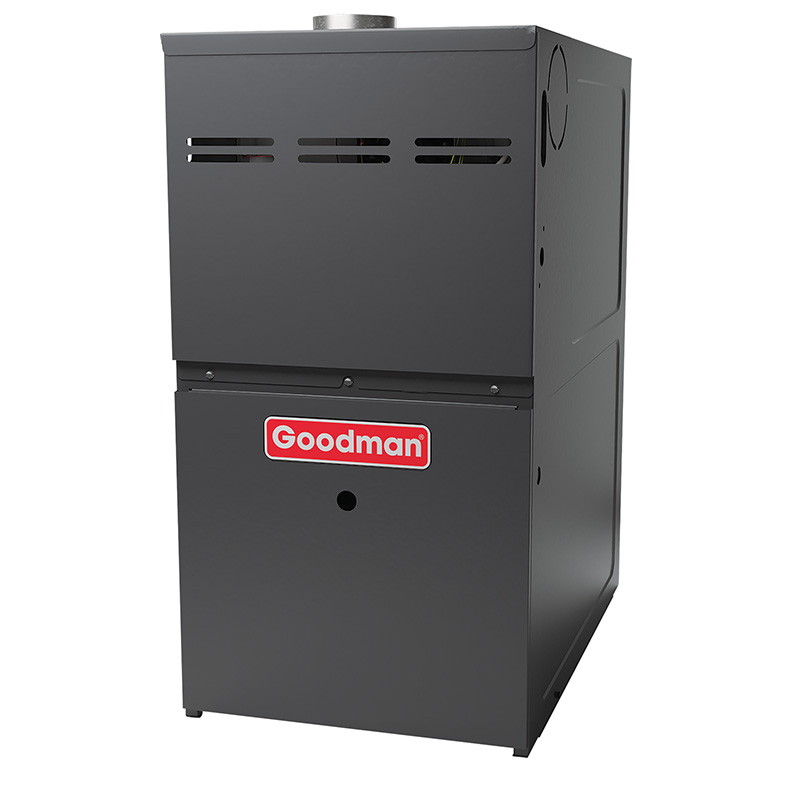
This Goodman horizontal gas furnace and air conditioning system pairs a 3-ton, 14 SEER2 R-32 condenser and coil with a 60,000 BTU, 80% AFUE two-stage variable-speed gas furnace configured for horizontal installation. The horizontal orientation makes it the right call for attic or crawl-space applications where a vertical unit simply will not fit. Two-stage heating means the furnace runs on a lower fire setting during mild weather, cycling to full output only when temperatures demand it, which cuts short-cycling and keeps indoor temperatures more consistent than a single-stage unit would.
At 14 SEER2, the cooling side sits at the current federal minimum efficiency threshold for many regions, so this is not a system buyers choose for low utility bills over a long horizon. It is a system buyers choose because the upfront cost is meaningfully lower than mid-efficiency offerings from Trane, Lennox, or Carrier, and because the R-32 refrigerant carries a lower global-warming potential than the R-410A it replaces across much of the industry. The variable-speed indoor blower motor improves comfort and dehumidification relative to single-speed alternatives, and it reduces electricity draw on the air-handler side even when the outdoor SEER2 rating itself is modest.
This configuration suits a homeowner replacing aging equipment in a tight budget window, a landlord managing operating costs on a rental property, or a buyer in a mild climate where the AC runs fewer seasonal hours and a higher-SEER2 payback period stretches too long to justify the premium. Anyone planning to stay in the home 15 or more years and running the AC heavily all summer should price out the next efficiency tier before committing here.
This Goodman system delivers a solid entry point for homeowners who need horizontal-fit replacement equipment without stretching their budget to a premium brand. The two-stage furnace and variable-speed blower punch above the price point for comfort, but 14 SEER2 is the floor of current efficiency standards, and Goodman's documented track record of capacitor failures, evaporator coil leaks, and compressor longevity trailing premium brands by several years are real considerations buyers should weigh against the lower sticker price.
Overall score is the average of the five ratings above.
What we like
- Significantly lower purchase price than comparable Carrier, Trane, or Lennox systems
- Two-stage furnace reduces short-cycling and improves temperature consistency over single-stage units
- Variable-speed ECM blower lowers air-handler electricity use and improves dehumidification
- R-32 refrigerant has a lower environmental impact than the R-410A used in older systems
- Horizontal configuration opens installation options in attics and crawl spaces where vertical units cannot go
Trade-offs
- 14 SEER2 is the current federal minimum in many regions, offering little room for cooling efficiency savings over the system's life
- Compressor lifespan averages 10 to 14 years versus 15 to 20 years typical of premium-brand compressors
- Evaporator coil leaks and early refrigerant loss are documented failure modes in owner reviews, with a minority experiencing leaks in year one
- Dual-run capacitor failures are the most commonly reported repair, and overall long-term ownership costs can climb after roughly year seven per ConsumerAffairs feedback
What homeowners and pros say about Goodman
Homeowners who follow up after installation tend to split along predictable lines. Those whose contractors set up the system carefully, verified refrigerant charge, and confirmed proper airflow report reliable performance and appreciate the lower sticker price. That experience tracks with Google dealer review scores that average around 3.8 out of 5, where affordability is the most-cited positive. The two-stage furnace and variable-speed blower get specific praise from owners who previously ran single-stage equipment, with noticeably fewer temperature swings and less on-off cycling being the most common observations.
The harder feedback surfaces in longer-term ownership data. ConsumerAffairs scores for Goodman run around 2.5 out of 5, and the recurring pattern in those complaints is repair costs that start climbing after roughly year seven. The most frequently mentioned failure is the dual-run capacitor, a relatively low-cost fix but an annoyance that shows up across multiple owner reports. Evaporator coil leaks are a documented concern in a meaningful share of reviews, and compressor longevity typically lands in the 10-to-14-year range rather than the 15-to-20 years owners of premium brands tend to report. HVAC technicians who work on Goodman equipment regularly note that the units are straightforward to service and parts are widely available, but they consistently emphasize that installation quality is the single biggest predictor of how long one lasts and how much it costs to keep running.
Sources: ConsumerAffairs Goodman owner reviews, AHRI Directory of Certified Product Performance, U.S. DOE appliance and equipment efficiency standards, Goodman product specification sheets.
What it costs to run
At 14 SEER2, cooling this 3-ton system for a typical 1200-hour cooling season at the U.S. average electricity rate of $0.17/kWh works out to roughly $525 per year in cooling, about $23 less per year than a minimum-efficiency 13.4 SEER2 unit of the same size. Your real cost depends on your climate and local rate.
Method: (36,000 BTU/hr ÷ 14 SEER2) × 1200 hours ÷ 1000 × $0.17/kWh. Rate source: U.S. EIA average; cooling hours: moderate-climate estimate.
How it compares
| Brand | Comparable model | SEER2 | Stage | Price position |
|---|---|---|---|---|
| Goodman | 3 Ton 14 SEER2 60,000 BTU 80% Two-Stage Variable Speed Horizontal | 14 | Two-stage furnace / single-stage condenser | Value pick |
| Carrier | Performance 14 Series (24ACC4) | 14 | Single-stage | Roughly 20 to 25 percent more than the Goodman for comparable tonnage |
| Trane | XR14c | 14-15 | Single-stage | Typically 20 to 30 percent more than the Goodman at similar capacity |
| Lennox | Merit ML14XC1 | 14-15 | Single-stage | Generally 25 to 35 percent more than the Goodman for a comparable 3-ton system |
Competitor rows are comparable single-stage units at similar efficiency; price is relative position, not a quote.
Questions about this system
Why does this system have a horizontal configuration and can it be installed vertically instead?
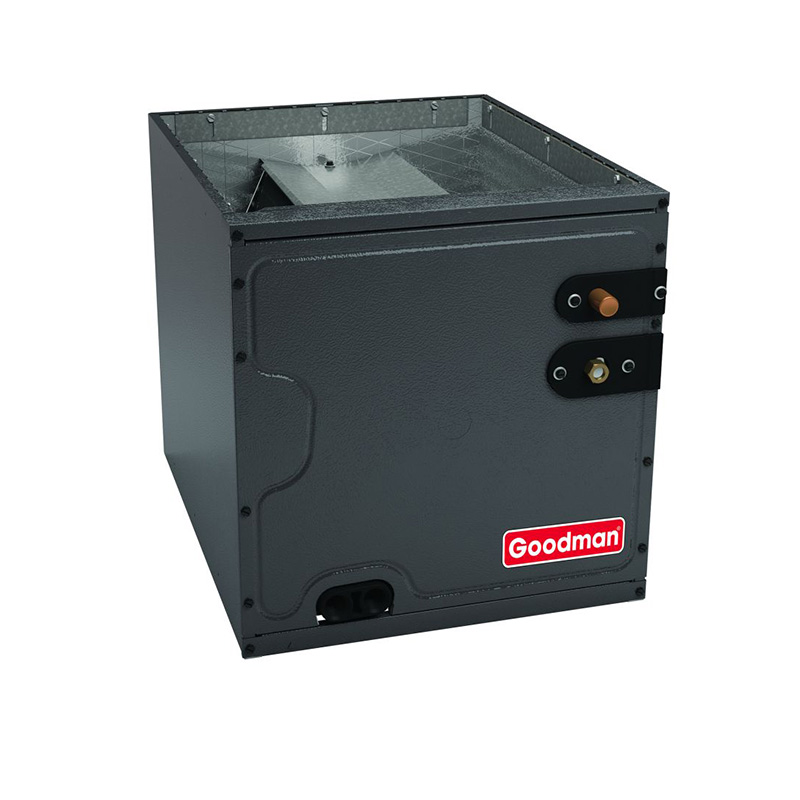
The coil and air-handler components in this kit are oriented for horizontal airflow, which is required in attic and crawl-space installations where the unit lies on its side. Using it in a vertical upflow or downflow application would require a differently configured coil; installing the wrong orientation can cause drainage and airflow problems, so confirm with your installer that horizontal is what your space actually needs.
Is 14 SEER2 still legal to install in my region?
As of 2023 federal standards, 14 SEER2 meets the minimum efficiency requirement in northern U.S. climate zones for a split system of this size, but some southern states require a higher minimum for cooling-dominant climates. Check your local jurisdiction before purchasing, as requirements can also change and some utility rebate programs set a higher efficiency floor.
What should I know about R-32 refrigerant before buying?
R-32 has a global-warming potential roughly 68 percent lower than R-410A and is becoming common across the industry as R-410A is phased down. It is mildly flammable (classified A2L), so your installing technician needs to be certified to handle it and your local code may specify ventilation or detection requirements in confined mechanical spaces.
What are the most likely repairs I should budget for over the first ten years?
The dual-run capacitor is the most commonly reported failure on Goodman condensing units and typically costs 300 to 600 dollars to diagnose and replace. Evaporator coil leaks are a documented issue in a meaningful share of owner reports, and a small number of owners have reported refrigerant loss in the first year, which usually points to an installation or initial-charge problem rather than a manufacturing defect.
Does Goodman's warranty cover parts and labor, and how does it compare to premium brands?
Goodman typically offers a 10-year parts warranty on registered equipment, but labor is not covered by the manufacturer. You are responsible for technician costs on every service call, which adds up if failures occur outside a home-warranty plan. Trane and Carrier offer comparable parts coverage at registration, but some Lennox and Carrier dealer programs include extended labor coverage that Goodman's standard warranty does not match.
Specifications
| Cooling capacity | 3 Ton |
| Efficiency | 14 SEER2 |
| Furnace output | 60000 BTU |
| Configuration | Horizontal |
| Refrigerant | R-32 |