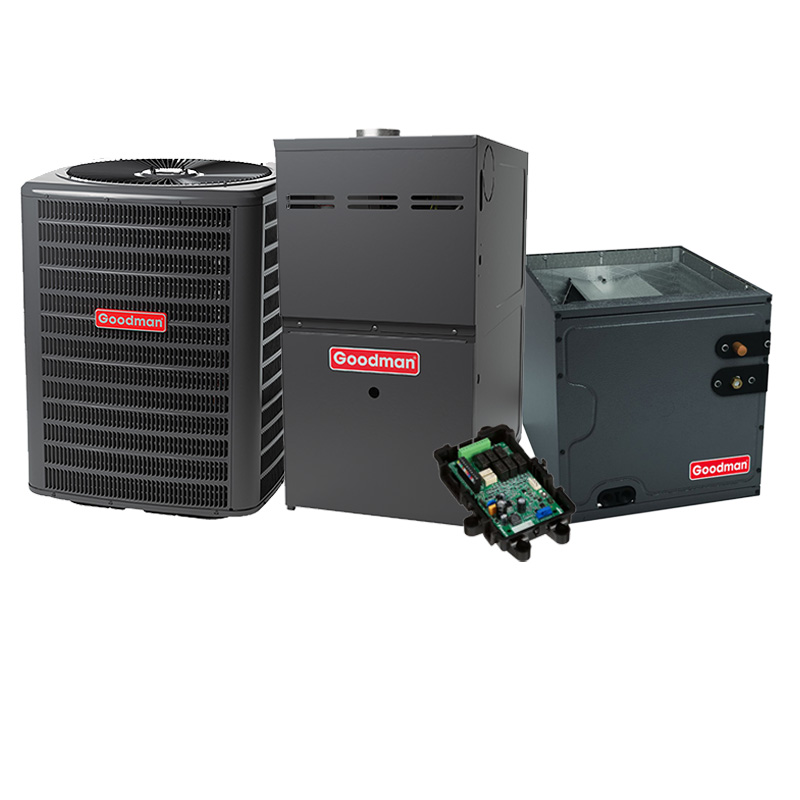
Goodman 4 Ton 13.6 SEER2 60000 BTU 80% Two-Stage Variable Speed Gas Furnace With R32 AC Condenser And Coil System – Horizontal
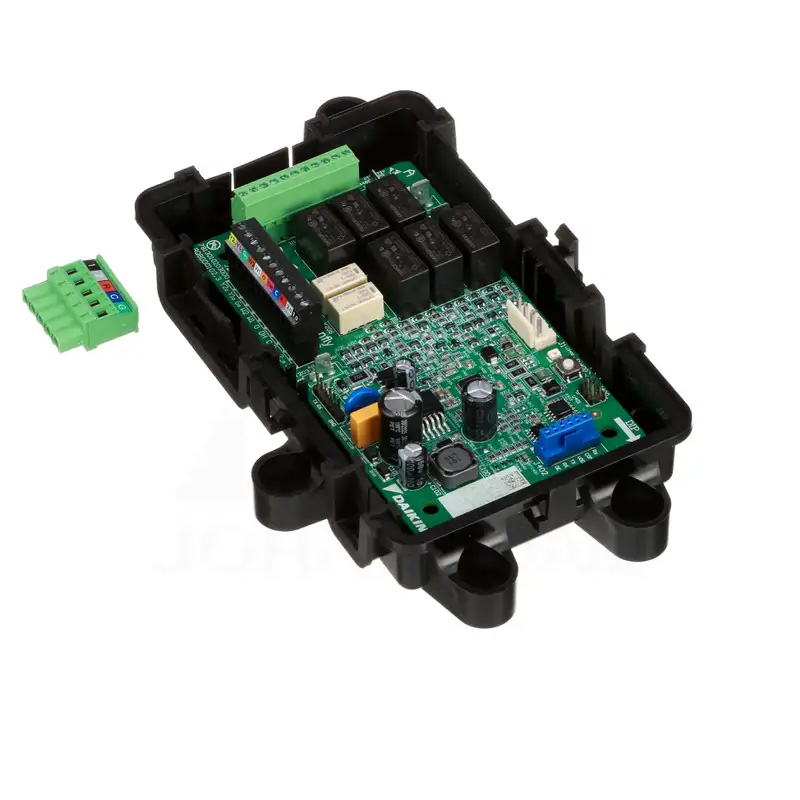
View on AC Direct see your lowest price →Check current price on AC Direct →
Key features
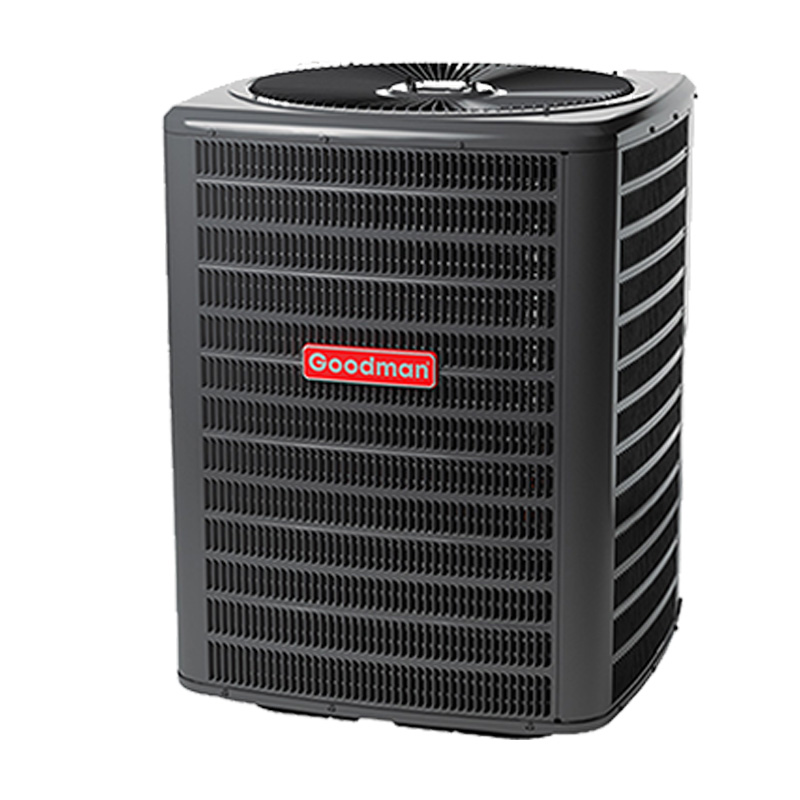
- 4-ton R-32 AC condenser rated at 13.6 SEER2 cooling efficiency
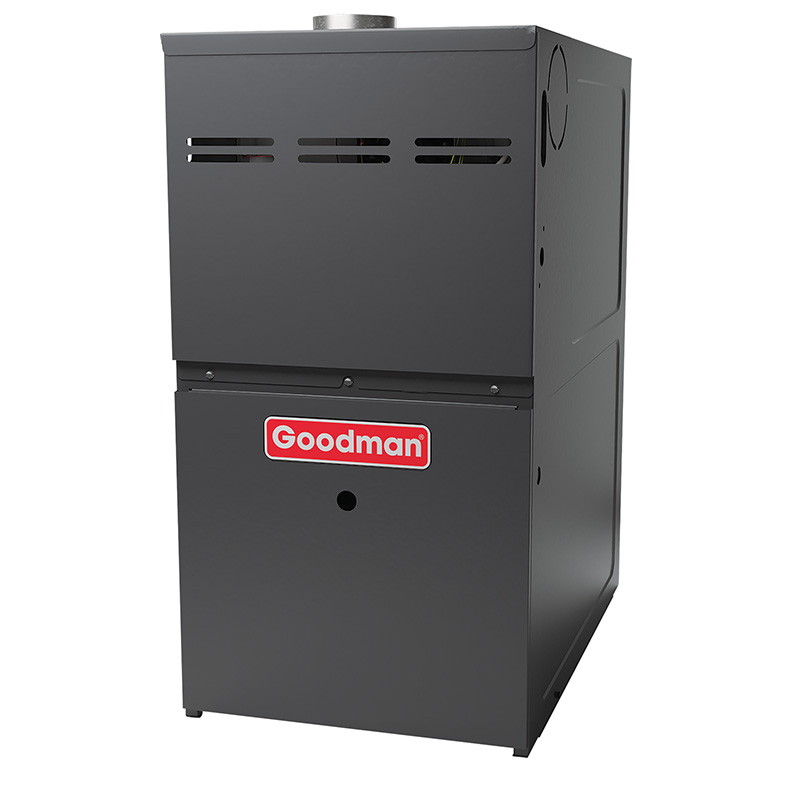
- 60,000 BTU two-stage gas furnace for reduced-capacity everyday heating
- Variable-speed ECM blower motor for quieter, more consistent airflow
- Horizontal configuration designed for attic, crawlspace, or tight-clearance installs
- 80% AFUE combustion efficiency, a mid-tier heating rating
- R-32 refrigerant with lower global-warming potential than legacy R-410A
About this system
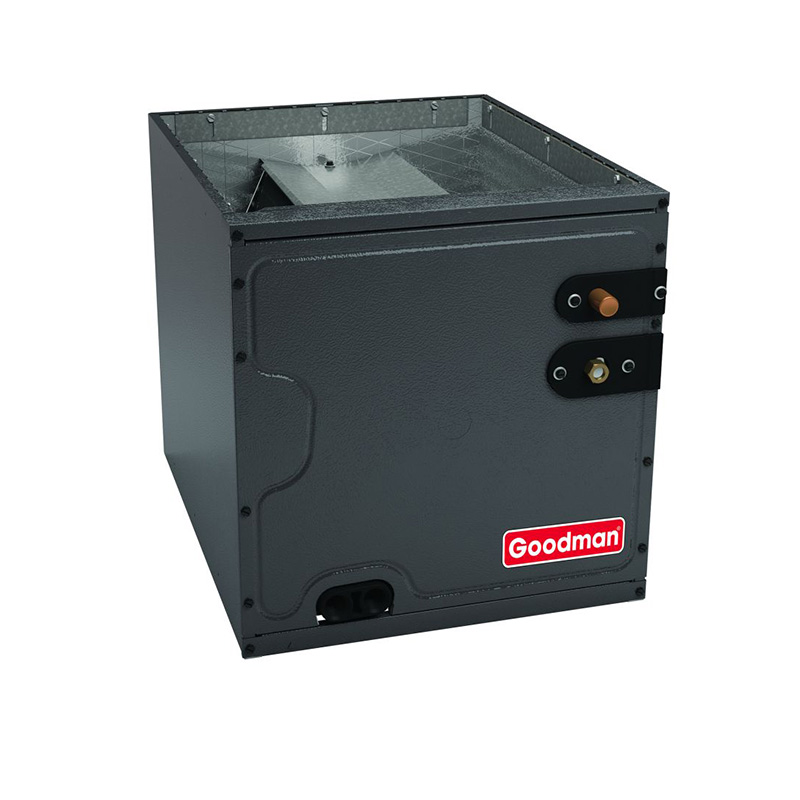
This Goodman horizontal system pairs a 4-ton R-32 condenser rated at 13.6 SEER2 with a 60,000 BTU two-stage, variable-speed gas furnace in a horizontal configuration. The horizontal layout is built specifically for attic, crawlspace, or side-closet installations where vertical clearance is limited, making it a practical choice for ranch-style homes, manufactured housing, and additions where ductwork runs through a low-profile space. R-32 refrigerant carries a lower global-warming potential than the R-410A it replaces and is increasingly standard in new equipment, so parts availability going forward is solid.
The two-stage furnace runs at a reduced capacity most of the time and only steps up to full output on the coldest days, which improves comfort and humidity control compared with a single-stage unit. The variable-speed air handler fan ramps up and down slowly rather than blasting on at full speed, further smoothing temperature swings and reducing energy draw at the air-handler level. At 80% AFUE the furnace is a mid-efficiency unit, meaning roughly one-fifth of combustion heat exits through the flue. Homeowners in very cold climates may want to weigh the long-term fuel cost against stepping up to a 96% AFUE model, though the upfront cost difference can be significant. The 13.6 SEER2 cooling rating clears the current federal minimum for most regions without reaching into premium efficiency territory.
This system is well suited to budget-conscious buyers replacing aging equipment who want the comfort upgrade of two-stage heating and variable-speed airflow without the price tag of a Carrier, Trane, or Lennox equivalent. It rewards careful installation more than most systems, so choosing an experienced, licensed contractor is not optional but essential to getting the rated performance and expected lifespan.
This Goodman system delivers genuine comfort upgrades over base single-stage equipment at a price point that is hard to match from premium brands. The trade-off is a compressor lifespan and reliability track record that lags Carrier, Trane, and Lennox, and an outcome that depends heavily on who installs it. Buyers who vet their contractor carefully and budget for a maintenance plan get solid value here.
Overall score is the average of the five ratings above.
What we like
- Priced 15 to 25 percent below comparable Carrier, Trane, and Lennox systems
- Two-stage furnace meaningfully improves day-to-day comfort and humidity management
- Variable-speed blower reduces noise and energy consumption at the air-handler level
- R-32 refrigerant is a forward-looking choice with good parts availability
- Horizontal configuration fills a real gap for attic and crawlspace installations
Trade-offs
- Compressor longevity averages 10 to 14 years versus 15 to 20 years for premium brands
- Evaporator coil leaks appear in a notable share of owner reviews, a known weak point
- 80% AFUE furnace leaves meaningful fuel savings on the table compared with high-efficiency alternatives in cold climates
- A minority of owners report refrigerant leaks within the first year, typically tied to install or charge quality
What homeowners and pros say about Goodman
Homeowners who have lived with Goodman equipment tend to land in one of two camps. Those who had a skilled contractor handle the install and who schedule annual tune-ups often report years of uneventful operation and point to the lower purchase price as money well spent. Those who had a rushed or cut-rate installation, or who skipped maintenance, more frequently encounter the issues that pull Goodman’s ConsumerAffairs rating down to roughly 2.5 out of 5: repair bills that climb after year 7, dual-run capacitor failures (a relatively inexpensive fix at 300 to 600 dollars when caught in time), and evaporator coil leaks that can be considerably more costly. A small percentage of owners report refrigerant leaks within the first year, and the consensus among technicians is that these trace back to install or charge problems rather than a manufacturing defect.
HVAC professionals who work on Goodman equipment regularly tend to respect the value position while being candid about the ceiling. On Google dealer review pages, where scores average around 3.8 out of 5 across hundreds of reviews per location, affordability is far and away the most frequent compliment. The consistent professional criticism is that Goodman compressors average 10 to 14 years of service life, noticeably shorter than the 15 to 20 years typically seen with Carrier, Trane, or Lennox compressors. For this horizontal two-stage system specifically, contractors note that horizontal installations add a layer of complexity at setup, so getting a technician who has done horizontal Goodman work before is worth asking about explicitly when getting quotes.
Sources: ConsumerAffairs Goodman owner reviews, AHRI Directory of Certified Product Performance, U.S. DOE appliance and equipment efficiency standards, Goodman product specification sheets.
What it costs to run
At 13.6 SEER2, cooling this 4-ton system for a typical 1200-hour cooling season at the U.S. average electricity rate of $0.17/kWh works out to roughly $720 per year in cooling, about $11 less per year than a minimum-efficiency 13.4 SEER2 unit of the same size. Your real cost depends on your climate and local rate.
Method: (48,000 BTU/hr ÷ 13.6 SEER2) × 1200 hours ÷ 1000 × $0.17/kWh. Rate source: U.S. EIA average; cooling hours: moderate-climate estimate.
How it compares
| Brand | Comparable model | SEER2 | Stage | Price position |
|---|---|---|---|---|
| Goodman | 4-Ton 13.6 SEER2 / 60k BTU 80% Two-Stage Variable-Speed Horizontal | 13.6 | Two-stage furnace / variable-speed blower | Value pick |
| Carrier | Performance 15 / 59TP6 80% Two-Stage Series | 15.0 | Two-stage furnace / multi-speed blower | Typically 20 to 25 percent more than this Goodman system |
| Trane | XR15 / S8X2 80% Two-Stage Series | 15.0 | Two-stage furnace / variable-speed blower | Typically 20 to 30 percent more than this Goodman system |
| Lennox | Merit 14ACX / ML180 80% Two-Stage Series | 13.8 | Two-stage furnace / variable-speed blower | Typically 15 to 25 percent more than this Goodman system |
Competitor rows are comparable single-stage units at similar efficiency; price is relative position, not a quote.
Questions about this system
Why does the horizontal configuration matter, and can this system be installed vertically?
Horizontal units are engineered to lie on their side so drain pans, coil orientation, and airflow paths work correctly in that position. Installing a horizontal-rated unit vertically will cause drainage and performance problems. If your application allows for a vertical install, you would need a different configuration of this system.
Is R-32 refrigerant harder to service than R-410A?
R-32 is flammable at high concentrations, so technicians need A2L certification to handle it, which not all older service contractors have yet. It is worth confirming your service provider is certified before scheduling maintenance or repairs. Supply and tooling availability are growing quickly as R-32 becomes the industry standard.
What does two-stage heating actually mean for my energy bills and comfort?
The furnace runs at a lower firing rate, typically around 65 percent of capacity, during most heating hours and only climbs to full output on very cold days. This keeps the home at a steadier temperature, reduces the cold-blast feeling of short cycling, and can modestly lower gas consumption compared with a single-stage unit running on and off at full power.
Goodman's ConsumerAffairs score is low. Should I be worried?
ConsumerAffairs is a complaint-driven channel, so scores there skew negative across almost every HVAC brand. Goodman's score of roughly 2.5 out of 5 there reflects a recurring pattern of repair costs rising after about year 7, which aligns with the documented weak points: dual-run capacitors, evaporator coil leaks, and a compressor lifespan shorter than premium competitors. Google dealer reviews average around 3.8 out of 5, where the most common praise is affordability. The honest picture is a budget brand with real trade-offs, not one to dismiss entirely.
What maintenance should I plan for to get the most life out of this system?
Annual professional tune-ups are important for any system but especially for Goodman, where install and maintenance quality strongly influence longevity. Ask your technician to check the dual-run capacitor each visit since that is the most commonly reported failure point and an inexpensive fix when caught early. Keeping the coil clean and ensuring refrigerant charge is correct from day one reduces the risk of the evaporator coil leaks that appear in owner reviews.
Specifications
| Cooling capacity | 4 Ton |
| Efficiency | 13.6 SEER2 |
| Furnace output | 60000 BTU |
| Configuration | Horizontal |
| Refrigerant | R-32 |