Goodman R32 60000 BTU 80% Multi-Speed ECM Gas Furnace Low Nox Downflow (GD9S800603AX)
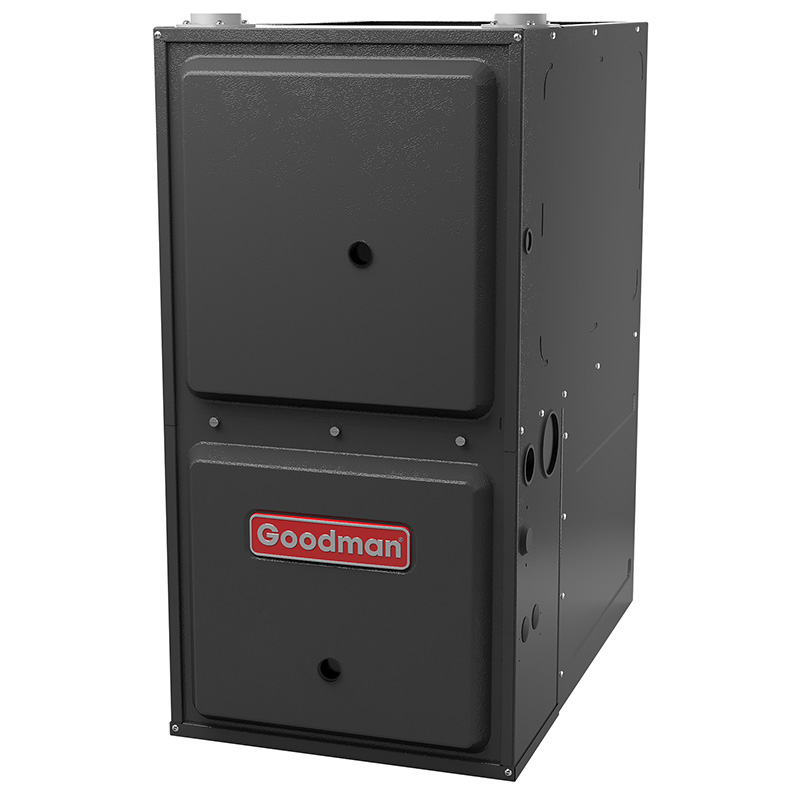
View on AC Direct see your lowest price →Check current price on AC Direct →
Key features
- 60,000 BTU output with 80% AFUE combustion efficiency
- Downflow configuration for closet or upper-floor utility room installs
- Multi-speed ECM blower motor for quieter, more efficient airflow
- Low NOx burner design meets California and regional air-quality standards
- Compatible with standard communicating and non-communicating thermostats
- Goodman's parts-included limited warranty covers heat exchanger, parts, and labor (registration required)
About this system
The Goodman GD9S800603AX is a 60,000 BTU downflow gas furnace rated at 80% AFUE, meaning 80 cents of every dollar spent on gas goes directly to heating your home. The downflow configuration pushes warm air downward through the supply plenum, making it the right choice for installations in upper-floor closets, hallways, or utility rooms where ductwork runs beneath the unit rather than above it. A multi-speed ECM blower motor helps the unit modulate airflow for quieter operation and more consistent temperature distribution compared to a fixed-speed PSC motor, while also reducing electricity draw during blower-only or fan modes.
The Low NOx designation means combustion is tuned to emit lower levels of nitrogen oxides, a requirement in several California air districts and an increasingly common specification in other regions with air-quality regulations. If you are in a Low NOx jurisdiction, this distinction is not optional branding; it is a compliance requirement. At 60,000 BTU, this furnace suits homes in the 1,200 to 1,800 square foot range in moderate climates, though actual sizing should always come from a Manual J load calculation performed by your installer. The R-32 refrigerant designation listed in the specs is unusual for a standalone gas furnace and likely reflects a system-level specification rather than a component of the furnace itself, which operates on natural gas or propane.
The GD9S800603AX delivers a solid 80% AFUE furnace at a price point well below Trane, Lennox, and Carrier equivalents, making it a legitimate choice for budget-conscious buyers who prioritize upfront cost. The ECM blower and Low NOx burner are genuine functional advantages, not just spec-sheet filler. The honest caveat is that Goodman's long-term ownership experience is heavily install-dependent, and owners who hit the repair cycle after year 7 tend to feel the savings erode.
Overall score is the average of the five ratings above.
What we like
- Priced 15 to 25 percent below comparable units from Trane, Lennox, and Carrier
- Multi-speed ECM motor reduces electricity consumption compared to single-speed PSC blowers
- Low NOx rating satisfies strict air-quality regulations in California and similar districts
- Downflow design covers a specific installation scenario that not every brand catalogs in entry-level lines
- Goodman's registered warranty includes a lifetime heat exchanger limited warranty and 10-year parts coverage
Trade-offs
- 80% AFUE sits at the minimum federal efficiency standard; homeowners in cold climates pay meaningfully more in gas bills than with a 96% AFUE alternative over time
- Goodman's ConsumerAffairs score of roughly 2.5 out of 5 reflects a pattern of repair costs climbing after year 7, which can narrow or eliminate the upfront savings advantage
- Dual-run capacitors are the most commonly reported failure point across Goodman equipment; while repairs typically run $300 to $600, frequency matters over a 10- to 15-year ownership window
- Compressor and heat-exchanger longevity averages 10 to 14 years on Goodman systems versus 15 to 20 for premium brands, meaning earlier replacement decisions for some owners
What homeowners and pros say about Goodman
Homeowners who go with Goodman frequently point to affordability as the deciding factor, and that tracks with Google dealer review scores that average around 3.8 out of 5 across hundreds of reviews per location, where price-to-performance is the most common thread of praise. The picture gets more complicated in longer ownership windows. ConsumerAffairs reviews for Goodman sit at roughly 2.5 out of 5, and while that platform skews toward people who had problems, the recurring theme is specific: repair costs that start climbing around year 7 and, for some owners, outpace the savings from the lower purchase price.
HVAC technicians tend to hold a pragmatic view of Goodman. The consensus in the trade is that installation quality determines more of the outcome than the brand nameplate does, and a Goodman unit installed carefully by an experienced technician will outlast a premium brand installed sloppily. The documented failure patterns worth knowing about are dual-run capacitor failures, which are common but inexpensive to fix; evaporator coil leaks, which appear in a meaningful share of owner reports; and a compressor lifespan that averages 10 to 14 years compared to 15 to 20 years for top-tier brands. For a downflow 80% furnace specifically, the equipment category itself is straightforward enough that a competent installer can set Goodman up for a solid run, but buyers should go in with realistic expectations about the mid-decade service history.
Sources: ConsumerAffairs Goodman owner reviews, AHRI Directory of Certified Product Performance, U.S. DOE appliance and equipment efficiency standards, Goodman product specification sheets.
How it compares
| Brand | Comparable model | SEER2 | Stage | Price position |
|---|---|---|---|---|
| Goodman | GD9S800603AX | N/A (gas furnace) | Multi-speed | Value pick |
| Carrier | Performance 80 (58TP0) | N/A (gas furnace) | Single-stage | Moderately higher than Goodman |
| Trane | S8X1 80% AFUE | N/A (gas furnace) | Single-stage | Moderately to significantly higher than Goodman |
| Lennox | Merit ML180 | N/A (gas furnace) | Single-stage | Moderately higher than Goodman |
Competitor rows are comparable single-stage units at similar efficiency; price is relative position, not a quote.
Questions about this system
Why does a gas furnace spec sheet reference R-32 refrigerant?
R-32 is a refrigerant used in air conditioning and heat pump systems, not in gas furnaces. If R-32 appears in this product's specifications, it most likely reflects a bundle or system-level listing rather than a component of the furnace itself. The GD9S800603AX heats your home by burning natural gas or propane and does not contain or circulate refrigerant.
Is a downflow furnace harder to install than an upflow model?
Downflow furnaces require the supply air to discharge downward, which means ductwork must be routed below the unit. This configuration is common in upper-floor closets and manufactured homes but is less universal than upflow. Installation complexity is comparable to an upflow unit as long as the mechanical space and duct layout are designed for it, but installing it in the wrong orientation is not an option, so confirm your existing or planned duct layout before purchasing.
What does the Low NOx designation actually require, and do I need it?
Low NOx burners are engineered to produce fewer nitrogen oxide emissions during combustion. In California's South Coast Air Quality Management District and several other regional air districts, Low NOx certification is a legal requirement for new furnace installations. If you are outside a regulated district, the designation does not hurt performance but is not mandatory; if you are in a regulated area, buying a non-Low-NOx unit means your installer cannot legally put it in.
How does the multi-speed ECM blower affect my electricity bill versus a standard blower?
An ECM (electronically commutated motor) blower uses significantly less electricity than a conventional PSC motor, particularly during lower-demand operation like fan-only mode or reduced heating cycles. The savings depend on how many hours per year your blower runs, but ECM motors are a genuine efficiency improvement for the air-moving portion of the system, separate from the furnace's gas combustion efficiency.
What repairs should I budget for over a 10-year ownership period with this Goodman furnace?
Based on documented owner experience with Goodman equipment, dual-run capacitors are the most commonly replaced component and typically cost $300 to $600 per service call. After roughly year 7, owners report a more active repair cycle that can include igniter replacements, control board issues, and heat exchanger inspections. Budgeting $500 to $1,000 over a decade for routine service calls is a realistic baseline, though a well-executed installation by a licensed technician reduces the likelihood of early failures.
Specifications
| Furnace output | 60000 BTU |
| Configuration | Downflow |
| Refrigerant | R-32 |
| Model | GD9S800603AX |