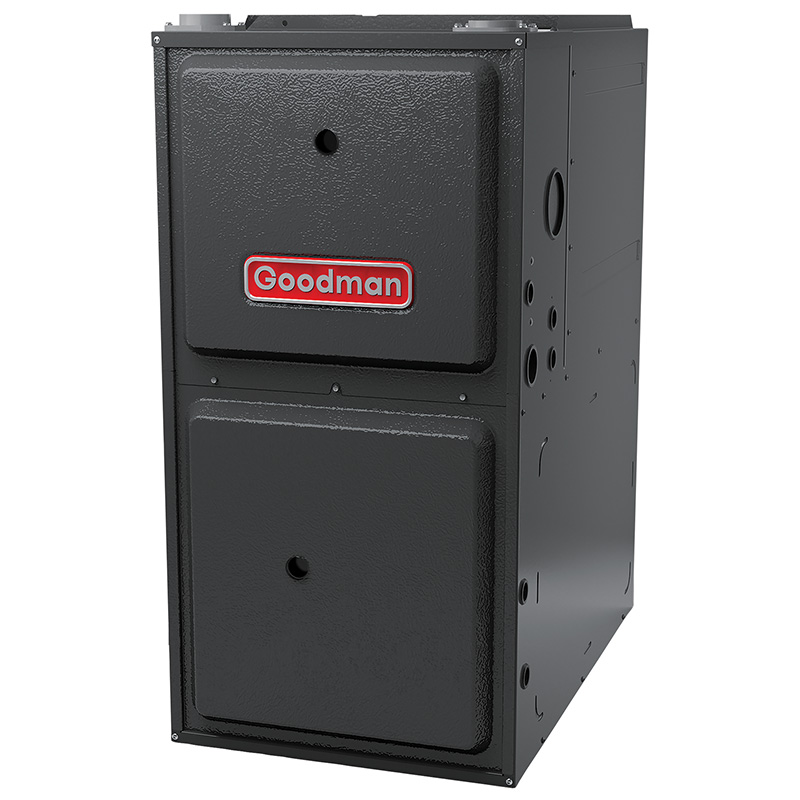
Goodman R32 60000 BTU 96% Two-Stage Multi-Speed ECM Gas Furnace Upflow / Horizontal ( GR9T960603BN)
View on AC Direct see your lowest price →Check current price on AC Direct →
Key features
- 96% AFUE two-stage gas combustion for high efficiency and smoother temperature control
- Multi-speed ECM blower motor reduces electrical consumption versus standard PSC motors
- 60,000 BTU heating output suited to mid-size residential applications
- Upflow and horizontal installation configurations supported
- Two-stage gas valve allows low-fire operation on mild days, reducing short-cycling
- Compatible with standard thermostat wiring including two-stage thermostat control
About this system
The Goodman GR9T960603BN is a 60,000 BTU, 96% AFUE two-stage gas furnace built for upflow or horizontal installation. The 96% AFUE rating means that 96 cents of every dollar spent on natural gas becomes usable heat, placing this unit in the upper tier of residential gas furnace efficiency and qualifying it for many utility rebates. Two-stage operation means the burner runs at a lower capacity most of the time, cycling up to full output only on the coldest days, which smooths out temperature swings and reduces short-cycling compared to single-stage units.
The multi-speed ECM (electronically commutated motor) blower is a meaningful spec at this price point. ECM motors use significantly less electricity than older PSC motors, and they allow the furnace to ramp airflow to match demand rather than blasting on at full speed every cycle. This improves comfort, reduces noise, and lowers operating costs over the life of the unit. The upflow/horizontal configuration makes it a practical fit for basements, utility closets, and attic installations where the air handler sits beside or below the duct plenum. At 60,000 BTU output, this furnace is sized for homes roughly in the 1,200 to 2,000 square foot range depending on climate zone, insulation, and ceiling height, though a proper Manual J load calculation is the only reliable sizing method.
This is a furnace-only unit with no cooling components, so refrigerant type (R-32 referenced in the model data) would apply to any matched cooling coil in a split system configuration. Buyers pairing this furnace with a new air conditioner should confirm coil and refrigerant compatibility with their installer before purchasing.
The GR9T960603BN delivers genuinely high-efficiency performance and a comfort-oriented feature set at a price point noticeably below comparable Trane, Carrier, and Lennox models. It is a reasonable choice for budget-conscious buyers who prioritize efficiency and can secure a skilled installer, but Goodman's documented reliability history and complaint patterns after year seven mean long-term ownership costs deserve honest consideration before purchase.
Overall score is the average of the five ratings above.
What we like
- 96% AFUE places it among the most efficient furnace tiers available, with real utility savings over mid-efficiency alternatives
- Two-stage operation reduces temperature swings and cycling noise compared to single-stage units
- ECM blower motor lowers electrical draw and supports better humidity control when paired with a whole-home humidifier or AC coil
- Priced 15 to 25 percent below comparable Carrier, Trane, and Lennox two-stage ECM furnaces
- Upflow and horizontal flexibility makes it easier to fit in a wider range of mechanical room configurations
Trade-offs
- Goodman's ConsumerAffairs rating of about 2.5 out of 5 reflects a pattern of repair costs climbing after roughly year seven, which can erode the initial price advantage
- Dual-run capacitors are a documented common failure point across Goodman equipment, and while repairs typically run $300 to $600, they add up over time
- Long-term reliability leans heavily on installer quality, meaning a poor installation can significantly shorten service life
- Compressor lifespan on Goodman equipment tends to average 10 to 14 years versus 15 to 20 years for premium brands, a relevant consideration for buyers planning to stay in the home long-term
What homeowners and pros say about Goodman
Homeowners who have purchased Goodman furnaces tend to split along a familiar line. Those who had skilled installers and kept up with routine maintenance often report years of trouble-free operation and point to the lower purchase price as a genuine advantage. Those who ran into problems, particularly after the unit passed the seven-year mark, describe escalating repair bills that begin to close the gap with what they would have paid for a premium brand upfront. Goodman’s Google dealer review average of around 3.8 out of 5 reflects the positive installation-day and early-ownership experience that many buyers have, while the ConsumerAffairs score of roughly 2.5 out of 5 captures the complaint-heavy voice of owners dealing with later-stage issues. Both numbers are real and both matter depending on how long you plan to own the home.
HVAC technicians who service Goodman equipment regularly point to dual-run capacitor failures as the most routine call they make on this brand, a repair that typically runs $300 to $600 and is not unique to Goodman but does appear with notable frequency in owner feedback. Evaporator coil leaks have shown up in a meaningful share of reviews as well, and while the furnace itself has no refrigerant components, buyers pairing it with a Goodman-matched coil should keep this in mind. Compressor longevity across Goodman systems tends to average 10 to 14 years versus the 15 to 20 years that premium brands achieve, which is worth factoring into a total cost of ownership calculation. For this specific furnace, the 96% AFUE and ECM blower are solid specs at the price, and technicians generally regard install quality as the single largest variable in how the unit actually performs over time.
Sources: ConsumerAffairs Goodman owner reviews, AHRI Directory of Certified Product Performance, U.S. DOE appliance and equipment efficiency standards, Goodman product specification sheets.
How it compares
| Brand | Comparable model | SEER2 | Stage | Price position |
|---|---|---|---|---|
| Goodman | GR9T960603BN | N/A (furnace only) | Two-stage | Value pick |
| Carrier | Performance 96 (59TP6) | N/A (furnace only) | Two-stage | Moderately higher than Goodman, mid-tier positioning |
| Trane | S9X2 (XR95 series) | N/A (furnace only) | Two-stage | Noticeably higher than Goodman, upper-mid-tier positioning |
| Lennox | Merit ML196E | N/A (furnace only) | Two-stage | Comparable to Carrier, premium over Goodman |
Competitor rows are comparable single-stage units at similar efficiency; price is relative position, not a quote.
Questions about this system
Is 60,000 BTU enough for my home, or should I size up?
BTU sizing depends on your climate zone, insulation levels, window area, and ceiling height, not square footage alone. A Manual J load calculation performed by your HVAC contractor is the only reliable way to confirm correct sizing. Oversizing a two-stage furnace is less problematic than oversizing a single-stage unit, but it still causes short-cycling and reduces efficiency.
What does the two-stage gas valve actually do day to day?
On most winter days the furnace runs at its lower firing stage, which is quieter, produces more even heat distribution, and reduces on-off cycling. It steps up to full capacity only when outdoor temperatures drop enough that low-stage cannot keep up. Most owners notice less temperature swing between thermostat calls compared to a single-stage furnace.
What warranty comes with the GR9T960603BN?
Goodman typically covers this class of furnace with a lifetime heat exchanger limited warranty and a 10-year parts limited warranty when the unit is registered within a set window after installation. Failure to register on time can reduce coverage, so confirm registration requirements with your installer and Goodman directly at the time of purchase.
How does the ECM motor affect my electric bill compared to a standard blower?
ECM motors can use 60 to 75 percent less electricity than older PSC motors during blower operation. For a furnace running several months of the year in a colder climate, this translates to a measurable reduction in annual electrical costs, though exact savings vary by run hours and local utility rates.
What are the most common repairs I should budget for over the life of this furnace?
Across Goodman equipment broadly, dual-run capacitors are the most frequently reported failure point and typically cost $300 to $600 to repair. Igniter replacement is also common on most furnace brands after several years of use. Keeping up with annual filter changes and professional tune-ups is the most effective way to extend service intervals and catch small issues before they become costly ones.
Specifications
| Furnace output | 60000 BTU |
| Configuration | Upflow |
| Refrigerant | R-32 |
| Model | GR9T960603BN |