Goodman R32 40000 BTU 96% Two-Stage Multi-Speed ECM Gas Furnace Downflow ( GD9T960403BN)
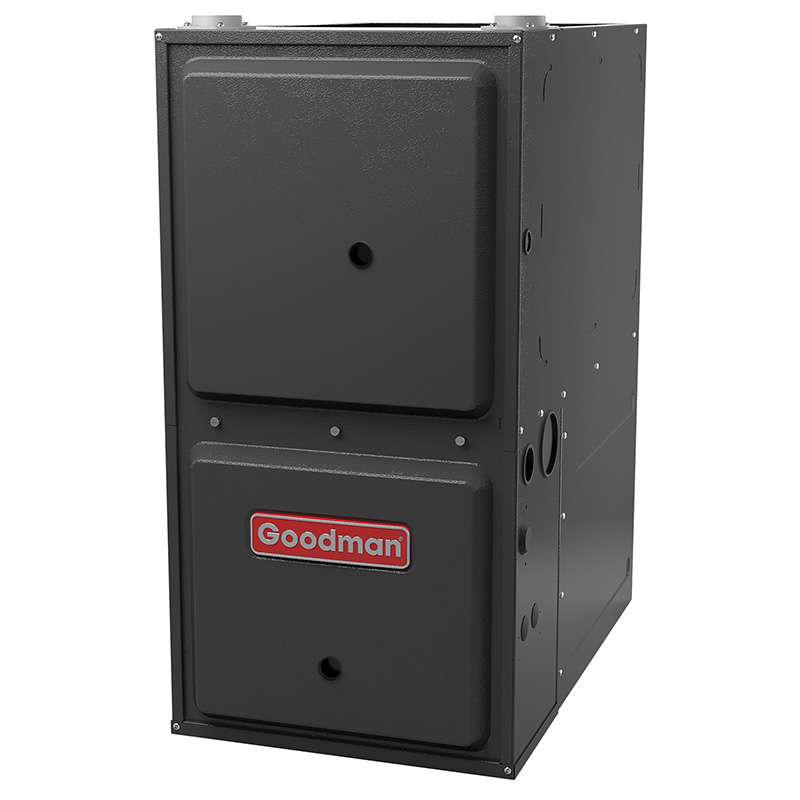
View on AC Direct see your lowest price →Check current price on AC Direct →
Key features
- 96% AFUE two-stage gas burner for high-efficiency, year-round fuel savings
- Downflow cabinet discharges conditioned air downward, suited for closet or platform installs above floor-level ductwork
- Multi-speed ECM blower motor reduces electricity draw and operates more quietly than standard PSC motors
- Two-stage heat output allows low-fire operation during mild conditions, reducing temperature swings and short cycling
- 40,000 BTU output targets smaller, well-insulated homes and right-sized replacement applications
- Compatible with standard communicating and non-communicating thermostat wiring, offering broad control flexibility
About this system
The Goodman GD9T960403BN is a 40,000 BTU, 96% AFUE two-stage gas furnace built in a downflow configuration, meaning warm air is discharged downward through the floor rather than upward through the top. That orientation makes it the right choice for installations in an upper-floor closet, a platform in a utility room where ductwork runs beneath the floor, or any setup where a horizontal or upflow cabinet simply will not fit. At 96% AFUE, virtually all of the gas consumed is converted to usable heat, putting it firmly in the high-efficiency tier and making it eligible for utility rebates in most markets.
Two-stage operation means the burner can fire at a lower capacity during mild weather and step up to full output on the coldest nights. Paired with the multi-speed ECM blower motor, the furnace runs longer, quieter cycles at the lower stage, which distributes heat more evenly and keeps humidity more stable than a single-stage unit can manage. The ECM motor also draws considerably less electricity than a standard PSC motor, trimming monthly operating costs beyond what the AFUE rating alone suggests. At 40,000 BTU, this is a smaller-output furnace suited to well-insulated homes roughly in the 1,000 to 1,600 square foot range, depending on climate zone and insulation quality. It is not a whole-house solution for larger or drafty structures.
One important note on the model designation: the R-32 listed in the product title refers to a refrigerant designation sometimes carried in product naming conventions, but this is a gas furnace only. There is no refrigerant circuit in this unit. If you are pairing it with a cooling system, the refrigerant type will depend entirely on the air conditioner or heat pump you choose, not this furnace.
The GD9T960403BN delivers genuine high-efficiency two-stage performance at a price point that undercuts comparable Trane, Carrier, and Lennox hardware by a meaningful margin. The trade-off is a brand reliability record that sits below those competitors and a unit whose long-term performance depends heavily on installation quality. For budget-conscious buyers who choose an experienced installer and keep up with maintenance, it represents solid value in the high-efficiency furnace category.
Overall score is the average of the five ratings above.
What we like
- 96% AFUE places it in the top efficiency tier, qualifying for many utility rebates
- Two-stage operation with ECM blower significantly reduces temperature swings and energy costs versus single-stage alternatives
- Downflow configuration opens installation options that upflow-only units cannot serve
- Purchase price typically runs 15 to 25 percent below comparable Carrier, Trane, and Lennox models
- Goodman's 10-year parts warranty and lifetime heat exchanger warranty are competitive for the value segment
Trade-offs
- Brand reliability ratings are below average, with ConsumerAffairs sitting around 2.5 out of 5 and recurring owner complaints about repair costs after year 7
- Long-term durability leans heavily on installer quality, meaning a subpar contractor can significantly shorten unit lifespan
- Dual-run capacitors are a commonly reported failure point and, while relatively inexpensive to fix, add up over time in service calls
- At 40,000 BTU this unit is undersized for larger or poorly insulated homes and should not be purchased without a proper Manual J load calculation
What homeowners and pros say about Goodman
Homeowners who praise the GD9T960403BN and similar Goodman high-efficiency furnaces tend to focus on one thing: the upfront cost. Google dealer reviews for Goodman equipment average around 3.8 out of 5 across locations where affordability is the most frequently cited reason for satisfaction. Buyers who had an experienced contractor handle the install report the unit running quietly and holding temperature well, which tracks with what two-stage ECM equipment is designed to do. The downflow configuration draws fewer comments simply because it is a niche orientation, but owners who needed it appreciate that Goodman offers it at this price point.
HVAC technicians and longer-term owners paint a more mixed picture. The ConsumerAffairs rating for Goodman sits at roughly 2.5 out of 5, a score that reflects a platform where dissatisfied owners are more likely to post, but the recurring themes are still worth noting: dual-run capacitor failures are the most commonly flagged service call, typically showing up after several years of use and costing somewhere between $300 and $600 to address. Evaporator coil leaks appear in a meaningful portion of owner reviews on Goodman cooling equipment, and while this furnace has no coil of its own, it is a consideration if you are building a matched system. Technicians consistently point to installation quality as the biggest predictor of how long a Goodman unit lasts, more so than with premium brands, which have somewhat more forgiving tolerances. For a replacement furnace in a straightforward downflow application with a skilled installer, this unit can perform well. For a first-time install in an older home with complex ductwork, the margin for error is narrower than it would be with a Carrier or Trane equivalent.
Sources: ConsumerAffairs Goodman owner reviews, AHRI Directory of Certified Product Performance, U.S. DOE appliance and equipment efficiency standards, Goodman product specification sheets.
How it compares
| Brand | Comparable model | SEER2 | Stage | Price position |
|---|---|---|---|---|
| Goodman | GD9T960403BN | N/A (gas furnace, 96% AFUE) | Two-stage | Value pick |
| Carrier | Performance 96 (58TP6) | N/A (gas furnace, 96% AFUE) | Two-stage | Approximately 20 to 30 percent above Goodman |
| Trane | S9V2 (XR95 / S9V2-B series) | N/A (gas furnace, 96% AFUE) | Two-stage | Approximately 20 to 30 percent above Goodman |
| Lennox | ML196E | N/A (gas furnace, 96% AFUE) | Two-stage | Approximately 25 to 35 percent above Goodman |
Competitor rows are comparable single-stage units at similar efficiency; price is relative position, not a quote.
Questions about this system
Why does the product listing mention R-32 if this is a gas furnace?
This is a gas-only furnace with no refrigerant circuit whatsoever. The R-32 reference in the product title or naming convention is likely a catalog or series labeling artifact and does not affect how the furnace operates. The refrigerant used in your cooling system will depend on the air conditioner or heat pump you pair with this unit, not the furnace itself.
What size home is a 40,000 BTU furnace appropriate for?
As a rough guide, 40,000 BTU typically covers a well-insulated home in the 1,000 to 1,600 square foot range in a moderate-to-cold climate, but no BTU estimate replaces a proper Manual J load calculation. An undersized furnace will run constantly and still struggle on the coldest days, so have your installer confirm sizing before purchase.
What does downflow mean and how do I know if my home needs it?
Downflow means the furnace draws return air in from the top and discharges heated air out the bottom, feeding ductwork that runs below the unit, typically under the floor or in a crawlspace. If your existing furnace or your duct system is configured this way, you need a downflow cabinet. Installing a downflow furnace into an upflow duct layout, or vice versa, requires significant duct modification and is not a simple swap.
How reliable is Goodman, and what problems should I watch for with this furnace?
Goodman sits below Trane, Carrier, and Lennox in documented reliability. Its ConsumerAffairs rating is approximately 2.5 out of 5, with recurring complaints centered on repair costs rising after year 7. The most commonly reported failure point across Goodman gas equipment is the dual-run capacitor, which is a relatively quick and affordable fix in the $300 to $600 range but can become a recurring nuisance. Keeping up with annual maintenance and using an experienced installer are the two most effective ways to extend unit life.
What warranty does this furnace carry, and what does it actually cover?
Goodman typically offers a 10-year parts limited warranty and a lifetime heat exchanger limited warranty on units like this, provided you register the product within a set window after installation, usually 60 days. The parts warranty covers components but does not cover labor, which is where repair costs add up. Read the warranty document carefully before purchase to confirm coverage terms and registration requirements, as they can change by model year.
Specifications
| Furnace output | 40000 BTU |
| Configuration | Downflow |
| Refrigerant | R-32 |
| Model | GD9T960403BN |