Goodman R32 80000 BTU 96% Two-Stage Multi-Speed ECM Gas Furnace Downflow ( GD9T960803BN)
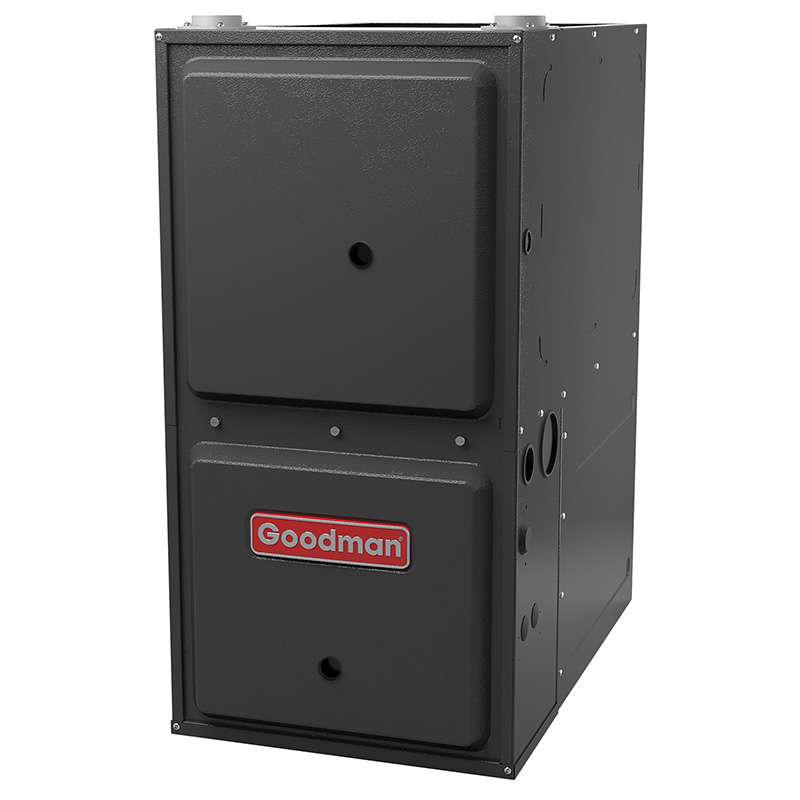
View on AC Direct see your lowest price →Check current price on AC Direct →
Key features
- 96% AFUE two-stage operation reduces short cycling and fuel waste
- Multi-speed ECM blower motor cuts electrical draw versus standard PSC motors
- Downflow configuration for installations above crawlspaces or slab-level duct systems
- 80,000 BTU output covers most mid-size to larger homes in moderate climates
- Two-stage gas valve allows low-fire operation on mild days for comfort and efficiency
- Goodman's 10-year parts limited warranty with unit registration (lifetime heat exchanger warranty)
About this system
The Goodman GD9T960803BN is a 96% AFUE two-stage, multi-speed ECM downflow gas furnace rated at 80,000 BTU. Downflow configuration means heated air exits through the bottom of the unit, making it the right choice for homes where the furnace sits on the main floor above a crawlspace or where ductwork runs under the unit rather than overhead. The two-stage gas valve fires at a reduced capacity on most days and ramps to full output only when outdoor temperatures demand it, which smooths temperature swings and reduces short cycling compared to a single-stage unit.
The ECM (electronically commutated motor) blower is the efficiency workhorse here. It draws significantly less electricity than a standard PSC motor and modulates airflow to keep static pressure balanced, which also means quieter, more consistent operation. At 96% AFUE, nearly all the fuel burned converts to usable heat, putting this furnace near the top of the mid-efficiency tier without stepping up to a condensing modulating unit. The R-32 refrigerant designation on the model number reflects Goodman’s system compatibility labeling rather than a refrigerant used by the furnace itself. This unit suits budget-minded homeowners replacing an aging furnace in a downflow application who want meaningful efficiency gains without paying premium-brand prices.
The GD9T960803BN delivers solid mid-tier furnace performance at a price point 15 to 25 percent below comparable Trane, Lennox, and Carrier hardware. The two-stage ECM combination is a genuine step up from entry-level single-stage furnaces, and the 96% AFUE rating means real fuel savings over older equipment. However, Goodman's real-world reliability record is uneven, and the long-term ownership experience depends heavily on installation quality and which components eventually need attention.
Overall score is the average of the five ratings above.
What we like
- 96% AFUE is near the top of the non-modulating furnace tier, reducing monthly heating bills
- Two-stage operation delivers quieter, more even heat on moderate-temperature days
- ECM blower motor lowers electricity consumption compared to standard motors
- Purchase price runs 15 to 25 percent below Trane, Lennox, and Carrier equivalents
- Lifetime heat exchanger warranty and 10-year parts warranty (with registration) are competitive for the price tier
Trade-offs
- Dual-run capacitors are the most commonly reported failure point, typically needing replacement before year 10
- Long-term reliability lags premium brands, with compressors and components averaging shorter service lives
- Performance is highly install-dependent, meaning a rushed or under-qualified installation can accelerate problems
- ConsumerAffairs reviews average around 2.5 out of 5, with recurring complaints about repair costs rising after year 7
What homeowners and pros say about Goodman
Goodman sits at about 3.8 out of 5 across Google dealer reviews, where the most consistent praise is straightforward: the price is hard to argue with. Contractors and homeowners who bought the GD9T960803BN or similar two-stage Goodman furnaces tend to report satisfaction in the first few years, particularly when a careful installer dialed in airflow and combustion settings properly. The ECM blower and two-stage valve are noted as real upgrades over older single-stage units in terms of comfort and quieter cycling.
The harder picture comes from ConsumerAffairs, where Goodman averages around 2.5 out of 5, and the recurring theme is repair costs that start accumulating around year 7. The most documented failure points are dual-run capacitors, which are relatively inexpensive to fix but signal a pattern of component wear that shows up earlier than in premium brands. Evaporator coil leaks appear in a meaningful portion of owner accounts, and compressor longevity in Goodman systems tends to land in the 10 to 14 year range compared to 15 to 20 years for Trane, Lennox, and Carrier equipment. HVAC technicians consistently emphasize that Goodman’s outcome spread is wide: a well-installed unit with a good service history can run reliably for well over a decade, while a rushed installation or neglected maintenance can make those year-7 complaints a self-fulfilling outcome.
Sources: ConsumerAffairs Goodman owner reviews, AHRI Directory of Certified Product Performance, U.S. DOE appliance and equipment efficiency standards, Goodman product specification sheets.
How it compares
| Brand | Comparable model | SEER2 | Stage | Price position |
|---|---|---|---|---|
| Goodman | GD9T960803BN | N/A (furnace only) | Two-stage | Value pick |
| Carrier | Performance 96 (58TP6) | N/A (furnace only) | Two-stage | Approximately 20 to 25 percent higher than Goodman |
| Trane | S9V2 (96% AFUE two-stage) | N/A (furnace only) | Two-stage | Approximately 20 to 30 percent higher than Goodman |
| Lennox | ML196V (96% AFUE two-stage ECM) | N/A (furnace only) | Two-stage | Approximately 25 to 35 percent higher than Goodman |
Competitor rows are comparable single-stage units at similar efficiency; price is relative position, not a quote.
Questions about this system
Is downflow the right configuration for my home?
Downflow furnaces discharge heated air from the bottom of the cabinet, so they require ductwork that runs below or under the unit, such as a crawlspace, basement plenum, or under-floor duct system. If your existing furnace is a downflow unit and the supply duct exits the bottom, the GD9T960803BN is a direct match. If your ducts run overhead, you need an upflow or horizontal unit instead.
What does two-stage actually mean for day-to-day comfort?
A two-stage furnace runs at a lower firing rate, typically around 65 percent capacity, on most days and switches to full 80,000 BTU output only when temperatures drop significantly. That lower stage runs longer and more quietly, which reduces hot and cold spots and prevents the blasting-then-off cycle common with single-stage units.
What are the most common repairs to budget for over the life of this furnace?
Based on Goodman's documented failure patterns, dual-run capacitors are the most frequently replaced component and typically cost 300 to 600 dollars including labor. Beyond that, the ECM motor and control board are higher-cost repairs that can appear in older units. Budgeting for a service call or two in years 7 through 12 is realistic.
Does registration actually matter for the warranty?
Yes, and it matters significantly. Without registration within the required window after installation, Goodman's warranty typically drops to 5 years on parts rather than 10. The lifetime heat exchanger warranty generally requires registration as well. Confirm the registration deadline and process with your installer before the job is complete.
Why does the model number reference R-32 if a furnace does not use refrigerant?
Goodman uses R-32 in its model nomenclature to indicate that the furnace is certified and configured to be paired with R-32 refrigerant-based air handlers or coils in a matched system. The furnace itself burns natural gas and uses no refrigerant. It is a system-compatibility designation, not a component inside the furnace.
Specifications
| Furnace output | 80000 BTU |
| Configuration | Downflow |
| Refrigerant | R-32 |
| Model | GD9T960803BN |