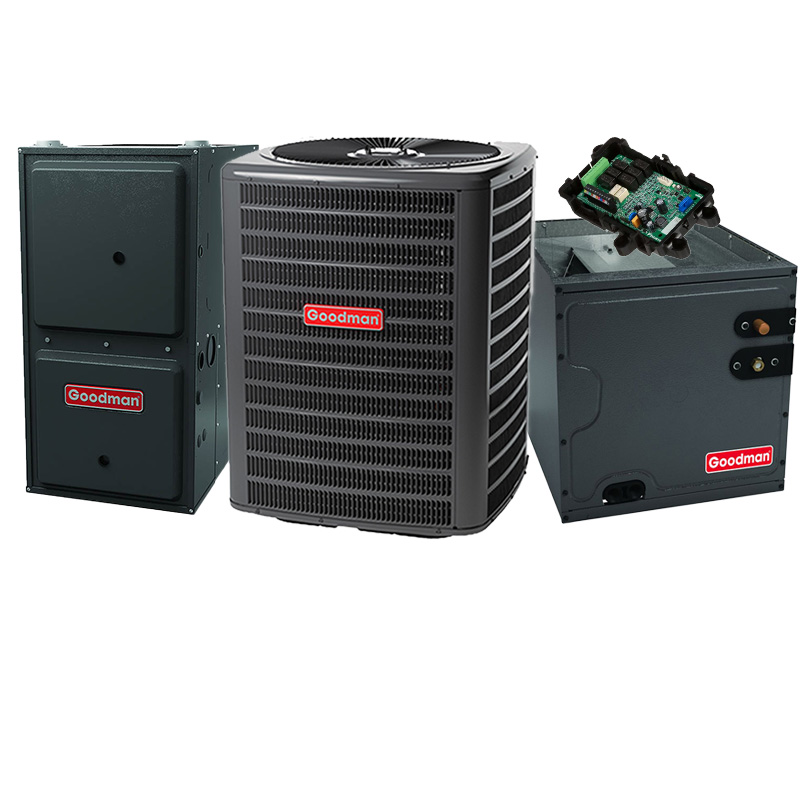
Goodman 3 Ton 13.8 SEER2 100000 BTU 96% AFUE Gas Furnace With R32 Air Condenser and Coil System – Downflow
View on AC Direct see your lowest price →Check current price on AC Direct →
Key features
- 3-ton cooling capacity with 13.8 SEER2 efficiency rating
- 100,000 BTU gas furnace at 96% AFUE for high-efficiency heating
- Downflow configuration for slab-mounted or under-floor duct systems
- R-32 refrigerant with lower global-warming potential than R-410A
- Matched condenser and coil sold as a system for ARI-rated performance
- Priced 15 to 25 percent below comparable Trane, Lennox, and Carrier systems
About this system
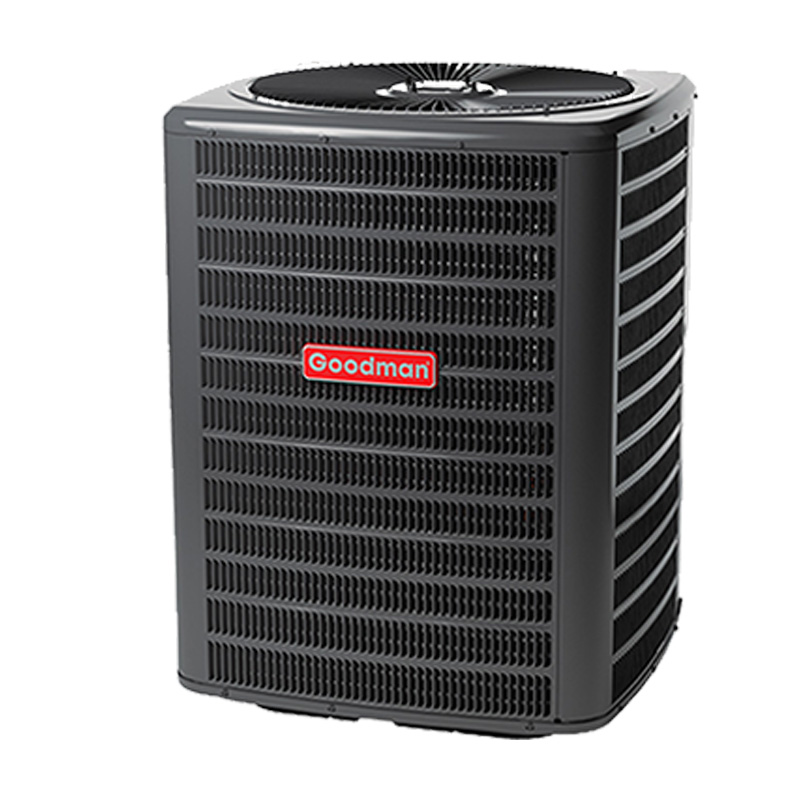
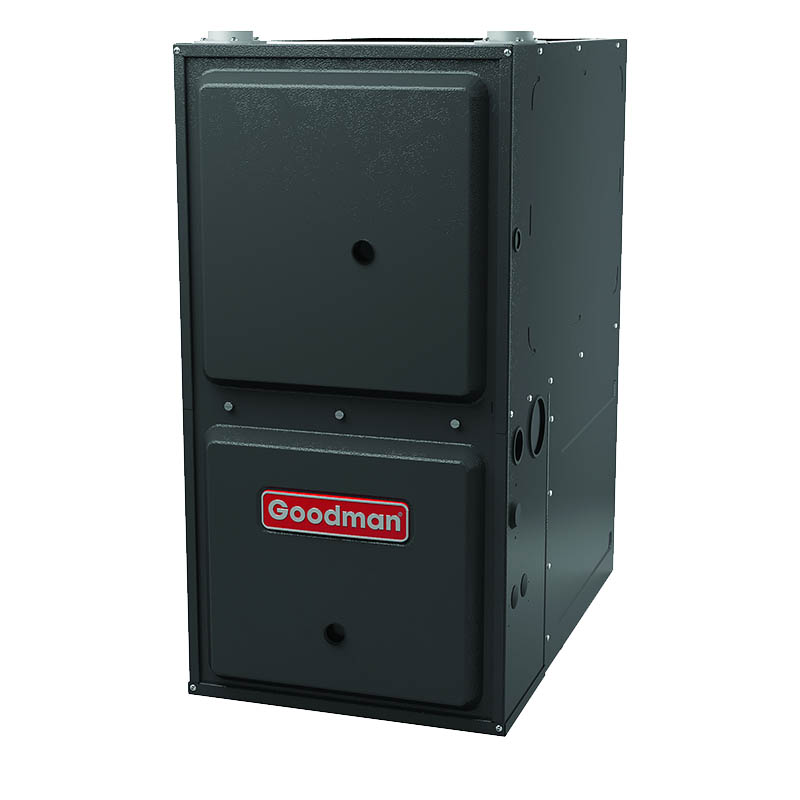
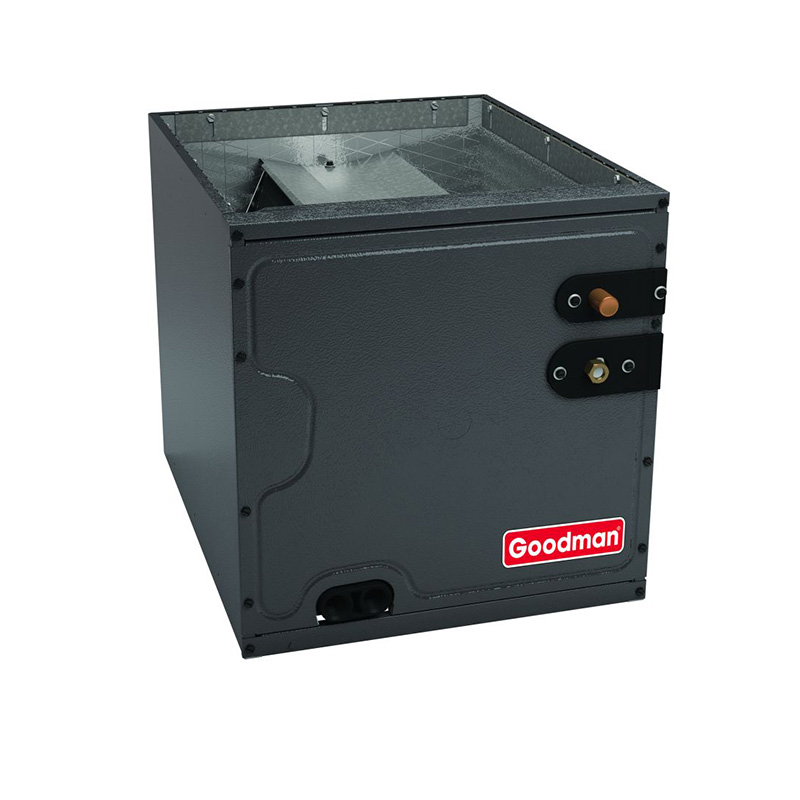
This Goodman downflow package pairs a 3-ton, 13.8 SEER2 R-32 air condenser and matching coil with a 100,000 BTU, 96% AFUE gas furnace. The downflow configuration directs conditioned air downward from the unit, which makes it the right fit for installations where ductwork runs beneath the air handler, typically in homes built on slabs or with under-floor duct systems. R-32 refrigerant carries a lower global-warming potential than the R-410A it replaces and operates at slightly higher pressures, so your installing technician needs to be familiar with its handling requirements.
A 96% AFUE rating means the furnace converts 96 cents of every fuel dollar into usable heat, putting it firmly in the high-efficiency tier and making it eligible for federal energy-efficiency tax credits in many cases. The 13.8 SEER2 cooling rating sits just above the federally mandated minimums for most U.S. climate zones, which keeps the purchase price down relative to higher-SEER2 alternatives while still delivering a noticeable efficiency improvement over older 10 to 13 SEER equipment. This system suits budget-conscious homeowners replacing aging equipment in medium-to-large spaces, roughly 1,500 to 2,200 square feet depending on insulation, climate, and layout, who want solid efficiency without paying a premium-brand markup.
This Goodman bundle delivers genuinely high-efficiency heating at a price point few premium brands can touch, and the downflow layout covers a specific installation need well. The trade-off is a compressor lifespan and first-year reliability record that trail premium competitors, so long-term cost depends heavily on install quality and whether you budget for eventual capacitor and coil service.
Overall score is the average of the five ratings above.
What we like
- 96% AFUE furnace qualifies as high-efficiency and can lower annual heating bills compared to mid-efficiency equipment
- Purchase price runs 15 to 25 percent below Trane, Lennox, and Carrier alternatives at similar efficiency
- R-32 refrigerant is increasingly standard and has a smaller environmental footprint than R-410A
- Matched coil and condenser are ARI-rated together, removing guesswork about system compatibility
- Downflow design fills a genuine gap for slab homes where most split systems do not fit without modification
Trade-offs
- Compressors average 10 to 14 years versus 15 to 20 years typical of premium-brand compressors, raising long-term replacement risk
- Evaporator coil leaks appear in a meaningful share of owner reviews, a repair that can run into the thousands
- A minority of owners have reported refrigerant leaks within the first year, usually traced to installation or initial charge issues
- ConsumerAffairs scores average around 2.5 out of 5, with recurring complaints about repair costs climbing after roughly year seven
What homeowners and pros say about Goodman
Homeowners who have installed Goodman systems often point first to the upfront savings, and that sentiment is reflected in Google dealer review scores that average around 3.8 out of 5, where affordability is the most commonly praised attribute. For many buyers replacing a failed system on short notice or working within a tight renovation budget, the price gap versus Carrier, Trane, or Lennox is the deciding factor, and plenty of those owners report years of trouble-free operation when the install is done properly. HVAC technicians are generally consistent on one point: Goodman’s real-world lifespan has a wider variance than premium brands, and the single largest predictor of whether a unit runs well into its second decade or needs attention in year eight is the quality of the original installation, including refrigerant charge, airflow balance, and electrical connections.
The ConsumerAffairs score of roughly 2.5 out of 5 is worth contextualizing. That platform is complaint-skewed by nature, so the score does not represent a neutral cross-section of all Goodman owners. Still, the recurring theme in those reviews, repair costs rising after roughly year seven, is consistent with the documented failure modes in broader owner feedback: dual-run capacitor failures (typically a 300 to 600 dollar fix), evaporator coil leaks that can run much higher, compressor lifespans that average 10 to 14 years versus 15 to 20 for premium brands, and a smaller share of first-year refrigerant leak reports tied to install or initial charge problems. None of those failure modes are unique to Goodman, but they do appear at a higher rate than with top-tier brands. Buyers who factor in a modest annual service reserve and who vet their installer carefully tend to report the most satisfying long-term outcomes with this equipment.
Sources: ConsumerAffairs Goodman owner reviews, AHRI Directory of Certified Product Performance, U.S. DOE appliance and equipment efficiency standards, Goodman product specification sheets.
What it costs to run
At 13.8 SEER2, cooling this 3-ton system for a typical 1200-hour cooling season at the U.S. average electricity rate of $0.17/kWh works out to roughly $532 per year in cooling, about $16 less per year than a minimum-efficiency 13.4 SEER2 unit of the same size. Your real cost depends on your climate and local rate.
Method: (36,000 BTU/hr ÷ 13.8 SEER2) × 1200 hours ÷ 1000 × $0.17/kWh. Rate source: U.S. EIA average; cooling hours: moderate-climate estimate.
How it compares
| Brand | Comparable model | SEER2 | Stage | Price position |
|---|---|---|---|---|
| Goodman | 3T 13.8 SEER2 / 96% AFUE Downflow Bundle | 13.8 | Single-stage | Value pick |
| Carrier | Comfort 24ACC6 / 58TP0 series | 14.3 | Single-stage | 15 to 25 percent above this Goodman bundle |
| Trane | XR14c / S9X2 series | 14.3 | Single-stage | 15 to 25 percent above this Goodman bundle |
| Lennox | Merit ML14XC1 / SL280V series | 14.3 | Single-stage | 20 to 30 percent above this Goodman bundle |
Competitor rows are comparable single-stage units at similar efficiency; price is relative position, not a quote.
Questions about this system
Why does this system use a downflow configuration, and how do I know if my home needs it?
Downflow means the furnace discharges air out of the bottom and draws return air in from the top. It is designed for installations where supply ducts run beneath the unit, which is common in slab-on-grade homes. If your current furnace sits in a closet or utility room and blows air down into a floor plenum, downflow is almost certainly what you need. An upflow or horizontal unit will not fit correctly in that application.
What should I know about R-32 refrigerant before having this system installed?
R-32 is mildly flammable (A2L classification), so your technician must follow specific handling and recovery procedures that differ from R-410A work. Most licensed HVAC contractors have received updated training as R-32 equipment rolls out, but it is worth confirming before booking installation. Homeowners do not interact with the refrigerant directly during normal operation.
Is the 96% AFUE furnace enough to qualify for the federal energy-efficiency tax credit?
For most of the contiguous U.S., the IRS Inflation Reduction Act credit for gas furnaces requires 97% AFUE or higher in the northern climate zone, while 96% AFUE qualifies in the southern zone. Check your specific climate zone designation and confirm with a tax professional, since rules and zone boundaries can change.
What are the most common repairs I should budget for with Goodman equipment?
Dual-run capacitors are the most frequently reported failure on Goodman condensers, typically costing 300 to 600 dollars for parts and labor and straightforward for any technician to fix. Evaporator coil leaks show up in a meaningful portion of owner reviews and cost significantly more. Setting aside a service budget after year five is a practical approach given Goodman's documented repair history.
How does this system compare in upfront cost to a similar Carrier or Trane system, and is the savings worth it?
Goodman equipment typically runs 15 to 25 percent less than comparable Carrier or Trane systems at the dealer or distributor level. Whether that gap is worth it depends on how long you plan to stay in the home: shorter ownership periods often favor the lower upfront cost, while owners planning to stay 15 or more years may find that premium-brand compressor longevity and lower long-term repair rates narrow the total cost difference.
Specifications
| Cooling capacity | 3 Ton |
| Efficiency | 13.8 SEER2 |
| Furnace output | 100000 BTU |
| Furnace efficiency | 96% AFUE |
| Configuration | Downflow |
| Refrigerant | R-32 |