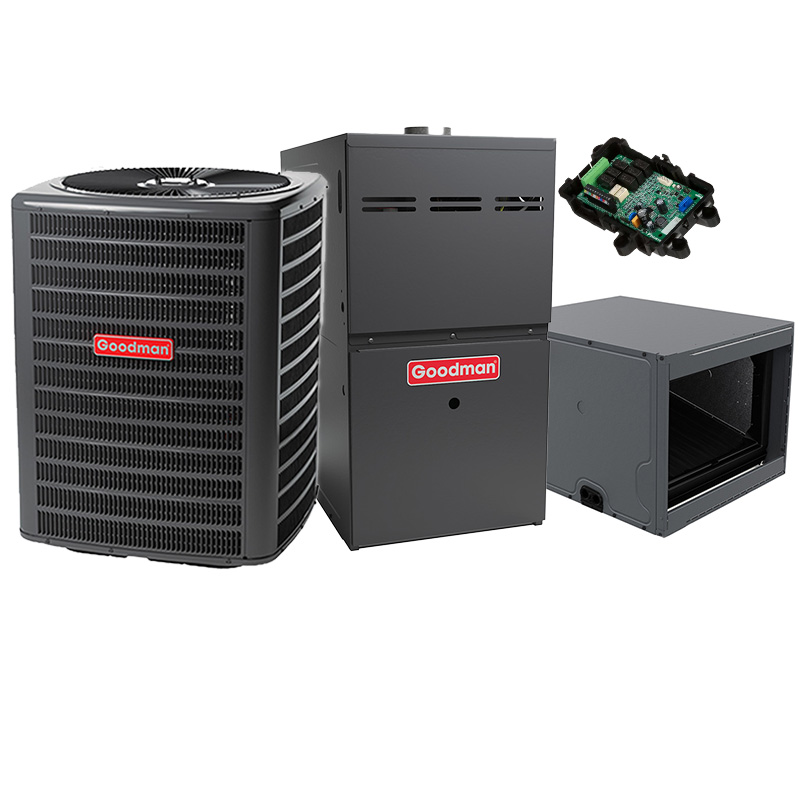
Goodman 3.5 Ton 13.4 SEER2 80000 BTU 96% AFUE Two-Stage Gas Furnace With R32 Air Condenser and Coil System – Horizontal
View on AC Direct see your lowest price →Check current price on AC Direct →
Key features
- 96% AFUE two-stage gas furnace reduces temperature swings and short-cycling
- 13.4 SEER2 cooling efficiency meets current federal minimums for most regions
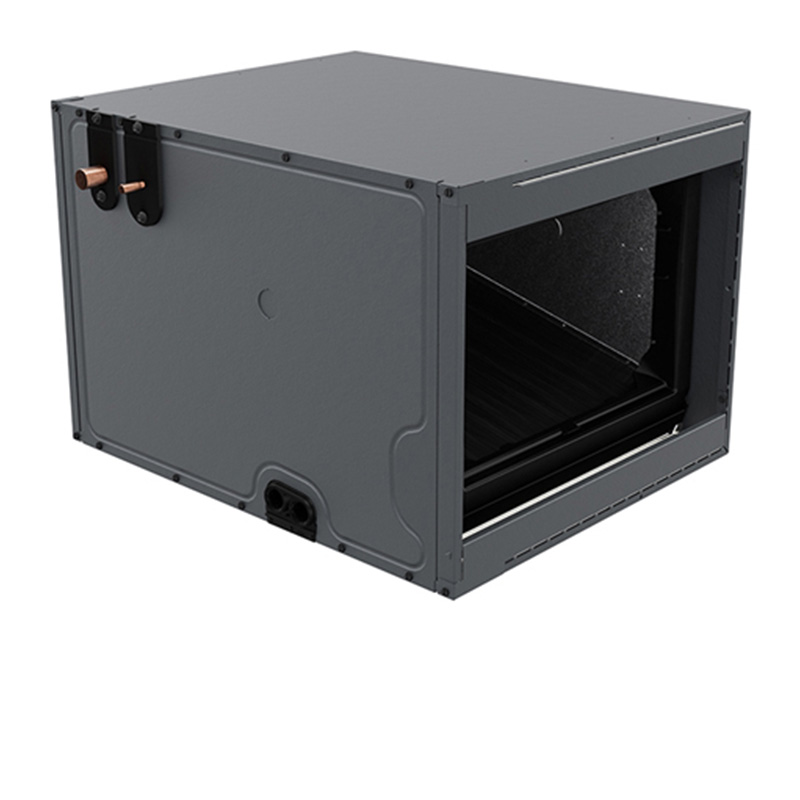
- Horizontal coil configuration designed for crawlspace, attic, or closet installs
- R-32 refrigerant with lower global warming potential than R-410A
- 3.5-ton capacity suited to approximately 1,800 to 2,400 sq ft depending on load
- Matched coil and condenser system factory-rated together for warranty compliance
About this system
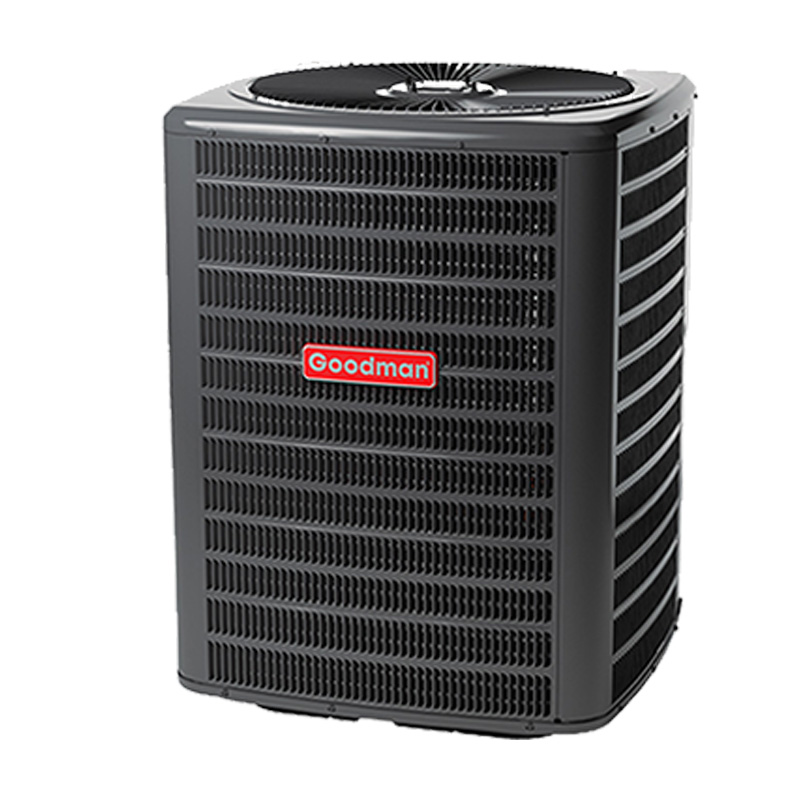
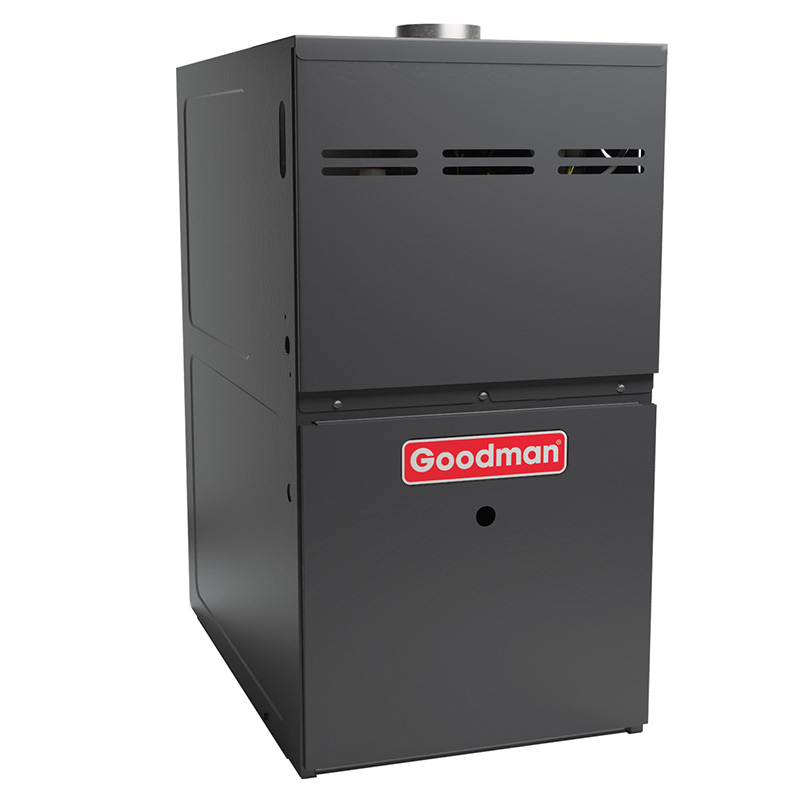
This Goodman system bundles a 3.5-ton R-32 air condenser, a matched evaporator coil, and an 80,000 BTU 96% AFUE two-stage gas furnace into a single horizontal configuration, making it a practical choice for homes where the air handler must sit on its side in a crawlspace, tight attic, or closet. The horizontal coil orientation is the defining constraint here: installation requires more planning than a standard upflow setup, and the quality of that installation will do more to determine long-term performance than any spec on the sheet.
The 13.4 SEER2 rating clears the federal minimum for most U.S. regions but sits at the lower end of mid-efficiency territory, meaning operating costs will be noticeably higher than a 16 or 18 SEER2 system over a 15-year span. The two-stage furnace is a genuine comfort upgrade over single-stage equipment: it runs on a lower firing rate most of the time, reducing temperature swings, cutting short-cycling, and operating more quietly. The 96% AFUE rating is strong, turning 96 cents of every gas dollar into usable heat. R-32 refrigerant carries a lower global warming potential than the R-410A it replaces, and it is the direction the industry is moving, so sourcing refrigerant for future service should remain straightforward.
This system is sized for roughly 1,800 to 2,400 square feet depending on climate, insulation, and load calculation. It suits homeowners replacing aging equipment in a home with an existing horizontal air handler position who want meaningful furnace efficiency without paying premium-brand prices. It is not the right fit for buyers prioritizing maximum cooling efficiency, long compressor life comparable to top-tier brands, or minimal maintenance involvement over a 15-plus-year horizon.
This Goodman system delivers a genuinely efficient furnace and a workable cooling package at a price point 15 to 25 percent below comparable Trane, Lennox, and Carrier setups. The horizontal configuration adds installation complexity, and the 13.4 SEER2 cooling side is entry-level rather than standout. Buyers who invest in a quality install and stay current on maintenance will get solid value; those expecting premium-brand durability from a value-brand price point may be disappointed past year seven or eight.
Overall score is the average of the five ratings above.
What we like
- 96% AFUE two-stage furnace is a strong heating efficiency tier at this price
- Priced 15 to 25 percent below comparable Carrier, Trane, and Lennox systems
- Two-stage operation provides quieter, more even heating than single-stage units
- R-32 refrigerant is forward-looking and widely serviceable
- Matched system configuration supports full manufacturer warranty compliance
Trade-offs
- 13.4 SEER2 is at the low end of mid-efficiency; expect higher cooling operating costs than 16-plus SEER2 alternatives
- Horizontal configuration increases installation complexity and labor time, raising install cost and the risk of errors that affect performance
- Compressor lifespan averages 10 to 14 years versus 15 to 20 for premium brands, meaning a mid-life replacement is more likely
- Documented owner reports of evaporator coil leaks and a minority of early refrigerant leaks tied to install or charge issues
What homeowners and pros say about Goodman
Homeowners who share feedback on Goodman equipment tend to split into two camps. Those who had the system installed by an experienced contractor and have kept up with annual maintenance generally report that the equipment does its job without drama, and the lower purchase price compared to Carrier, Trane, or Lennox is the most consistent point of praise reflected in dealer Google scores that average around 3.8 out of 5. The other camp, well represented on complaint-weighted channels like ConsumerAffairs where Goodman sits at about 2.5 out of 5, describes repair costs that begin climbing around year seven or eight, most commonly around the dual-run capacitor and, in more serious cases, evaporator coil leaks that require partial or full coil replacement. A smaller number of owners report refrigerant leaks within the first year, a pattern that HVAC technicians generally attribute to the install rather than the equipment itself.
HVAC professionals who work on Goodman units regularly tend to be frank about the trade-off: the equipment is serviceable, parts are widely available, and the value proposition is real for buyers who understand what they are getting. The technician consensus is that install quality is the single largest variable in how a Goodman system performs over time, which matters more with a horizontal configuration where proper leveling, drainage, and line set handling require more care than a straightforward upflow setup. Compressor longevity is a genuine concern, with real-world averages running 10 to 14 years compared to 15 to 20 for top-tier brands, so buyers planning to stay in a home long-term should factor a potential compressor replacement into their ownership cost estimate. For a replacement job on a budget with a skilled installer, the value case is honest. For a forever-home installation where minimizing service calls over 15-plus years is the priority, the premium brands earn their price difference.
Sources: ConsumerAffairs Goodman owner reviews, AHRI Directory of Certified Product Performance, U.S. DOE appliance and equipment efficiency standards, Goodman product specification sheets.
What it costs to run
At 13.4 SEER2, cooling this 3.5-ton system for a typical 1200-hour cooling season at the U.S. average electricity rate of $0.17/kWh works out to roughly $639 per year in cooling, about $0 less per year than a minimum-efficiency 13.4 SEER2 unit of the same size. Your real cost depends on your climate and local rate.
Method: (42,000 BTU/hr ÷ 13.4 SEER2) × 1200 hours ÷ 1000 × $0.17/kWh. Rate source: U.S. EIA average; cooling hours: moderate-climate estimate.
How it compares
| Brand | Comparable model | SEER2 | Stage | Price position |
|---|---|---|---|---|
| Goodman | 3.5T 13.4 SEER2 96% AFUE Two-Stage Horizontal System | 13.4 | Two-stage | Value pick |
| Carrier | Performance 14 / 58TP Two-Stage Series | 14 | Two-stage | Approximately 20 to 25 percent above this Goodman system |
| Trane | XR14 / S9V2 Two-Stage Series | 14 | Two-stage | Approximately 20 to 25 percent above this Goodman system |
| Lennox | Merit 14ACX / ML96V Series | 13.8 | Two-stage furnace, single-stage condenser | Approximately 15 to 20 percent above this Goodman system |
Competitor rows are comparable single-stage units at similar efficiency; price is relative position, not a quote.
Questions about this system
Why is the horizontal configuration more expensive to install than a standard upflow setup?
A horizontal install typically requires the coil and air handler to be mounted and secured on their side in a confined space such as an attic or crawlspace, which is more labor-intensive than a straight vertical drop. Restricted access slows every step, and proper condensate drainage in a horizontal position requires careful leveling and trap placement that a less experienced technician can get wrong, leading to water damage or reduced performance.
What does two-stage mean on the furnace, and does it actually matter for comfort?
Two-stage means the furnace fires at a lower rate, typically around 65 percent of full capacity, during mild weather and ramps up to 100 percent only when the load demands it. In practice this means the furnace runs longer, more even cycles rather than short blasts of intense heat, which reduces hot and cold spots and tends to be noticeably quieter. For most homeowners in climates that see a wide range of outdoor temperatures, two-stage is a meaningful comfort upgrade over single-stage.
What are the most common repair issues I should budget for over the life of this system?
Dual-run capacitors are the most frequently reported failure on Goodman equipment and typically cost 300 to 600 dollars to replace, including labor. Evaporator coil leaks appear in a meaningful share of owner reviews and can be more expensive depending on whether the coil needs to be replaced. A minority of owners have reported refrigerant leaks within the first year, which is usually an installation or initial charge issue rather than a product defect.
Is R-32 refrigerant easy to service, and is it safe to have in my home?
R-32 is increasingly common in residential HVAC equipment and most licensed HVAC technicians can handle it, though some smaller shops may need to update their equipment and certifications. It is mildly flammable, classified as A2L, which is why proper installation and leak testing matter. Refrigerant is contained in the outdoor condenser and the line set, not inside the living space, so the safety risk to occupants is very low under normal operating conditions.
How does 13.4 SEER2 affect my electricity bill compared to a higher-efficiency unit?
A 16 SEER2 system would use roughly 16 to 19 percent less electricity for the same cooling output compared to a 13.4 SEER2 unit. In a warmer climate running the system several months a year, that gap can add up to a meaningful amount annually over the system's life. The lower upfront cost of this system may offset that difference for some buyers, but in hot climates with long cooling seasons the payback calculation favors higher SEER2 equipment.
Specifications
| Cooling capacity | 3.5 Ton |
| Efficiency | 13.4 SEER2 |
| Furnace output | 80000 BTU |
| Furnace efficiency | 96% AFUE |
| Configuration | Horizontal |
| Refrigerant | R-32 |