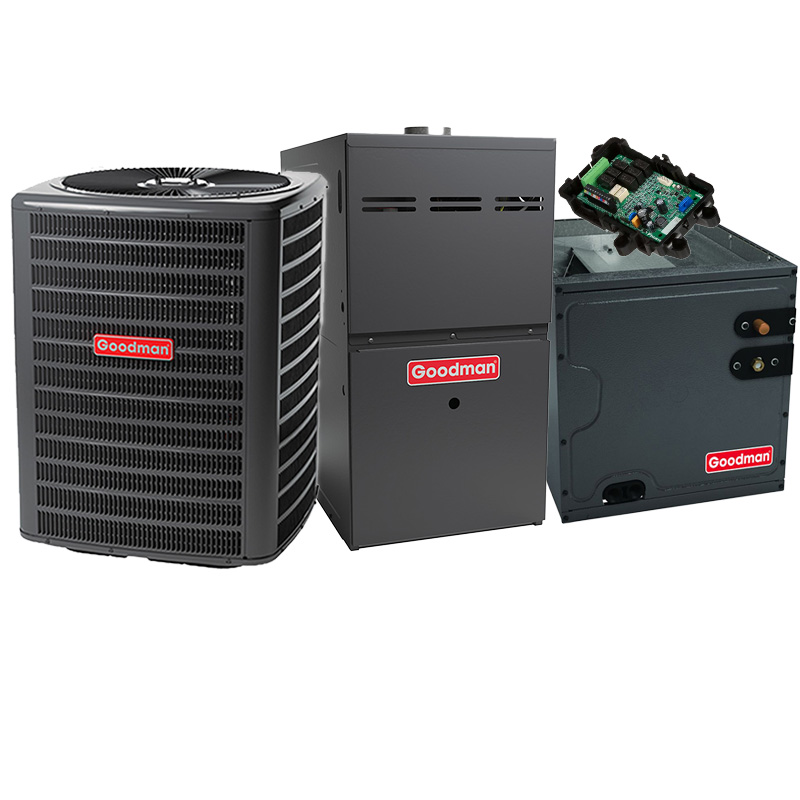
Goodman 4 Ton 13.4 SEER2 120000 BTU 96% AFUE Two-Stage Gas Furnace With R32 Air Condenser and Coil System – Upflow
View on AC Direct see your lowest price →Check current price on AC Direct →
Key features
- 4-ton cooling capacity with 13.4 SEER2 efficiency rating
- 120,000 BTU two-stage gas furnace at 96% AFUE
- R-32 refrigerant with lower global warming potential than R-410A
- Upflow configuration for basement or closet installation with supply air directed upward
- Matched condenser, evaporator coil, and furnace sold as a system bundle
- Two-stage furnace operation reduces short-cycling and improves comfort on mild days
About this system
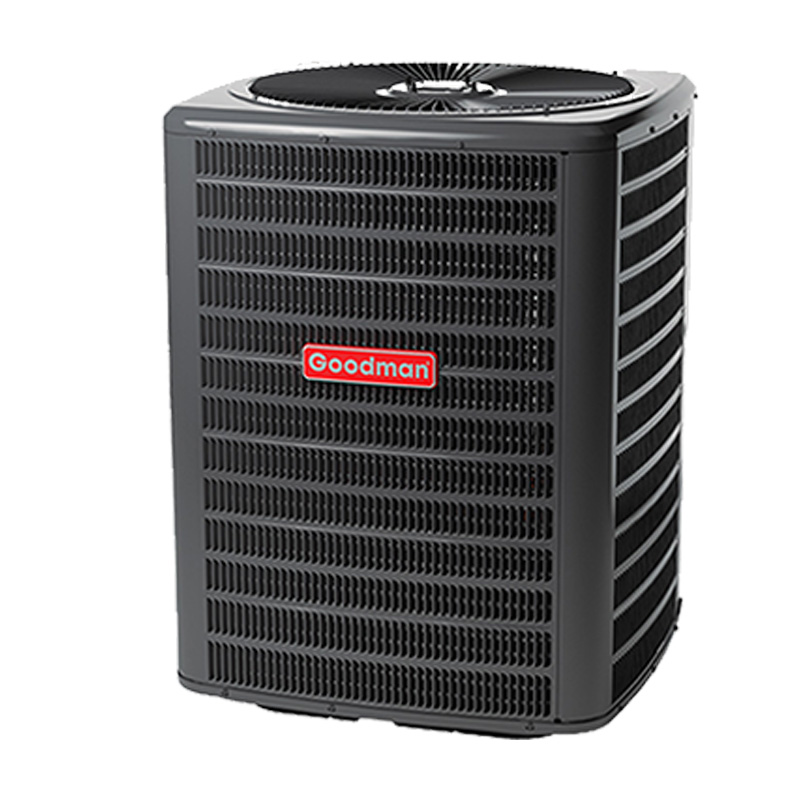
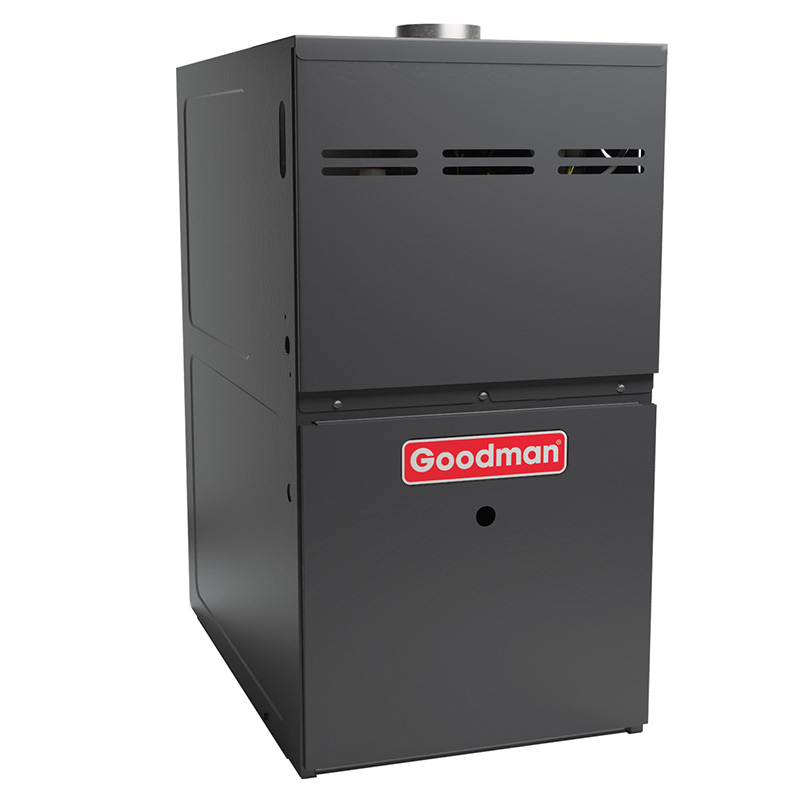
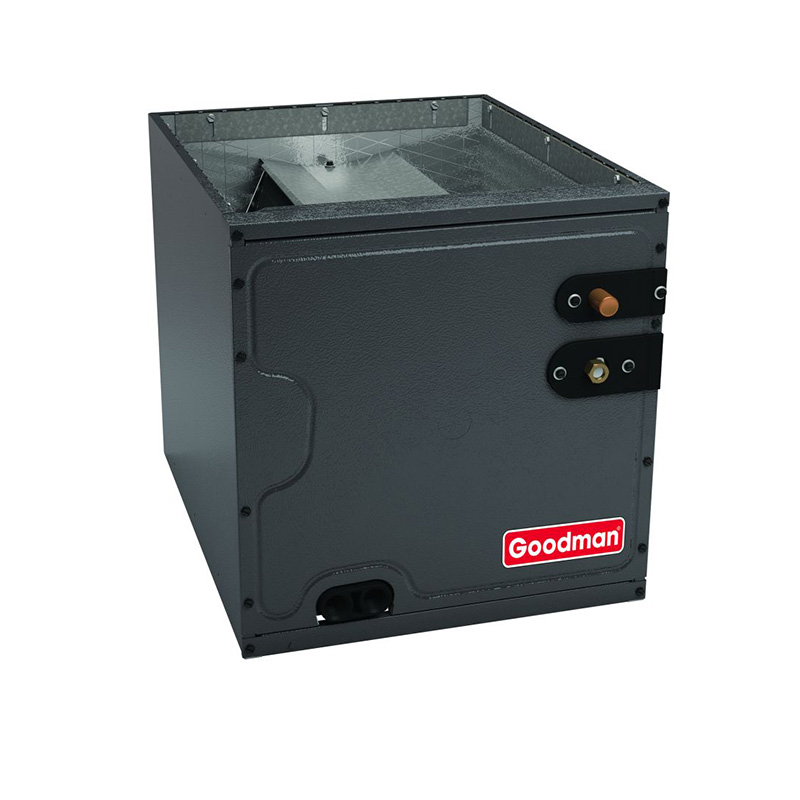
This Goodman bundle pairs a 4-ton R-32 air condenser and matching evaporator coil with a 120,000 BTU two-stage gas furnace rated at 96% AFUE, all configured for upflow installation. The result is a full split system aimed at larger homes, typically in the 2,000 to 2,800 square foot range depending on climate and insulation, where both serious heating demand and summer cooling loads need to be addressed with a single purchase. Buying the condenser, coil, and furnace as a matched set simplifies equipment selection and helps ensure the components are rated to work together, which matters for warranty eligibility and peak efficiency.
The 13.4 SEER2 rating lands right at the current federal minimum for many northern regions, so this is an efficiency-compliant system without being a high-efficiency standout. The 96% AFUE furnace is a genuine strong point, recovering 96 cents of heat for every dollar of gas burned, which is meaningful in cold climates where the furnace runs for months at a time. Two-stage furnace operation means the unit runs at a lower capacity on milder days, reducing short-cycling, improving humidity control, and cutting fuel use compared to single-stage alternatives. R-32 refrigerant has a lower global warming potential than the R-410A it replaces, and it is becoming the new standard for residential cooling equipment.
This system suits buyers who want a code-compliant, fully functional HVAC upgrade without paying the premium that Trane, Carrier, or Lennox command. It is a practical choice for landlords, budget-conscious homeowners, or anyone replacing aging equipment who needs reliable performance over a reasonable service life and is not chasing top-of-market efficiency numbers. The caveat, consistent across Goodman’s lineup, is that installation quality has an outsized influence on how well and how long the system performs.
This Goodman bundle delivers a fully compliant, two-stage heating and cooling system at a price point meaningfully below premium brands, making it a reasonable choice for cost-focused buyers who pair it with a skilled installer. The 96% AFUE furnace adds real value in colder climates, but the 13.4 SEER2 rating is entry-level on the cooling side, and Goodman's documented track record of capacitor failures and shorter average compressor lifespan are trade-offs worth pricing into the decision. Buyers who treat installation quality and a solid service contract as non-negotiable will get the most from this system.
Overall score is the average of the five ratings above.
What we like
- Purchase price runs 15 to 25 percent below comparable Trane, Lennox, and Carrier systems
- 96% AFUE furnace is a genuinely high-efficiency rating that cuts gas costs in cold climates
- Two-stage furnace operation improves humidity control and reduces on/off cycling versus single-stage units
- Matched system bundle simplifies selection and supports warranty eligibility
- R-32 refrigerant is the emerging residential standard with a lower environmental impact
Trade-offs
- 13.4 SEER2 is the minimum tier; higher-efficiency options exist at modest cost increases from this and competing brands
- Dual-run capacitor failures are the most commonly reported repair issue, typically surfacing within the first several years
- Average compressor lifespan of 10 to 14 years trails the 15 to 20 years reported for premium-brand compressors
- A minority of owners report refrigerant leaks in the first year, most often linked to installation or initial charge issues rather than equipment defects
What homeowners and pros say about Goodman
Homeowners who review Goodman equipment on ConsumerAffairs give the brand roughly 2.5 out of 5 stars, a score shaped heavily by owners who sought out a review platform specifically because something went wrong. The recurring complaint in that channel is repair costs that climb noticeably after about year seven, with dual-run capacitor failures and evaporator coil issues cited most often. Google dealer reviews, which capture a broader mix of satisfied and dissatisfied customers, average around 3.8 out of 5 across locations, and the most consistent praise is for the upfront price relative to what the equipment delivers. That gap between the two scores is itself informative: buyers who had a smooth install and a responsive service relationship tend to be satisfied, while those who faced early failures or poor contractor support make up a disproportionate share of the negative feedback.
HVAC technicians have a more nuanced view. Most acknowledge that Goodman equipment performs adequately when installed correctly and maintained on schedule, and they point to dual-run capacitors as the single most predictable service call on these systems, typically a fast, low-cost fix in the 300 to 600 dollar range. The more significant concern among experienced installers is compressor longevity: Goodman compressors average 10 to 14 years in real-world service, a gap of several years compared to the 15 to 20 year average cited for premium-brand compressors. There are also documented cases of refrigerant leaks appearing within the first year, though technicians generally attribute those to installation or initial charge problems rather than factory defects. The consistent advice from the trade is that this equipment rewards careful installation and regular maintenance more than most, and that skimping on either accelerates the timeline to a costly repair.
Sources: ConsumerAffairs Goodman owner reviews, AHRI Directory of Certified Product Performance, U.S. DOE appliance and equipment efficiency standards, Goodman product specification sheets.
What it costs to run
At 13.4 SEER2, cooling this 4-ton system for a typical 1200-hour cooling season at the U.S. average electricity rate of $0.17/kWh works out to roughly $731 per year in cooling, about $0 less per year than a minimum-efficiency 13.4 SEER2 unit of the same size. Your real cost depends on your climate and local rate.
Method: (48,000 BTU/hr ÷ 13.4 SEER2) × 1200 hours ÷ 1000 × $0.17/kWh. Rate source: U.S. EIA average; cooling hours: moderate-climate estimate.
How it compares
| Brand | Comparable model | SEER2 | Stage | Price position |
|---|---|---|---|---|
| Goodman | 4-Ton 13.4 SEER2 / 120K BTU 96% AFUE Two-Stage Bundle (this system) | 13.4 | Two-stage furnace / single-stage condenser | Value pick |
| Carrier | Comfort 24ACC636A003 Condenser with 58TP Gas Furnace | 13.4-14 | Single-stage | Typically 15 to 25 percent higher than this Goodman bundle |
| Trane | XR13c Condenser with S9V2 Two-Stage Gas Furnace | 13.4-14 | Two-stage furnace | Typically 20 to 30 percent higher than this Goodman bundle |
| Lennox | Merit ML14XC1 Condenser with ML196E Two-Stage Gas Furnace | 14 | Two-stage furnace | Typically 20 to 30 percent higher than this Goodman bundle |
Competitor rows are comparable single-stage units at similar efficiency; price is relative position, not a quote.
Questions about this system
Is 13.4 SEER2 going to cost me more to run than a higher-efficiency unit?
Yes, compared to a 16 or 17 SEER2 system, you will spend more on electricity over the life of the equipment to move the same amount of heat. How much more depends on your local electricity rates and how many cooling hours your climate demands. In mild climates the payback period on a higher-efficiency unit can stretch beyond 10 years, but in hot southern climates the gap in annual operating cost is more meaningful.
What does the two-stage furnace actually do differently, and is it worth it?
A two-stage furnace fires at a lower capacity, typically around 65 percent, on milder days and only ramps to full output when the load requires it. This reduces the abrupt temperature swings and short on/off cycles common with single-stage units, which most homeowners notice as more even room temperatures and better humidity management in spring and fall. For a 120,000 BTU unit, that lower stage also means less wasted fuel when full output is not needed.
How hard is it to find R-32 refrigerant if the system needs a service charge?
R-32 availability is growing as more manufacturers adopt it, but it is still less universally stocked than R-410A was at its peak. Most established HVAC service companies carry or can order it without issue, though in rural areas you may want to confirm your service tech has access before committing. Handling R-32 also requires specific certifications because it is mildly flammable, so confirm your technician is certified to work with it.
What are the most likely repair costs I should budget for over the first 10 years?
Based on Goodman's documented failure patterns, a dual-run capacitor replacement is the most probable service call, typically costing between 300 and 600 dollars including labor. Evaporator coil leaks show up in a meaningful share of owner reports and can run significantly higher depending on whether the coil needs to be replaced. Setting aside a few hundred dollars a year in a maintenance fund, and keeping the system on an annual tune-up schedule, reflects a realistic ownership picture.
Does Goodman's warranty actually cover the compressor, and what do I need to do to keep it valid?
Goodman offers a 10-year parts limited warranty on registered equipment, which includes the compressor, but registration must be completed within a specific window after installation or the warranty period shortens. The warranty also generally requires that a licensed HVAC contractor install the system; DIY installation typically voids coverage. Read the specific warranty document for this model carefully, because labor costs are not covered, and that is where a large portion of any repair bill originates.
Specifications
| Cooling capacity | 4 Ton |
| Efficiency | 13.4 SEER2 |
| Furnace output | 120000 BTU |
| Furnace efficiency | 96% AFUE |
| Configuration | Upflow |
| Refrigerant | R-32 |