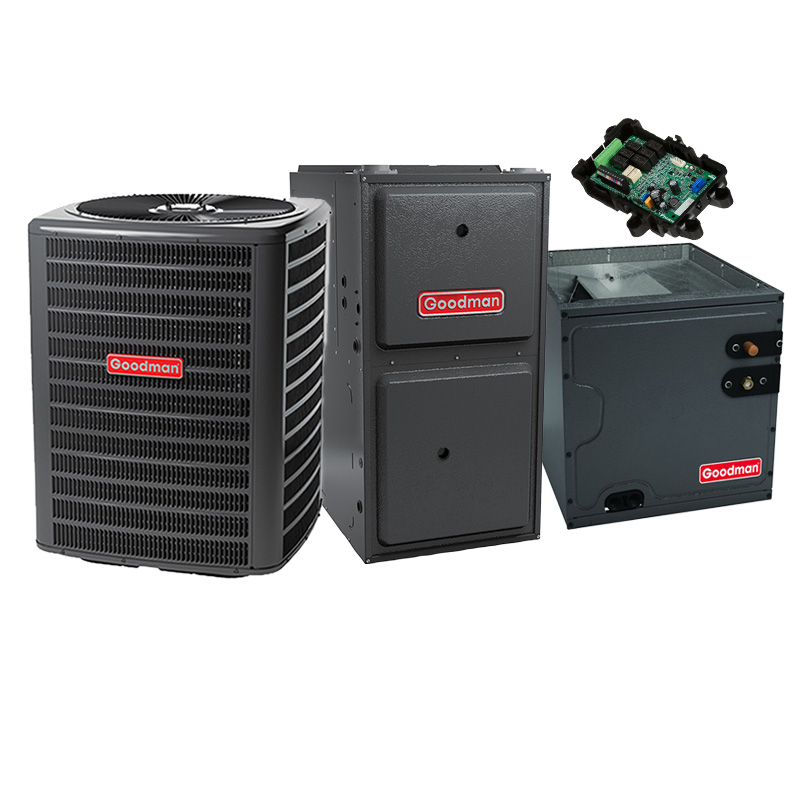
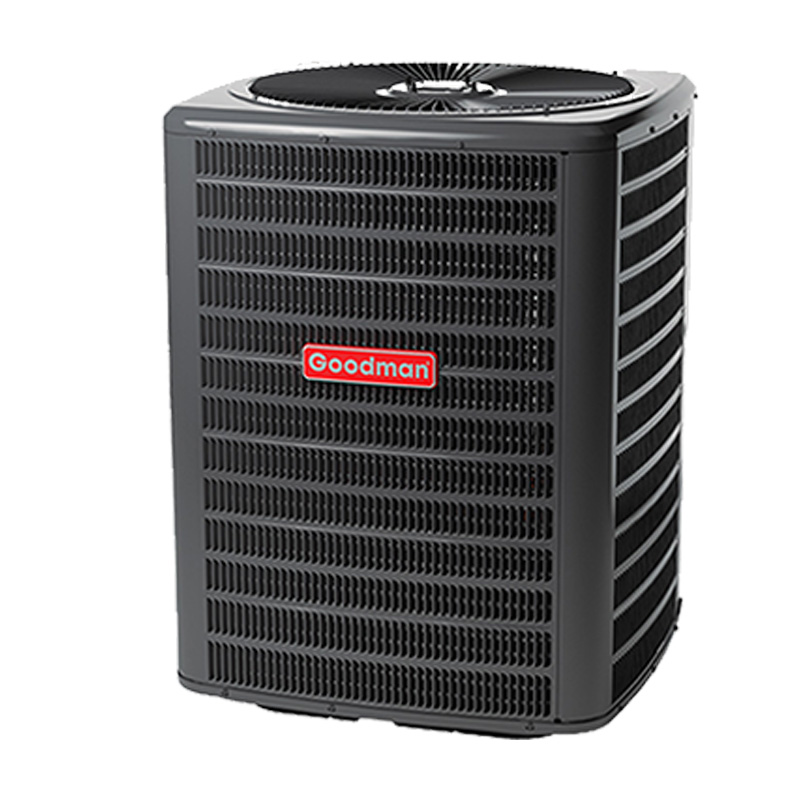
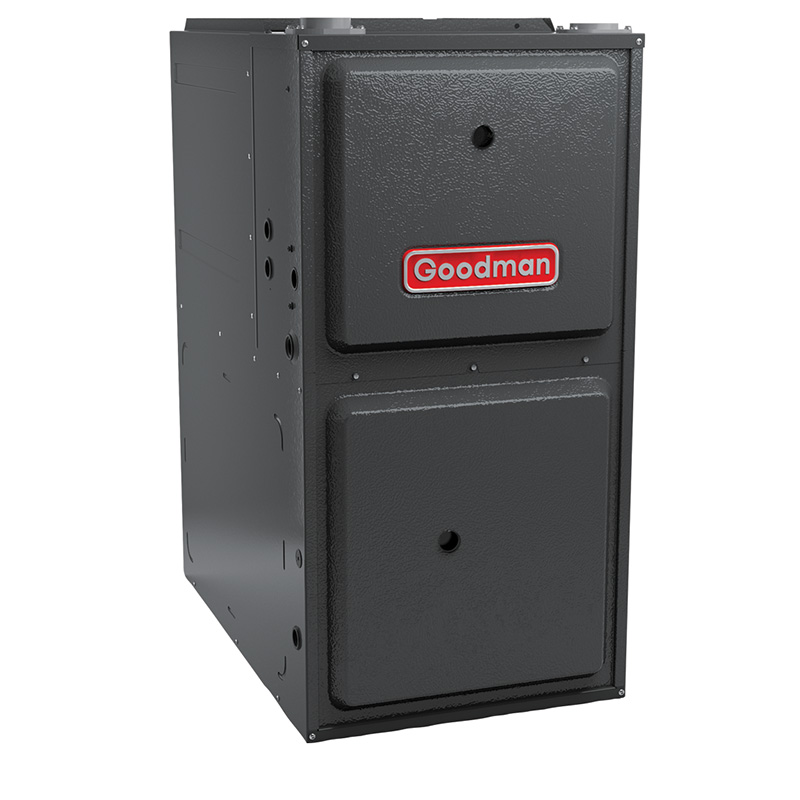
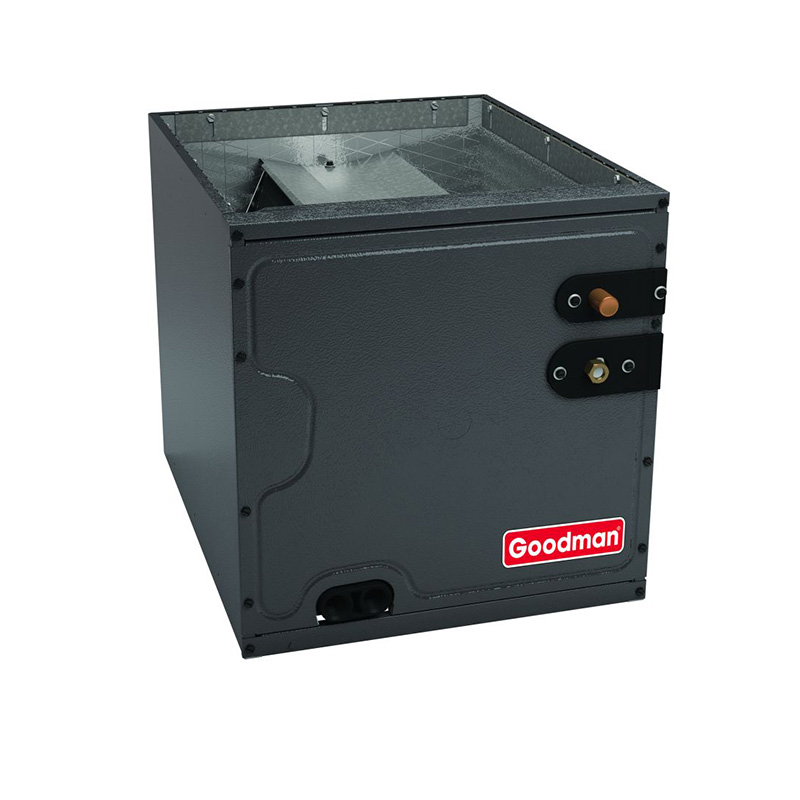
Goodman 1.5 Ton 14.5 SEER2 80000 BTU 96% AFUE Gas Furnace With R32 Air Condenser and Coil System – Upflow
View on AC Direct see your lowest price →Check current price on AC Direct →
Key features
- 1.5-ton cooling capacity paired with 80,000 BTU, 96% AFUE condensing gas furnace
- 14.5 SEER2 efficiency rating meets current federal minimum standards
- R-32 refrigerant with lower global warming potential than R-410A
- Upflow configuration for basement or floor-level installations with overhead ductwork
- Condensing furnace design with two heat exchangers for high-efficiency gas heating
- Factory-matched coil and condenser included for simplified compatibility and warranty compliance
About this system
This Goodman upflow system pairs a 1.5-ton, 14.5 SEER2 R-32 air condenser and matching coil with an 80,000 BTU, 96% AFUE gas furnace. The combination is sized for smaller homes, typically in the 600 to 900 square foot range depending on climate zone and insulation, and the upflow configuration means the furnace sits on the floor and pushes conditioned air upward into overhead ductwork. That layout is standard in homes with a basement or utility closet and a conventional trunk-and-branch duct system. R-32 refrigerant carries a lower global warming potential than the R-410A it replaces, so this package is reasonably well positioned for near-term regulatory direction without jumping to the higher cost of R-454B systems.
On the heating side, 96% AFUE means the furnace converts 96 cents of every dollar of gas into usable heat, which puts it in the condensing furnace tier where two heat exchangers extract latent heat from flue gases. That is a meaningful upgrade over standard 80% AFUE units and will reduce monthly gas bills in cold climates, though the efficiency premium is most valuable in regions with heating-degree-day counts above roughly 4,500 per year. The 14.5 SEER2 cooling rating is entry-level compliant under current federal minimums for most U.S. regions and will deliver adequate comfort without the compressor cycling benefits of a two-stage or variable-speed unit. Buyers who prioritize runtime comfort or humidity control in humid climates should weigh that limitation carefully before purchasing.
This Goodman upflow system is a serviceable entry-level package for budget-focused buyers in smaller homes who want high-efficiency heating without paying premium-brand prices. The 96% AFUE furnace is a genuine strength, but single-stage cooling, a modest compressor lifespan relative to competitors, and Goodman's documented component failure history mean buyers should budget for maintenance and not expect 20-plus years of trouble-free operation. It earns its place in the market through price, not through long-term robustness.
Overall score is the average of the five ratings above.
What we like
- 96% AFUE furnace delivers real gas savings over standard 80% units, especially in cold climates
- Factory-matched coil, condenser, and furnace simplify compatibility and support warranty claims
- R-32 refrigerant is a forward-looking choice with lower environmental impact than R-410A
- Priced 15 to 25 percent below comparable Trane, Lennox, and Carrier equipment
- Upflow layout is well-suited to the most common residential duct configurations
Trade-offs
- Single-stage cooling provides no variable output, which can leave humid climates feeling clammy during mild weather
- Dual-run capacitors are the most commonly reported failure point, typically requiring a repair in the 300 to 600 dollar range
- Compressor lifespan averages 10 to 14 years versus 15 to 20 years for premium-brand compressors
- A minority of owners report refrigerant leaks within the first year, pointing to the system's sensitivity to install quality
What homeowners and pros say about Goodman
Owner feedback on Goodman systems is split in a way that reflects the brand’s real position in the market. On ConsumerAffairs, where the audience skews toward people motivated by a complaint, Goodman scores around 2.5 out of 5, and the recurring theme in those reviews is repair costs that start climbing after roughly year seven. The failures most often mentioned match the documented failure modes: dual-run capacitors going out, evaporator coil leaks developing over time, and compressors that tend to average 10 to 14 years rather than the 15 to 20 years owners of premium-brand equipment often report. For this specific 1.5-ton upflow system with a condensing furnace, the furnace side tends to draw fewer complaints than the cooling components, which is consistent with the broader pattern of Goodman gas furnaces performing more reliably than their air-side equipment.
Google dealer reviews tell a somewhat more balanced story, landing around 3.8 out of 5 across multiple locations, where the most consistent praise is straightforwardly about affordability and the most consistent criticism is about the long-term cost of ownership once the initial savings are offset by service calls. HVAC technicians who work on Goodman equipment regularly tend to say the same thing in trade forums: the equipment can hold up well when the install is done correctly and maintained consistently, but it has less margin for error than premium brands and responds poorly to shortcuts. For this particular system, the R-32 refrigerant adds a layer of installer knowledge that makes technician selection especially important, since an improper charge or connection on a mildly flammable refrigerant carries both performance and safety implications.
Sources: ConsumerAffairs Goodman owner reviews, AHRI Directory of Certified Product Performance, U.S. DOE appliance and equipment efficiency standards, Goodman product specification sheets.
What it costs to run
At 14.5 SEER2, cooling this 1.5-ton system for a typical 1200-hour cooling season at the U.S. average electricity rate of $0.17/kWh works out to roughly $253 per year in cooling, about $21 less per year than a minimum-efficiency 13.4 SEER2 unit of the same size. Your real cost depends on your climate and local rate.
Method: (18,000 BTU/hr ÷ 14.5 SEER2) × 1200 hours ÷ 1000 × $0.17/kWh. Rate source: U.S. EIA average; cooling hours: moderate-climate estimate.
How it compares
| Brand | Comparable model | SEER2 | Stage | Price position |
|---|---|---|---|---|
| Goodman | GLXS14305B / GCVC960803BN / CAPF coil | 14.5 | Single-stage | Value pick |
| Carrier | Comfort 24ACC636A003 with 59SC5B080S17 furnace | 14.5 | Single-stage | 15 to 25 percent above this Goodman system |
| Trane | XR14c condenser with S9X2 96% AFUE furnace | 14.5 | Single-stage | 20 to 30 percent above this Goodman system |
| Lennox | Merit ML14XC1 condenser with ML196E furnace | 14.5 | Single-stage | 20 to 30 percent above this Goodman system |
Competitor rows are comparable single-stage units at similar efficiency; price is relative position, not a quote.
Questions about this system
Is 1.5 tons enough for my home, and how do I know if this furnace is oversized?
A 1.5-ton unit is generally appropriate for homes between roughly 600 and 900 square feet in moderate climates, but an accurate Manual J load calculation by your installer is the only reliable way to confirm the right size. An 80,000 BTU furnace in a small home can be oversized, which leads to short cycling and uneven heat distribution, so ask your technician to verify the heat load before committing to this configuration.
What maintenance should I plan for to get the most life out of this system?
Annual preventive maintenance that includes inspecting and replacing the dual-run capacitor proactively is especially important with Goodman equipment, since capacitor failure is the most commonly reported issue and catching it before it takes out the compressor saves significant money. Keeping the coil clean, checking refrigerant charge at each service visit, and replacing filters on schedule will extend the life of both the furnace and the cooling components.
Does this system work with my existing ductwork?
The upflow configuration requires overhead supply ductwork and a return air path below the furnace, which matches the most common basement and utility-room layouts. Your installer should verify that existing duct sizing is adequate for 1.5-ton airflow, since undersized or leaky ducts will reduce both efficiency and comfort regardless of what equipment you install.
How does R-32 refrigerant affect service costs compared to the R-410A system I am replacing?
R-32 is a mildly flammable refrigerant, which means technicians must be certified to handle it and some older service equipment cannot be used with it. In practice, most established HVAC companies have already updated their tools and training, but you should confirm this with your service provider before purchasing to avoid limited service options down the road.
What does the Goodman warranty actually cover, and are there strings attached?
Goodman typically offers a 10-year parts limited warranty when the system is registered within a set window after installation, but coverage requires that a licensed contractor perform the install and that you maintain proof of those service records. Failure to register, using an unlicensed installer, or missing documentation can reduce the warranty to as little as five years, so registration and keeping service invoices are essential steps right after installation.
Specifications
| Cooling capacity | 1.5 Ton |
| Efficiency | 14.5 SEER2 |
| Furnace output | 80000 BTU |
| Furnace efficiency | 96% AFUE |
| Configuration | Upflow |
| Refrigerant | R-32 |