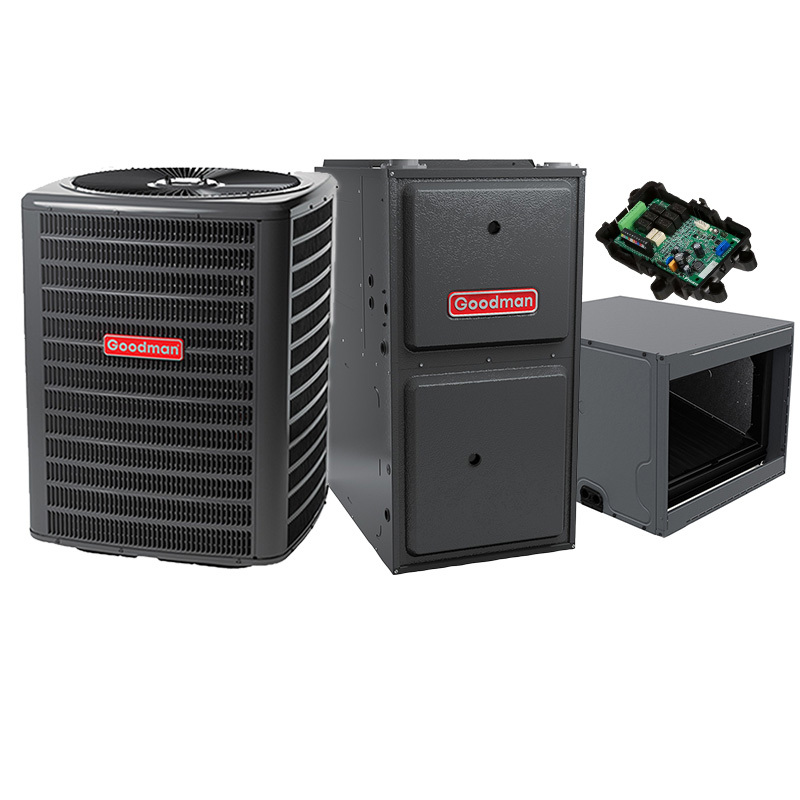
Goodman 3.5 Ton 13.4 SEER2 80000 BTU 96% AFUE Gas Furnace With R32 Air Condenser and Coil System – Horizontal
View on AC Direct see your lowest price →Check current price on AC Direct →
Key features
- 3.5-ton cooling capacity with 13.4 SEER2 efficiency rating
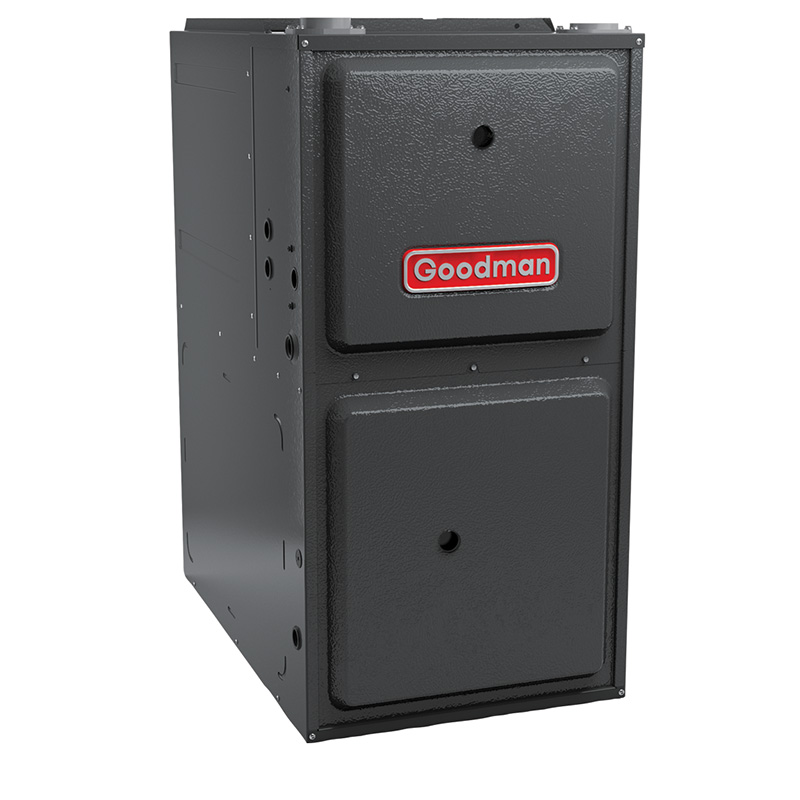
- 80,000 BTU, 96% AFUE two-stage condensing gas furnace
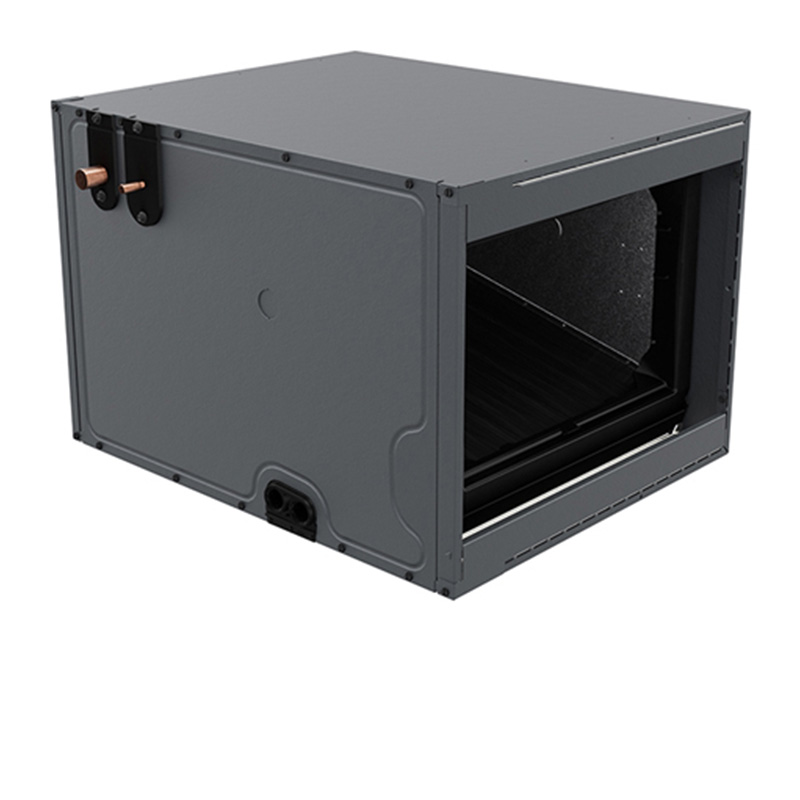
- Horizontal configuration for attic, crawl space, or side-load installations
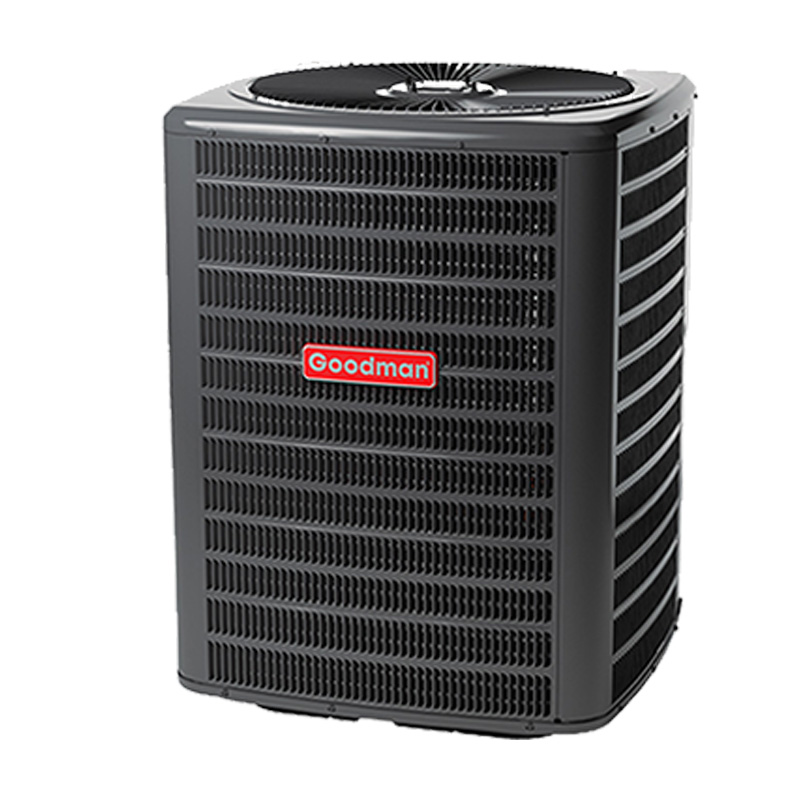
- R-32 refrigerant with lower global warming potential than R-410A
- Matched coil included for a factory-tested, warranty-compliant assembly
- Compatible with Goodman ComfortBridge communicating controls for easier diagnostics
About this system
The Goodman 3.5-ton horizontal gas furnace and air conditioner system pairs a 96% AFUE condensing furnace with a 13.4 SEER2 air condenser and matching coil in a horizontal configuration, making it a practical fit for crawl spaces, attics, and tight utility closets where upright installations are not an option. The 80,000 BTU furnace output suits homes in the 1,800 to 2,400 square-foot range depending on climate zone and insulation quality, while the 3.5-ton cooling capacity covers similar square footage in moderate to warm climates. R-32 refrigerant replaces the older R-410A found in most legacy systems, offering a lower global warming potential and slightly better heat transfer efficiency.
At 96% AFUE, the furnace sits in the high-efficiency tier, meaning roughly 96 cents of every dollar spent on gas goes directly toward heating your home. That figure can meaningfully reduce monthly gas bills compared to an 80% AFUE unit, particularly in colder climates where the furnace runs heavily from November through March. The 13.4 SEER2 rating lands at the current federal minimum threshold for most regions, so this is a code-compliant starting point rather than a standout cooling performer. Buyers who prioritize low upfront cost and plan to replace the system in 10 to 15 years will find this combination sensible; those expecting to stay in the home 20 or more years may want to weigh a higher-SEER2 or two-stage option against the lifetime operating cost difference.
This Goodman horizontal system delivers legitimate high-efficiency heating and entry-level cooling at a price point that undercuts major competitors by a noticeable margin. It is a workable choice for budget-conscious buyers who understand they are trading some long-term reliability ceiling and brand-tier support for upfront savings. The single biggest variable in how well it performs is the quality of the installing contractor, not the equipment itself.
Overall score is the average of the five ratings above.
What we like
- 96% AFUE furnace meaningfully reduces gas consumption versus standard-efficiency alternatives
- Horizontal configuration opens installation options in spaces where vertical units cannot fit
- R-32 refrigerant is more environmentally friendly and is becoming the industry standard
- Matched coil included, removing compatibility guesswork and protecting the full warranty
- Priced 15 to 25 percent below comparable Trane, Carrier, and Lennox systems
Trade-offs
- 13.4 SEER2 is the federal minimum threshold, not a standout cooling efficiency figure
- Dual-run capacitor failures are a documented and recurring issue, typically after year 5 to 7
- Compressor lifespan averages 10 to 14 years, shorter than the 15 to 20 years seen in premium brands
- Evaporator coil leaks appear in a meaningful share of owner reports, and a minority report refrigerant issues within the first year
What homeowners and pros say about Goodman
On ConsumerAffairs, Goodman scores around 2.5 out of 5, though that platform attracts owners who had problems far more than satisfied ones. The recurring theme in those reviews is repair costs climbing after roughly year 7, with dual-run capacitor failures and evaporator coil leaks appearing most often. Google dealer reviews tell a somewhat different story, averaging around 3.8 out of 5 across hundreds of reviews per location, where the most consistent praise centers on affordability and the availability of local service. The gap between those two scores reflects both the platform bias and a real truth about this product: buyers who went in with realistic expectations tend to report reasonable satisfaction, while those expecting premium-brand longevity on a value-brand budget are more likely to feel let down.
HVAC technicians who work on Goodman equipment regularly point to install quality as the single biggest predictor of how long one of these systems lasts. A properly charged, correctly configured Goodman horizontal system with a good contractor behind it can run a decade or more without major issues beyond a capacitor swap. But the documented failure modes are real: compressors averaging 10 to 14 years versus the 15 to 20 years seen in premium brands, a minority of owners reporting refrigerant issues within the first year that trace back to charge errors at installation, and coil leaks that show up in a meaningful share of long-term owner reports. This system rewards buyers who treat installer selection as seriously as equipment selection.
Sources: ConsumerAffairs Goodman owner reviews, AHRI Directory of Certified Product Performance, U.S. DOE appliance and equipment efficiency standards, Goodman product specification sheets.
What it costs to run
At 13.4 SEER2, cooling this 3.5-ton system for a typical 1200-hour cooling season at the U.S. average electricity rate of $0.17/kWh works out to roughly $639 per year in cooling, about $0 less per year than a minimum-efficiency 13.4 SEER2 unit of the same size. Your real cost depends on your climate and local rate.
Method: (42,000 BTU/hr ÷ 13.4 SEER2) × 1200 hours ÷ 1000 × $0.17/kWh. Rate source: U.S. EIA average; cooling hours: moderate-climate estimate.
How it compares
| Brand | Comparable model | SEER2 | Stage | Price position |
|---|---|---|---|---|
| Goodman | 3.5 Ton 13.4 SEER2 / 96% AFUE Horizontal Gas System | 13.4 | Single-stage cooling / Two-stage heating | Value pick |
| Carrier | Performance 13 (24ACC3) with 58TP 96% AFUE | 13.4 | Single-stage | Roughly 15 to 20 percent more than this Goodman system |
| Trane | XR13c with S9X2 96% AFUE furnace | 13.4 | Single-stage | Roughly 20 to 25 percent more than this Goodman system |
| Lennox | Merit 13ACX with ML96 96% AFUE furnace | 13.4 | Single-stage | Roughly 15 to 25 percent more than this Goodman system |
Competitor rows are comparable single-stage units at similar efficiency; price is relative position, not a quote.
Questions about this system
Why does horizontal configuration matter and can this system be installed vertically instead?
Horizontal configuration means the air handler and coil are designed to lie on their side, which is necessary for attic or crawl space installations where headroom is limited. This specific unit is rated and warranted for horizontal use; installing it vertically without a confirmed dual-position cabinet can void the warranty and create drainage problems, so verify the cabinet rating before purchase.
Is 13.4 SEER2 going to cost me noticeably more to run than a higher-rated system?
Compared to a 16 SEER2 unit of the same tonnage, the difference typically runs in the range of 10 to 15 percent higher cooling energy cost per season. In a mild climate where the AC runs 1,000 hours a year that gap is modest; in a hot southern climate with 2,000 or more run hours, the annual dollar difference becomes more meaningful over a 12-year ownership window.
What is the Goodman warranty on this system and what can void it?
Goodman offers a 10-year parts warranty when the system is registered within 60 days of installation by a licensed contractor. Using mismatched components, skipping registration, or having the unit installed by an unlicensed person can drop that coverage to 5 years. Refrigerant charge errors at install, which account for many first-year refrigerant complaints, are generally not covered as a warranty claim.
My old system used R-410A. Does switching to R-32 create any compatibility or service issues?
R-32 requires a fully replaced line set or thoroughly flushed and dried existing copper lines, and technicians must use R-32 certified equipment for service calls. It is not a drop-in replacement for R-410A. Most qualified HVAC companies are already equipped for R-32 work as the industry transitions, but it is worth confirming before your service appointment.
How often do Goodman capacitors fail and what does that repair actually cost?
Dual-run capacitor failure is the most commonly reported Goodman repair, and it tends to show up after roughly five to seven years of service. The part itself is inexpensive and the repair usually runs between 300 and 600 dollars including a service call, making it one of the more manageable maintenance costs. Keeping a service contract or scheduling annual tune-ups gives a technician the chance to catch a weakening capacitor before it strands you on a hot day.
Specifications
| Cooling capacity | 3.5 Ton |
| Efficiency | 13.4 SEER2 |
| Furnace output | 80000 BTU |
| Furnace efficiency | 96% AFUE |
| Configuration | Horizontal |
| Refrigerant | R-32 |