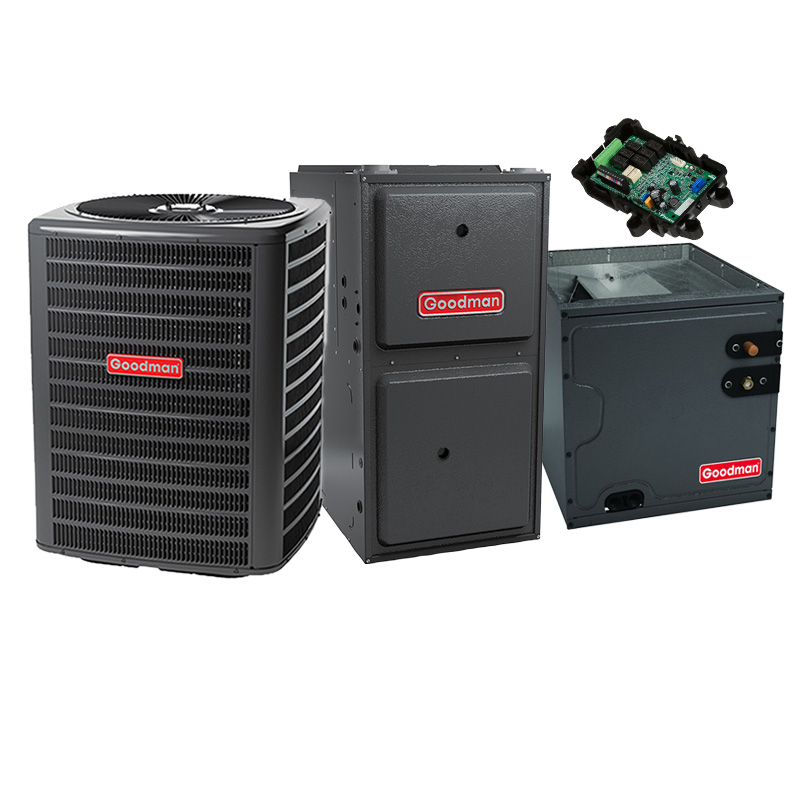
Goodman 3 Ton 14 SEER2 100000 BTU 96% AFUE Gas Furnace With R32 Air Condenser and Coil System – Upflow
View on AC Direct see your lowest price →Check current price on AC Direct →
Key features
- 3-ton cooling capacity with 14 SEER2 efficiency rating
- 100,000 BTU gas furnace at 96% AFUE for high-efficiency heating
- R-32 refrigerant with lower global warming potential than R-410A
- Upflow configuration for basement or ground-level mechanical room installs
- Factory-matched condenser, coil, and furnace for rated efficiency and warranty compliance
- Priced approximately 15 to 25 percent below comparable Trane, Lennox, and Carrier systems
About this system
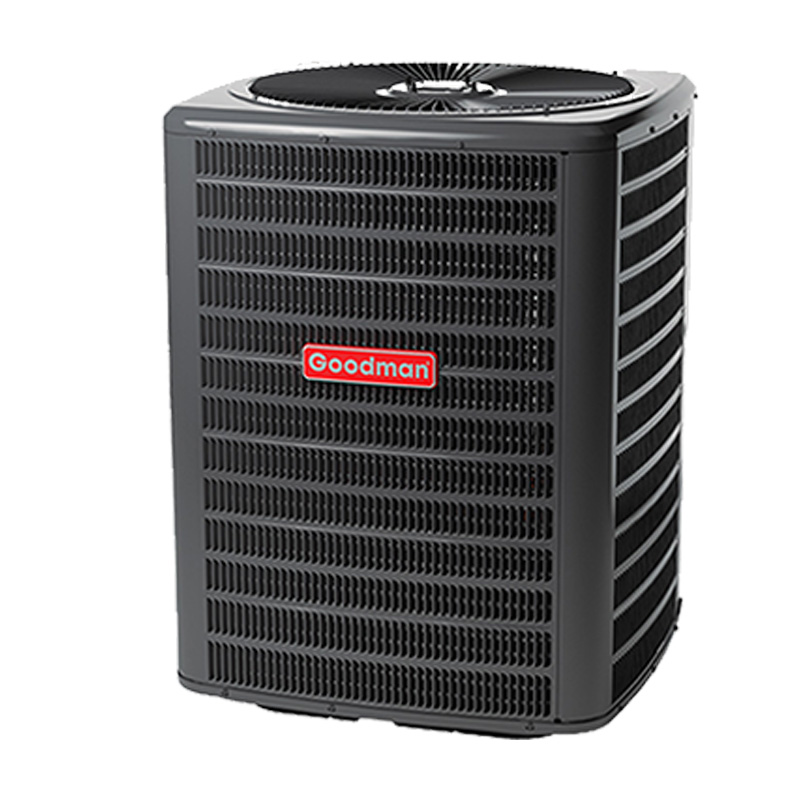
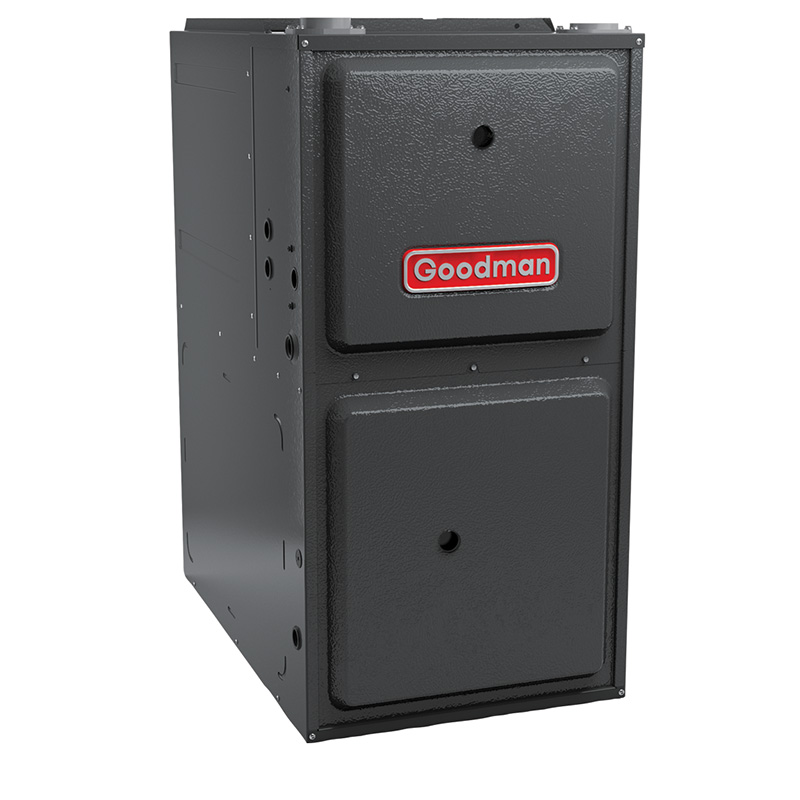
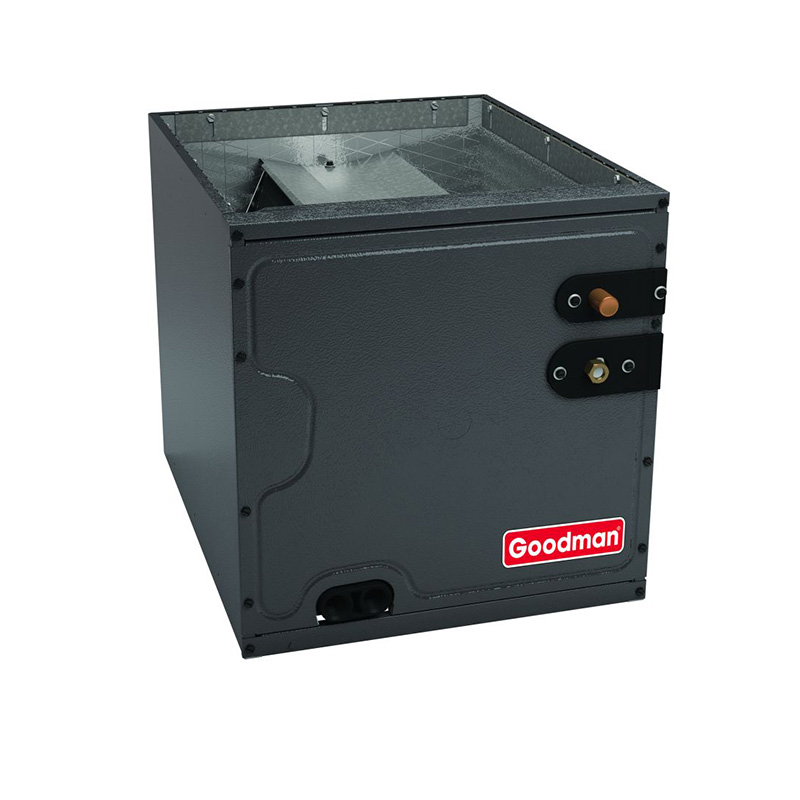
This Goodman bundle pairs a 3-ton, 14 SEER2 R-32 air condenser and matching evaporator coil with a 100,000 BTU, 96% AFUE upflow gas furnace. The combination covers roughly 1,500 to 2,200 square feet depending on climate zone, insulation quality, and ceiling height. At 14 SEER2, efficiency sits at the current federal minimum for most northern and central regions, meaning you are not leaving significant energy savings on the table compared to code-minimum installs, but you are also not at the top of what modern equipment offers. The 96% AFUE furnace is a genuine high-efficiency rating, condensing nearly all combustion heat rather than exhausting it up a flue, and it represents a real upgrade over an 80% unit for anyone in a heating-heavy climate.
R-32 refrigerant is worth noting for buyers who may need service in the coming years. It has a lower global warming potential than the R-410A it replaces, is increasingly stocked by HVAC wholesalers, and is the direction the industry is moving. The upflow configuration means the furnace draws air from the bottom and discharges it through the top, which suits the most common residential installation layout where the air handler sits in a basement, utility closet, or ground-level mechanical room with ductwork above. This is a factory-matched system, so the coil is sized and rated to work with the condenser, which matters for both rated efficiency and warranty eligibility.
This Goodman system delivers legitimate high-efficiency heating and code-compliant cooling at a price point that makes sense for budget-conscious homeowners who are willing to accept a shorter expected compressor lifespan and a documented history of capacitor and coil issues. It is a workable choice when professionally installed, but it requires that qualifier more than premium brands do. Buyers who want a system that performs predictably into its second decade should weigh the savings against the real-world failure data.
Overall score is the average of the five ratings above.
What we like
- 96% AFUE furnace provides meaningful heating efficiency and lower gas bills compared to 80% units
- Factory-matched system qualifies for full manufacturer warranty when installed by a licensed contractor
- R-32 refrigerant is increasingly available and aligns with industry direction away from R-410A
- 14 SEER2 meets current federal minimums, so the system is legal and functional in all major climate zones
- Upfront cost is substantially lower than Carrier, Trane, or Lennox equivalents at similar efficiency
Trade-offs
- Compressor lifespan averages 10 to 14 years, shorter than the 15 to 20 years documented for premium brands
- Dual-run capacitor failures are the most commonly reported issue, typically appearing after year 7
- Evaporator coil leaks show up in a meaningful share of owner reviews and can be costly to address
- A minority of owners report refrigerant leaks within the first year, typically tied to install quality or charge issues
What homeowners and pros say about Goodman
Homeowners who have lived with Goodman equipment tend to land in two camps. Those who had it properly installed by an experienced contractor and addressed the inevitable capacitor replacement around year 7 to 9 often report it as an acceptable long-term value. Those who had a rushed or cut-rate install, or who ran into an evaporator coil leak without a parts warranty in effect, frequently describe it in the terms reflected by the brand’s roughly 2.5 out of 5 rating on ConsumerAffairs, a channel where repair cost frustration after year 7 is the most consistent complaint. Google dealer reviews, which tend to capture a broader picture, sit around 3.8 out of 5, where the most repeated positive is straightforward: the price made it possible to replace aging equipment that would have otherwise gone another season.
HVAC technicians who service Goodman regularly point to dual-run capacitor failure as the most predictable maintenance event, typically a quick fix in the 300 to 600 dollar range but one that newer owners do not always anticipate. Evaporator coil leaks are a documented issue across owner forums and reviews, and compressor longevity running 10 to 14 years on average versus 15 to 20 for Trane, Carrier, or Lennox is a real gap that matters when you are thinking about total cost of ownership over a system’s life. Refrigerant leaks in the first year, while affecting a minority of buyers, are consistently tied back to installation or initial charge issues rather than factory defects, which is why every technician familiar with this brand emphasizes that the installer choice matters as much as the equipment choice.
Sources: ConsumerAffairs Goodman owner reviews, AHRI Directory of Certified Product Performance, U.S. DOE appliance and equipment efficiency standards, Goodman product specification sheets.
What it costs to run
At 14 SEER2, cooling this 3-ton system for a typical 1200-hour cooling season at the U.S. average electricity rate of $0.17/kWh works out to roughly $525 per year in cooling, about $23 less per year than a minimum-efficiency 13.4 SEER2 unit of the same size. Your real cost depends on your climate and local rate.
Method: (36,000 BTU/hr ÷ 14 SEER2) × 1200 hours ÷ 1000 × $0.17/kWh. Rate source: U.S. EIA average; cooling hours: moderate-climate estimate.
How it compares
| Brand | Comparable model | SEER2 | Stage | Price position |
|---|---|---|---|---|
| Goodman | 3-Ton 14 SEER2 / 96% AFUE Upflow Bundle (this system) | 14 | Single-stage | Value pick |
| Carrier | Comfort 24ACC636 condenser with 58TP furnace | 14-15 | Single-stage | 15 to 25 percent higher than this system |
| Trane | XR14c condenser with S9X2 furnace | 14-15 | Single-stage | 15 to 25 percent higher than this system |
| Lennox | Merit ML14XC1 condenser with ML196E furnace | 14-15 | Single-stage | 15 to 20 percent higher than this system |
Competitor rows are comparable single-stage units at similar efficiency; price is relative position, not a quote.
Questions about this system
Does this system qualify for the federal energy efficiency tax credit?
The 96% AFUE furnace meets the threshold for the 25C federal tax credit on heating equipment. The 14 SEER2 condenser sits at the minimum efficiency tier, so it does not qualify for the cooling portion of that credit on its own. Check current IRS guidance and consult a tax professional, as eligibility depends on your specific situation and the credit rules in effect at the time of installation.
Can I install this system myself to save money?
In most states, installation requires a licensed HVAC contractor, and Goodman's warranty requires professional installation to remain valid. Beyond the legal and warranty issues, technician feedback consistently points to install quality as the single biggest factor in how long a Goodman system lasts, so DIY installation meaningfully increases the risk of early failure or a first-year refrigerant leak.
What is the warranty on this system, and what does it actually cover?
Goodman typically offers a 10-year parts warranty on registered systems, which requires registration within a set window after installation by a licensed contractor. The warranty covers component replacement parts but not labor, refrigerant, or diagnostic costs, which means an out-of-warranty repair call for a coil leak or compressor can still be expensive even within the parts coverage period.
How does the R-32 refrigerant affect future service costs compared to R-410A systems?
R-32 is now widely stocked by HVAC wholesalers and is generally comparable in price to R-410A, so service costs are not expected to be a significant penalty. R-32 does require technicians to use compatible recovery equipment and follow its specific handling procedures, so confirming your service provider is set up for R-32 before you need an emergency call is worthwhile.
Is a 3-ton, 100,000 BTU combination typical for my home size, or should I be concerned about oversizing?
A proper Manual J load calculation is the only reliable way to size a system for your home. Three tons of cooling and 100,000 BTU of heating are common for homes in the 1,500 to 2,200 square foot range in colder climates, but factors like insulation, windows, air sealing, and local design temperatures shift that range significantly. An oversized system short-cycles, which accelerates wear and reduces dehumidification performance, so ask your contractor to show you the load calculation before installation.
Specifications
| Cooling capacity | 3 Ton |
| Efficiency | 14 SEER2 |
| Furnace output | 100000 BTU |
| Furnace efficiency | 96% AFUE |
| Configuration | Upflow |
| Refrigerant | R-32 |