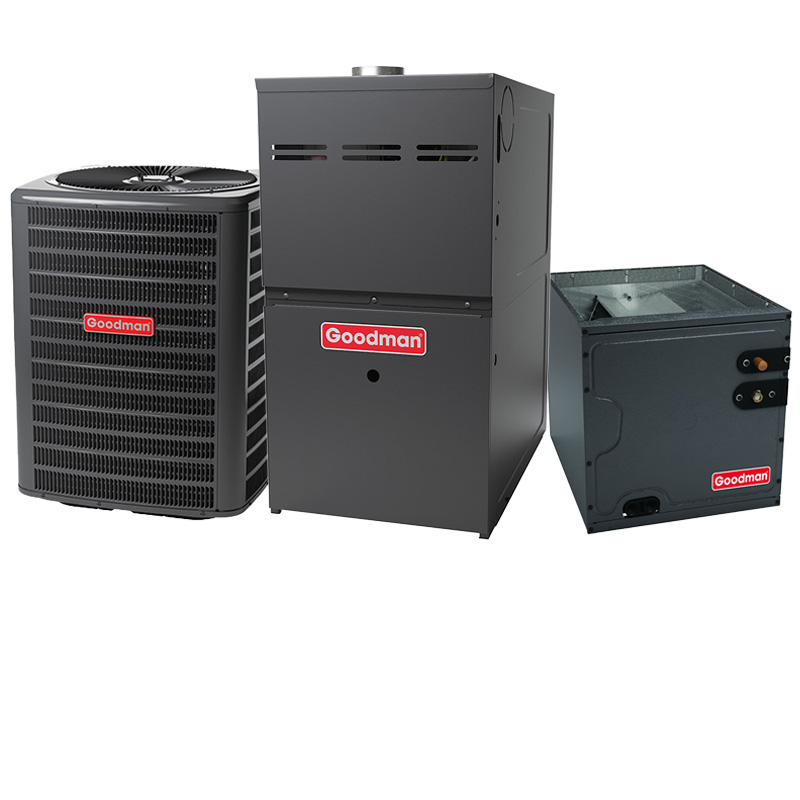
Goodman R32 2.5 Ton 14 SEER2 60000 BTU 80% Multi-Speed ECM Gas Furnace and Air Conditioner System – Upflow
View on AC Direct see your lowest price →Check current price on AC Direct →
Key features
- 2.5-ton cooling capacity with 14 SEER2 efficiency rating
- 60,000 BTU gas furnace at 80% AFUE for heating
- Multi-speed ECM blower motor for quieter, more efficient airflow
- R-32 refrigerant with lower global warming potential than R-410A
- Upflow configuration for attic-fed or top-discharge duct systems
- Priced 15 to 25 percent below comparable Trane, Carrier, and Lennox systems
About this system
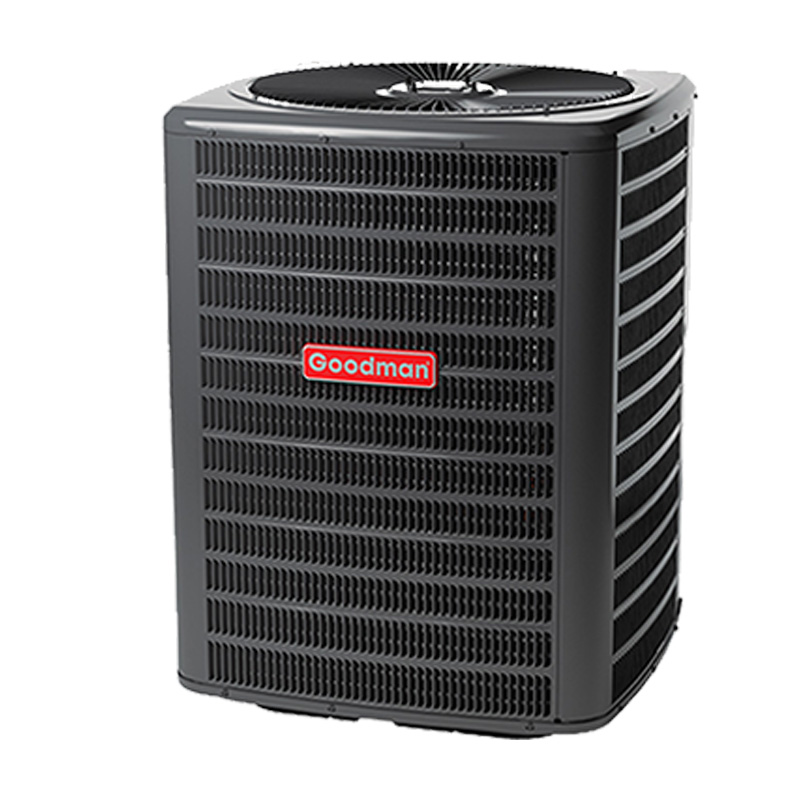
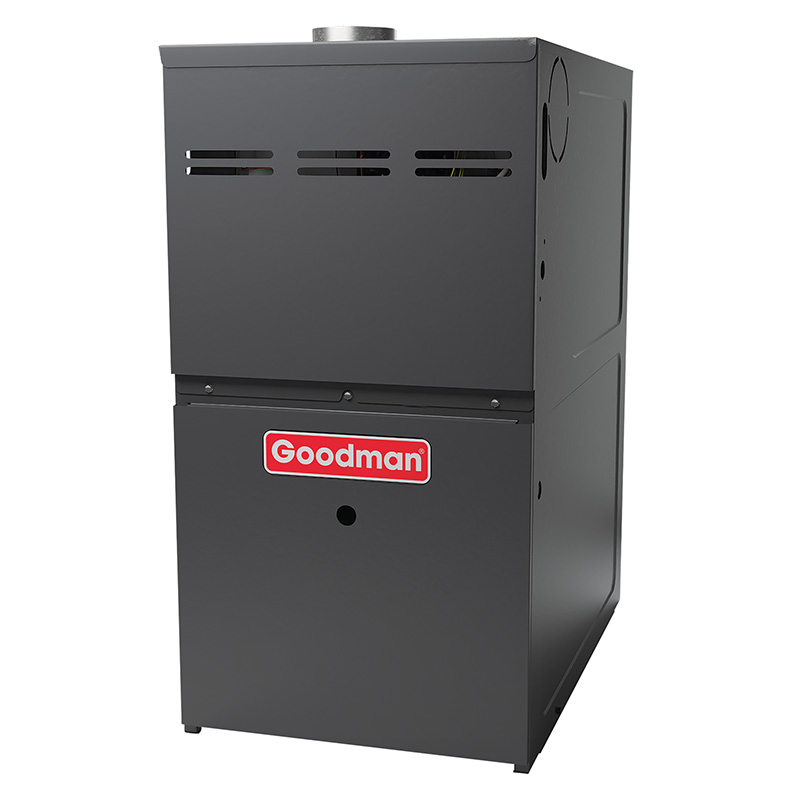
This Goodman upflow system pairs a 2.5-ton R-32 air conditioner rated at 14 SEER2 with a 60,000 BTU, 80% AFUE multi-speed ECM gas furnace. The combination is sized for homes roughly in the 1,200 to 1,600 square-foot range, depending on local climate, insulation quality, and duct layout. The upflow configuration means the furnace discharges conditioned air from the top, making it the right fit for systems where ductwork runs through an attic or upper floor rather than a crawlspace or basement.
R-32 refrigerant carries a significantly lower global warming potential than the R-410A it replaces, and it operates at slightly higher efficiency. The multi-speed ECM blower motor is a meaningful upgrade over a standard single-speed PSC motor: it ramps airflow up and down based on demand, which reduces energy use at the air handler, improves humidity control on moderate days, and runs noticeably quieter at lower speeds. At 14 SEER2, this system clears the federal minimum efficiency threshold for most U.S. climate regions but sits at the entry-level tier of efficiency, not the mid or premium tier. Buyers who expect to stay in the home for 10 or more years or who face high summer cooling bills may want to compare the operating cost difference against a 16 or 17 SEER2 system before deciding.
This Goodman system is a competent, budget-conscious choice for homeowners who want a complete ducted split system without the premium price tag of Trane or Carrier. The ECM motor and R-32 refrigerant are genuine improvements over older entry-level equipment, but documented issues with dual-run capacitors, evaporator coil leaks, and shorter average compressor life mean long-term ownership costs can close the gap with pricier brands. It delivers solid value when professionally installed and maintained, and is a harder sell when corners are cut.
Overall score is the average of the five ratings above.
What we like
- Upfront cost is notably lower than comparable Carrier, Trane, and Lennox systems
- ECM multi-speed motor improves humidity control and reduces blower energy use
- R-32 refrigerant is more environmentally responsible than R-410A
- 14 SEER2 meets federal minimum requirements across most U.S. climate zones
- Widely stocked by distributors, making parts and service easier to source
Trade-offs
- Dual-run capacitors are the most commonly reported failure, typically appearing after year 5 to 7
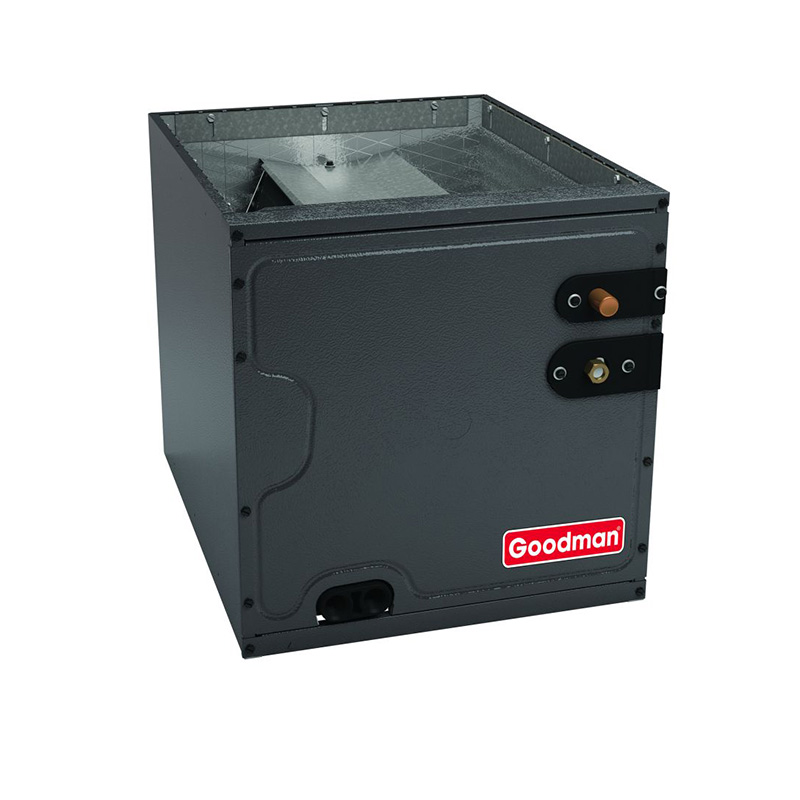
- Evaporator coil leaks appear in a meaningful share of owner reviews, a costly mid-life repair
- Compressor longevity averages 10 to 14 years versus 15 to 20 for premium-brand compressors
- 80% AFUE is the low end of furnace efficiency; condensing 95%+ furnaces save noticeably more on gas bills in cold climates
What homeowners and pros say about Goodman
Homeowners who have installed Goodman equipment tend to land in two camps. Those who report smooth ownership give credit largely to a strong installation by an experienced technician, consistent annual maintenance, and prompt attention to early warning signs. On Google dealer review pages, Goodman systems typically score around 3.8 out of 5, where the most repeated praise is straightforward: the price was fair and the system works as expected. On ConsumerAffairs, the score drops to roughly 2.5 out of 5, which reflects the platform’s complaint-heavy audience, but the recurring theme there is worth noting: repair costs start climbing noticeably after about year 7, and owners who did not budget for that are often the most frustrated.
Among HVAC technicians, the documented failure pattern on Goodman equipment is fairly consistent. Dual-run capacitors are the most commonly cited weak point, though a capacitor swap is usually a straightforward, lower-cost repair in the $300 to $600 range when caught before it kills the compressor. More concerning to pros are evaporator coil leaks, which appear across a meaningful portion of owner reviews and carry a higher repair cost. Compressor longevity is another honest trade-off: Goodman compressors average roughly 10 to 14 years in real-world use, compared to 15 to 20 years typically seen in Carrier, Trane, or Lennox equipment. For this specific upflow system with its ECM blower, technicians generally note that the motor itself is a quality component and less likely to be the source of trouble, but the refrigerant circuit and capacitor still deserve attention at every annual service visit.
Sources: ConsumerAffairs Goodman owner reviews, AHRI Directory of Certified Product Performance, U.S. DOE appliance and equipment efficiency standards, Goodman product specification sheets.
What it costs to run
At 14 SEER2, cooling this 2.5-ton system for a typical 1200-hour cooling season at the U.S. average electricity rate of $0.17/kWh works out to roughly $437 per year in cooling, about $20 less per year than a minimum-efficiency 13.4 SEER2 unit of the same size. Your real cost depends on your climate and local rate.
Method: (30,000 BTU/hr ÷ 14 SEER2) × 1200 hours ÷ 1000 × $0.17/kWh. Rate source: U.S. EIA average; cooling hours: moderate-climate estimate.
How it compares
| Brand | Comparable model | SEER2 | Stage | Price position |
|---|---|---|---|---|
| Goodman | R-32 2.5 Ton 14 SEER2 80% Multi-Speed ECM System (this unit) | 14 | Multi-speed | Value pick |
| Carrier | Comfort 24ACC636 with 58MXA furnace | 14-15 | Single-stage | Typically 20 to 25 percent more than this Goodman system |
| Trane | XR14c with S8X1 furnace | 14 | Single-stage | Typically 20 to 30 percent more than this Goodman system |
| Lennox | Merit ML14XC1 with ML180UH furnace | 14-15 | Single-stage | Typically 15 to 25 percent more than this Goodman system |
Competitor rows are comparable single-stage units at similar efficiency; price is relative position, not a quote.
Questions about this system
Is 14 SEER2 going to cost me noticeably more to run than a higher-efficiency system?
Compared to a 16 SEER2 system, a 14 SEER2 unit uses roughly 12 to 14 percent more electricity for the same cooling load. In a moderate climate with average summer use, that difference may be $50 to $120 per season, but in hot regions with long cooling seasons the gap widens. Run your own numbers against local electricity rates before deciding whether upgrading efficiency at purchase makes financial sense.
Why does it matter that this furnace is 80% AFUE instead of 90% or 95%?
An 80% AFUE furnace vents through a standard flue, which is simpler and cheaper to install, but 20 cents of every dollar of gas consumed is lost as exhaust heat. A 95% AFUE condensing furnace loses only 5 cents. In climates with long heating seasons or high gas prices, the operating savings from a higher-AFUE furnace can outweigh its higher purchase price within 5 to 8 years.
What is the warranty on this Goodman system and what does it actually cover?
Goodman typically offers a 10-year parts warranty on registered equipment, which covers most major components including the compressor, heat exchanger, and coil. Registration is required within a set window after installation, and the warranty generally covers parts only, not labor, refrigerant, or diagnostic fees. Read the specific warranty card for this model because coverage terms can vary by component.
Some reviews mention evaporator coil leaks. How serious is that risk with this system?
Evaporator coil leaks appear in a meaningful portion of Goodman owner reviews and, when they occur, typically mean either a coil replacement or a refrigerant recharge, both of which run into the hundreds to over a thousand dollars depending on labor rates. Ensuring the system is properly charged at installation, keeping the coil clean, and having it inspected during annual tune-ups are the most practical ways to catch a developing leak early.
Can any HVAC contractor install this system, or does the R-32 refrigerant require special certification?
R-32 requires technicians to hold an EPA 608 certification, the same credential required for R-410A work, so most licensed HVAC contractors are already qualified. However, R-32 is mildly flammable, classified A2L, which means some contractors may need specific training, tools, or local code compliance steps before working with it. Confirm your installer is familiar with A2L refrigerants before booking the job.
Specifications
| Cooling capacity | 2.5 Ton |
| Efficiency | 14 SEER2 |
| Furnace output | 60000 BTU |
| Configuration | Upflow |
| Refrigerant | R-32 |