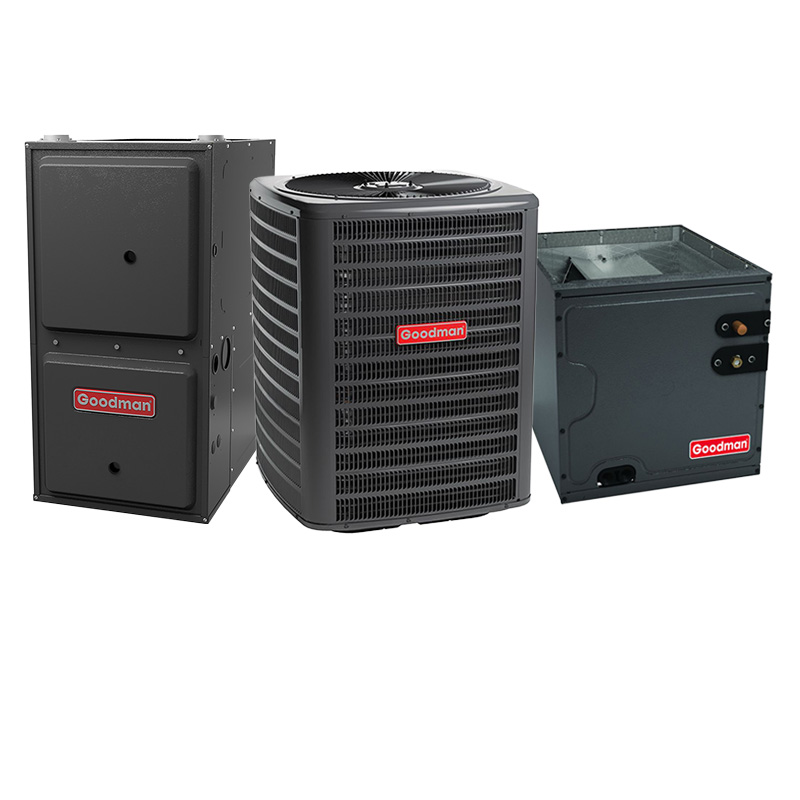
Goodman R32 1.5 Ton 14 SEER2 40000 BTU 80% Multi-Speed ECM Gas Furnace and Air Conditioner System – Downflow
View on AC Direct see your lowest price →Check current price on AC Direct →
Key features
- 1.5-ton cooling capacity, suited to homes roughly 600 to 900 square feet depending on climate and insulation
- 14 SEER2 cooling efficiency, meeting the current federal minimum standard
- 40,000 BTU output at 80% AFUE, recovering 80 cents of heat energy per dollar of gas burned
- Downflow configuration with bottom air discharge for attic or platform installations
- R-32 refrigerant with lower global warming potential than R-410A
- Multi-speed ECM blower motor for quieter operation and reduced air-handler energy use
About this system
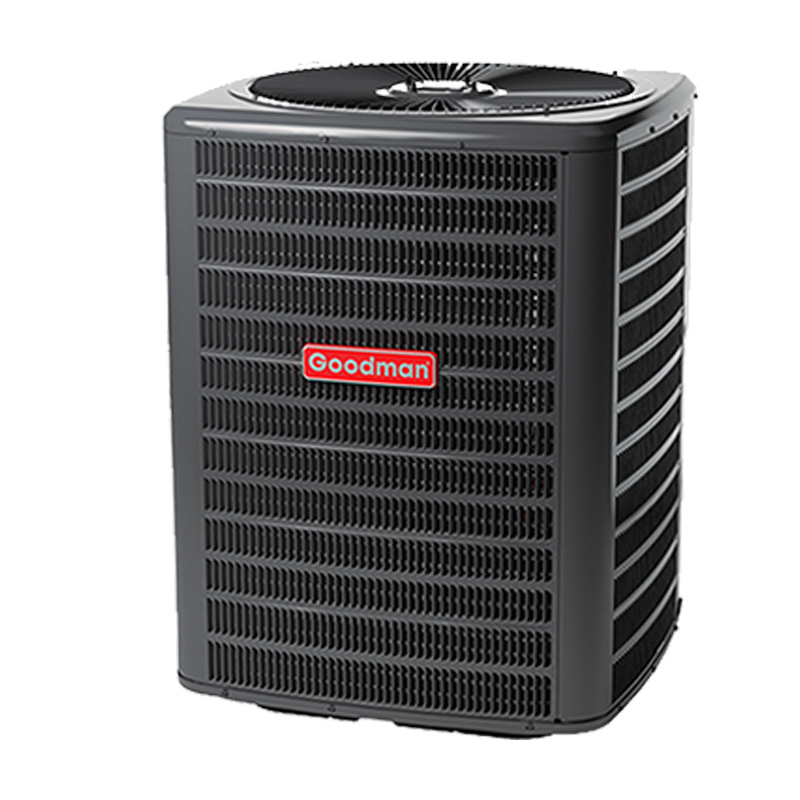
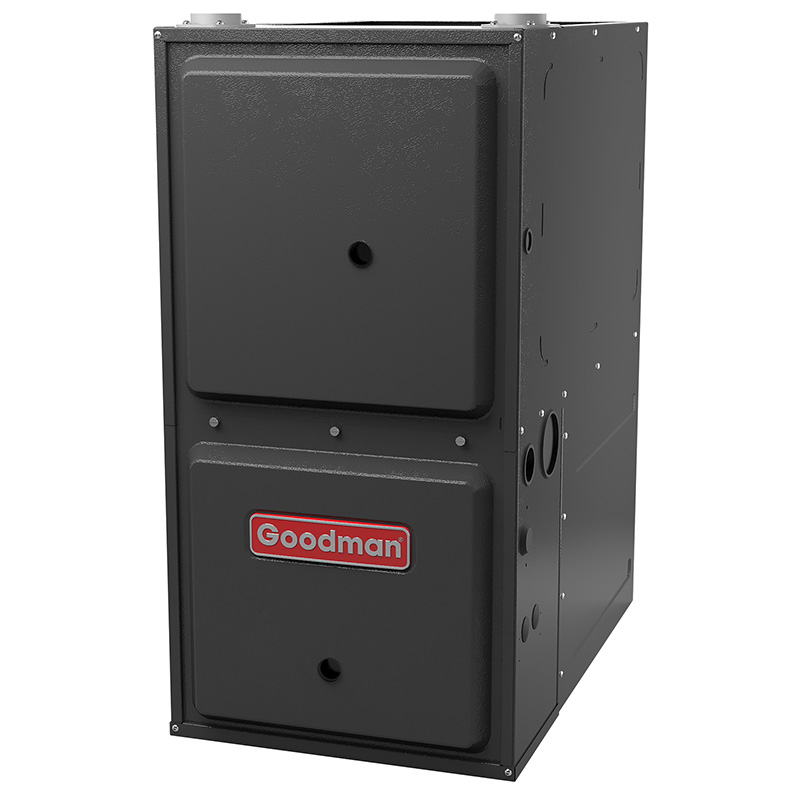
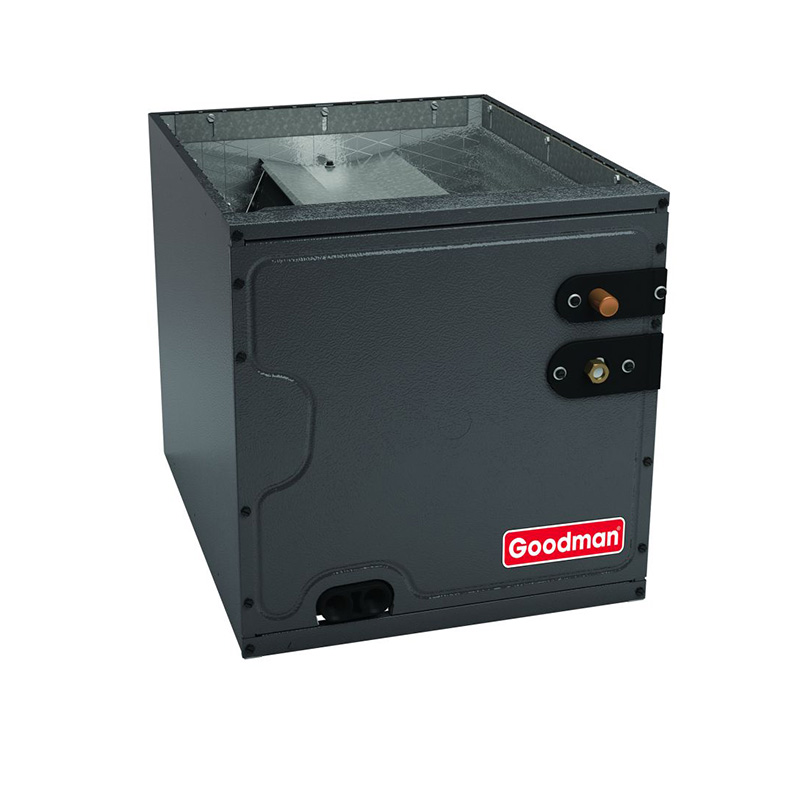
This Goodman downflow package pairs a 1.5-ton, 14 SEER2 air conditioner with a 40,000 BTU, 80% AFUE multi-speed ECM gas furnace in a single downflow configuration, meaning supply air exits from the bottom of the unit. That orientation suits homes where the air handler sits in an attic or above a crawlspace with ductwork running beneath it, a setup common in the South and Southwest. The R-32 refrigerant is a meaningful upgrade over older R-410A systems: it carries a lower global warming potential and slightly better thermodynamic efficiency, so the equipment is positioned well ahead of near-term regulatory changes.
At 14 SEER2 this system sits at the federal minimum efficiency threshold for most U.S. climate zones, which keeps the purchase price down but means operating costs will run higher over a decade compared with a 16 or 18 SEER2 unit. The multi-speed ECM blower motor is a genuine comfort advantage over single-speed PSC motors: it ramps airflow more gradually, reduces temperature swings, and uses noticeably less electricity moving air. For a small home or a moderate-climate region where the cooling season is short, the efficiency compromise is easier to accept. Buyers in Arizona, Texas, or Florida who run their systems seven or eight months a year will feel the efficiency gap more in their utility bills.
This system offers a low entry cost and a genuinely useful ECM blower, but 14 SEER2 efficiency and Goodman's documented mid-life repair pattern mean the total ten-year cost picture is less flattering than the sticker price suggests. It is a reasonable choice when the budget is the binding constraint, install quality is secured, and the home is in a mild climate.
Overall score is the average of the five ratings above.
What we like
- Purchase price runs 15 to 25 percent below comparable Carrier, Trane, and Lennox systems
- R-32 refrigerant is future-ready and carries a lower environmental footprint than R-410A
- Multi-speed ECM blower improves comfort and lowers fan electricity costs versus a single-speed motor
- Downflow configuration covers an installation need that many competing combo units do not address
- Widely stocked by distributors, so parts availability is generally not an issue
Trade-offs
- 14 SEER2 is the lowest legal efficiency tier, so utility savings over a higher-SEER2 unit are lost within a few years in hot climates
- Dual-run capacitor failures and evaporator coil leaks are documented recurring issues, and compressor lifespan averages 10 to 14 years versus 15 to 20 for premium brands
- 80% AFUE furnace wastes 20 cents of every gas dollar; a 96% AFUE unit would recover that margin over a heating-heavy winter
- System performance is heavily dependent on installation quality, and a poor charge or poor duct match will degrade both efficiency and reliability
What homeowners and pros say about Goodman
Homeowners who chose Goodman equipment tend to split into two camps, and that split shows clearly in the brand’s ratings. Google dealer reviews land around 3.8 out of 5, where the most common praise is straightforward: the equipment cost less than competing bids and it works as advertised when the install is done right. ConsumerAffairs tells a different story, sitting near 2.5 out of 5, largely because that platform attracts owners who have something to report, and the recurring theme in those reports is repair bills climbing after roughly year seven. Neither score is the complete picture, but together they suggest a brand that delivers on its value promise early and asks more of its owners later.
HVAC technicians who work on Goodman equipment regularly point to two recurring items on their service calls: dual-run capacitor failures, which are a low-cost fix in the $300 to $600 range but become an expected line item as the system ages, and evaporator coil leaks that show up in a meaningful share of owner reviews. Compressor lifespan is the longer-term consideration: Goodman compressors average 10 to 14 years in documented owner experience, compared with 15 to 20 years for premium brands, which matters when you are deciding whether to repair or replace at year 11. For this specific downflow combo, the R-32 refrigerant and ECM blower are genuine positives that put it a step ahead of older Goodman configurations, but the brand’s core trade-off, lower upfront cost in exchange for closer attention to maintenance and a shorter average component life, still applies.
Sources: ConsumerAffairs Goodman owner reviews, AHRI Directory of Certified Product Performance, U.S. DOE appliance and equipment efficiency standards, Goodman product specification sheets.
What it costs to run
At 14 SEER2, cooling this 1.5-ton system for a typical 1200-hour cooling season at the U.S. average electricity rate of $0.17/kWh works out to roughly $262 per year in cooling, about $12 less per year than a minimum-efficiency 13.4 SEER2 unit of the same size. Your real cost depends on your climate and local rate.
Method: (18,000 BTU/hr ÷ 14 SEER2) × 1200 hours ÷ 1000 × $0.17/kWh. Rate source: U.S. EIA average; cooling hours: moderate-climate estimate.
How it compares
| Brand | Comparable model | SEER2 | Stage | Price position |
|---|---|---|---|---|
| Goodman | Downflow 1.5T 14 SEER2 R-32 ECM Gas Combo | 14 | Multi-speed | Value pick |
| Carrier | Performance 14 (24ACC4 + 59SC5) | 14 | Single-stage | Typically 15 to 25 percent more than this Goodman |
| Trane | XR14 (4TTR4 + S9X1) | 14 | Single-stage | Typically 20 to 30 percent more than this Goodman |
| Lennox | Merit 14 (13ACX + ML180) | 14 | Single-stage | Typically 20 to 35 percent more than this Goodman |
Competitor rows are comparable single-stage units at similar efficiency; price is relative position, not a quote.
Questions about this system
What does 'downflow' mean, and how do I know if my home needs it?
Downflow means the blower pulls return air in from the top of the unit and pushes conditioned air out the bottom, into ductwork below. This is the correct choice when the air handler is mounted in an attic or on a platform and your supply ducts run under the unit. If your existing furnace pulls air from the bottom and blows up, you need an upflow or horizontal unit instead.
Is R-32 refrigerant safe, and can my existing technician service it?
R-32 is mildly flammable (A2L classification) but has been widely used in residential systems in Europe and Asia for years. Most U.S. states now require technicians to have A2L-specific training, so confirm your installer is current before booking. It is not compatible with R-410A equipment, so no mixing or retrofitting is possible.
What is the most likely repair I will face in the first ten years?
Based on Goodman's documented failure pattern, the dual-run capacitor is the most common fix, typically running $300 to $600 for parts and labor, and it often shows up after year seven. Evaporator coil leaks are a secondary concern. Keeping a service agreement that includes a capacitor check each season is a reasonable hedge.
Will 14 SEER2 cost me significantly more to run than a higher-efficiency unit?
In a mild climate with short cooling seasons, the annual dollar difference versus a 16 SEER2 unit on a 1.5-ton system is modest. In Texas, Arizona, or Florida, where you might run the system 2,000 or more hours per year, the gap grows to a few hundred dollars annually, which can exceed the upfront savings on the equipment within four to six years.
Does the 80% AFUE furnace qualify for any federal tax credits?
As of current IRS guidance under the Inflation Reduction Act, gas furnaces must reach 97% AFUE (in most Northern climate zones) to qualify for the 25C efficiency tax credit. An 80% AFUE unit generally does not qualify. Check IRS Form 5695 instructions and your state's energy office for any local utility rebates, which sometimes have lower efficiency thresholds.
Specifications
| Cooling capacity | 1.5 Ton |
| Efficiency | 14 SEER2 |
| Furnace output | 40000 BTU |
| Configuration | Downflow |
| Refrigerant | R-32 |