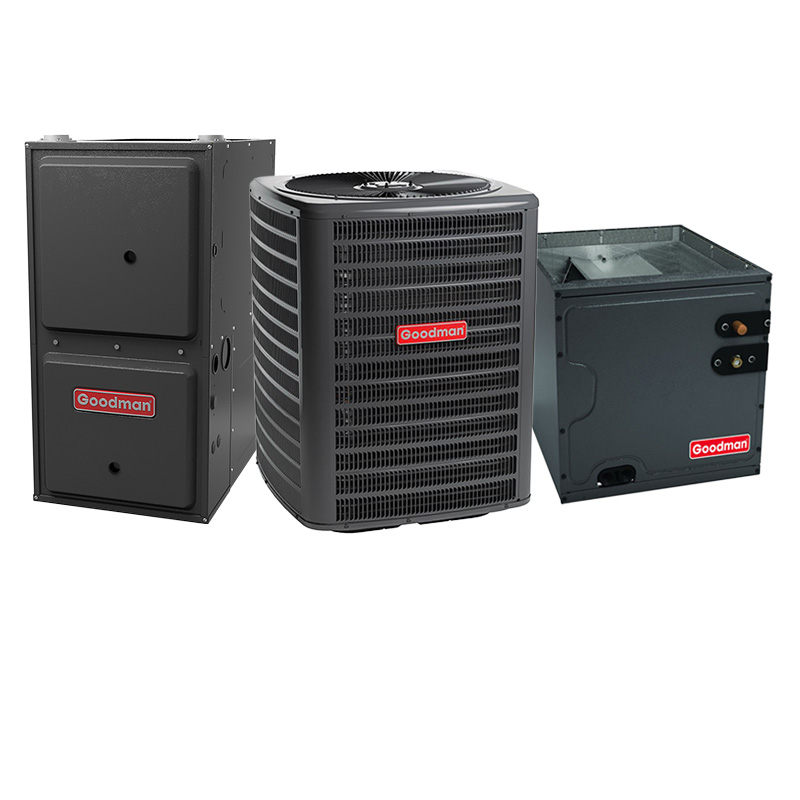
Goodman R32 2 Ton 14 SEER2 60000 BTU 80% Two Stage 9-Speed ECM Gas Furnace and Air Conditioner System – Upflow
View on AC Direct see your lowest price →Check current price on AC Direct →
Key features
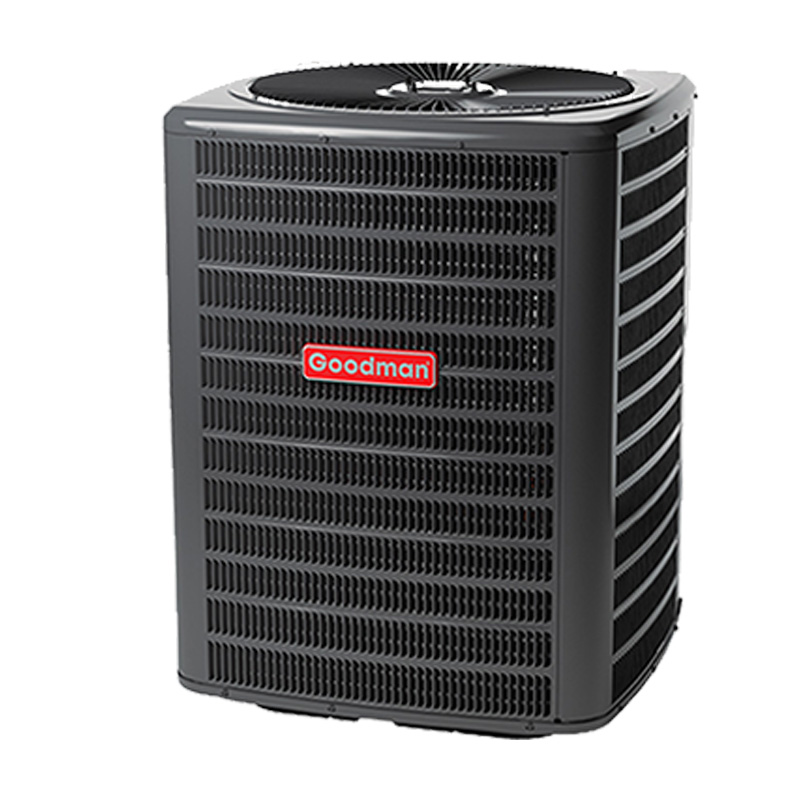
- 2-ton, 14 SEER2 split-system air conditioner using R-32 refrigerant
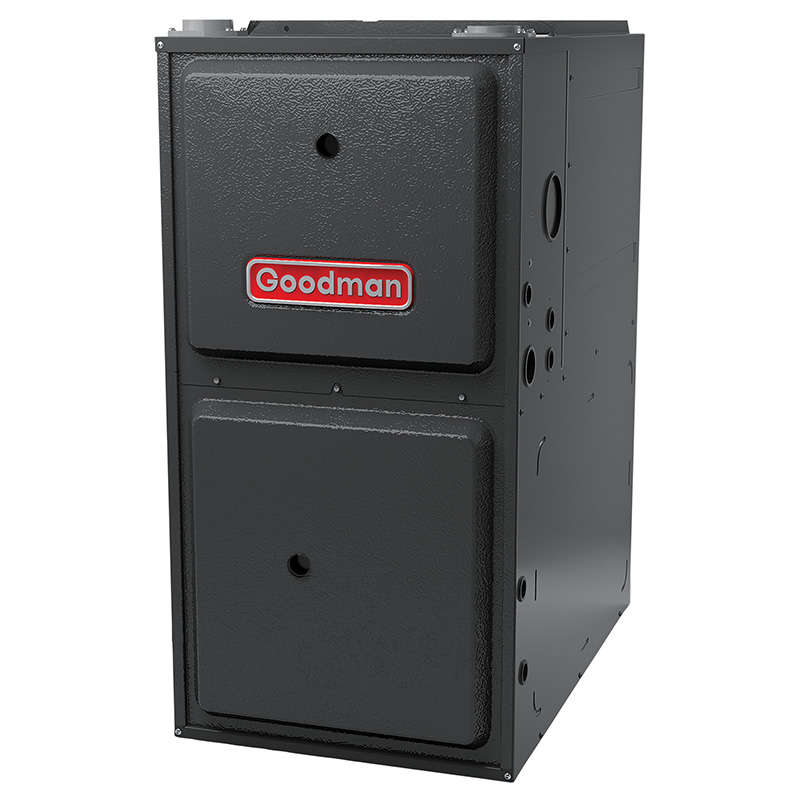
- 60,000 BTU 80% AFUE two-stage gas furnace for variable-output heating
- 9-speed ECM blower motor reduces electricity use and softens airflow noise
- Upflow configuration for basement or main-floor utility closet installations
- Two-stage gas valve improves humidity control on mild-weather days
- R-32 refrigerant with a lower global warming potential than R-410A
About this system
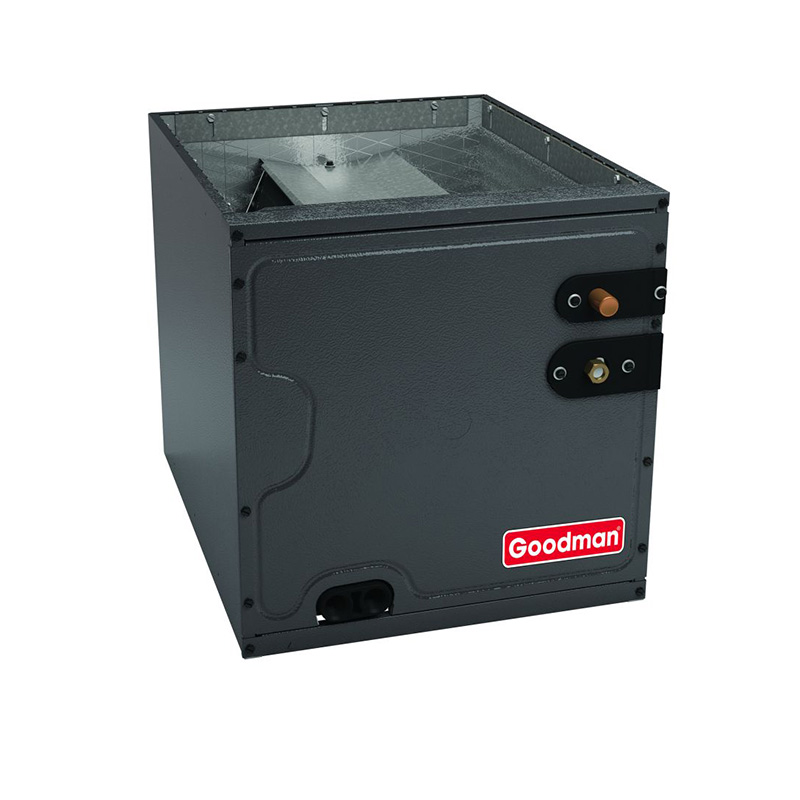
This Goodman bundle pairs a 2-ton, 14 SEER2 R-32 split-system air conditioner with a 60,000 BTU, 80% AFUE two-stage gas furnace in an upflow configuration. The 14 SEER2 rating sits at the current federal minimum efficiency threshold for most U.S. climate zones, meaning it will keep your cooling bills reasonable without the premium cost of a 16 or 18 SEER2 unit. R-32 refrigerant has a lower global warming potential than the R-410A it is replacing, and it operates at slightly higher pressures, so any future service technician will need to be rated to handle it. The upflow setup means the furnace draws return air from the bottom and discharges conditioned air upward, which suits systems installed in a basement or a first-floor utility closet with ductwork running overhead.
The two-stage furnace and 9-speed ECM blower motor are the most practically useful features in this package. A two-stage gas valve fires at a reduced capacity on mild days, running longer cycles that even out temperatures and reduce humidity better than a single-stage unit. The ECM motor adjusts blower speed in small increments, which lowers electricity consumption compared to a standard PSC motor and tends to reduce the rush-of-air sound at startup. Together, these features make the system noticeably more comfortable on shoulder-season days. A 2-ton capacity is appropriate for roughly 800 to 1,200 square feet of well-insulated living space in a moderate climate, though a proper Manual J load calculation is the only reliable way to confirm sizing for your home.
This Goodman bundle offers a genuinely capable two-stage comfort package at a price point that undercuts comparable Carrier, Trane, and Lennox systems by roughly 15 to 25 percent. The trade-off is a compressor that statistically ages faster than premium brands and a brand track record that leans heavily on the quality of whoever installs it. For a budget-conscious buyer who hires a skilled installer and budgets for a capacitor replacement around year 5 to 8, it delivers solid value; for someone expecting set-it-and-forget-it reliability over 18 or 20 years, the premium brands carry a better historical record.
Overall score is the average of the five ratings above.
What we like
- Lower upfront cost than Carrier, Trane, or Lennox systems at similar efficiency
- Two-stage furnace improves temperature consistency and humidity removal vs single-stage
- 9-speed ECM blower cuts electricity use and reduces startup noise
- R-32 refrigerant has lower environmental impact than outgoing R-410A equipment
- Wide parts availability and large national installer network keep repair lead times short
Trade-offs
- Dual-run capacitors are the most commonly reported failure point, typically surfacing within the first 7 to 10 years
- Compressor lifespan averages 10 to 14 years, shorter than the 15 to 20 years typical of premium brands
- Evaporator coil leaks appear in a meaningful share of owner feedback, adding potential mid-life repair cost
- A minority of owners report refrigerant leaks in the first year, most often linked to install or initial charge quality
What homeowners and pros say about Goodman
Homeowners who post about their Goodman systems tend to land in two camps: those who are happy with the upfront savings and have had no major issues in years one through six, and those who run into repair costs after year seven that make them wish they had spent more upfront. On ConsumerAffairs, Goodman scores around 2.5 out of 5, a channel that attracts complaint-heavy feedback, where the recurring pattern is repair expenses climbing in the second half of the warranty period. Google dealer reviews average closer to 3.8 out of 5, with affordability the most frequently praised attribute. Neither score suggests a brand that consistently punches above its price tier, but the Google figure does reflect a real base of satisfied buyers.
HVAC pros who work on Goodman equipment regularly point to dual-run capacitor failure as the most predictable maintenance event, generally a straightforward fix in the 300 to 600 dollar range but one to budget for. Evaporator coil leaks surface in a meaningful share of owner reviews and represent a more significant repair. Compressor lifespan is the larger strategic concern: documented averages of 10 to 14 years compare unfavorably to the 15 to 20 years often cited for Carrier, Trane, and Lennox compressors. The first-year refrigerant leak reports that appear in owner feedback are almost universally attributed to install quality rather than the factory, which is why experienced technicians emphasize that choosing a skilled, certified installer is especially important with Goodman equipment.
Sources: ConsumerAffairs Goodman owner reviews, AHRI Directory of Certified Product Performance, U.S. DOE appliance and equipment efficiency standards, Goodman product specification sheets.
What it costs to run
At 14 SEER2, cooling this 2-ton system for a typical 1200-hour cooling season at the U.S. average electricity rate of $0.17/kWh works out to roughly $350 per year in cooling, about $15 less per year than a minimum-efficiency 13.4 SEER2 unit of the same size. Your real cost depends on your climate and local rate.
Method: (24,000 BTU/hr ÷ 14 SEER2) × 1200 hours ÷ 1000 × $0.17/kWh. Rate source: U.S. EIA average; cooling hours: moderate-climate estimate.
How it compares
| Brand | Comparable model | SEER2 | Stage | Price position |
|---|---|---|---|---|
| Goodman | R-32 2-Ton 14 SEER2 Two-Stage + 60K BTU 80% AFUE ECM Furnace (this system) | 14 | Two-stage | Value pick |
| Carrier | Performance 14 Series (24ACC4 + 59TP6) | 14 | Two-stage | Typically 15 to 25% higher than this Goodman bundle |
| Trane | XR14 + S8X2 (XR Series split system bundle) | 14 | Single-stage AC, two-stage furnace | Typically 20 to 30% higher than this Goodman bundle |
| Lennox | Merit ML14 + ML196E bundle | 14 | Single-stage AC, two-stage furnace | Typically 20 to 30% higher than this Goodman bundle |
Competitor rows are comparable single-stage units at similar efficiency; price is relative position, not a quote.
Questions about this system
Is 14 SEER2 going to be legal and sufficient in my state after the 2025 federal minimum efficiency updates?
14 SEER2 meets the current federal minimum for most northern U.S. climate zones and remains legal for new installations in those regions. Southern states (roughly the Southwest and Southeast) now require a 15 SEER2 minimum for split-system air conditioners, so confirm your local requirement before ordering. Your installing contractor can verify which standard applies to your ZIP code.
What does R-32 refrigerant mean for me as the homeowner?
R-32 is the replacement for R-410A across much of the industry and has a global warming potential roughly 68 percent lower. For day-to-day ownership it means any technician who services the system must hold an EPA 608 certification and be familiar with R-32 handling procedures, which is increasingly common but still worth confirming when you schedule service calls.
How often do Goodman dual-run capacitors fail, and what does that repair cost?
Capacitor failure is the single most commonly reported repair issue across Goodman owner feedback, and it tends to show up after year 5 or so. The good news is it is one of the cheaper HVAC repairs, typically running in the 300 to 600 dollar range including labor, and most technicians can complete it in under an hour.
Does this system qualify for the federal energy efficiency tax credit?
The federal 25C tax credit currently requires a minimum of 15 SEER2 for central air conditioning. At 14 SEER2, the air conditioning portion of this bundle does not meet that threshold. The two-stage 80% AFUE furnace also falls short of the 97% AFUE requirement for the gas furnace credit. Check with a tax professional for your specific situation.
How important is installer quality for a Goodman system compared to a premium brand?
HVAC technicians consistently cite install quality as the dominant factor in how long a Goodman unit lasts, more so than with Trane or Lennox, which tend to have narrower tolerance for a slightly imperfect charge or airflow setup. The recurring refrigerant-leak-in-year-one reports from owners are most often traced back to install or charge issues, not factory defects, which underscores why choosing an experienced, licensed contractor matters more here than it might with a premium brand.
Specifications
| Cooling capacity | 2 Ton |
| Efficiency | 14 SEER2 |
| Furnace output | 60000 BTU |
| Configuration | Upflow |
| Refrigerant | R-32 |