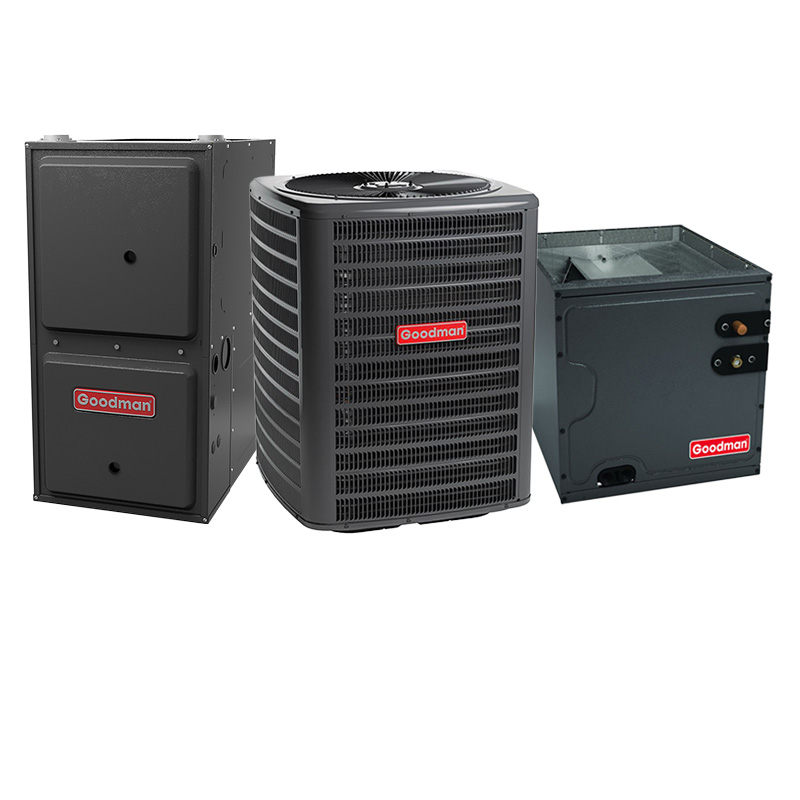
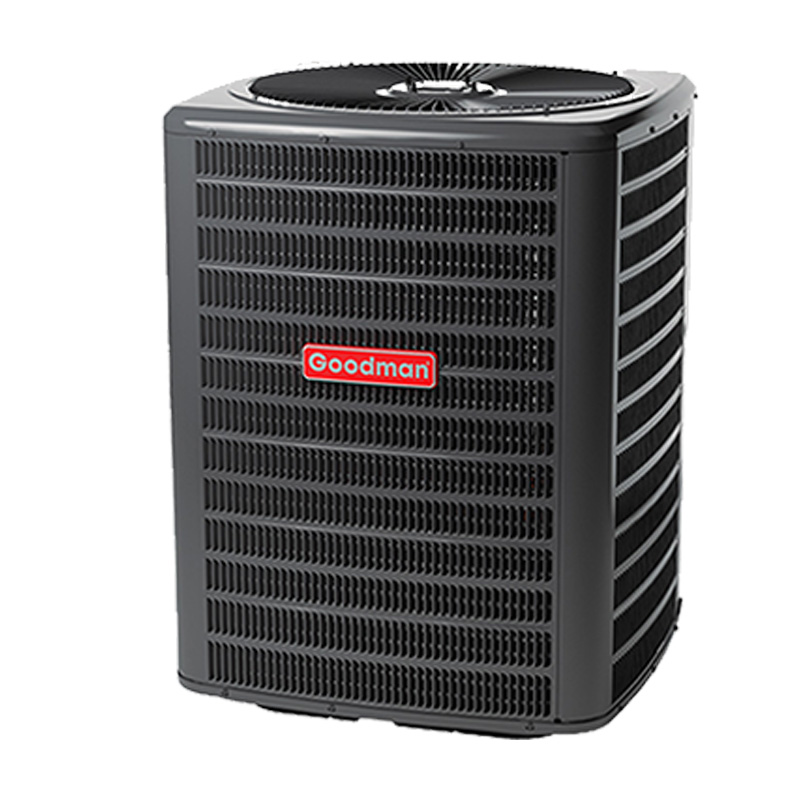
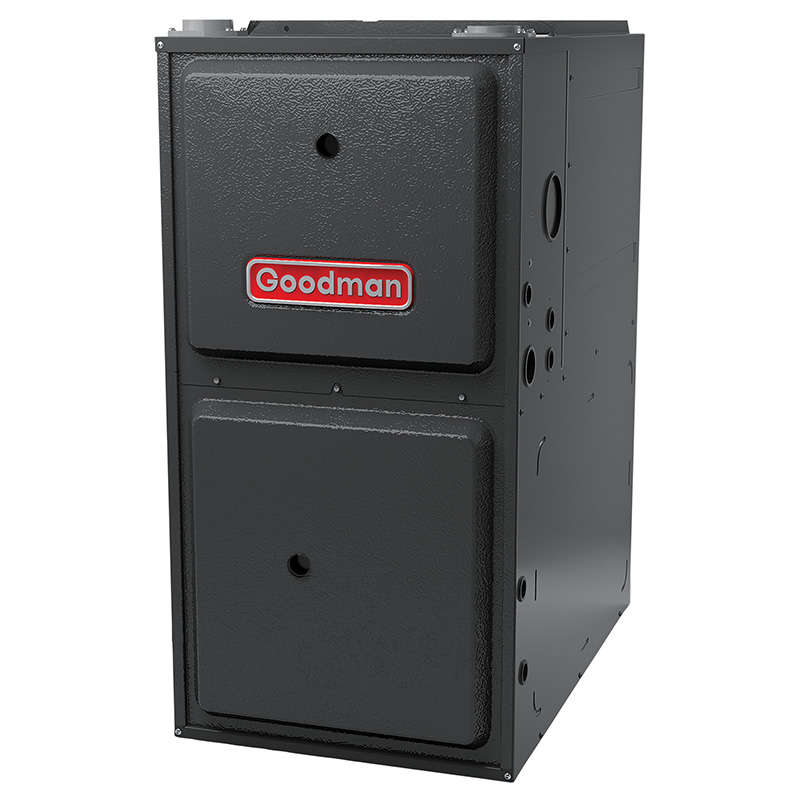
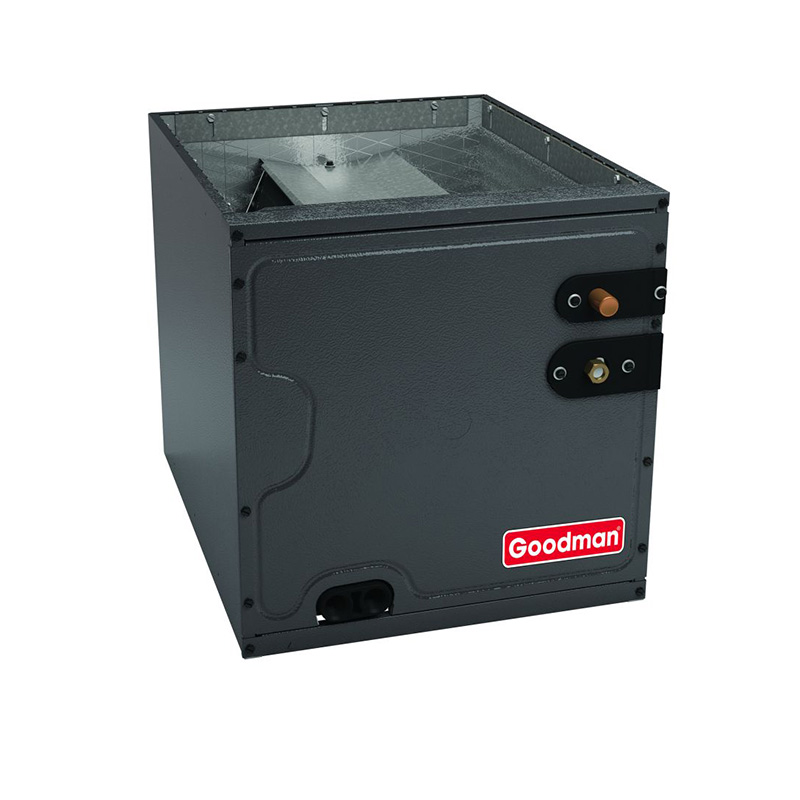
Goodman R32 5 Ton 13.6 SEER2 80000 BTU 80% Two Stage 9-Speed ECM Gas Furnace and Air Conditioner System – Upflow
View on AC Direct see your lowest price →Check current price on AC Direct →
Key features
- 5-ton cooling capacity paired with 80,000 BTU, 80% AFUE two-stage gas furnace
- 13.6 SEER2 efficiency rating, meeting current federal minimum standards for most U.S. regions
- R-32 refrigerant with lower global warming potential than R-410A
- 9-speed ECM blower motor for incremental airflow control and reduced fan energy use
- Two-stage gas valve reduces temperature swings and short-cycling on mild days
- Upflow configuration designed for basement or ground-level installations with overhead ductwork
About this system
This Goodman bundle pairs a 5-ton, 13.6 SEER2 R-32 air conditioner with an 80,000 BTU, 80% AFUE two-stage gas furnace in an upflow configuration. At 5 tons, the system is sized for larger homes, typically in the 2,400 to 3,000 square foot range depending on climate, insulation, and layout. The two-stage gas valve lets the furnace run at a lower fire rate on milder days, which reduces temperature swings and improves comfort compared to a single-stage unit. The 9-speed ECM blower motor adjusts airflow incrementally, cutting electricity use at the air handler and helping maintain steadier humidity levels throughout the house.
The switch to R-32 refrigerant is a forward-looking choice. R-32 has a lower global warming potential than the R-410A it replaces, and its higher energy density means slightly less refrigerant is needed per charge. Practically speaking, it also means your technician will need R-32 certification and tools at any future service call, so confirming local availability before purchase is worth the time. The upflow configuration sends conditioned air upward through supply ducts, which suits homes where the furnace sits in a basement or ground-level utility room with ductwork running overhead.
This system suits homeowners who want a complete, contractor-ready bundle at a price point well below premium brands, and who are comfortable with the understanding that long-term performance will depend heavily on the quality of the installation. It is not the right fit for buyers expecting the compressor longevity of a Trane or Carrier, but for a budget-conscious owner with access to a skilled installer and a willingness to stay on top of annual maintenance, it represents a workable path to whole-home comfort.
This Goodman bundle delivers a complete two-stage heating and cooling system at a price 15 to 25 percent below comparable Carrier, Trane, or Lennox equipment, which is its clearest selling point. The two-stage furnace and 9-speed ECM blower add genuine comfort benefits over entry-level single-stage setups, but Goodman's documented history of capacitor failures, evaporator coil leaks, and compressor lifespans that trail premium brands means buyers are making a real trade-off between upfront savings and potential mid-term repair costs. The system's long-run performance will hinge more on who installs it than on the equipment itself.
Overall score is the average of the five ratings above.
What we like
- Priced 15 to 25 percent below comparable Trane, Lennox, and Carrier systems, meaningful savings on a 5-ton setup
- Two-stage furnace operation reduces temperature swings and improves day-to-day comfort over single-stage alternatives
- 9-speed ECM blower lowers fan electricity consumption and helps with humidity management
- R-32 refrigerant is a lower-GWP choice that future-proofs the system against evolving refrigerant regulations
- Complete matched system bundle simplifies procurement and supports warranty compliance
Trade-offs
- Dual-run capacitors are the most commonly reported failure, typically surfacing within the first several years and costing $300 to $600 per repair
- Evaporator coil leaks appear in a meaningful share of owner reviews, a cost that climbs quickly with R-32 service requirements
- Compressor lifespan averages 10 to 14 years versus 15 to 20 years for premium-brand compressors at this tonnage
- A minority of owners report refrigerant leaks within year one, most often traced to installation or initial charge issues rather than the equipment itself
What homeowners and pros say about Goodman
Homeowners who have lived with Goodman equipment land in one of two camps, and the dividing line is usually whether the original installation was done carefully. On ConsumerAffairs, where Goodman scores around 2.5 out of 5, the recurring thread in negative reviews is repair bills that start climbing after roughly year seven, with capacitor replacements and refrigerant-related service calls cited most often. Evaporator coil leaks draw particular frustration in those accounts because the repair cost is high relative to what was saved upfront. On Google dealer review pages, where scores average around 3.8 out of 5 across several hundred reviews per location, the tone shifts: affordability is the most repeated praise, and owners who got a clean install and stuck to annual tune-ups tend to report years of unremarkable, functional service.
HVAC technicians who work on Goodman equipment regularly tend to describe it as serviceable rather than impressive. They point to dual-run capacitors as a near-certain eventual replacement, the cost of which is low enough to be almost routine. The bigger concern they raise is compressor longevity: at this tonnage, Goodman compressors are generally expected to reach 10 to 14 years, while comparable Trane or Carrier compressors at the same load are more commonly associated with 15 to 20 years of service. For a 5-ton system where compressor replacement is a significant expense, that gap matters in a long-term cost calculation. The technician consensus is consistent: Goodman is a reasonable choice when the budget is fixed and the installer is skilled, but it rewards attentive ownership more than premium equipment does.
Sources: ConsumerAffairs Goodman owner reviews, AHRI Directory of Certified Product Performance, U.S. DOE appliance and equipment efficiency standards, Goodman product specification sheets.
What it costs to run
At 13.6 SEER2, cooling this 5-ton system for a typical 1200-hour cooling season at the U.S. average electricity rate of $0.17/kWh works out to roughly $900 per year in cooling, about $13 less per year than a minimum-efficiency 13.4 SEER2 unit of the same size. Your real cost depends on your climate and local rate.
Method: (60,000 BTU/hr ÷ 13.6 SEER2) × 1200 hours ÷ 1000 × $0.17/kWh. Rate source: U.S. EIA average; cooling hours: moderate-climate estimate.
How it compares
| Brand | Comparable model | SEER2 | Stage | Price position |
|---|---|---|---|---|
| Goodman | R-32 5-Ton 13.6 SEER2 / 80K BTU 80% Two-Stage Bundle | 13.6 | Two-stage | Value pick |
| Carrier | Performance 24ACC636 Condenser with 58TP 80% Furnace | 13.8 | Two-stage | Typically 15 to 20 percent more than this Goodman bundle |
| Trane | XR15 Condenser with S9V2 80% Furnace | 14.0 | Two-stage | Typically 20 to 25 percent more than this Goodman bundle |
| Lennox | Merit ML14XC1 Condenser with ML196 80% Furnace | 13.8 | Two-stage | Typically 18 to 25 percent more than this Goodman bundle |
Competitor rows are comparable single-stage units at similar efficiency; price is relative position, not a quote.
Questions about this system
Is 5 tons the right size for my home, and what happens if it is oversized?
Five tons is generally appropriate for homes in the 2,400 to 3,000 square foot range, but the correct size depends on your climate zone, insulation levels, window area, and ceiling height. An oversized system will short-cycle, meaning it cools the space quickly but shuts off before removing enough humidity, leaving the home feeling clammy. A Manual J load calculation performed by your HVAC contractor before purchase is the only reliable way to confirm sizing.
What does switching to R-32 refrigerant mean for future service calls?
R-32 requires a technician with specific certification and compatible recovery equipment, which not every local contractor carries yet. Before buying, confirm that at least two or three HVAC companies in your area are equipped to service R-32 systems so you are not limited to a single provider if repairs are needed.
What is the warranty on this system and are there conditions attached?
Goodman typically offers a 10-year parts limited warranty on registered systems, but registration must usually be completed within a set window after installation, and the warranty generally requires installation by a licensed HVAC contractor. Review the specific warranty documentation included with the unit, because coverage on the compressor and heat exchanger can differ from coverage on other parts.
How significant is the two-stage furnace compared to a single-stage unit at this BTU rating?
At 80,000 BTU in a larger home, two-stage operation is genuinely useful. The low stage handles most heating days, running longer cycles at a reduced fire rate, which distributes heat more evenly and reduces the on-off temperature swings common with single-stage furnaces. In very cold climates or during extreme cold snaps, the furnace steps up to full output automatically.
How worried should I be about the capacitor and coil leak failure modes mentioned in owner reviews?
Dual-run capacitor failures are common across many brands but appear frequently in Goodman owner reports and typically cost $300 to $600 to fix when they occur. Evaporator coil leaks are a more serious concern because coil replacement at this tonnage, combined with R-32 recovery and recharge, can run into the thousands. Scheduling annual maintenance, keeping the outdoor unit clear of debris, and replacing capacitors proactively when they test weak can reduce but not eliminate these risks.
Specifications
| Cooling capacity | 5 Ton |
| Efficiency | 13.6 SEER2 |
| Furnace output | 80000 BTU |
| Configuration | Upflow |
| Refrigerant | R-32 |