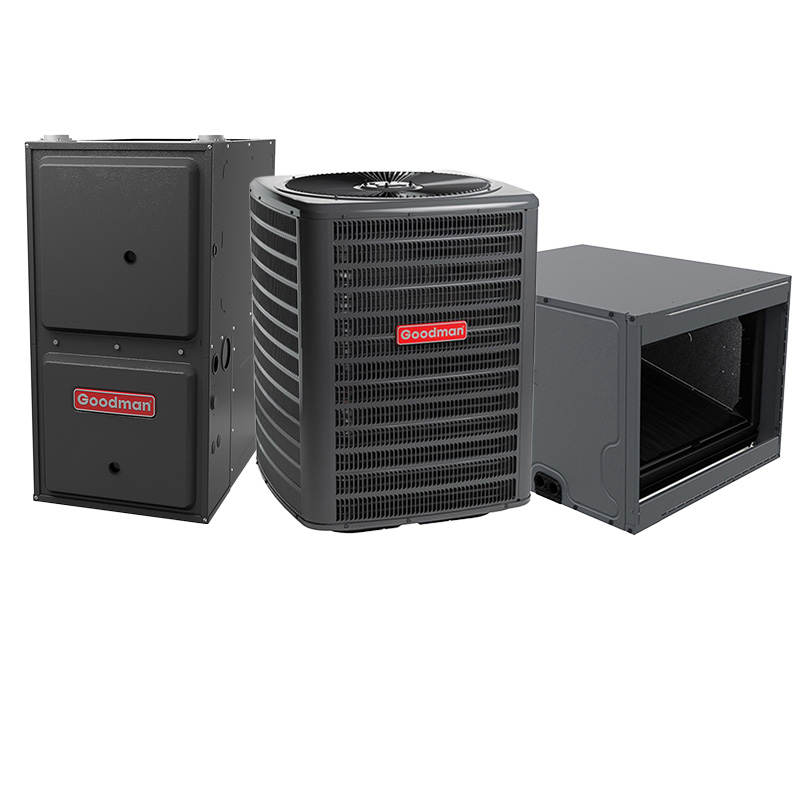
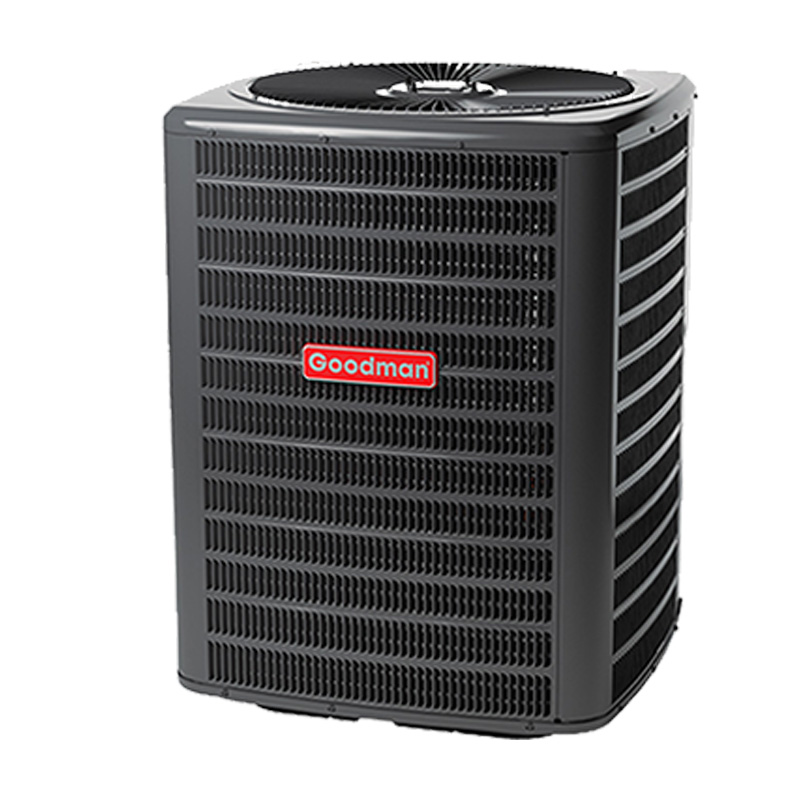
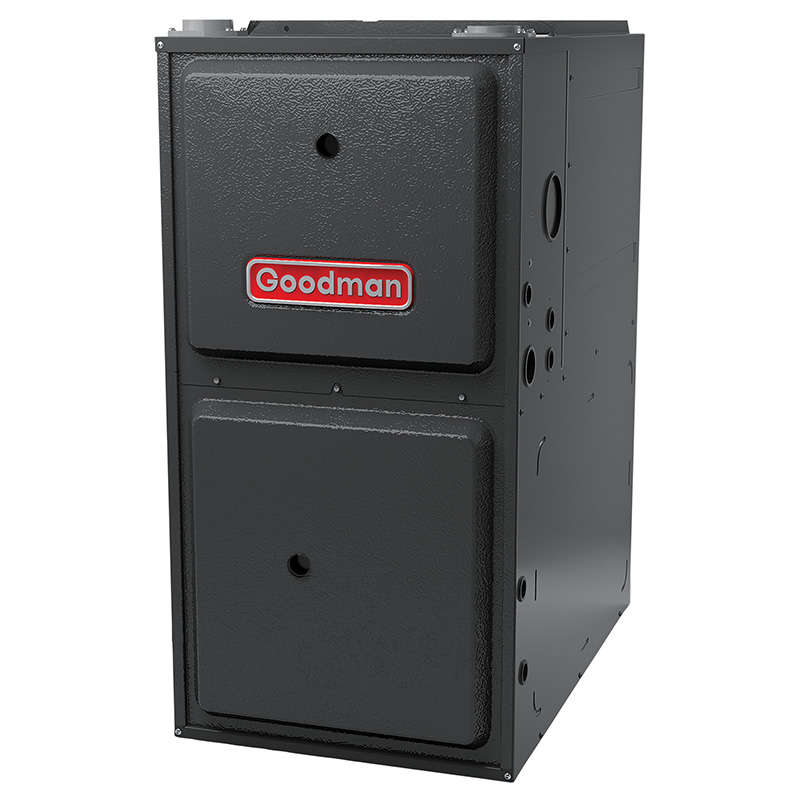
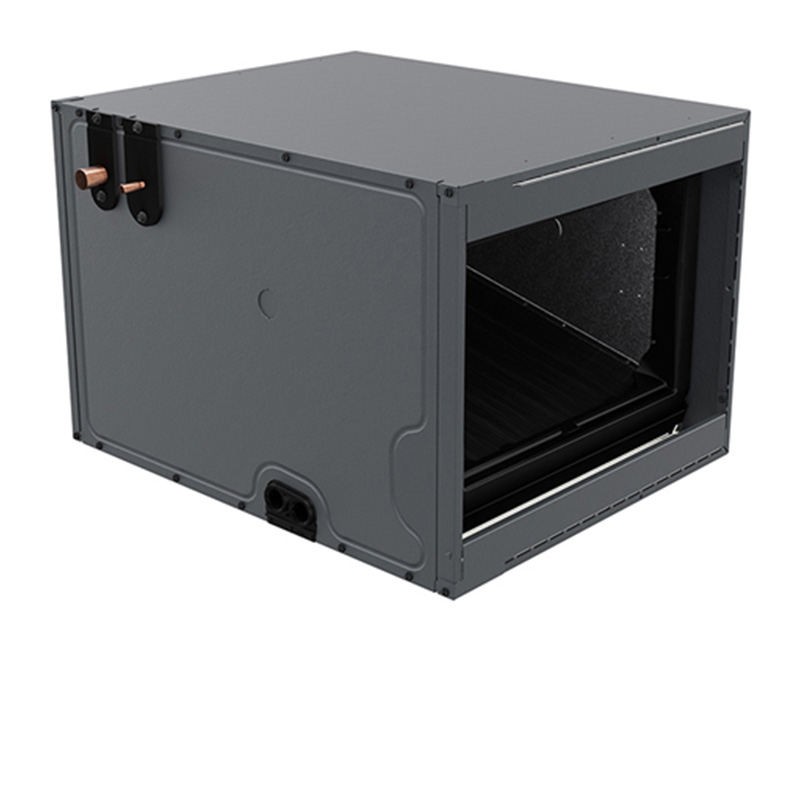
Goodman R32 4 Ton 13.5 SEER2 120000 BTU 80% Two Stage 9-Speed ECM Gas Furnace and Air Conditioner System – Horizontal
View on AC Direct see your lowest price →Check current price on AC Direct →
Key features
- 4-ton cooling capacity paired with 120,000 BTU two-stage gas heating
- 13.5 SEER2 efficiency rating meets 2023 federal minimum standards
- R-32 refrigerant with lower global warming potential than R-410A
- 9-speed ECM blower motor reduces electricity use and improves comfort
- Horizontal configuration for attic, crawlspace, or side-mount installations
- Two-stage furnace operation for better humidity control on mild days
About this system
This Goodman bundle pairs a 4-ton, 13.5 SEER2 R-32 air conditioner with a 120,000 BTU, 80% AFUE two-stage gas furnace in a horizontal configuration, making it suited for homes with attic or crawlspace duct layouts where the air handler sits on its side. The horizontal orientation limits which spaces and duct systems it can serve, so verifying your existing ductwork and equipment platform before ordering is critical. At 4 tons, it targets larger homes roughly in the 2,000 to 2,600 square-foot range, though actual sizing depends on insulation, climate, and load calculations specific to your house.
The 13.5 SEER2 rating sits at the regulatory baseline for most U.S. climate zones as of 2023, meaning this system meets minimum efficiency requirements without reaching the higher tiers that carry a noticeable premium. The two-stage furnace and 9-speed ECM blower motor are meaningful upgrades over single-stage equipment: they allow the system to run at a lower capacity on mild days, which improves humidity control, reduces temperature swings, and lowers blower electricity use compared to a single-speed motor. R-32 refrigerant has a lower global warming potential than the R-410A it replaces and is increasingly common in new equipment. This system suits buyers who need a reliable replacement or new-construction solution without paying for premium-brand pricing, and who have a qualified installer handling the job.
This Goodman bundle offers a workable entry point for large-home heating and cooling at a price point noticeably below Carrier, Trane, and Lennox equivalents, and the two-stage furnace with ECM blower adds genuine comfort value at this price tier. The 13.5 SEER2 rating is the floor, not a selling point, and long-term ownership costs depend heavily on install quality and your willingness to budget for repairs after year seven. Buyers who want peace of mind over upfront savings should price out a step-up brand before committing.
Overall score is the average of the five ratings above.
What we like
- Purchase price runs 15 to 25 percent below comparable Carrier, Trane, and Lennox systems
- Two-stage furnace operation reduces temperature swings and improves humidity control versus single-stage
- 9-speed ECM blower motor lowers fan electricity consumption meaningfully over a fixed-speed motor
- R-32 refrigerant has a lower environmental impact and is the industry direction for new equipment
- Horizontal configuration fills a real need for homes where vertical installation is not possible
Trade-offs
- 13.5 SEER2 is the regulatory minimum, so cooling efficiency offers no headroom above the baseline
- Compressor lifespan averages 10 to 14 years, shorter than the 15 to 20 years typical of premium brands
- Dual-run capacitor failures and evaporator coil leaks are documented recurring issues in owner reports
- A minority of owners report refrigerant leaks in the first year, usually tied to installation or initial charge problems
What homeowners and pros say about Goodman
Goodman’s reputation among homeowners and HVAC professionals sits in a familiar tension: the price is hard to argue with, and the comfort features on two-stage, ECM-equipped systems are real, but the long-term ownership story is more complicated. On Google dealer reviews the brand averages around 3.8 out of 5, where affordability is the most repeated compliment. ConsumerAffairs tells a harsher story at roughly 2.5 out of 5, though that platform skews toward people who had a problem worth writing about. The recurring theme in the critical reviews is that repair costs start climbing after roughly year seven, which tracks with the documented compressor lifespan of 10 to 14 years compared to 15 to 20 years for premium brands.
The specific failure modes that come up most consistently are dual-run capacitor failures, which are relatively inexpensive to fix at 300 to 600 dollars but still an inconvenience, and evaporator coil leaks, which appear in a meaningful share of owner accounts and carry a steeper repair bill. A smaller group of owners report refrigerant leaks within the first year, and technicians generally attribute those to installation or initial charge issues rather than factory defects. That last point underscores what experienced installers say about Goodman across the board: the equipment rewards a clean, careful install and punishes a rushed one more visibly than premium-brand hardware does. For this horizontal 4-ton system, that means the installer’s skill set and attention to drain configuration and refrigerant charge matters as much as the unit itself.
Sources: ConsumerAffairs Goodman owner reviews, AHRI Directory of Certified Product Performance, U.S. DOE appliance and equipment efficiency standards, Goodman product specification sheets.
What it costs to run
At 13.5 SEER2, cooling this 4-ton system for a typical 1200-hour cooling season at the U.S. average electricity rate of $0.17/kWh works out to roughly $725 per year in cooling, about $6 less per year than a minimum-efficiency 13.4 SEER2 unit of the same size. Your real cost depends on your climate and local rate.
Method: (48,000 BTU/hr ÷ 13.5 SEER2) × 1200 hours ÷ 1000 × $0.17/kWh. Rate source: U.S. EIA average; cooling hours: moderate-climate estimate.
How it compares
| Brand | Comparable model | SEER2 | Stage | Price position |
|---|---|---|---|---|
| Goodman | R-32 4-Ton 13.5 SEER2 Two-Stage / 120K BTU 80% ECM Furnace – Horizontal | 13.5 | Two-stage | Value pick |
| Carrier | Comfort 24ACC636 / 58TP 4-Ton Series | 14.3 | Single-stage | Moderately higher than Goodman |
| Trane | XR15 / S9X2 4-Ton Series | 15.0 | Two-stage | Noticeably higher than Goodman |
| Lennox | Merit ML14XC1 / ML196E 4-Ton Series | 14.3 | Single-stage | Moderately to noticeably higher than Goodman |
Competitor rows are comparable single-stage units at similar efficiency; price is relative position, not a quote.
Questions about this system
Is 13.5 SEER2 going to cost me noticeably more in electricity than a higher-efficiency unit?
At 13.5 SEER2 you are at the federal minimum, so a 16 or 17 SEER2 system would reduce cooling electricity use by roughly 15 to 25 percent over a cooling season. Whether that gap pays back the higher purchase price depends on your local electricity rates, climate, and how many years you plan to own the system, so running a simple payback calculation with your installer is worth the time.
Why does the horizontal configuration matter, and can I convert it to vertical?
Horizontal units are built to lie on their side and use drain pans and airflow paths designed for that orientation; installing one vertically voids the design intent and can cause drainage problems or reduced performance. If your installation space could accommodate either orientation, confirm with your installer before ordering because a vertical configuration may give you more equipment options.
What are the most common repairs I should budget for with Goodman equipment?
Dual-run capacitor replacements are the most frequently reported issue and typically run between 300 and 600 dollars including labor. Evaporator coil leaks also appear in a meaningful share of owner accounts and are a more costly repair, so keeping the system on a maintenance plan helps catch refrigerant loss early.
Does R-32 refrigerant affect service costs compared to R-410A?
R-32 is mildly flammable, which means technicians need specific training and equipment to handle it safely, and not every local HVAC company is set up for it yet. As R-32 equipment becomes more common that gap will close, but it is worth confirming your service provider has R-32 certification before you buy.
How important is the installer for a system like this?
Very important. Goodman's real-world performance and longevity are widely cited by technicians as being heavily dependent on installation quality, including correct refrigerant charge, proper airflow sizing, and drain configuration. The minority of first-year refrigerant leak reports in owner reviews are typically traced back to installation issues rather than factory defects, so choosing a licensed, experienced installer is not a place to cut costs.
Specifications
| Cooling capacity | 4 Ton |
| Efficiency | 13.5 SEER2 |
| Furnace output | 120000 BTU |
| Configuration | Horizontal |
| Refrigerant | R-32 |