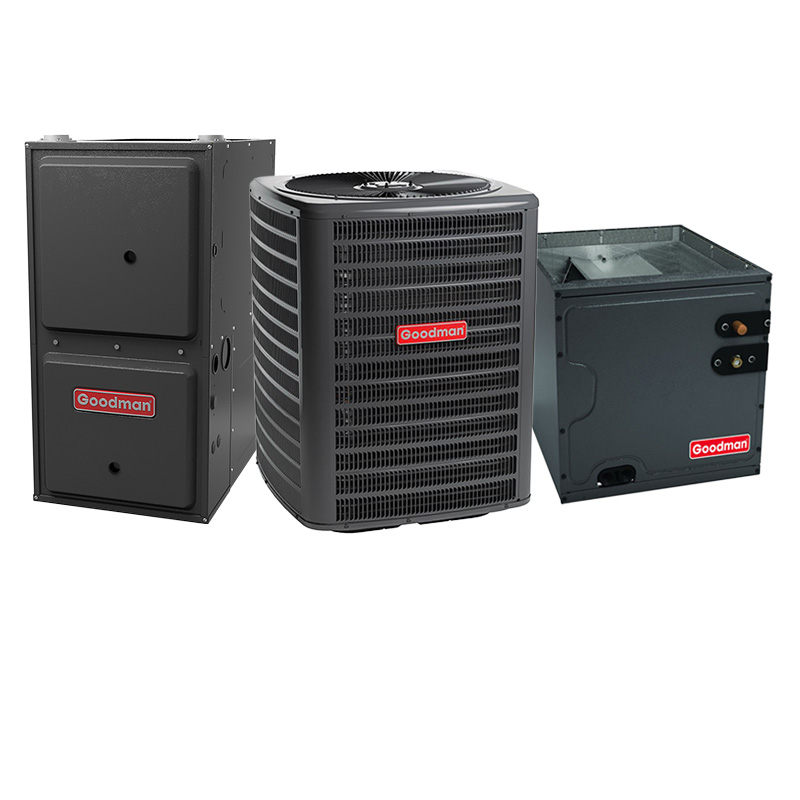
Goodman R32 4 Ton 13.5 SEER2 80000 BTU 80% Two Stage 9-Speed ECM Gas Furnace and Air Conditioner System – Upflow
View on AC Direct see your lowest price →Check current price on AC Direct →
Key features
- 4-ton cooling capacity suited to roughly 2,000 to 2,600 sq ft
- 13.5 SEER2 efficiency rating, meeting federal minimums with moderate operating costs
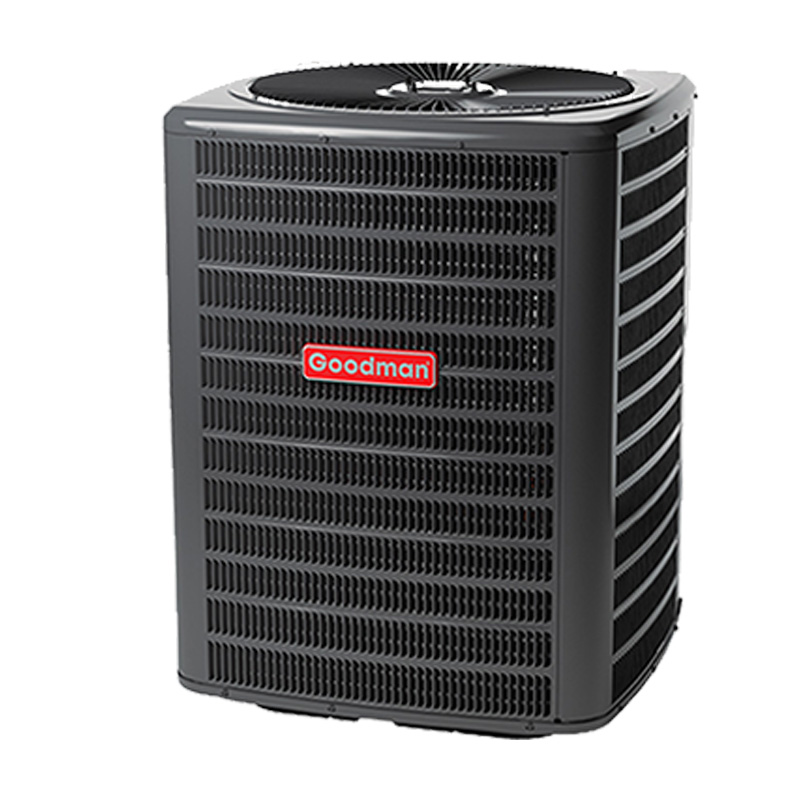
- R-32 refrigerant with lower global-warming potential than R-410A
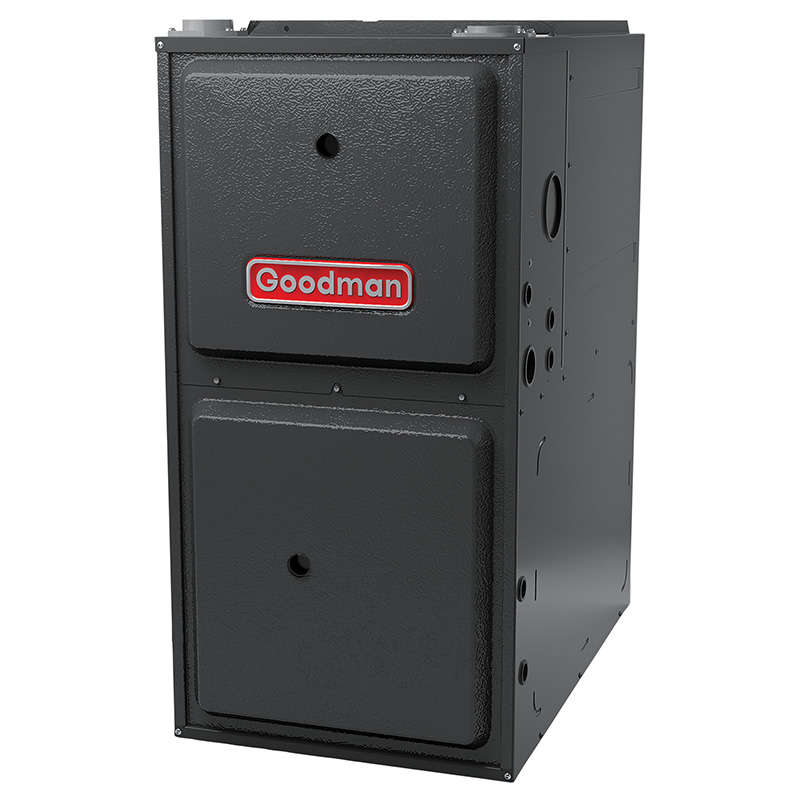
- Two-stage gas furnace at 80,000 BTU and 80% AFUE for more even heat distribution
- 9-speed ECM blower motor for quieter operation and improved humidity management
- Upflow configuration designed for basement or closet installations with ductwork above
About this system
This Goodman bundle pairs a 4-ton, 13.5 SEER2 R-32 air conditioner with an 80,000 BTU, 80% AFUE two-stage gas furnace in an upflow configuration, making it a practical match for homes in the 2,000 to 2,600 square foot range that have ductwork routed from a basement, crawlspace, or closet. The 13.5 SEER2 rating lands at the lower end of mid-efficiency territory, clearing the federal minimum comfortably without approaching the upper tiers where costs rise sharply. R-32 refrigerant is a newer, lower global-warming-potential alternative to R-410A, and its adoption by Goodman reflects a broader industry shift ahead of stricter regulations.
The two-stage furnace and 9-speed ECM blower motor are the standout mechanical features here. Two-stage heating means the system runs on a lower fire most of the time, cycling less aggressively and maintaining more even temperatures than a single-stage unit. The variable-speed ECM blower moves air quietly and efficiently across different calls for heating, cooling, and circulation, which also helps with humidity control in humid climates. Together, these components push comfort meaningfully above what an entry-level single-stage system delivers, even if the overall efficiency ceiling stays modest. Buyers who want reliable climate control without paying Carrier, Trane, or Lennox prices, and who have a qualified installer they trust, are the core audience for this system.
This Goodman system delivers genuine two-stage comfort and a modern refrigerant at a price point 15 to 25 percent below comparable equipment from Trane, Lennox, and Carrier. The efficiency and feature set are solid for the money, but Goodman's real-world track record, including documented coil leaks, capacitor failures after year seven, and compressor lifespans shorter than premium brands, means long-term value depends heavily on installation quality and a willingness to budget for maintenance. It is a reasonable choice for cost-conscious buyers with a skilled installer, not an obvious pick for those prioritizing 15-plus years of low-maintenance operation.
Overall score is the average of the five ratings above.
What we like
- Price undercuts Trane, Lennox, and Carrier by roughly 15 to 25 percent on comparable configurations
- Two-stage furnace and 9-speed ECM blower deliver noticeably more even comfort than single-stage alternatives
- R-32 refrigerant is future-compatible as R-410A is phased out industry-wide
- 80,000 BTU two-stage heating suits a wide range of cold-climate applications in this square footage range
- Upflow layout is one of the simpler configurations for installers, reducing labor complexity
Trade-offs
- Compressor lifespan averages 10 to 14 years, compared to 15 to 20 years typical for premium-brand compressors
- Dual-run capacitor failures are the most commonly reported repair, usually appearing after year seven
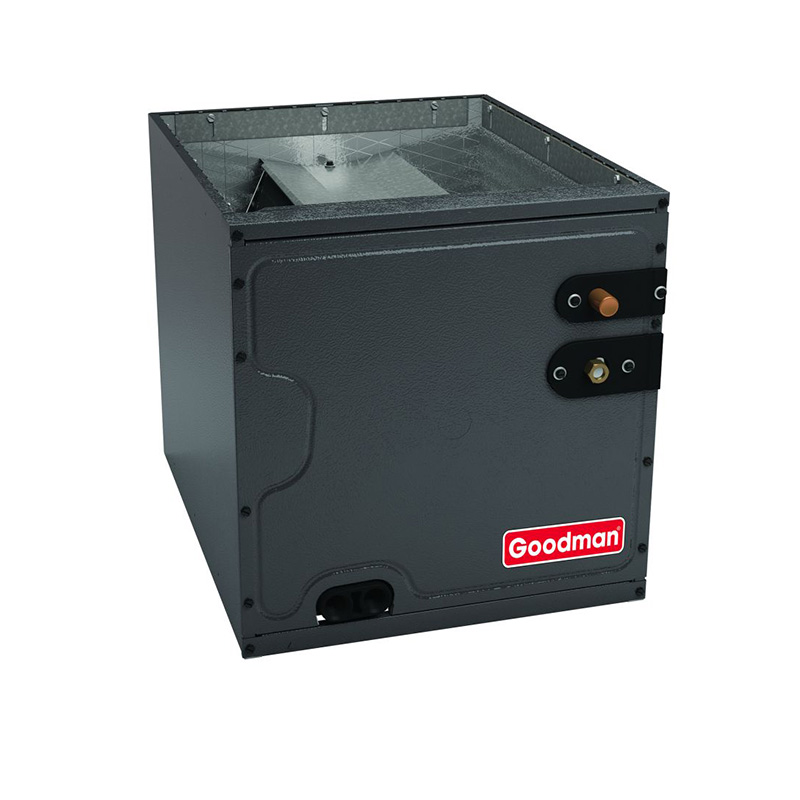
- A meaningful share of owner reviews cite evaporator coil leaks, which can be a costly mid-life repair
- 13.5 SEER2 will not produce the lowest possible utility bills; higher-efficiency options exist at greater upfront cost
What homeowners and pros say about Goodman
Homeowners and HVAC technicians tend to land in different camps when discussing Goodman. On consumer review platforms, Goodman’s ConsumerAffairs score sits at roughly 2.5 out of 5, a channel that skews toward frustrated owners, where the most consistent complaint is repair costs that climb after approximately year seven of ownership. Google dealer reviews tell a more balanced story, averaging around 3.8 out of 5 across locations, with affordability cited most frequently as the reason buyers chose it. The gap between those two scores is revealing: buyers who get a clean installation and stay current on maintenance often report reasonable satisfaction, while those who encounter problems feel the brand’s lower build quality ceiling more sharply.
Among the specific failure modes that appear repeatedly in owner accounts and technician forums, dual-run capacitor failures are the most discussed. They are generally an inexpensive repair in the 300 to 600 dollar range, but their frequency after year seven is a known pattern with this brand. Evaporator coil leaks appear in a meaningful share of reviews and represent a more significant expense when they occur. Compressor longevity is another documented trade-off: Goodman compressors tend to average 10 to 14 years in practice, shorter than the 15 to 20 years more commonly reported for Trane, Lennox, and Carrier equipment. A small minority of owners also report refrigerant leaks in the first year, which technicians typically attribute to installation or initial charge issues rather than manufacturing defects in the unit itself. For this two-stage R-32 system specifically, installation precision around the refrigerant charge is more critical than ever given R-32’s different pressure characteristics, reinforcing what experienced technicians consistently say: with Goodman, the installer matters as much as the equipment itself.
Sources: ConsumerAffairs Goodman owner reviews, AHRI Directory of Certified Product Performance, U.S. DOE appliance and equipment efficiency standards, Goodman product specification sheets.
What it costs to run
At 13.5 SEER2, cooling this 4-ton system for a typical 1200-hour cooling season at the U.S. average electricity rate of $0.17/kWh works out to roughly $725 per year in cooling, about $6 less per year than a minimum-efficiency 13.4 SEER2 unit of the same size. Your real cost depends on your climate and local rate.
Method: (48,000 BTU/hr ÷ 13.5 SEER2) × 1200 hours ÷ 1000 × $0.17/kWh. Rate source: U.S. EIA average; cooling hours: moderate-climate estimate.
How it compares
| Brand | Comparable model | SEER2 | Stage | Price position |
|---|---|---|---|---|
| Goodman | R-32 4-Ton 13.5 SEER2 Two-Stage + 80k BTU 80% Two-Stage ECM Furnace | 13.5 | Two-stage | Value pick |
| Carrier | Performance 24ACC636A003 + 58TP 80% Furnace | 14.3 | Two-stage | Typically 15 to 25 percent above this Goodman bundle |
| Trane | XR15 4TTR5048 + S8X2 80% Furnace | 14.0 | Single-stage AC, two-stage furnace | Typically 20 to 30 percent above this Goodman bundle |
| Lennox | Merit ML14XC1 + ML196E 80% Furnace | 13.8 | Single-stage | Typically 15 to 25 percent above this Goodman bundle |
Competitor rows are comparable single-stage units at similar efficiency; price is relative position, not a quote.
Questions about this system
Will my current R-410A line set work with this R-32 system?
R-32 operates at higher pressures than R-410A, so a licensed technician needs to evaluate your existing line set before reuse. In many cases a clean, correctly sized copper line set can be flushed and reused, but this is a decision for your installer to make on-site, not an assumption to build into your budget.
What does two-stage heating actually mean for my day-to-day comfort?
The furnace operates at a lower capacity most of the time, running longer cycles at reduced output rather than blasting full heat and shutting off quickly. Most homeowners notice fewer cold spots, less temperature swing between cycles, and quieter operation compared to a single-stage furnace.
What are the most likely repairs I should budget for over the life of this system?
Dual-run capacitors are the single most commonly reported failure on Goodman equipment, typically costing 300 to 600 dollars to replace and often surfacing after year seven. Evaporator coil leaks appear in a meaningful share of owner reviews and are a more expensive repair. Budgeting for an annual maintenance contract that includes capacitor inspection is a practical step.
Is 80% AFUE enough for my climate, or should I consider a higher-efficiency furnace?
For milder climates or homes where heating is a secondary concern, 80% AFUE is often adequate. In regions with long, cold winters, a 95% or higher AFUE furnace can recover the higher upfront cost through fuel savings over time. Your utility costs and local energy prices are the main factors to run through with your installer.
Does Goodman's warranty require professional registration after install?
Yes, Goodman's full limited warranty, including the extended parts coverage, typically requires product registration within a set window after installation by a licensed HVAC contractor. Failing to register usually reduces coverage to a shorter base warranty, so confirming registration with your installer immediately after the job is completed is important.
Specifications
| Cooling capacity | 4 Ton |
| Efficiency | 13.5 SEER2 |
| Furnace output | 80000 BTU |
| Configuration | Upflow |
| Refrigerant | R-32 |