Goodman 3 Ton Up to 17.2 SEER2 Variable-Speed Inverter AC Side Discharge Condenser, R32 (GXV6SS3610)
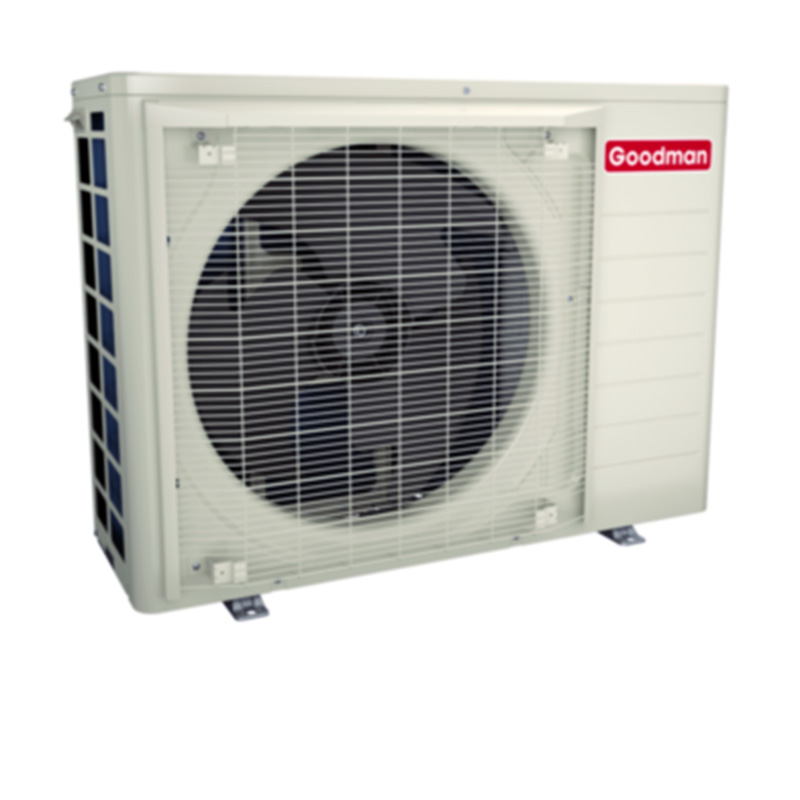
View on AC Direct see your lowest price →Check current price on AC Direct →
Key features
- Variable-speed inverter compressor for precise capacity modulation and humidity control
- Up to 17.2 SEER2 efficiency rating, exceeding federal minimums for most climate regions
- R-32 refrigerant with lower global warming potential than R-410A
- Side-discharge condenser design for installations with limited overhead clearance
- Compatible with two-stage or variable-speed air handlers for full system efficiency
- 10-year parts warranty when registered within 60 days of installation
About this system
The Goodman GXV6SS3610 is a 3-ton, side-discharge central air conditioner rated up to 17.2 SEER2, running on R-32 refrigerant with a variable-speed inverter compressor. That efficiency tier sits solidly in the upper-mid range, well above the federal minimum and competitive with most mid-grade offerings from premium brands. The variable-speed inverter drive is the headline feature here: instead of cycling fully on and off, the compressor modulates its output to match actual cooling demand, which keeps humidity levels more consistent, reduces temperature swings, and lowers operating costs compared to single-stage or two-stage equipment at the same tonnage.
R-32 refrigerant is a meaningful forward-looking choice. It has a lower global warming potential than the R-410A it replaces and is increasingly the industry standard as older refrigerants are phased down. Practically speaking, R-32 operates at slightly higher pressures, so any technician servicing this unit will need to be familiar with its handling requirements. The side-discharge configuration matters for installation planning: it exhausts condenser air horizontally rather than upward, which suits installations where overhead clearance is limited or where the unit sits close to a wall or fence on one side. Homeowners replacing a standard top-discharge unit should confirm their chosen installer accounts for this in siting and clearance.
This system is a reasonable fit for homeowners who want variable-speed comfort and above-average efficiency without paying premium-brand prices, provided they invest in a high-quality installation. Goodman equipment has a well-documented sensitivity to install quality, and that factor will do more to determine long-term performance than the brand name on the cabinet.
The GXV6SS3610 delivers genuine variable-speed comfort and solid efficiency at a price point that undercuts comparable Carrier, Trane, and Lennox hardware by a meaningful margin. The trade-off is a brand track record that shows higher rates of capacitor failure, evaporator coil leaks, and shorter average compressor lifespan than premium competitors, all of which make installer selection and warranty registration critical steps. For buyers who prioritize upfront cost and are willing to vet their contractor carefully, this unit offers real value; buyers who want the lowest long-term maintenance risk should weigh premium alternatives.
Overall score is the average of the five ratings above.
What we like
- Variable-speed inverter operation provides better humidity control and more even temperatures than single- or two-stage units
- 17.2 SEER2 efficiency qualifies for many utility rebates and meaningfully cuts operating costs versus minimum-efficiency equipment
- R-32 refrigerant is better positioned for long-term availability as R-410A is phased out
- Priced roughly 15 to 25 percent below comparable variable-speed systems from Trane, Lennox, and Carrier
- Side-discharge airflow adds installation flexibility in constrained outdoor spaces
Trade-offs
- Dual-run capacitors are the most frequently reported failure point in Goodman equipment, typically requiring service in the 300 to 600 dollar range
- Evaporator coil leaks appear in a notable share of owner reviews, which can be a costly mid-life repair
- Average compressor lifespan of 10 to 14 years runs shorter than the 15 to 20 years typical of premium brand compressors
- A minority of owners report refrigerant leaks within the first year, usually traced to installation or initial charge issues rather than the equipment itself
What homeowners and pros say about Goodman
Among homeowners, Goodman equipment draws a split reaction that tracks closely with the channel where they leave feedback. On ConsumerAffairs, the brand scores around 2.5 out of 5, a figure shaped heavily by owners who sought out that platform after a frustrating repair experience. The recurring theme in those reviews is escalating repair costs after roughly year seven, with capacitor replacements being the most commonly cited service call. Evaporator coil leaks also surface frequently enough to be a genuine pattern, not an outlier complaint. Google dealer reviews are more balanced, averaging around 3.8 out of 5, where the most consistent praise is straightforward: buyers got a functioning, reasonably efficient system at a price that fit their budget.
HVAC technicians who work on Goodman equipment regularly tend to echo a consistent message about the GXV6SS3610 and its siblings: the hardware can perform well, but the install is where outcomes are made or broken. Documented failure modes like dual-run capacitor failures, which typically run 300 to 600 dollars to fix, are in many cases accelerated by poor installation or inadequate refrigerant charge at startup. The same applies to the first-year refrigerant leaks that a minority of owners report, which technicians generally attribute to install or charge errors rather than factory defects. Compressor longevity averaging 10 to 14 years, versus 15 to 20 for premium brands, is the one gap that careful installation does not fully close, and it is the most legitimate reason a buyer with a long-horizon view might choose to spend more upfront elsewhere.
Sources: ConsumerAffairs Goodman owner reviews, AHRI Directory of Certified Product Performance, U.S. DOE appliance and equipment efficiency standards, Goodman product specification sheets.
What it costs to run
At 17.2 SEER2, cooling this 3-ton system for a typical 1200-hour cooling season at the U.S. average electricity rate of $0.17/kWh works out to roughly $427 per year in cooling, about $121 less per year than a minimum-efficiency 13.4 SEER2 unit of the same size. Your real cost depends on your climate and local rate.
Method: (36,000 BTU/hr ÷ 17.2 SEER2) × 1200 hours ÷ 1000 × $0.17/kWh. Rate source: U.S. EIA average; cooling hours: moderate-climate estimate.
How it compares
| Brand | Comparable model | SEER2 | Stage | Price position |
|---|---|---|---|---|
| Goodman | GXV6SS3610 | 17.2 | Variable-speed inverter | Value pick |
| Carrier | Infinity 24 (24VNA636) | 17.0–18.0 | Variable-speed inverter | Roughly 20 to 25 percent more than this Goodman |
| Trane | XV18 (4TTX8036) | 17.0–18.0 | Variable-speed inverter | Roughly 20 to 30 percent more than this Goodman |
| Lennox | XC21 (XC21-036) | 17.0–18.0 | Variable-speed inverter | Roughly 25 to 35 percent more than this Goodman |
Competitor rows are comparable single-stage units at similar efficiency; price is relative position, not a quote.
Questions about this system
Does the side-discharge design require special clearances or installation considerations compared to a standard top-discharge unit?
Yes. Side-discharge units exhaust hot air horizontally, so the open side needs unobstructed space for airflow, typically at least 18 to 24 inches, and the discharge should not face a wall, fence, or obstruction that would allow hot air to recirculate back into the unit. Your installer should review the manufacturer's clearance specs and orient the unit accordingly during siting.
Is R-32 refrigerant harder or more expensive to service than R-410A?
R-32 is increasingly common and most licensed HVAC technicians are equipped to handle it, but it does require slightly different handling procedures due to its mildly flammable classification and higher operating pressures. It is worth confirming your service contractor is familiar with R-32 before signing a maintenance agreement.
What air handler or furnace does this condenser need to reach its rated 17.2 SEER2 efficiency?
To achieve the published SEER2 rating, the GXV6SS3610 must be paired with a matched, communicating variable-speed air handler from Goodman's lineup, not just any compatible indoor unit. Mixing with a lower-tier or mismatched air handler will reduce system efficiency and may affect warranty coverage, so confirm the matched combination with your installer before purchasing.
How important is it to register the warranty, and what does the 10-year coverage actually include?
Registration within 60 days of installation is required to activate the full 10-year parts warranty; without it, coverage typically drops to five years. The warranty covers replacement parts but not labor costs, refrigerant, or diagnostic fees, so a repair in year eight could still carry a significant out-of-pocket labor charge even with a valid warranty.
Given Goodman's reliability reviews, is an extended service plan worth buying for this system?
Given documented failure patterns including capacitor replacements, potential coil leaks, and compressor lifespans that average 10 to 14 years, an extended labor warranty or service contract can offset repair costs that the parts-only manufacturer warranty does not cover. Whether it is cost-effective depends on the contract price and your local labor rates, but it is worth pricing out before installation is complete.
Specifications
| Cooling capacity | 3 Ton |
| Efficiency | 17.2 SEER2 |
| Refrigerant | R-32 |
| Model | GXV6SS3610 |