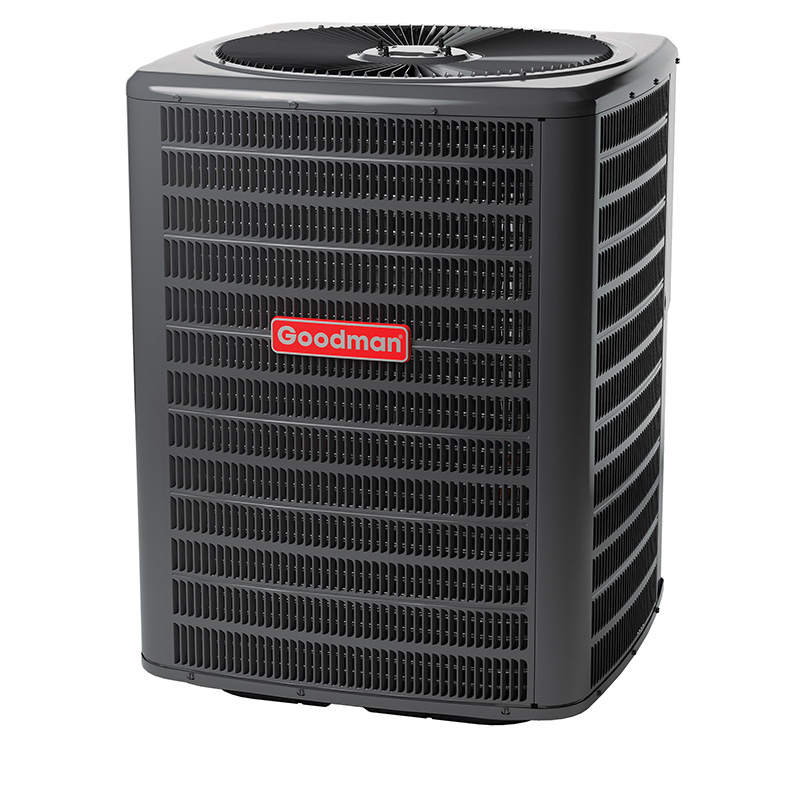
Goodman 3 Ton 17.2 SEER2 R32 High-Efficiency Two Stage Heat Pump Condenser (GLZT7CA3610)
View on AC Direct see your lowest price →Check current price on AC Direct →
Key features
- 17.2 SEER2 two-stage cooling and heating efficiency
- R-32 refrigerant with lower global warming potential than R-410A
- Two-stage compressor for better humidity control and reduced short-cycling
- 3-ton capacity suited to homes roughly 1,500 to 2,100 sq ft depending on climate and load
- 10-year parts warranty when registered within 60 days of installation
- Compatible with Goodman and select third-party air handlers for full system builds
About this system
The Goodman GLZT7CA3610 is a 3-ton, two-stage heat pump condenser rated at 17.2 SEER2 and designed to run on R-32 refrigerant, a lower-GWP alternative to the R-410A found in older systems. At 17.2 SEER2, it sits in a genuinely high-efficiency tier, comfortably clearing the federal 15.2 SEER2 minimum for most regions and delivering real-world energy savings compared to entry-level equipment. Two-stage operation means the compressor runs at a lower capacity during mild weather, reducing short-cycling, improving humidity control, and keeping operating costs in check on all but the hottest or coldest days.
This condenser is built for homeowners who want above-average efficiency without paying premium-brand prices. It suits moderate to large homes in mixed-climate regions where a heat pump can handle both cooling and heating loads for much of the year. Because it is a condenser-only unit, it requires a compatible indoor air handler or coil and an appropriate line set, so total installed cost depends heavily on what is already in the house. Buyers replacing aging R-410A systems should confirm their contractor is R-32 certified, as handling procedures differ from the previous refrigerant standard.
Goodman positions this model as a value-oriented alternative to mid-tier offerings from Carrier, Trane, and Lennox, typically coming in 15 to 25 percent below those brands at comparable efficiency ratings. That price gap is real, but so is the trade-off: Goodman’s long-term reliability record is more variable, and how well this system performs over a decade-plus depends significantly on installation quality and early maintenance.
The GLZT7CA3610 delivers genuine high-efficiency two-stage performance at a price point well below comparable units from Carrier, Trane, or Lennox, making it a reasonable choice for budget-conscious buyers who prioritize upfront savings. The R-32 refrigerant transition is a forward-looking move, though it requires a certified installer. Long-term ownership costs can creep up if capacitors or coils need attention after year seven, so factor service access and extended warranty options into the total cost calculation.
Overall score is the average of the five ratings above.
What we like
- 17.2 SEER2 rating represents genuinely high efficiency, not just a marginal step above minimum
- Two-stage operation improves comfort and humidity control compared to single-stage alternatives
- R-32 refrigerant is more environmentally responsible and increasingly the industry standard
- Priced 15 to 25 percent below Trane, Carrier, and Lennox at similar efficiency tiers
- 10-year parts warranty with registration provides meaningful coverage on compressor and components
Trade-offs
- Compressor lifespan averages 10 to 14 years, shorter than the 15 to 20 years typical of premium brands
- Dual-run capacitor failures are a well-documented recurring issue, adding service costs after the first several years
- Evaporator coil leaks appear in a meaningful share of owner reports and can be costly to address
- Performance and longevity are heavily dependent on installation quality, leaving more variability than with premium brands
What homeowners and pros say about Goodman
Homeowners discussing Goodman on ConsumerAffairs give the brand roughly 2.5 out of 5 stars, a score worth reading with context: that platform attracts a disproportionate share of dissatisfied owners, and the recurring theme in negative reviews is repair costs climbing after roughly year seven, not catastrophic early failures. Google reviews aggregated across dealer locations tell a somewhat different story, averaging around 3.8 out of 5, where affordability and the value-for-money proposition come up most often as reasons buyers are satisfied. Neither figure is a ringing endorsement of bulletproof reliability, but together they sketch a brand that gets you in the door at a lower price and performs adequately when installed and serviced correctly.
HVAC technicians who work on Goodman equipment regularly point to dual-run capacitor failures as the most predictable maintenance item, a fix that typically costs 300 to 600 dollars and is not unique to Goodman but does seem to surface with notable frequency on their units after several years of operation. Evaporator coil leaks are a more serious concern cited in owner reviews and worth monitoring, especially given that R-32 systems require a certified technician to address a refrigerant issue. Compressor longevity is the other honest caveat: Goodman compressors average 10 to 14 years in real-world use, noticeably shorter than the 15 to 20 years commonly cited for premium-brand compressors. Professionals consistently note that a clean, properly charged installation by an experienced contractor is the single biggest variable separating a Goodman that lasts a decade-plus from one that causes problems early on.
Sources: ConsumerAffairs Goodman owner reviews, AHRI Directory of Certified Product Performance, U.S. DOE appliance and equipment efficiency standards, Goodman product specification sheets.
What it costs to run
At 17.2 SEER2, cooling this 3-ton system for a typical 1200-hour cooling season at the U.S. average electricity rate of $0.17/kWh works out to roughly $427 per year in cooling, about $121 less per year than a minimum-efficiency 13.4 SEER2 unit of the same size. Your real cost depends on your climate and local rate.
Method: (36,000 BTU/hr ÷ 17.2 SEER2) × 1200 hours ÷ 1000 × $0.17/kWh. Rate source: U.S. EIA average; cooling hours: moderate-climate estimate.
How it compares
| Brand | Comparable model | SEER2 | Stage | Price position |
|---|---|---|---|---|
| Goodman | GLZT7CA3610 | 17.2 | Two-stage | Value pick |
| Carrier | Comfort 17 (25HCE636A003) | 17 | Two-stage | Approximately 15 to 25 percent more than this Goodman |
| Trane | XR17 (4TWR7036E) | 17 | Two-stage | Approximately 20 to 28 percent more than this Goodman |
| Lennox | Merit ML17XP1 (ML17XP1-036) | 17 | Two-stage | Approximately 18 to 25 percent more than this Goodman |
Competitor rows are comparable single-stage units at similar efficiency; price is relative position, not a quote.
Questions about this system
Does this unit require a special installer because it uses R-32 refrigerant?
Yes. R-32 has different flammability characteristics than R-410A, so technicians need specific R-32 handling certification and appropriate equipment. Confirm your contractor is certified before scheduling installation, as an improperly handled charge is one of the documented causes of early refrigerant leaks with Goodman systems.
What indoor air handler or coil is compatible with the GLZT7CA3610?
This is a condenser-only unit and must be paired with a compatible R-32 rated air handler or uncased coil. Goodman's own AVPTC or CAPF series coils are the straightforward match, but your HVAC contractor can verify compatibility with other brands based on capacity and refrigerant rating.
How do I make sure the 10-year warranty stays valid?
You must register the unit with Goodman within 60 days of installation to activate the 10-year parts warranty. Without registration, the warranty typically defaults to a shorter five-year period. Keep your installation paperwork and the registered confirmation on file in case you need to make a claim.
What are the most likely repair costs I should budget for over the life of this system?
Dual-run capacitor replacement is the most frequently reported service call on Goodman heat pumps, typically running 300 to 600 dollars per occurrence and most common after year five or six. Evaporator coil leaks are a more serious and expensive issue reported by a meaningful share of owners. Setting aside a dedicated HVAC service fund or purchasing an extended labor warranty is a reasonable precaution.
Will this two-stage heat pump actually save money on my energy bills compared to a single-stage unit?
In most climates, yes. The lower-stage operation runs more frequently for longer, quieter cycles, which improves humidity removal and reduces the energy spikes associated with full-capacity startups. The real-world savings depend on your local electricity rates, climate, home insulation, and how well the system is sized and installed, but the 17.2 SEER2 rating reflects meaningful efficiency gains over single-stage or entry-level two-stage systems.
Specifications
| Cooling capacity | 3 Ton |
| Efficiency | 17.2 SEER2 |
| Refrigerant | R-32 |
| Model | GLZT7CA3610 |