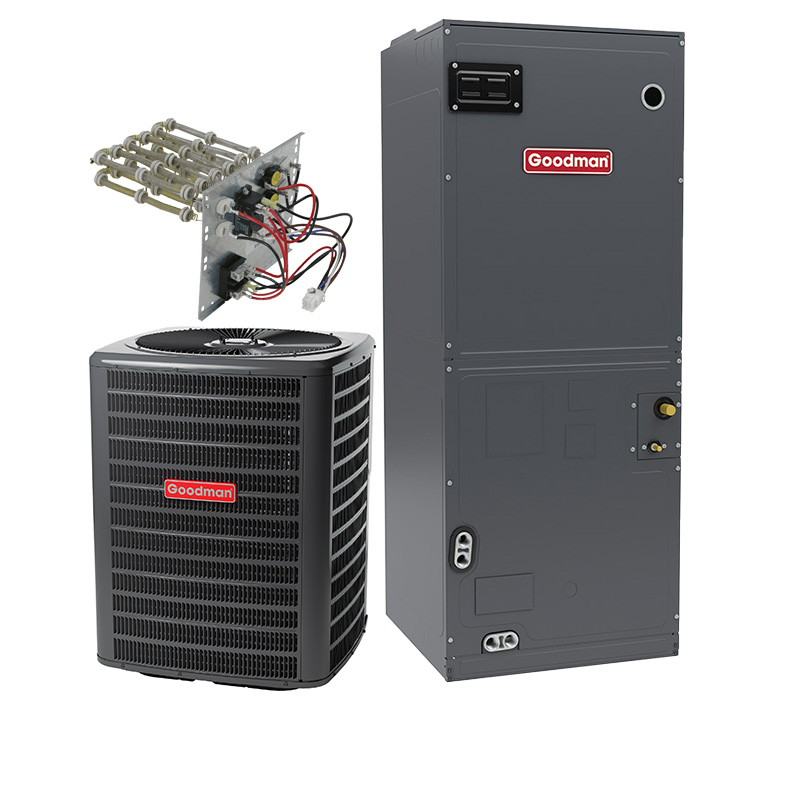
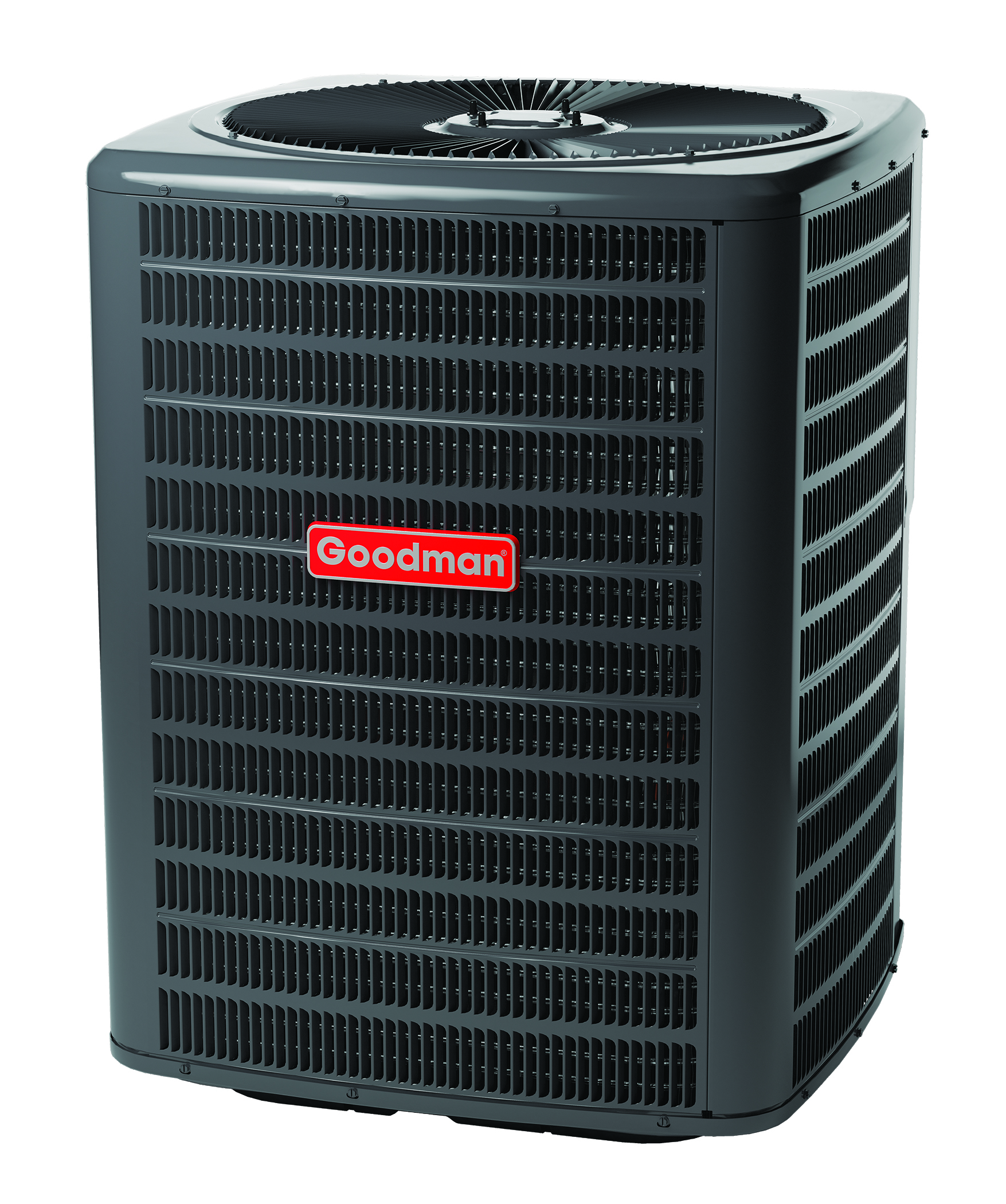
Goodman 4 Ton 17.2 SEER2 R32 High-Efficiency Two Stage Heat Pump System
View on AC Direct see your lowest price →Check current price on AC Direct →
Key features
- 17.2 SEER2 efficiency rating, qualifying for most utility and federal rebate programs
- Two-stage compressor runs at reduced capacity on moderate days for steadier temps and lower humidity
- R-32 refrigerant, which has a lower global warming potential than R-410A
- 4-ton capacity sized for larger homes, typically 2,000 to 2,800 square feet depending on climate and envelope
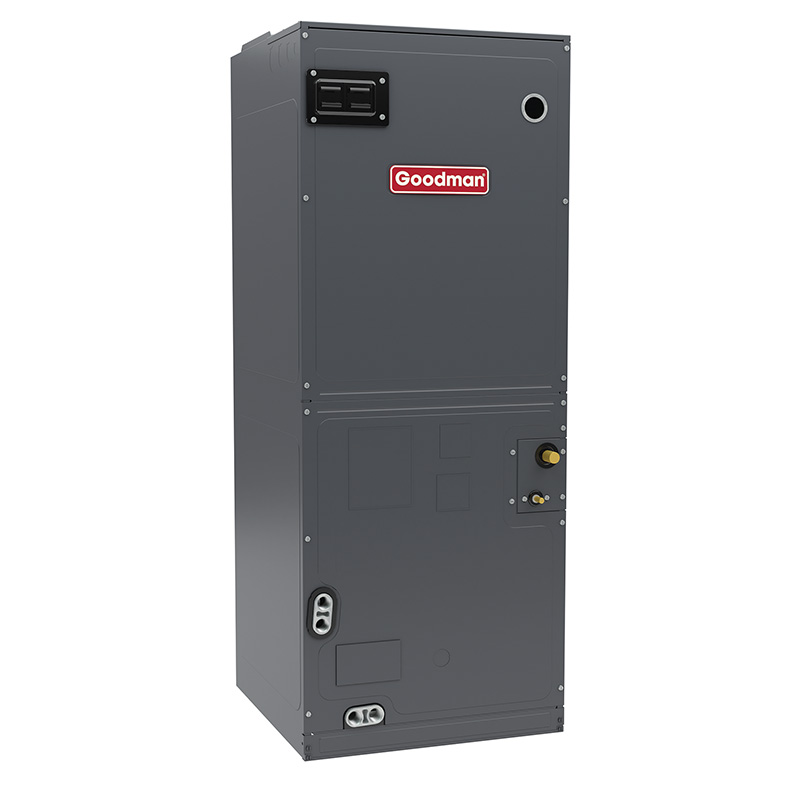
- Designed as a split-system heat pump requiring a matched indoor air handler or coil
- Priced approximately 15 to 25 percent below comparable Trane, Carrier, and Lennox configurations
About this system
The Goodman 4-ton 17.2 SEER2 two-stage heat pump is built for larger homes, typically in the 2,000 to 2,800 square foot range, that need meaningful cooling and heating capacity without the price tag of a premium brand. At 17.2 SEER2, this unit clears the high-efficiency threshold by a comfortable margin, meaning it qualifies for most utility rebates and sits well above the federal minimum for split-system heat pumps. Two-stage operation is a real practical benefit: the system runs at a lower capacity on mild days, cycling less frequently, holding steadier indoor temperatures, and reducing humidity more effectively than a single-stage unit can.
The switch to R-32 refrigerant is a meaningful spec. R-32 has a lower global warming potential than the R-410A it replaces, and it operates at slightly different pressures, so your installing technician needs to be current on R-32 handling procedures and have the appropriate recovery equipment. That is worth confirming before scheduling installation. As a 4-ton unit, this system also requires properly sized ductwork and a matched air handler or furnace coil to perform at its rated efficiency. Goodman’s reputation for value holds here: you are getting solid efficiency numbers and two-stage comfort at a price point that typically runs 15 to 25 percent below equivalent Trane, Lennox, or Carrier configurations.
This system suits budget-conscious homeowners who plan to invest in a qualified installer and understand that Goodman’s long-term performance is closely tied to how well the equipment is set up on day one. It is less suited to buyers who prioritize brand prestige, want the longest-documented compressor lifespan in the industry, or plan to handle their own maintenance without professional support.
This Goodman delivers legitimate high-efficiency two-stage performance at a price that undercuts most name-brand competition by a notable margin. The trade-off is a reliability track record that lags premium brands, particularly after year seven, and a compressor lifespan that averages shorter than Trane or Carrier equivalents. For buyers who prioritize upfront value and plan to keep up with maintenance, it is a reasonable choice; for those who want maximum long-term durability, the savings may not fully offset the risk.
Overall score is the average of the five ratings above.
What we like
- 17.2 SEER2 is a genuinely high-efficiency rating, not a marginal upgrade
- Two-stage operation meaningfully improves comfort and dehumidification over single-stage units
- R-32 refrigerant is more environmentally responsible and increasingly the industry standard
- Substantially lower purchase price than comparable Carrier, Trane, or Lennox systems
- Dual-run capacitor failures, the most common reported issue, are a low-cost and straightforward repair
Trade-offs
- Compressor lifespan averages 10 to 14 years, shorter than the 15 to 20 years reported for premium brands
- Evaporator coil leaks appear in a meaningful share of owner reports and can be a costly mid-life repair
- A minority of owners report refrigerant leaks in year one, almost always tied to installation quality rather than the unit itself
- Overall performance is heavily dependent on installer skill, making contractor selection as important as the equipment choice
What homeowners and pros say about Goodman
Homeowners who have lived with this Goodman configuration tend to split along familiar lines. Those who found a skilled installer and kept up with annual maintenance often report years of trouble-free operation and point to the lower purchase price as a genuine win. The most common early complaint in owner forums is a refrigerant charge that was off from day one, which points back to installation rather than the equipment itself. Goodman’s Google dealer reviews average around 3.8 out of 5, and affordability is the phrase that shows up most consistently in positive feedback. The ConsumerAffairs score is lower, around 2.5 out of 5, but that platform disproportionately captures owners who sought a place to vent frustration, and the recurring theme is repair costs that start to add up after roughly year seven of ownership.
HVAC technicians who service Goodman equipment regularly tend to have a pragmatic view. Dual-run capacitor failures are the most commonly cited repair call, and most pros note that it is a straightforward, low-cost fix in the $300 to $600 range. More concerning are evaporator coil leaks, which show up in a meaningful share of owner accounts and represent a more involved repair. On compressor longevity, technicians generally put Goodman in the 10 to 14 year range, which is a real gap compared to the 15 to 20 years more commonly cited for Trane and Carrier compressors. The consistent advice from experienced installers: Goodman can perform well at this efficiency tier, but the installer you choose matters as much as the brand on the cabinet.
Sources: ConsumerAffairs Goodman owner reviews, AHRI Directory of Certified Product Performance, U.S. DOE appliance and equipment efficiency standards, Goodman product specification sheets.
What it costs to run
At 17.2 SEER2, cooling this 4-ton system for a typical 1200-hour cooling season at the U.S. average electricity rate of $0.17/kWh works out to roughly $569 per year in cooling, about $162 less per year than a minimum-efficiency 13.4 SEER2 unit of the same size. Your real cost depends on your climate and local rate.
Method: (48,000 BTU/hr ÷ 17.2 SEER2) × 1200 hours ÷ 1000 × $0.17/kWh. Rate source: U.S. EIA average; cooling hours: moderate-climate estimate.
How it compares
| Brand | Comparable model | SEER2 | Stage | Price position |
|---|---|---|---|---|
| Goodman | 4-Ton 17.2 SEER2 R-32 Two-Stage Heat Pump | 17.2 | Two-stage | Value pick |
| Carrier | Comfort 18 (25HCE6) | 17.5 | Two-stage | Approximately 20 to 25 percent more than this Goodman |
| Trane | XR17 Heat Pump (4TWR7) | 17.0 | Two-stage | Approximately 20 to 30 percent more than this Goodman |
| Lennox | Merit ML18XP1 | 17.0 | Two-stage | Approximately 15 to 25 percent more than this Goodman |
Competitor rows are comparable single-stage units at similar efficiency; price is relative position, not a quote.
Questions about this system
Does this system qualify for the federal energy efficiency tax credit?
Heat pumps at or above 15.2 SEER2 with a qualifying HSPF2 rating generally meet the IRS requirements for the 25C residential energy efficiency credit, worth up to $2,000. Confirm the specific model's HSPF2 rating and keep your installation invoice, as the credit applies to installed cost.
What does R-32 refrigerant mean for service and maintenance?
R-32 requires technicians to have current certification and the appropriate recovery equipment, since it behaves differently from R-410A. Most established HVAC contractors are already equipped, but it is worth asking before you book a service call, especially in smaller or rural markets.
How important is it to match this unit with a specific air handler or coil?
Very important. Running a 4-ton outdoor unit with a mismatched or undersized indoor coil will prevent the system from reaching its rated 17.2 SEER2 efficiency and can shorten compressor life. Always install the system with a manufacturer-matched or AHRI-certified paired indoor unit.
Goodman has mixed reviews online. Should I be worried about reliability?
The concern is real but context matters. Goodman's ConsumerAffairs score sits around 2.5 out of 5, a channel that skews toward complaint writers, and the recurring theme is repair costs climbing after roughly year seven. Google dealer reviews average around 3.8 out of 5, where affordability is the most common praise. The documented failure points are dual-run capacitors (a low-cost fix), evaporator coil leaks, and compressor longevity that averages shorter than premium brands. Budgeting for a service contract and a proactive maintenance schedule reduces the risk meaningfully.
Is a two-stage heat pump worth the extra cost over a single-stage at this capacity?
At 4 tons, yes, for most larger homes. Two-stage units run at lower output during mild weather, which reduces short cycling, keeps indoor humidity lower, and typically cuts runtime energy use compared to a single-stage unit that only operates at full blast. The comfort difference is noticeable, particularly in shoulder seasons.
Specifications
| Cooling capacity | 4 Ton |
| Efficiency | 17.2 SEER2 |
| Refrigerant | R-32 |