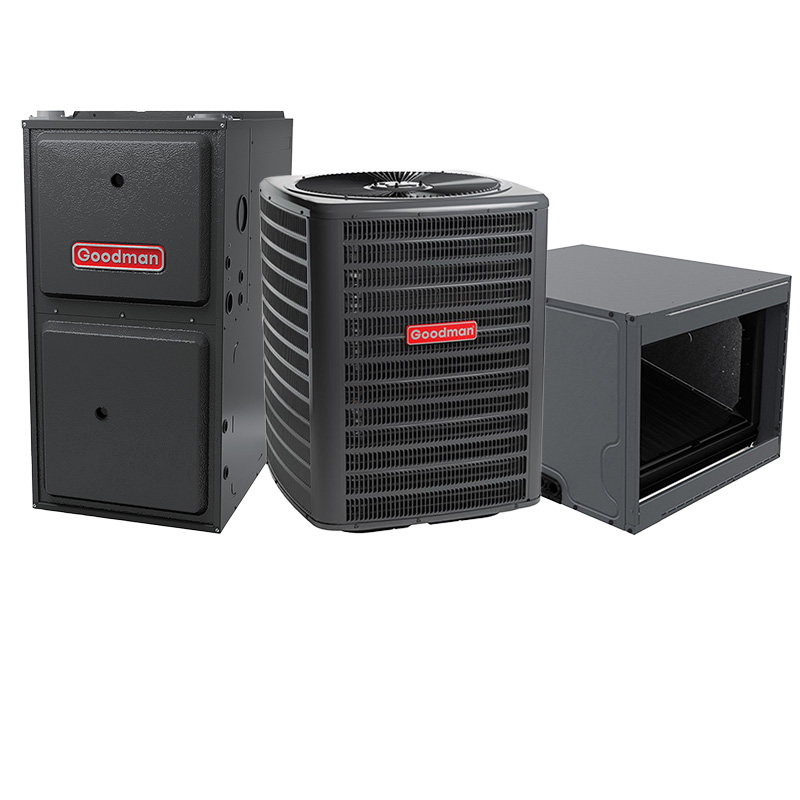
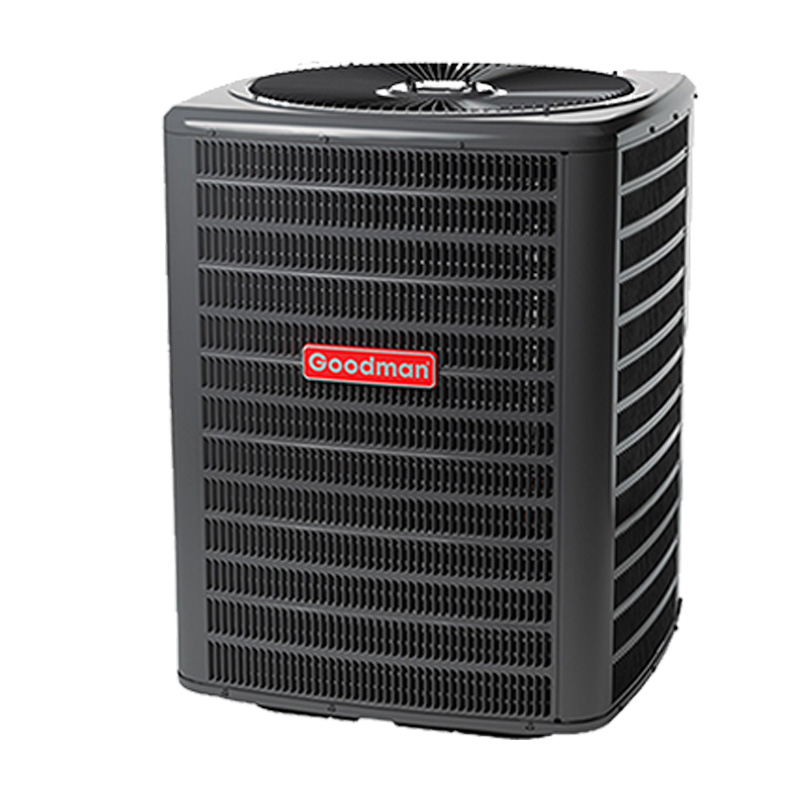
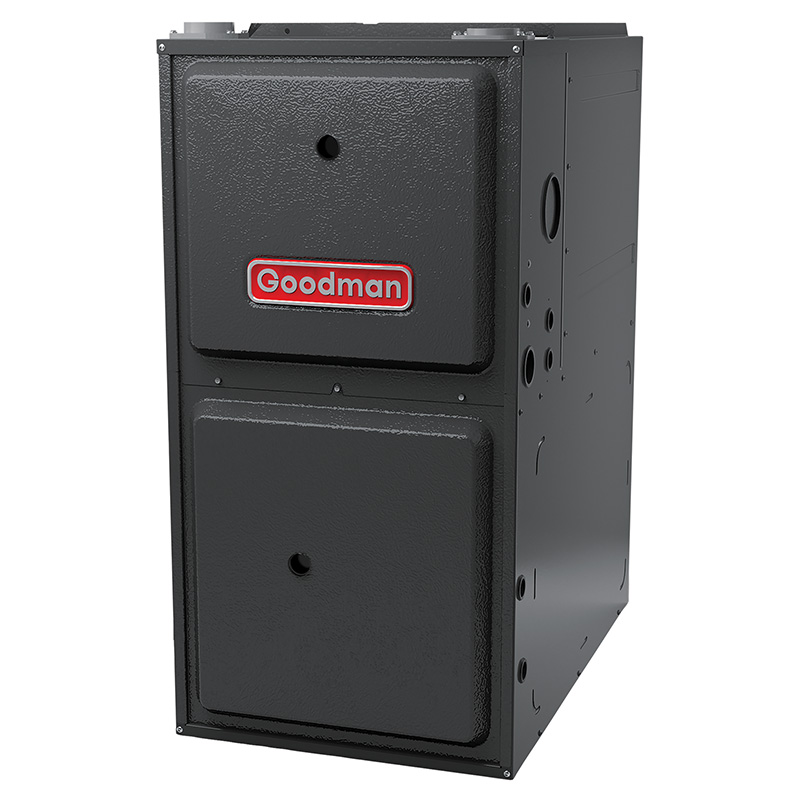
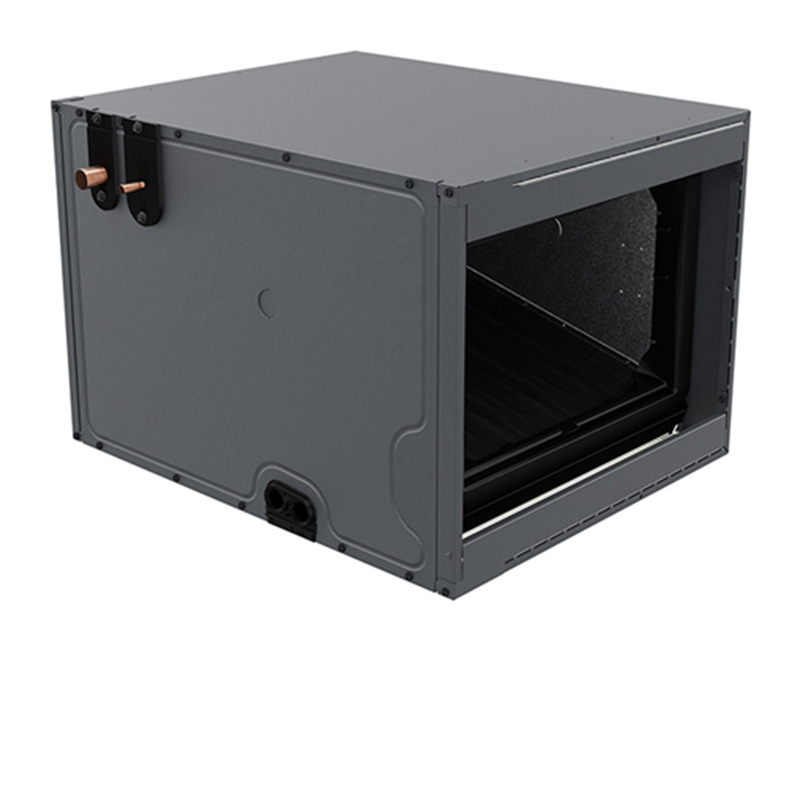
Goodman 3.5 Ton 13.4 SEER2 80000 BTU 96% AFUE Multi-Speed ECM Gas Furnace System – Horizontal | R32
View on AC Direct see your lowest price →Check current price on AC Direct →
Key features
- 13.4 SEER2 cooling efficiency meets current federal minimums for most regions
- 96% AFUE condensing furnace recovers nearly all combustion heat for lower gas bills
- Multi-speed ECM blower motor reduces fan electricity use and improves dehumidification
- Horizontal configuration suited for attic, crawlspace, or side-closet installs
- R-32 refrigerant: lower global-warming potential than legacy R-410A
- 80,000 BTU furnace output sized for medium-to-large homes in moderate to cold climates
About this system
The Goodman 3.5-ton, 13.4 SEER2, 96% AFUE horizontal gas furnace system is a full split-system bundle built around a mid-efficiency cooling unit and a high-efficiency furnace, paired with R-32 refrigerant. The 13.4 SEER2 rating lands right at the federal minimum-efficiency floor for most northern climate regions, making it a compliant but not exceptional performer on cooling costs. The 96% AFUE furnace, however, is a genuine strong point: condensing-furnace territory that recovers nearly all combustion heat and can meaningfully reduce gas bills compared to an 80% AFUE unit, especially in colder climates where the furnace runs hard from October through April.
The horizontal configuration is specifically designed for attic, crawlspace, or side-closet installs where vertical airflow is not an option. That constraint matters because horizontal installs are more sensitive to leveling, condensate drainage, and duct alignment than upflow or downflow setups, so the quality of the installation crew becomes even more important than usual. The multi-speed ECM blower motor improves dehumidification and air distribution compared to a single-speed PSC motor, and it draws considerably less electricity during fan-only operation, adding a modest but real efficiency benefit beyond what the SEER2 number alone reflects.
This Goodman bundle makes practical sense for budget-focused buyers who need a code-compliant split system in a horizontal application and are willing to invest in quality installation. The 96% AFUE furnace delivers real long-term savings on heating, but the 13.4 SEER2 cooling side is entry-level efficiency, and Goodman's track record past year 7 is checkered enough to warrant setting aside a modest repair fund. It is a reasonable trade-off, not a worry-free one.
Overall score is the average of the five ratings above.
What we like
- 96% AFUE furnace is genuinely high-efficiency and will cut gas consumption versus 80% AFUE alternatives
- ECM multi-speed motor is a real upgrade over single-speed PSC motors in humidity control and fan energy use
- R-32 refrigerant is more environmentally responsible and increasingly supported by service technicians
- Horizontal-specific engineering reduces the improvisation sometimes required when forcing a vertical unit into an attic or crawlspace install
- Goodman pricing typically runs 15 to 25 percent below comparable Trane, Lennox, and Carrier equipment, lowering the initial capital outlay
Trade-offs
- 13.4 SEER2 is the low end of the efficiency range; buyers in hot southern climates will see limited savings on summer cooling bills compared to a 16+ SEER2 system
- Dual-run capacitors and evaporator coil leaks are documented recurring failure points in owner reviews, with compressor lifespan averaging 10 to 14 years versus 15 to 20 for premium brands
- Horizontal installs are more complex and drainage-sensitive than vertical ones, amplifying the already significant role that installer quality plays in long-term reliability
- ConsumerAffairs ratings average around 2.5 out of 5, with repair cost complaints rising notably after year 7, suggesting owners should budget for maintenance beyond the warranty period
What homeowners and pros say about Goodman
Homeowners and HVAC professionals tend to hold two distinct views on Goodman equipment, and this horizontal system sits squarely in that tension. On Google dealer reviews, Goodman-installed systems average around 3.8 out of 5 across hundreds of reviews per location, where affordability is consistently the most cited reason for choosing the brand. Contractors who specialize in budget replacement jobs report that a properly installed Goodman can run reliably for a decade with routine maintenance. That phrase, properly installed, comes up repeatedly because technicians emphasize that Goodman’s margin for installer error is thinner than with premium brands, and a horizontal configuration in an attic only raises the stakes.
The ConsumerAffairs picture is less flattering, with Goodman averaging roughly 2.5 out of 5 on that complaint-heavy platform. The recurring story there is not early catastrophic failure but rather a steady accumulation of repair costs beginning around year 7 or 8. The documented failure modes align with that pattern: dual-run capacitors are the most frequently reported breakdown and are generally a low-cost fix, but evaporator coil leaks and compressor replacements are more expensive propositions, and Goodman compressors average 10 to 14 years of service life compared to the 15 to 20 years owners of Trane, Carrier, and Lennox equipment tend to see. A first-year refrigerant leak, when it occurs, almost always traces back to the install or initial refrigerant charge rather than the equipment itself. The honest takeaway is that the 15 to 25 percent upfront savings are real, but they come with a longer-term maintenance budget that buyers should account for from day one.
Sources: ConsumerAffairs Goodman owner reviews, AHRI Directory of Certified Product Performance, U.S. DOE appliance and equipment efficiency standards, Goodman product specification sheets.
What it costs to run
At 13.4 SEER2, cooling this 3.5-ton system for a typical 1200-hour cooling season at the U.S. average electricity rate of $0.17/kWh works out to roughly $639 per year in cooling, about $0 less per year than a minimum-efficiency 13.4 SEER2 unit of the same size. Your real cost depends on your climate and local rate.
Method: (42,000 BTU/hr ÷ 13.4 SEER2) × 1200 hours ÷ 1000 × $0.17/kWh. Rate source: U.S. EIA average; cooling hours: moderate-climate estimate.
How it compares
| Brand | Comparable model | SEER2 | Stage | Price position |
|---|---|---|---|---|
| Goodman | 3.5T 13.4 SEER2 / 96% AFUE Horizontal ECM Bundle | 13.4 | Multi-speed | Value pick |
| Carrier | Comfort 24ACC636 / 58CVA Gas Furnace | 14.3 | Single-stage | Approximately 20 to 25 percent above this Goodman bundle |
| Trane | XR14C / S9X2 Gas Furnace | 14.3 | Single-stage | Approximately 20 to 30 percent above this Goodman bundle |
| Lennox | Merit ML14XC1 / ML196E Gas Furnace | 14.3 | Single-stage | Approximately 25 to 35 percent above this Goodman bundle |
Competitor rows are comparable single-stage units at similar efficiency; price is relative position, not a quote.
Questions about this system
Is 13.4 SEER2 efficient enough to keep my summer cooling bills reasonable?
It meets current federal minimums and will cool your home effectively, but it is the lowest rung of the efficiency ladder. In climates where air conditioning runs four to six months a year, upgrading to a 16 or 17 SEER2 system often pays back the price difference over five to eight years in reduced electricity costs. If your cooling season is short and heating dominates your utility bill, the 96% AFUE furnace is the bigger efficiency win here.
What makes horizontal installation more complicated than a standard upflow setup?
In a horizontal position, the unit must be precisely leveled so condensate drains correctly and does not pool around the heat exchanger or coil. Duct connections, refrigerant line routing, and flue venting all require more planning in tight attic or crawlspace conditions. A misleveled install or improperly sloped condensate line is a common source of early problems, so vetting your installer's specific horizontal-install experience matters more than usual.
What are the most likely repairs I should plan for over the first 10 years?
Dual-run capacitors are the single most commonly reported failure on Goodman equipment and typically cost between 300 and 600 dollars to replace, including a service call. Evaporator coil refrigerant leaks appear in a meaningful share of owner reviews and can be a more expensive fix. A small minority of owners report refrigerant leaks within the first year, which is usually tied to installation or initial charge quality rather than a manufacturing defect.
Does this system use R-32, and does that affect service costs?
Yes, the system uses R-32 refrigerant, which has a lower global-warming potential than R-410A. R-32 requires technicians with specific handling certification because it is mildly flammable, and not all service companies carry it yet. In most metro areas coverage is not a problem, but in rural markets you should confirm your local HVAC service provider stocks and is certified to handle R-32 before purchasing.
What warranty does Goodman typically offer, and are there conditions I need to know about?
Goodman generally offers a 10-year parts warranty when the unit is registered within a specified window after installation, with a shorter unregistered warranty if that step is skipped. Labor is not covered under the standard warranty, so a service call for a warranty parts repair still carries a technician fee. Some dealers offer extended labor warranties separately, which is worth asking about given Goodman's documented repair history after year 7.
Specifications
| Cooling capacity | 3.5 Ton |
| Efficiency | 13.4 SEER2 |
| Furnace output | 80000 BTU |
| Furnace efficiency | 96% AFUE |
| Configuration | Horizontal |
| Refrigerant | R-32 |