Goodman 4 Ton 13.4 SEER2 100000 BTU 96% AFUE Multi-Speed ECM Gas Furnace System – Upflow | R32
View on AC Direct see your lowest price →Check current price on AC Direct →
Key features
- 13.4 SEER2 cooling efficiency meets federal minimums for most U.S. regions
- 96% AFUE gas furnace converts nearly all fuel to usable heat
- Multi-speed ECM blower motor improves humidity control and lowers fan energy use
- R-32 refrigerant with lower global-warming potential than R-410A
- Upflow configuration compatible with standard basement and main-floor furnace installations
- 100,000 BTU heating capacity suited to larger homes in colder climates
About this system
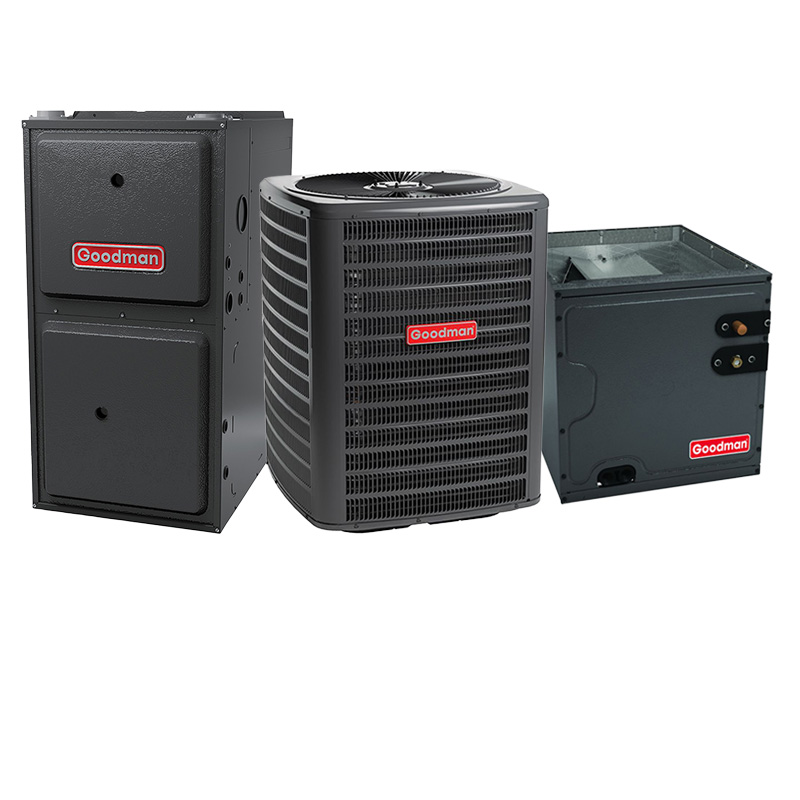
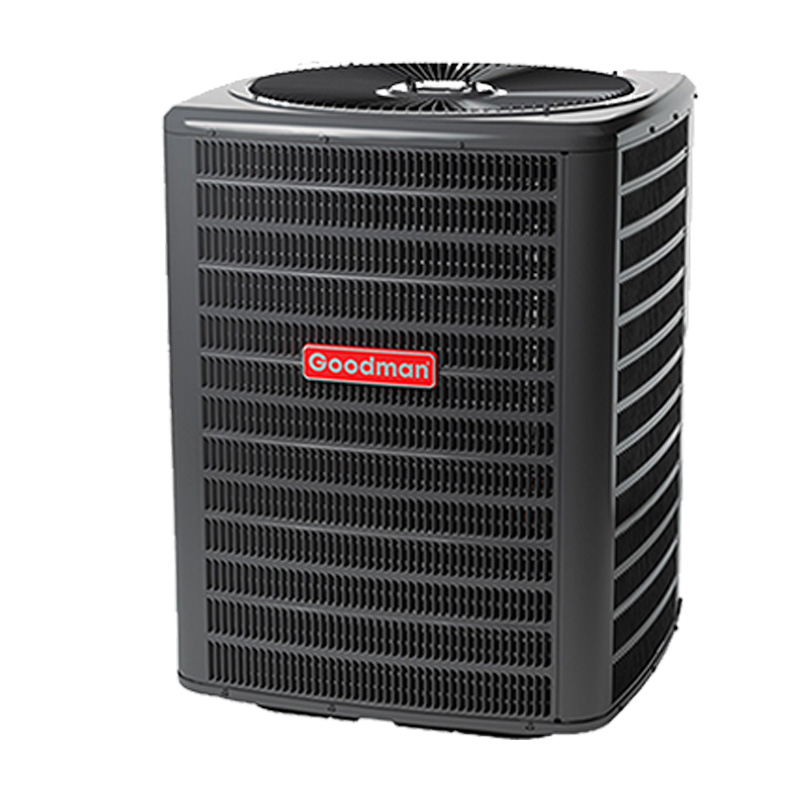
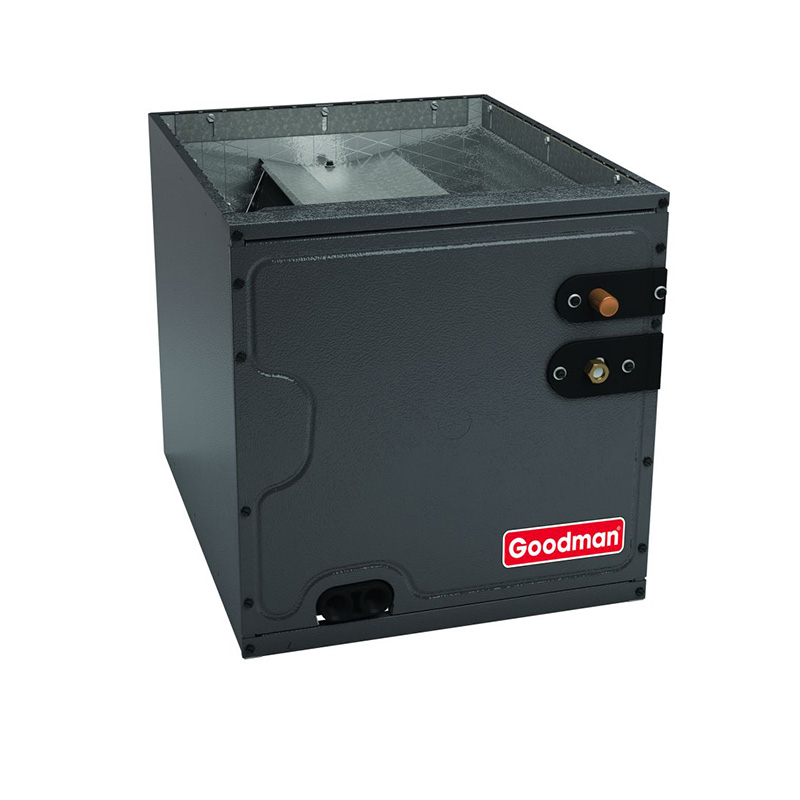
This Goodman bundle pairs a 4-ton, 13.4 SEER2 split-system air conditioner with a 100,000 BTU, 96% AFUE multi-speed ECM gas furnace in an upflow configuration. The cooling side uses R-32 refrigerant, a lower-global-warming-potential option that is becoming the industry standard as R-410A phases out. At 13.4 SEER2, the system clears the federal minimum for most U.S. climate zones and delivers solid everyday efficiency without the premium price tag of higher-tier variable-speed equipment. The 96% AFUE furnace means roughly 96 cents of every dollar spent on gas goes toward heating your home, which is genuinely strong performance and about as efficient as a gas furnace gets without stepping into 98% condensing territory.
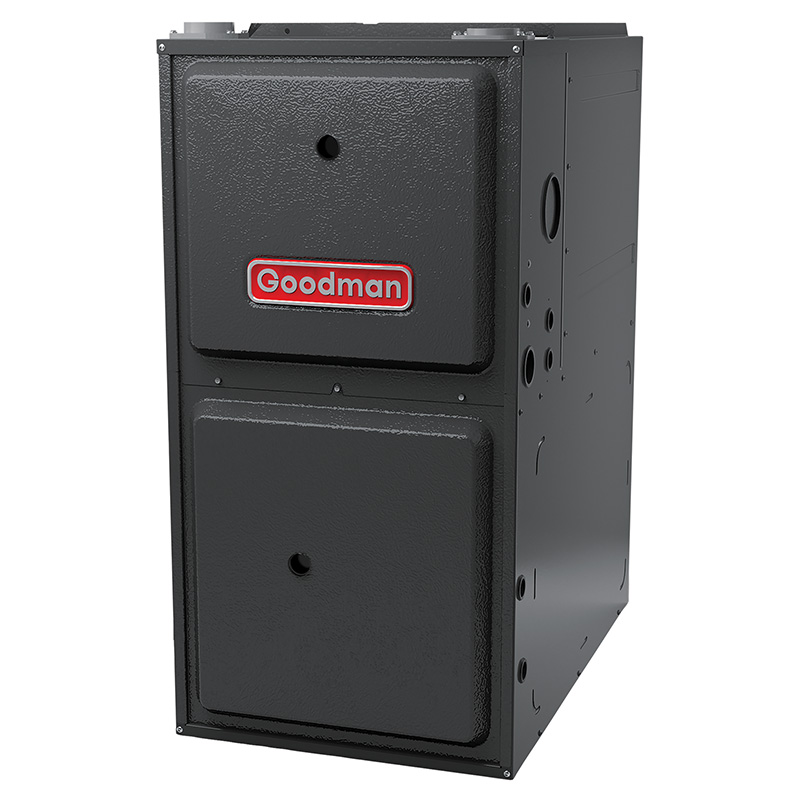
The multi-speed ECM blower motor is one of the standout mechanical features here. Unlike a single-speed motor that runs at full blast or not at all, the ECM ramps up and down to match demand, which improves humidity control, reduces energy use at the air handler, and runs quieter during shoulder-season operation. Upflow configuration means the furnace pulls return air from the bottom and discharges conditioned air upward through your existing duct system, the most common arrangement in homes with a basement or a furnace closet on the main floor. This is a full system replacement bundle suited to homes in the 2,000 to 2,800 square foot range, depending on insulation quality, climate zone, and duct condition.
This system delivers genuinely good specs for the money: a high-efficiency furnace and a code-compliant, forward-looking R-32 cooling system at a price point roughly 15 to 25 percent below Trane, Carrier, and Lennox equivalents. The trade-off is a brand track record that shows more repair activity after year seven and compressor longevity that typically falls short of premium competitors. If you are budget-conscious and commit to regular maintenance with a qualified installer, it earns its place; if long-term peace of mind outweighs upfront savings, the premium brands are worth considering.
Overall score is the average of the five ratings above.
What we like
- 96% AFUE furnace is among the most fuel-efficient gas heating options available
- R-32 refrigerant is future-ready as the industry moves away from R-410A
- ECM multi-speed motor meaningfully improves comfort and lowers blower electricity costs
- Substantially lower purchase price than comparable Carrier, Trane, or Lennox bundles
- Upflow design fits the most common residential duct layout with no special modifications
Trade-offs
- Dual-run capacitors are the most frequently reported failure, typically surfacing within the first decade and costing $300 to $600 to replace
- Evaporator coil leaks appear in a notable share of owner reviews, a potential mid-life repair cost
- Compressor lifespan averages 10 to 14 years versus 15 to 20 years seen with premium brands
- A minority of owners report refrigerant leaks within the first year, generally tied to install or charge quality rather than the unit itself
What homeowners and pros say about Goodman
Homeowners who post about Goodman on review platforms tend to cluster at the extremes. On ConsumerAffairs, Goodman scores around 2.5 out of 5, a channel that skews toward people who had a problem worth writing about, and the recurring complaint centers on repair bills that start climbing after roughly year seven. On Google dealer reviews, the brand lands around 3.8 out of 5 across hundreds of location-level reviews, where affordability is the most consistent point of praise. Neither number tells the whole story, but together they sketch a brand that wins on price and loses some goodwill when components begin to age. The failure modes that show up most often in real owner feedback for this product class are dual-run capacitor failures, a common and relatively inexpensive repair in the $300 to $600 range that most systems see at least once; evaporator coil leaks, which appear in a meaningful share of longer-term owner accounts and can be a more significant expense; and compressor longevity that typically falls in the 10 to 14 year range rather than the 15 to 20 years more commonly reported for Trane and Carrier equipment. A minority of first-year owners also report refrigerant leaks, which technicians generally attribute to installation or charge errors rather than a factory defect.
HVAC professionals who install Goodman regularly tend to give it a pragmatic endorsement: adequate equipment at a price that works for cost-sensitive customers, with performance outcomes that depend heavily on how carefully the system is commissioned. Contractors who are thorough about refrigerant charge, airflow balancing, and duct integrity report reasonably good results. Those who cut corners find the Goodman warranty and component quality less forgiving than premium brands. For this specific bundle, the 96% AFUE furnace and ECM blower are genuinely strong features that pros note positively, and the R-32 refrigerant transition is seen as a sensible move for long-term serviceability. The consensus is that Goodman is a workable choice for the right customer, meaning someone with realistic expectations about mid-life maintenance costs and a commitment to hiring a skilled, thorough installer from the start.
Sources: ConsumerAffairs Goodman owner reviews, AHRI Directory of Certified Product Performance, U.S. DOE appliance and equipment efficiency standards, Goodman product specification sheets.
What it costs to run
At 13.4 SEER2, cooling this 4-ton system for a typical 1200-hour cooling season at the U.S. average electricity rate of $0.17/kWh works out to roughly $731 per year in cooling, about $0 less per year than a minimum-efficiency 13.4 SEER2 unit of the same size. Your real cost depends on your climate and local rate.
Method: (48,000 BTU/hr ÷ 13.4 SEER2) × 1200 hours ÷ 1000 × $0.17/kWh. Rate source: U.S. EIA average; cooling hours: moderate-climate estimate.
How it compares
| Brand | Comparable model | SEER2 | Stage | Price position |
|---|---|---|---|---|
| Goodman | 4 Ton 13.4 SEER2 / 96% AFUE Multi-Speed ECM Bundle | 13.4 | Multi-speed | Value pick |
| Carrier | Comfort Series (24ACC636 + 59SC2) | 14.3 | Single-stage | Moderately higher than Goodman, typically 15 to 20 percent more |
| Trane | S-Series (4TTR3048 + S9X2) | 13.8 | Single-stage | Higher than Goodman, typically 20 to 25 percent more |
| Lennox | Merit Series (14ACX + ML196E) | 13.4 | Single-stage | Comparable to slightly higher than Goodman depending on dealer |
Competitor rows are comparable single-stage units at similar efficiency; price is relative position, not a quote.
Questions about this system
Is 13.4 SEER2 going to cost me noticeably more to run than a higher-efficiency unit?
It depends on your climate and usage. Moving from 13.4 SEER2 to 16 SEER2 can reduce cooling energy use by roughly 15 to 20 percent, but annual savings vary widely by region and runtime hours. In a moderate climate with short cooling seasons, the payback period on a higher-efficiency unit can stretch well beyond ten years, making 13.4 SEER2 a reasonable choice. In hot, humid climates with long cooling seasons, the higher-efficiency option is worth pricing out.
What does switching to R-32 refrigerant actually mean for me as a homeowner?
R-32 has a lower global-warming potential than R-410A and is increasingly the refrigerant of choice as the industry phases out older options under new EPA rules. Practically, it means your system is built on a forward-looking platform, so sourcing refrigerant for future service calls should remain straightforward. Your technician will need R-32 certified equipment and training, which is standard at most shops but worth confirming before you hire anyone.
How important is the installer for a Goodman system specifically?
Critically important. Goodman's own field performance and the feedback pattern in owner reviews both point to install quality as the single largest variable in how well the system runs and how long it lasts. Improper refrigerant charge, duct leaks, and incorrect airflow setup are the root cause of many of the first-year refrigerant leak reports. Get at least two quotes from licensed contractors, ask for Manual J load calculations, and verify the installer will pull permits.
What should I expect from the warranty, and is a Goodman extended warranty worth buying?
Goodman typically offers a 10-year parts warranty when the unit is registered within a specified window after installation, which is a competitive baseline. Labor is not covered under the factory warranty, so a service call in year eight still means paying a technician. Given the documented pattern of capacitor failures and coil leak reports after year seven, an extended labor or parts-and-labor plan from a reputable local dealer is worth pricing out, particularly on a 4-ton system where component costs are higher.
Will a 100,000 BTU furnace be too large for my home?
Possibly, depending on your climate zone, insulation level, and square footage. Oversizing a furnace causes short cycling, which accelerates wear on the heat exchanger and reduces comfort. A proper Manual J heating load calculation is the only reliable way to confirm sizing, and a contractor who skips that step and sizes by square footage alone is a red flag. In a well-insulated 2,000 square foot home in a moderate climate, 80,000 BTU is often sufficient; the 100,000 BTU unit is better suited to colder climates or homes with higher heat loss.
Specifications
| Cooling capacity | 4 Ton |
| Efficiency | 13.4 SEER2 |
| Furnace output | 100000 BTU |
| Furnace efficiency | 96% AFUE |
| Configuration | Upflow |
| Refrigerant | R-32 |