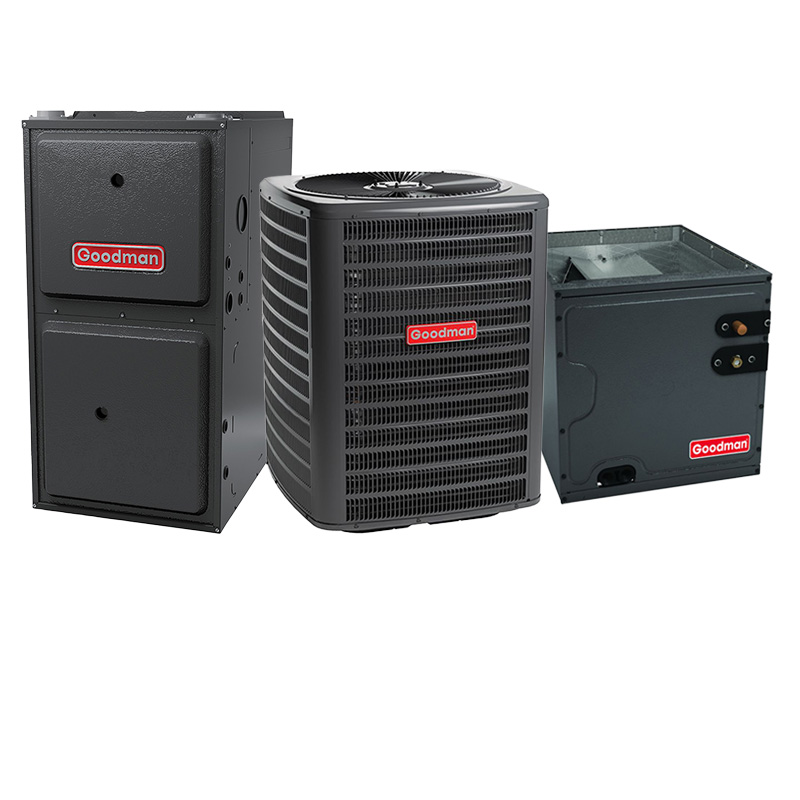
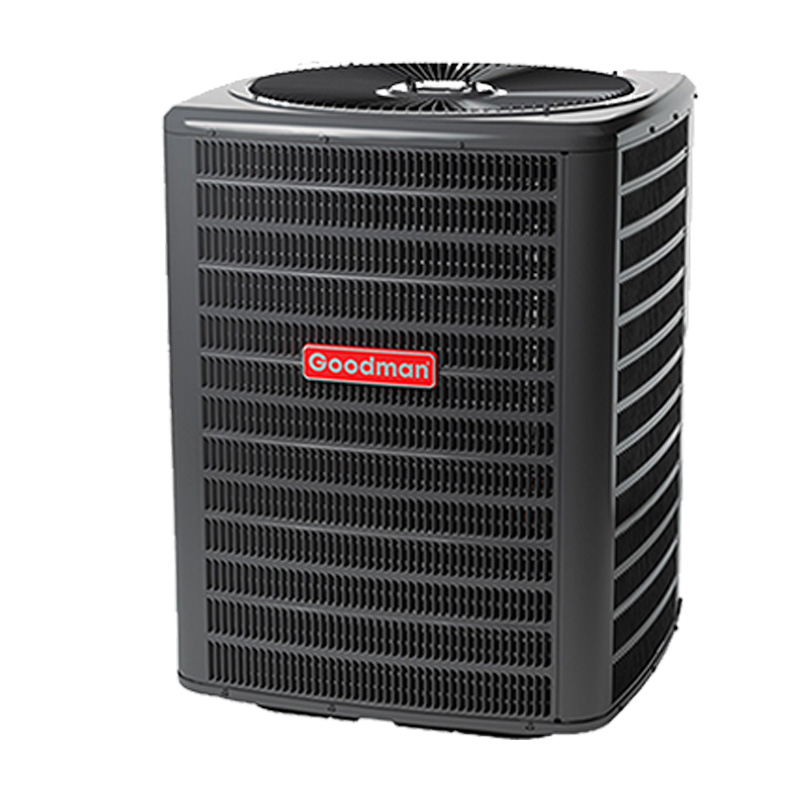
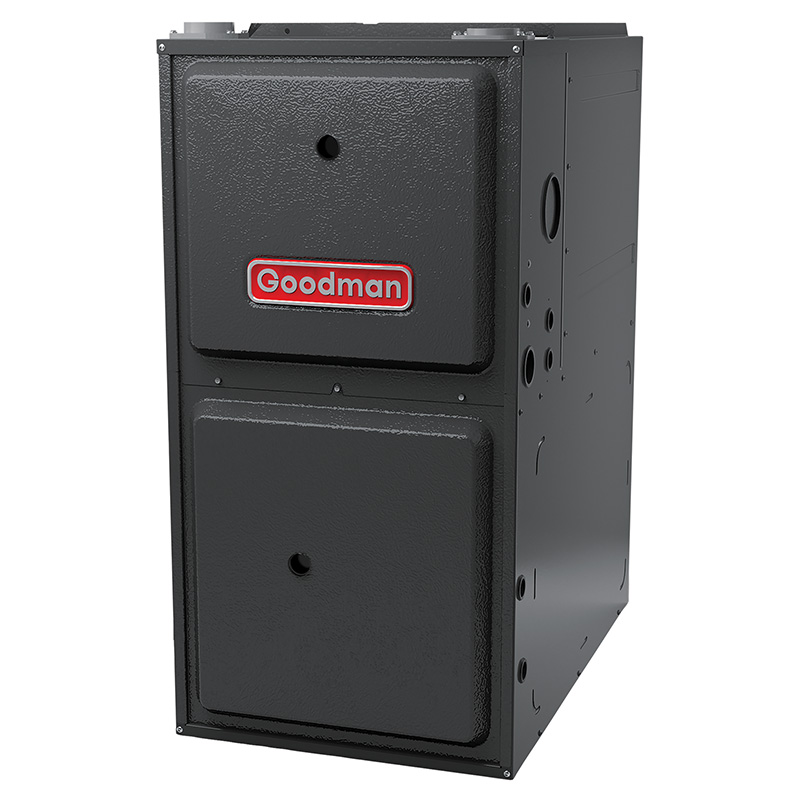
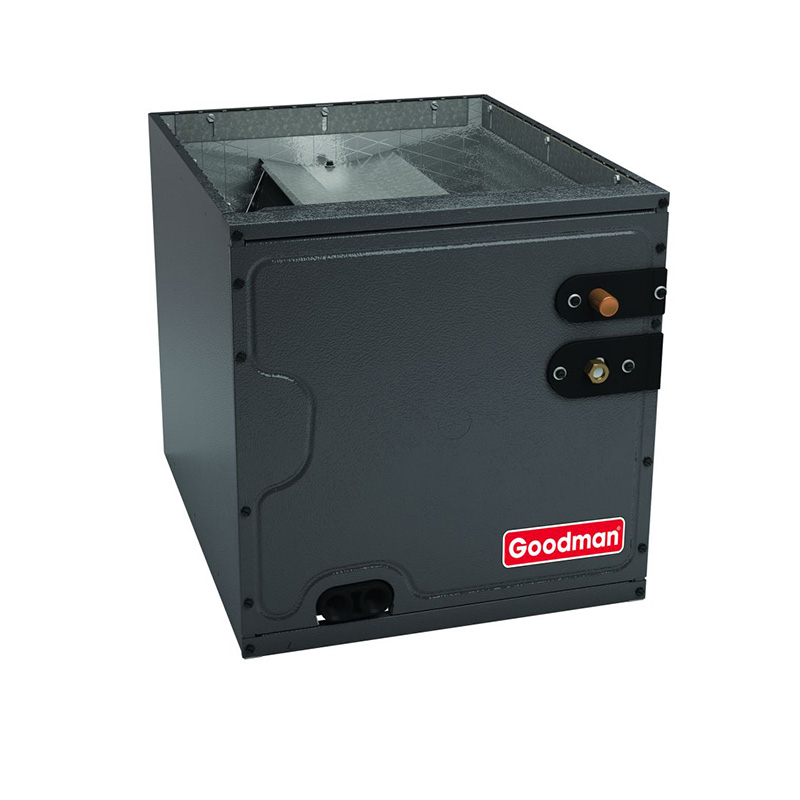
Goodman 5 Ton 13.4 SEER2 80000 BTU 96% AFUE Multi-Speed ECM Gas Furnace System – Upflow | R32
View on AC Direct see your lowest price →Check current price on AC Direct →
Key features
- 5-ton cooling capacity for larger homes, typically 2,400 to 3,000+ sq ft depending on climate and insulation
- 96% AFUE two-stage or multi-speed gas furnace reduces fuel waste and supports more even heat distribution
- Multi-speed ECM blower motor lowers blower electricity use and improves airflow consistency
- 13.4 SEER2 cooling efficiency meets current federal minimum standards for most U.S. regions
- R-32 refrigerant has a lower global-warming potential than R-410A and is forward-compatible with evolving regulations
- Upflow configuration designed for basement or ground-level utility closet installations with overhead duct runs
About this system
This Goodman package pairs a 5-ton, 13.4 SEER2 central air system with an 80,000 BTU, 96% AFUE multi-speed ECM gas furnace in an upflow configuration, making it a strong candidate for larger homes in climates that demand serious heating and cooling capacity. The 96% AFUE rating sits at the top tier of gas furnace efficiency, meaning roughly 96 cents of every dollar spent on gas goes toward heating your home rather than escaping through the flue. The multi-speed ECM blower motor modulates airflow to match demand, which improves comfort, reduces temperature swings, and cuts blower electricity costs compared to a single-speed PSC motor.
The system uses R-32 refrigerant, a lower global-warming-potential alternative to the older R-410A that has become increasingly common as the industry moves away from legacy refrigerants. At 13.4 SEER2, efficiency sits at the current federal minimum threshold for most U.S. climate zones, so this is not a premium-efficiency system and energy savings versus older equipment will vary based on what you are replacing. The upflow configuration suits homes where the furnace sits in a basement or utility closet and air is delivered upward through floor or ceiling registers. For buyers covering a large footprint who want a reliable entry-point system without paying Trane or Carrier prices, this bundle addresses both heating and cooling in a single purchase.
This Goodman system offers a practical, budget-conscious entry point for homeowners who need substantial heating and cooling capacity without the premium price tag of Carrier, Trane, or Lennox. The 96% AFUE furnace is genuinely efficient, and the ECM motor adds real comfort value, but the cooling side operates at minimum-efficiency levels and Goodman's track record shows meaningful reliability gaps after the first decade. It is a reasonable choice when budget is the primary constraint and you hire a skilled installer.
Overall score is the average of the five ratings above.
What we like
- 96% AFUE is top-tier furnace efficiency, delivering real fuel savings over 80% AFUE equipment
- ECM multi-speed blower reduces electricity use and improves temperature consistency throughout the home
- R-32 refrigerant is forward-compatible and carries a lower environmental impact than R-410A
- Priced 15 to 25 percent below comparable Carrier, Trane, and Lennox systems, easing upfront budget pressure
- Upflow design suits common basement and utility-closet installations with minimal ductwork modification
Trade-offs
- 13.4 SEER2 is the federal minimum efficiency floor for cooling, so energy savings on the AC side will be modest
- Compressors average 10 to 14 years, noticeably shorter than the 15 to 20 years typical of premium brands
- Dual-run capacitor failures and evaporator coil leaks are documented recurring issues in owner feedback
- Long-term reliability leans heavily on install quality, and a mediocre installation can accelerate every failure mode
What homeowners and pros say about Goodman
Homeowners who have lived with Goodman systems tend to split into two camps. Those who hired experienced, detail-oriented installers often report years of uneventful service and point to the lower purchase price as a straightforward win. Those who had a rushed or underbid installation frequently describe a repair cycle that starts around year 7 and gradually erodes the savings they expected. On ConsumerAffairs, Goodman scores around 2.5 out of 5, but that platform skews toward people motivated by frustration, so it reflects the worst-case ownership experience rather than a typical one. Google dealer reviews land closer to 3.8 out of 5, where the most common praise is straightforwardly about affordability.
HVAC technicians are consistent on a few points when discussing Goodman in the field. Dual-run capacitor failures come up repeatedly as the brand’s most predictable service call, though technicians also note it is among the least expensive repairs in the trade. Evaporator coil leaks appear in a notable share of owner accounts and can be more costly to address. The bigger concern pros raise is compressor longevity: Goodman compressors tend to average 10 to 14 years in service, versus 15 to 20 years for premium brands, which matters on a 5-ton unit where compressor replacement is a substantial cost. The ECM blower and 96% AFUE furnace in this particular bundle are genuine strengths that pros acknowledge, and early refrigerant leak reports are generally attributed to installer error rather than a factory defect.
Sources: ConsumerAffairs Goodman owner reviews, AHRI Directory of Certified Product Performance, U.S. DOE appliance and equipment efficiency standards, Goodman product specification sheets.
What it costs to run
At 13.4 SEER2, cooling this 5-ton system for a typical 1200-hour cooling season at the U.S. average electricity rate of $0.17/kWh works out to roughly $913 per year in cooling, about $0 less per year than a minimum-efficiency 13.4 SEER2 unit of the same size. Your real cost depends on your climate and local rate.
Method: (60,000 BTU/hr ÷ 13.4 SEER2) × 1200 hours ÷ 1000 × $0.17/kWh. Rate source: U.S. EIA average; cooling hours: moderate-climate estimate.
How it compares
| Brand | Comparable model | SEER2 | Stage | Price position |
|---|---|---|---|---|
| Goodman | 5 Ton 13.4 SEER2 / 96% AFUE Multi-Speed ECM System (this unit) | 13.4 | Multi-speed | Value pick |
| Carrier | Comfort 24ACC636 / 58CVA080 (Performance 96 furnace bundle) | 14.0 | Single-stage / Multi-speed | Priced roughly 20 to 25 percent above this Goodman bundle |
| Trane | XR14 / S9X2 (5 ton split system bundle) | 14.0 | Single-stage / Variable-speed furnace | Priced roughly 20 to 30 percent above this Goodman bundle |
| Lennox | Merit ML14XC1 / SL280V (5 ton system bundle) | 14.3 | Single-stage / Variable-speed furnace | Priced roughly 25 to 35 percent above this Goodman bundle |
Competitor rows are comparable single-stage units at similar efficiency; price is relative position, not a quote.
Questions about this system
Why does this system use R-32 instead of R-410A, and does that affect service costs?
R-32 is a newer refrigerant with a lower global-warming potential that Goodman has adopted as the industry phases out R-410A. Most HVAC technicians are trained to handle it, but not every service van will stock it yet, so in some markets you may wait longer for a refrigerant recharge. Over time, availability should improve as the transition continues.
What size home is a 5-ton system actually right for?
A rough rule of thumb puts 5 tons at roughly 2,400 to 3,200 square feet, but the real answer depends on your climate zone, insulation quality, ceiling height, and window area. Oversizing a 5-ton unit in a smaller home causes short-cycling, higher humidity, and faster wear, so a proper Manual J load calculation by your installer is essential before purchase.
How significant is the dual-run capacitor failure issue in practice?
Capacitor failure is the most commonly reported repair in owner feedback, but it is also one of the cheapest and fastest HVAC fixes, typically running between 300 and 600 dollars including labor. Keeping a service contract or scheduling annual tune-ups means a technician will usually catch a weakening capacitor before it causes the compressor to fail.
Does the 96% AFUE rating apply to this furnace in all climates, or only colder regions?
The 96% AFUE rating reflects how efficiently the furnace converts gas to heat regardless of climate, but the financial payback versus a lower-AFUE unit is greatest in colder climates where the furnace runs more hours per year. In mild climates with short heating seasons, the efficiency premium delivers less dollar savings annually.
What warranty does this Goodman system carry, and what do I need to do to keep it valid?
Goodman typically offers a 10-year parts limited warranty on registered equipment, but you must register the product within a specified window after installation or the warranty period shortens. Installation by a licensed HVAC contractor is also generally required to maintain coverage, so DIY installation would likely void the warranty.
Specifications
| Cooling capacity | 5 Ton |
| Efficiency | 13.4 SEER2 |
| Furnace output | 80000 BTU |
| Furnace efficiency | 96% AFUE |
| Configuration | Upflow |
| Refrigerant | R-32 |