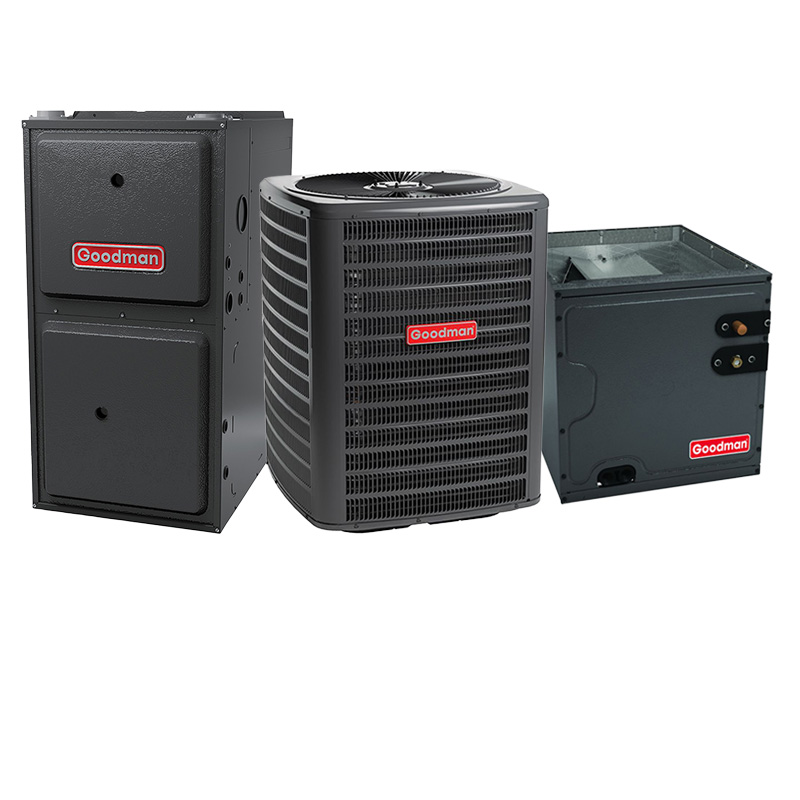
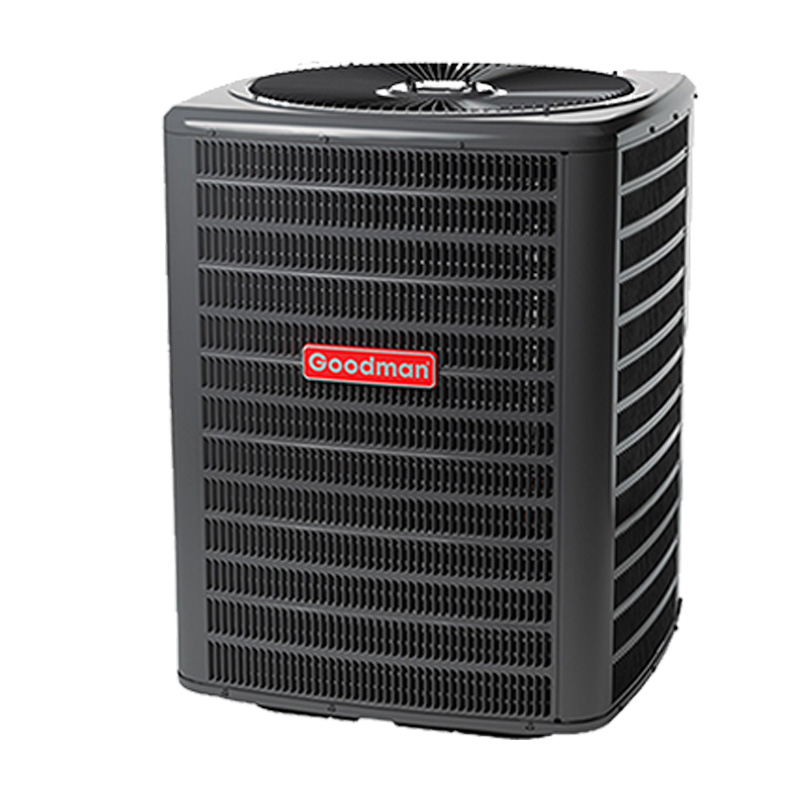
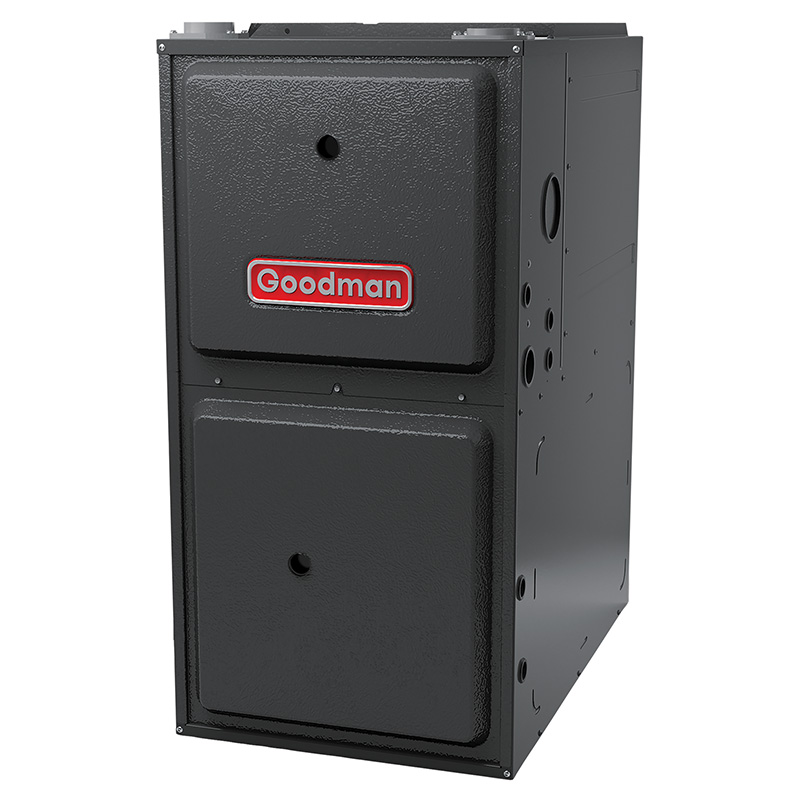
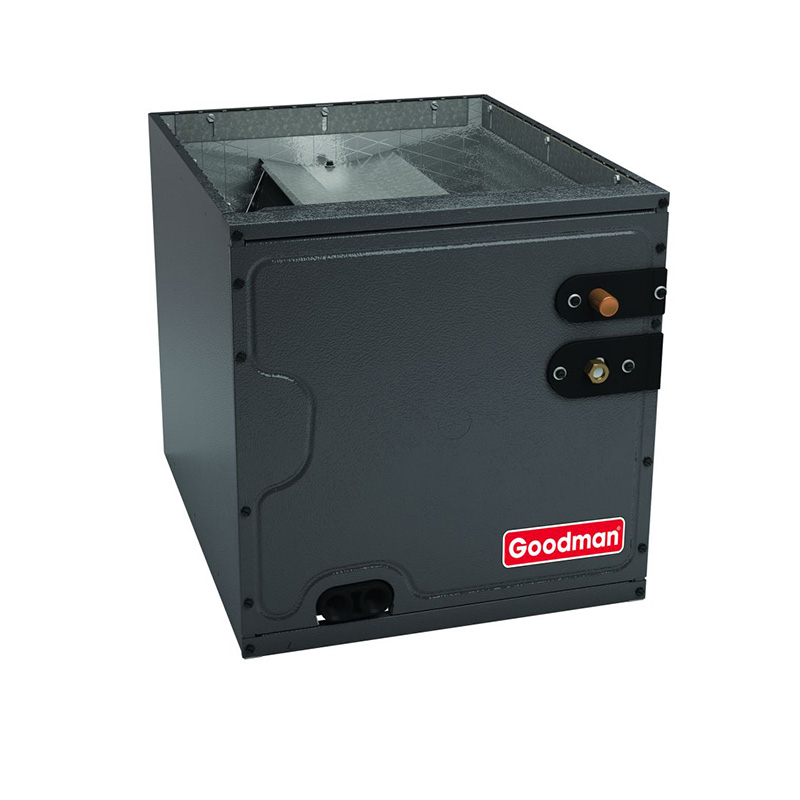
Goodman 5 Ton 13.6 SEER2 120000 BTU 96% AFUE Multi-Speed ECM Gas Furnace System – Upflow | R32
View on AC Direct see your lowest price →Check current price on AC Direct →
Key features
- 5-ton cooling capacity with 13.6 SEER2 efficiency rating
- 120,000 BTU furnace at 96% AFUE for high-efficiency gas heating
- Multi-speed ECM blower motor reduces electricity use and noise at partial loads
- R-32 refrigerant with lower global warming potential than R-410A
- Upflow configuration for basement or closet installations with overhead ductwork
- Bundled system designed for matched-component efficiency and simplified permitting
About this system
This Goodman 5-ton system pairs a 13.6 SEER2 central air conditioner with a 120,000 BTU, 96% AFUE multi-speed ECM gas furnace in an upflow configuration, making it a strong candidate for larger homes in the 2,500 to 3,500 square foot range that need serious heating and cooling capacity. The R-32 refrigerant charge is a forward-looking choice: R-32 has a lower global warming potential than the older R-410A it replaces, and it is increasingly the industry standard, which should make future servicing easier as the refrigerant landscape shifts.
The 96% AFUE rating means only four cents of every fuel dollar escapes as waste heat, which puts this furnace in the high-efficiency tier without reaching the 98% ceiling of the most expensive modulating units. The multi-speed ECM blower motor is a meaningful upgrade over a single-speed unit: it ramps airflow up and down to match demand, which reduces temperature swings, cuts electricity consumption at the air handler, and runs quieter during partial-load conditions. That said, this is still a multi-speed rather than a true variable-speed system, so it steps between fixed speeds rather than continuously modulating, which is worth understanding if ultimate comfort consistency is your priority.
Goodman positions this bundle as a value alternative to Carrier, Trane, and Lennox at a price typically 15 to 25 percent lower for comparable specs. What that savings buys you is solid foundational equipment; what it does not buy you is the same compressor longevity track record or the same tolerance for marginal installation work. This system rewards a careful, experienced installer and a consistent maintenance schedule more than a premium brand might.
This Goodman bundle delivers high-efficiency heating and adequate cooling capacity at a price that undercuts major premium brands by a meaningful margin, making it a practical choice for cost-conscious buyers who prioritize upfront savings. The 96% AFUE furnace and ECM motor are genuinely strong specifications, but the system's long-term performance will depend heavily on installation quality and routine maintenance, more so than comparable Trane or Carrier equipment. Buyers who can vet a skilled installer and commit to annual servicing will get solid value here; those expecting hands-off durability comparable to premium brands should adjust expectations.
Overall score is the average of the five ratings above.
What we like
- 96% AFUE furnace is in the high-efficiency tier, delivering real fuel savings over standard 80% units
- Multi-speed ECM motor improves comfort consistency and lowers blower electricity costs versus single-speed designs
- R-32 refrigerant is a future-ready choice as the industry moves away from R-410A
- Upfront cost is typically 15 to 25 percent below Carrier, Trane, or Lennox at similar specs
- Matched bundle simplifies equipment selection, warranty coordination, and permit documentation
Trade-offs
- Compressor lifespan averages 10 to 14 years, notably shorter than the 15 to 20 years documented for premium brands
- Evaporator coil leaks appear in a meaningful share of owner reviews and are among the more expensive repairs
- Dual-run capacitor failures are the most commonly reported issue, typically surfacing after year 7 and adding recurring service costs
- A minority of first-year owners report refrigerant leaks, usually tied to installation or initial charge issues rather than a factory defect, which underscores how dependent this equipment is on installer competence
What homeowners and pros say about Goodman
Homeowners who post about Goodman online tend to fall into two camps, and the split is reflected in the brand’s ratings: a ConsumerAffairs score of around 2.5 out of 5 driven largely by owners who encountered repair costs after roughly year 7, and a Google dealer review average of around 3.8 out of 5 where affordability is the praise that comes up most often. The complaints that recur most reliably center on dual-run capacitor failures, which are annoying and add up over time but are not catastrophic, and on evaporator coil leaks, which are more serious and more expensive when they appear. Compressor longevity is also a real gap: Goodman compressors tend to average 10 to 14 years in documented owner experience, and premium brands routinely outlast that by several years. A first-year refrigerant leak is the failure mode that frustrates owners the most, because it almost always traces back to installation workmanship rather than the equipment itself, and it still lands as the homeowner’s problem to sort out.
HVAC technicians who work on both Goodman and premium brands generally describe Goodman as serviceable equipment that performs well when it is installed correctly and maintained consistently, and that punishes shortcuts more visibly than a Trane or Carrier might. For a 5-ton, 96% AFUE ECM system at this price point, the professional consensus is that the specs are honest and the savings are real, but the long-run total cost of ownership closes the gap with premium brands if repair frequency runs toward the higher end of what owners report. For a buyer who vets the installer, pulls the permit, and schedules annual tune-ups, this system represents a reasonable value proposition. For a buyer hoping to install and forget, the documented failure modes suggest that approach carries more risk here than with higher-tier brands.
Sources: ConsumerAffairs Goodman owner reviews, AHRI Directory of Certified Product Performance, U.S. DOE appliance and equipment efficiency standards, Goodman product specification sheets.
What it costs to run
At 13.6 SEER2, cooling this 5-ton system for a typical 1200-hour cooling season at the U.S. average electricity rate of $0.17/kWh works out to roughly $900 per year in cooling, about $13 less per year than a minimum-efficiency 13.4 SEER2 unit of the same size. Your real cost depends on your climate and local rate.
Method: (60,000 BTU/hr ÷ 13.6 SEER2) × 1200 hours ÷ 1000 × $0.17/kWh. Rate source: U.S. EIA average; cooling hours: moderate-climate estimate.
How it compares
| Brand | Comparable model | SEER2 | Stage | Price position |
|---|---|---|---|---|
| Goodman | 5-Ton 13.6 SEER2 / 120K BTU 96% AFUE ECM Bundle (this system) | 13.6 | Multi-speed | Value pick |
| Carrier | Performance 24ACC636 with 58TP 96% furnace | up to 14.3 | Two-stage | Typically 20 to 30 percent more than this Goodman bundle |
| Trane | XR15 condenser with S9X2 96% furnace | up to 15.0 | Single-stage / Two-stage | Typically 20 to 30 percent more than this Goodman bundle |
| Lennox | Merit 14ACX with ML196 96% furnace | up to 14.3 | Single-stage | Typically 15 to 25 percent more than this Goodman bundle |
Competitor rows are comparable single-stage units at similar efficiency; price is relative position, not a quote.
Questions about this system
Will this system work with my existing ductwork, or do I need to resize it for 5 tons?
A 5-ton system requires ductwork designed for that airflow volume, and many homes sized for a smaller system will have undersized ducts that restrict performance and increase static pressure on the blower. Before installation, ask your HVAC contractor to perform a Manual J load calculation and a duct assessment. Skipping this step is one of the most common reasons multi-speed and high-efficiency systems underperform after install.
How does 13.6 SEER2 compare to other options, and is it worth going higher?
13.6 SEER2 meets current federal minimum efficiency standards for most regions and will deliver lower operating costs than older 10 to 13 SEER equipment. Moving to a 16 or 18 SEER2 system costs more upfront and can take several years to recover through energy savings in moderate climates, so whether it pencils out depends on your cooling hours, local electricity rates, and how long you plan to stay in the home.
What does the R-32 refrigerant change mean for me as an owner?
R-32 is a lower-global-warming-potential refrigerant that the industry is broadly adopting as R-410A phases down. As an owner, the practical impact is that future service technicians will need to be certified to handle R-32 and have the correct equipment, which is becoming standard. If you ever need a refrigerant top-off or a recharge after a leak repair, confirm your service technician is equipped for R-32 specifically.
The documented failure modes mention capacitor problems and coil leaks. How worried should I be, and what does it cost to fix?
Dual-run capacitor failures are the most commonly reported Goodman issue and are generally a low-stakes repair in the 300 to 600 dollar range that a qualified tech can complete in a short visit. Evaporator coil leaks are more disruptive and expensive, potentially running into the thousands depending on warranty status and whether refrigerant needs to be replaced. Keeping up with annual maintenance checks, including inspection of refrigerant pressures and electrical components, is the most practical way to catch either issue early.
Does the upflow configuration limit where this furnace can be installed, and can it be converted?
An upflow furnace pulls return air in at the bottom and discharges conditioned air out the top, which is designed for installations in a basement, utility closet, or ground-level space with ductwork running overhead. It is not suited for attic installations or applications that need a downflow or horizontal configuration without a different cabinet. Some Goodman furnace models support horizontal adaptation kits, but this specific upflow configuration should be confirmed against your install location before purchasing.
Specifications
| Cooling capacity | 5 Ton |
| Efficiency | 13.6 SEER2 |
| Furnace output | 120000 BTU |
| Furnace efficiency | 96% AFUE |
| Configuration | Upflow |
| Refrigerant | R-32 |