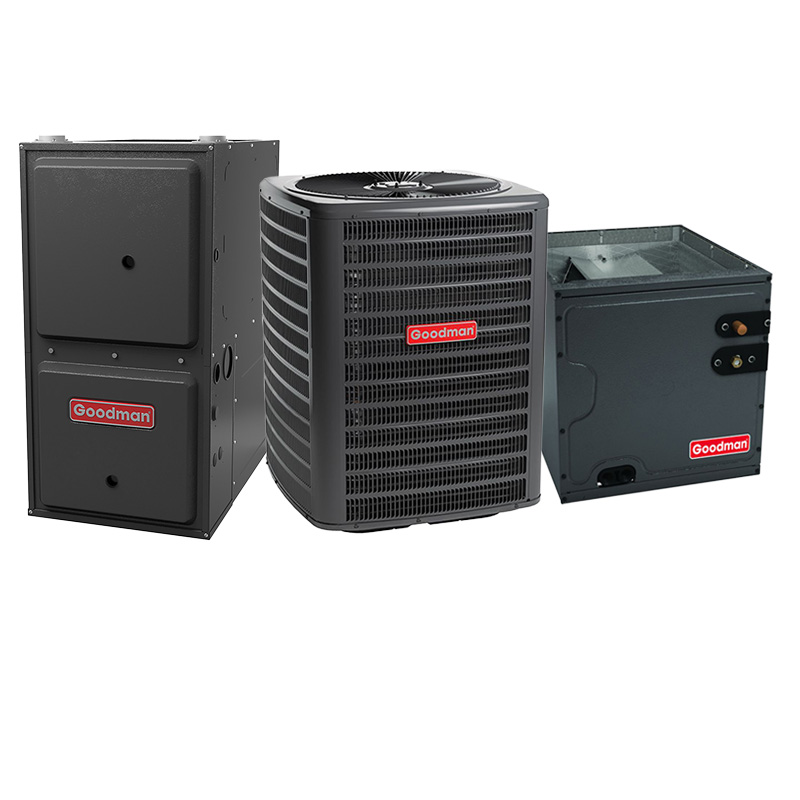
Goodman 3 Ton 13.8 SEER2 80000 BTU 96% AFUE Multi-Speed ECM Gas Furnace System – Downflow | R32
View on AC Direct see your lowest price →Check current price on AC Direct →
Key features
- 3-ton cooling capacity with 13.8 SEER2 efficiency rating
- 80,000 BTU furnace at 96% AFUE for high-efficiency heating
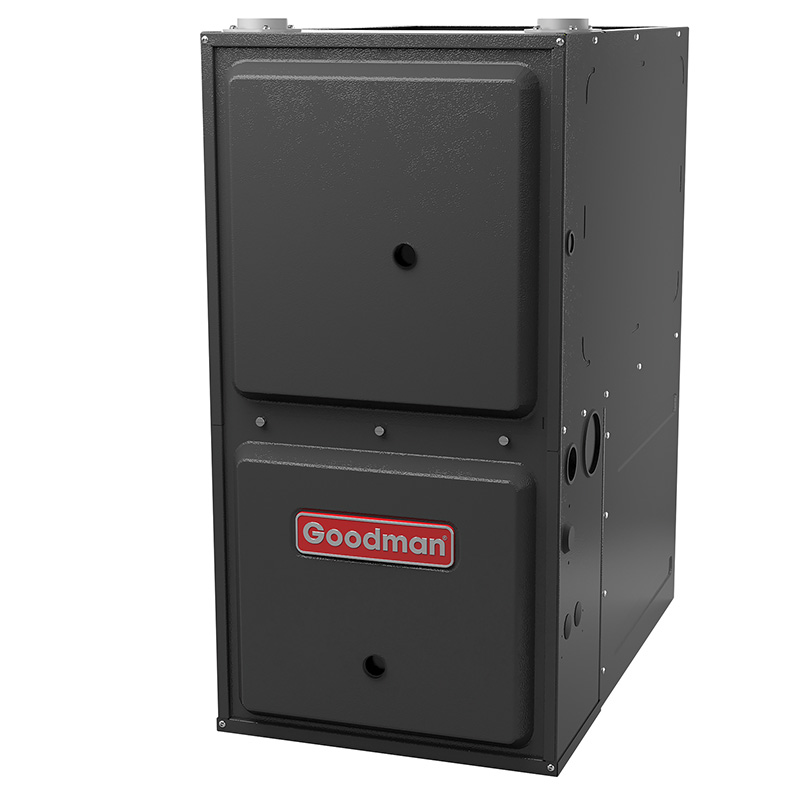
- Downflow configuration designed for floor-discharge duct systems
- R-32 refrigerant with lower global warming potential than R-410A
- Multi-speed ECM blower motor for improved comfort and humidity control
- Bundled system simplifies component matching and installation sourcing
About this system
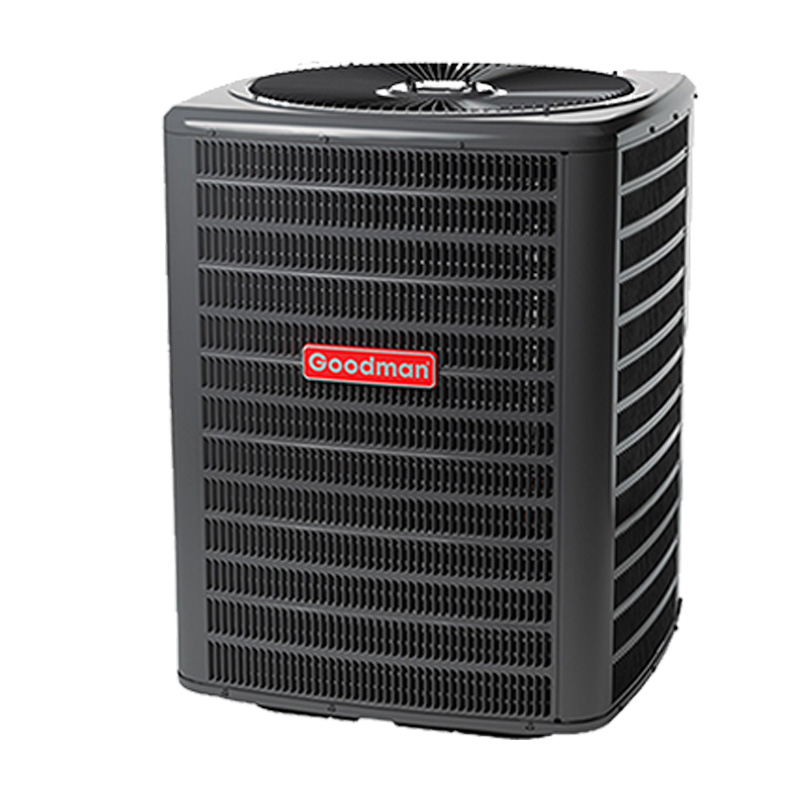
This Goodman bundle pairs a 3-ton, 13.8 SEER2 central air conditioner with an 80,000 BTU, 96% AFUE multi-speed ECM gas furnace in a downflow configuration, meaning the furnace discharges conditioned air downward through the floor — a layout common in homes with basement or crawlspace duct systems. The R-32 refrigerant charge is the forward-looking element here: R-32 carries a lower global warming potential than the R-410A it replaces and is becoming the new baseline for residential equipment. Buyers get a reasonably complete cooling and heating solution in a single purchase, which simplifies sourcing and can reduce contractor markup on component coordination.
The 96% AFUE rating means only 4% of combustion energy escapes as exhaust, which puts this furnace squarely in the high-efficiency tier and is particularly relevant in colder climates where heating bills are a bigger line item than cooling. The multi-speed ECM blower motor modulates airflow rather than running at full blast or stopping completely, which improves comfort, humidity control, and electricity consumption at the air handler side. At 13.8 SEER2, the cooling efficiency clears the current federal minimums for most regions but sits at the entry level of the efficiency range — adequate, not exceptional. Homeowners in climates with long, hot summers who run their AC heavily may find that stepping up to a 16 or 17 SEER2 system pays back the cost difference over time.
This Goodman bundle delivers genuine high-efficiency heating and adequate cooling at a price point well below comparable Carrier, Trane, or Lennox equipment, making it a practical choice for budget-conscious buyers who have a skilled installer lined up. The 96% AFUE furnace is a real strength, and the ECM motor adds meaningful comfort over single-speed alternatives. The trade-off is a shorter expected compressor lifespan and a documented history of capacitor and coil issues that owners should budget for after year seven.
Overall score is the average of the five ratings above.
What we like
- 96% AFUE furnace rating meaningfully reduces heating costs versus standard-efficiency units
- Multi-speed ECM motor improves airflow consistency and humidity management
- R-32 refrigerant is more environmentally responsible and aligns with industry direction
- Priced 15 to 25 percent below comparable Trane, Lennox, and Carrier equipment
- Downflow configuration is a direct fit for homes with basement or under-floor duct runs
Trade-offs
- 13.8 SEER2 is entry-level cooling efficiency and may not maximize savings in hot climates
- Compressors average 10 to 14 years versus 15 to 20 years for premium-brand competitors
- Dual-run capacitor failures are the most commonly reported issue, typically surfacing around year 7 and beyond
- A minority of owners report refrigerant leaks in the first year, usually tied to installation or initial charge quality
What homeowners and pros say about Goodman
Goodman’s reputation among homeowners is sharply divided along a fault line that has less to do with the equipment itself and more to do with who installs it and when repairs come due. On Google dealer reviews, Goodman-based systems average around 3.8 out of 5 stars across hundreds of location reviews, where the most consistent praise is straightforward: the price was fair and it cooled or heated the house on day one. That affordability advantage — typically 15 to 25 percent below Carrier, Trane, or Lennox on comparable equipment — is real and not disputed. On ConsumerAffairs, however, the score drops to roughly 2.5 out of 5, and the pattern in those complaints is telling: the trouble usually starts after year seven, when repair costs accumulate and owners feel the gap between what they saved upfront and what they are spending to keep the system running.
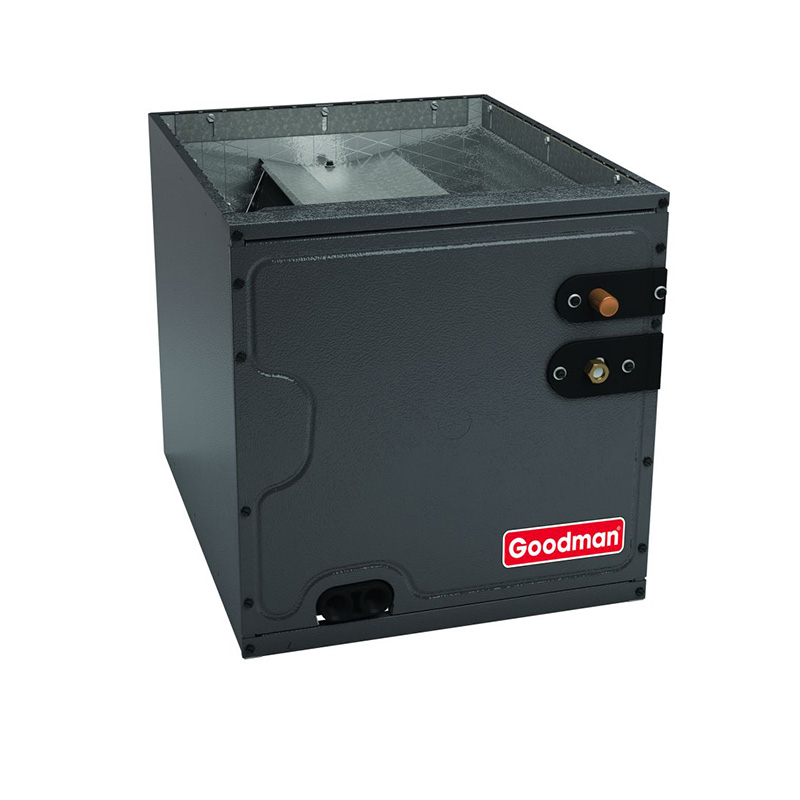
The specific failure modes that technicians and owners document most often on Goodman equipment are worth knowing before you buy. Dual-run capacitor failures are the most commonly reported issue and are generally a low-drama fix in the 300 to 600 dollar range, but they do happen with some regularity. Evaporator coil leaks appear in a meaningful share of reviews and are a more costly repair. Compressor longevity is where Goodman shows the clearest gap versus premium brands: average compressor life runs 10 to 14 years here, compared to 15 to 20 years on higher-tier equipment. There is also a documented minority of owners who experience refrigerant leaks in the first year, which installers and Goodman both attribute primarily to charge errors at install rather than manufacturing defects — a reminder that who performs the installation is not a footnote but a central variable in how this system performs over its life.
Sources: ConsumerAffairs Goodman owner reviews, AHRI Directory of Certified Product Performance, U.S. DOE appliance and equipment efficiency standards, Goodman product specification sheets.
What it costs to run
At 13.8 SEER2, cooling this 3-ton system for a typical 1200-hour cooling season at the U.S. average electricity rate of $0.17/kWh works out to roughly $532 per year in cooling, about $16 less per year than a minimum-efficiency 13.4 SEER2 unit of the same size. Your real cost depends on your climate and local rate.
Method: (36,000 BTU/hr ÷ 13.8 SEER2) × 1200 hours ÷ 1000 × $0.17/kWh. Rate source: U.S. EIA average; cooling hours: moderate-climate estimate.
How it compares
| Brand | Comparable model | SEER2 | Stage | Price position |
|---|---|---|---|---|
| Goodman | 3 Ton 13.8 SEER2 / 80K BTU 96% AFUE ECM Downflow Bundle | 13.8 | Multi-speed | Value pick |
| Carrier | Performance Series (24ACC6 + 59SC5) | 15–16 | Two-stage | Approximately 20 to 30 percent above this Goodman bundle |
| Trane | S-Series (XR15 + S9X2) | 15 | Two-stage | Approximately 20 to 30 percent above this Goodman bundle |
| Lennox | Merit Series (14ACX + ML196E) | 14–15 | Single-stage to two-stage | Approximately 15 to 25 percent above this Goodman bundle |
Competitor rows are comparable single-stage units at similar efficiency; price is relative position, not a quote.
Questions about this system
Is the downflow configuration the right choice for my home?
Downflow furnaces are designed for installations where the supply air exits through the bottom of the unit and flows into a duct system below the furnace, which suits homes with basement or crawlspace duct runs. If your ducts run through an attic or the supply plenum is above the unit, you need a different orientation such as upflow or horizontal. Confirm your existing duct layout with your installer before ordering.
What does switching to R-32 refrigerant mean for me as a homeowner?
R-32 has a global warming potential roughly one-third that of R-410A and is the direction most manufacturers are moving under evolving EPA regulations. In practical terms it means that technicians servicing this unit need to be certified to handle R-32, which is a mildly flammable (A2L class) refrigerant requiring specific handling procedures. Most established HVAC contractors are already equipped for it, but confirm with your service provider before scheduling maintenance or repairs.
What repair costs should I realistically plan for over the life of this system?
Dual-run capacitor replacement is the most frequently reported issue on Goodman equipment and typically runs between 300 and 600 dollars including labor — a manageable cost. Evaporator coil leaks show up in a meaningful share of owner reviews and are more expensive to address. Compressor lifespan on Goodman units averages 10 to 14 years, so buyers should factor a potential compressor repair or full replacement into their long-term cost picture.
How does Goodman's warranty work, and what do I need to do to activate it?
Goodman typically requires online registration within a set window after installation to receive the extended parts warranty — the coverage period is shorter if you skip registration. Verify current warranty terms on Goodman's website at the time of purchase, because coverage specifics can change with product generations. Labor is not covered by the manufacturer warranty, which is a common point of frustration in owner reviews, so understanding what your installing contractor offers for labor separately is important.
How much does installer quality actually affect how this system performs?
Significantly. HVAC technicians consistently cite installation quality as the single biggest factor in how long a Goodman unit lasts and how efficiently it runs. A minority of owners who report refrigerant leaks in the first year are typically experiencing an installation or initial charge issue rather than a manufacturing defect. Getting a proper Manual J load calculation, correct refrigerant charge, and sealed ductwork from a qualified contractor will do more for long-term performance than any single equipment spec.
Specifications
| Cooling capacity | 3 Ton |
| Efficiency | 13.8 SEER2 |
| Furnace output | 80000 BTU |
| Furnace efficiency | 96% AFUE |
| Configuration | Downflow |
| Refrigerant | R-32 |