Goodman Downflow 60000 BTU Gas Furnace – 97 % Efficient Modulating Variable-Speed ECM Gas Furnace | R32 (GDVM970603BN)
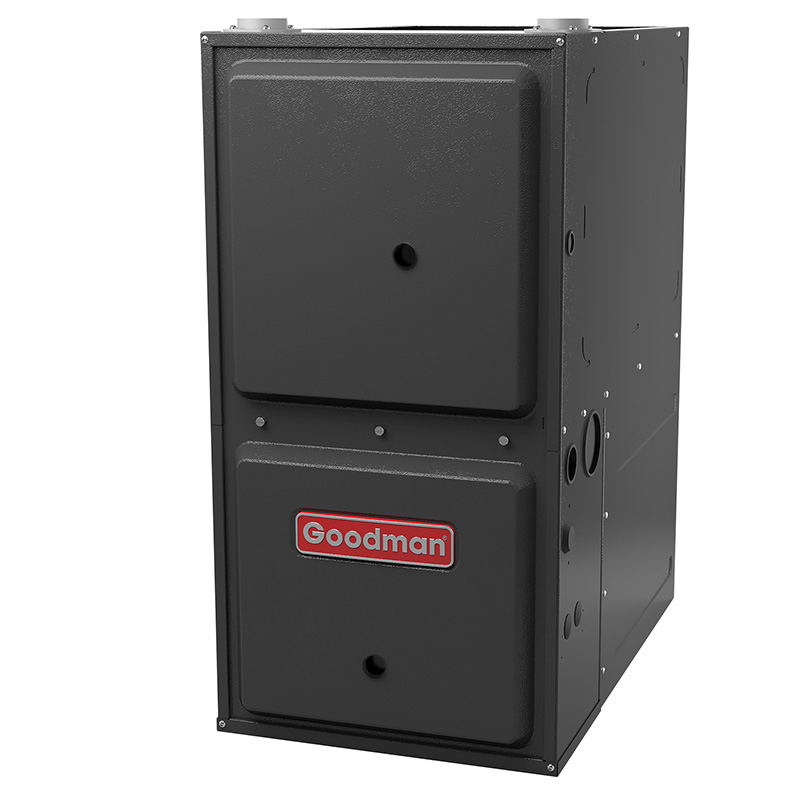
View on AC Direct see your lowest price →Check current price on AC Direct →
Key features
- 97% AFUE modulating gas furnace for top-tier fuel efficiency
- Downflow configuration for installations with below-unit ductwork
- Variable-speed ECM blower motor reduces electricity consumption and noise
- Modulating burner adjusts heat output incrementally to minimize temperature swings
- 60,000 BTU capacity suited to small-to-mid-size homes in colder climates
- Priced roughly 15 to 25 percent below comparable Carrier, Trane, and Lennox models
About this system
The Goodman GDVM970603BN is a 60,000 BTU downflow gas furnace built around a modulating burner and a variable-speed ECM blower motor. The modulating burner adjusts heat output in small increments rather than cycling fully on and off, which smooths out temperature swings and reduces short-cycling. The variable-speed ECM motor ramps airflow up and down to match demand, drawing significantly less electricity than a standard PSC motor in the process. Together these two features place this furnace at the top tier of residential gas heating technology, and the 97% AFUE rating means roughly 97 cents of every dollar spent on gas becomes usable heat in your home.
The downflow configuration is a specific installation requirement, not a universal fit. Downflow furnaces discharge heated air downward, making them the right choice for homes where ductwork runs below the unit, such as a closet installation over a crawl space or a first-floor utility room with ducts in the floor. If your duct system is in the attic or walls above the unit, this is the wrong configuration and the wrong model. The R-32 refrigerant designation on this furnace is unusual since furnaces do not use refrigerant, and buyers should confirm with their installer exactly what that spec refers to in the context of their specific system package before purchasing.
At 60,000 BTU this unit is sized for roughly 1,200 to 2,000 square feet depending on your climate zone, insulation quality, and local Manual J heat loss calculation. It suits homeowners in colder climates who want top-tier efficiency and comfort features at a price point below Carrier, Trane, or Lennox equivalents, and who are willing to invest in a skilled installation to get the most out of the hardware.
The GDVM970603BN delivers genuine top-tier furnace technology at a value price point, and on paper the modulating, variable-speed combination is hard to beat for comfort and efficiency at this cost. The honest caveat is that Goodman's real-world performance record is more uneven than the specs suggest, and the quality of the installation matters at least as much as the hardware itself. Buyers who secure a skilled installer and stay on top of maintenance will likely get solid years from this furnace; those who cut corners on installation may see the brand's weaker reliability reputation play out firsthand.
Overall score is the average of the five ratings above.
What we like
- 97% AFUE is among the highest efficiency ratings available for residential gas furnaces
- Modulating burner and variable-speed ECM together deliver noticeably more even, quiet heating than single- or two-stage units
- Priced well below comparably featured Trane, Lennox, and Carrier furnaces, freeing budget for a quality installation
- ECM motor draws less electricity at part-load operation, cutting utility costs beyond just gas savings
- Goodman's wide dealer and parts network means service is generally accessible across most of the U.S.
Trade-offs
- Goodman's ConsumerAffairs rating sits around 2.5 out of 5, with repair costs after year 7 a recurring complaint theme
- Compressor and component longevity tends to average shorter than premium brands, with compressors often reaching 10 to 14 years versus 15 to 20 for Trane or Lennox
- Dual-run capacitors are a documented and common failure point, typically requiring a $300 to $600 service call
- Downflow-only configuration limits this model to a specific installation context and reduces resale flexibility if ductwork changes
What homeowners and pros say about Goodman
Goodman sits in an interesting spot in the market because the feedback it draws tends to cluster at the extremes. On Google dealer review pages, where scores average around 3.8 out of 5 across hundreds of reviews per location, the most common praise is straightforward: the equipment costs less than the name brands and, when installed well, heats and cools reliably for years. Technicians who work on these systems regularly point out that a clean, properly commissioned installation closes a large portion of the gap between Goodman and a more expensive alternative. On ConsumerAffairs, where the audience skews toward people with complaints, the rating drops to around 2.5 out of 5, and the pattern in those reviews is consistent: things go well for the first several years, then repair calls start accumulating around year 7 and beyond.
For a high-end modulating furnace like this one, the documented failure modes most relevant to prospective buyers are capacitor failures, which technicians flag as the single most common Goodman repair call and typically cost $300 to $600 to fix, and questions about long-term component durability compared to premium brands. Goodman compressors in cooling applications tend to average 10 to 14 years rather than the 15 to 20 years more commonly seen with Trane or Lennox equipment. On the furnace side specifically, the heat exchanger warranty is strong on paper, but labor costs are not covered, so owners who hit the more frequent repair pattern after year 7 absorb those service bills themselves. The honest summary from both homeowners and the trade is that Goodman is a capable product when it is installed correctly and maintained, and a frustrating one when either of those conditions falls short.
Sources: ConsumerAffairs Goodman owner reviews, AHRI Directory of Certified Product Performance, U.S. DOE appliance and equipment efficiency standards, Goodman product specification sheets.
How it compares
| Brand | Comparable model | SEER2 | Stage | Price position |
|---|---|---|---|---|
| Goodman | GDVM970603BN | N/A (gas furnace) | Modulating variable-speed | Value pick |
| Carrier | Infinity 98 (59MN7) | N/A (gas furnace) | Modulating variable-speed | 20 to 30 percent above Goodman |
| Trane | XV95 | N/A (gas furnace) | Modulating variable-speed | 20 to 30 percent above Goodman |
| Lennox | SLP99V | N/A (gas furnace) | Modulating variable-speed | 25 to 35 percent above Goodman |
Competitor rows are comparable single-stage units at similar efficiency; price is relative position, not a quote.
Questions about this system
Why does this furnace spec sheet mention R-32 refrigerant? Furnaces don't use refrigerant.
This is a fair point to flag before purchasing. A gas furnace does not contain or use refrigerant in its heating operation. If R-32 appears in the spec, it likely refers to a matched system package that includes a cooling component, or it may be a labeling artifact from a multi-component listing. Confirm with your installer or the distributor exactly what components are included and whether R-32 is relevant to your specific order before buying.
Is a downflow furnace right for my home?
A downflow furnace discharges heated air from the bottom of the unit, so it is designed for installations where the supply ductwork is below the furnace, such as a closet over a crawl space or a slab-floor utility room. If your ducts are in an attic or overhead, you need an upflow or horizontal unit instead. Getting this wrong is a costly mistake, so confirm your duct configuration with your installer before ordering.
What does modulating mean in practice, and is it worth the extra cost over a two-stage furnace?
A modulating furnace adjusts its burner output in fine increments, often from around 40% up to 100% capacity, rather than switching between just two fixed stages. The result is more consistent room temperature, less noticeable cycling, and quieter operation. For most homeowners in climates with long heating seasons, the comfort improvement is real and the efficiency gains are genuine, though payback period versus a two-stage unit can be long depending on gas prices and usage.
What are the most common repairs I should budget for with a Goodman furnace over the first ten years?
Dual-run capacitors are the most frequently documented failure point on Goodman equipment, and a capacitor replacement typically runs $300 to $600 depending on your market and the technician. Beyond that, Goodman owners in longer-term reviews report repair costs rising noticeably after about year 7, so budgeting for an annual maintenance contract and keeping a service fund is practical advice. Evaporator coil leaks are also documented in owner feedback, though that applies primarily to cooling-side components if this furnace is part of a split system.
How does Goodman's warranty on this furnace compare to Trane or Lennox?
Goodman typically offers a lifetime heat exchanger warranty and a 10-year parts warranty when the unit is registered within a specified window after installation, which on paper is competitive with premium brands. The practical difference is that Goodman's warranty does not cover labor, and as repair frequency tends to increase after year 7 per owner feedback, out-of-pocket labor costs can add up even when parts are covered. Trane and Lennox warranties are structured similarly but are backed by brands with stronger documented component longevity.
Specifications
| Furnace output | 60000 BTU |
| Configuration | Downflow |
| Refrigerant | R-32 |
| Model | GDVM970603BN |