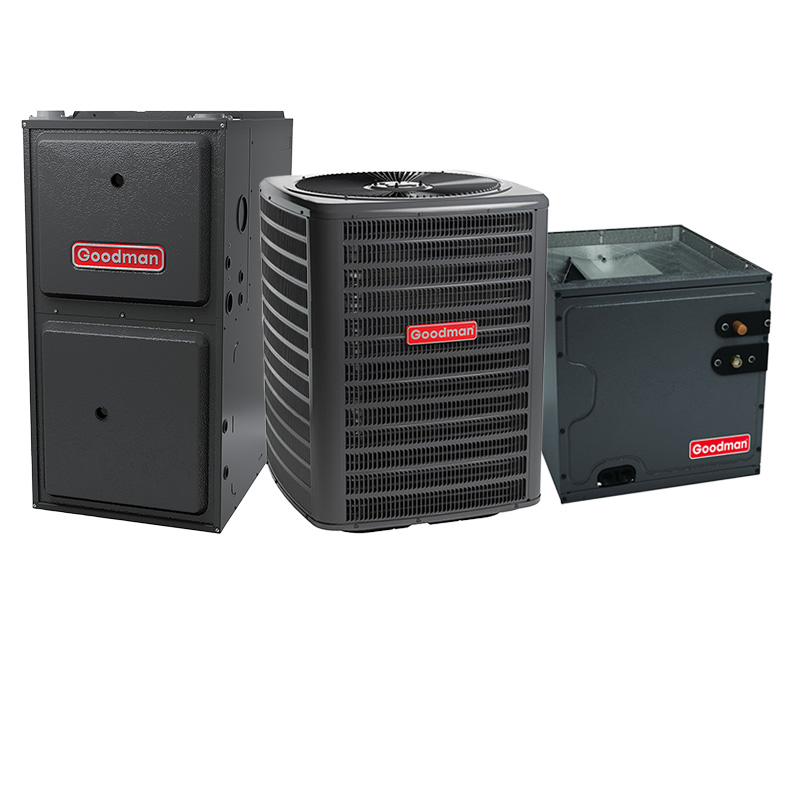
Goodman 3.5 Ton 13.8 SEER2 80000 BTU 96% AFUE Two Stage Multi-Speed ECM Gas Furnace System – Upflow | R32
View on AC Direct see your lowest price →Check current price on AC Direct →
Key features
- 3.5-ton cooling capacity with 13.8 SEER2 efficiency rating
- 80,000 BTU two-stage gas furnace at 96% AFUE
- Multi-speed ECM blower motor for quieter, more consistent airflow
- R-32 refrigerant with lower global warming potential than R-410A
- Upflow configuration for basement or ground-level air handler installs
- Two-stage heating reduces short-cycling and improves temperature stability
About this system
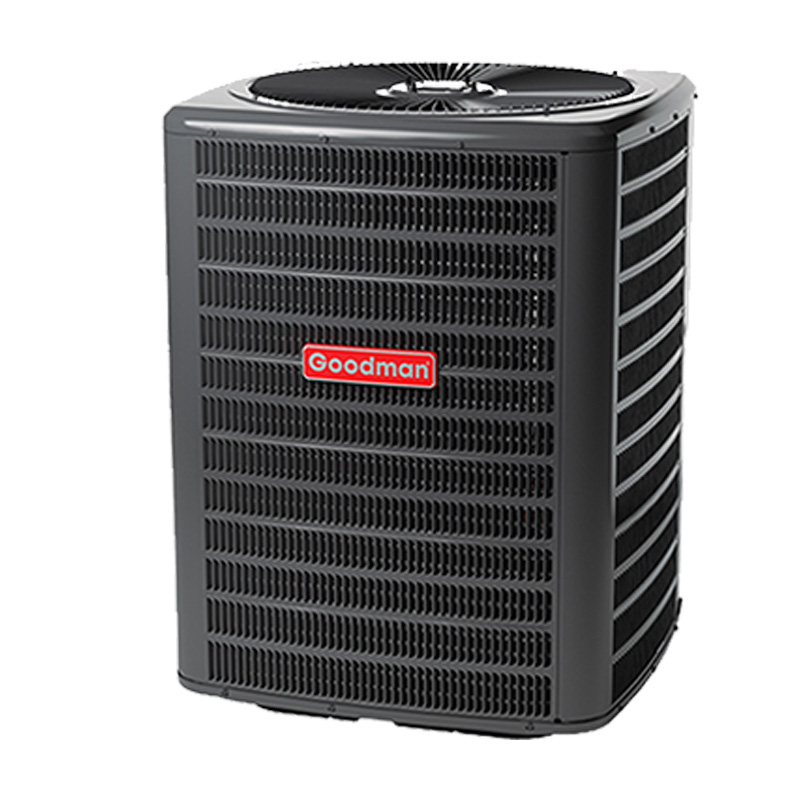
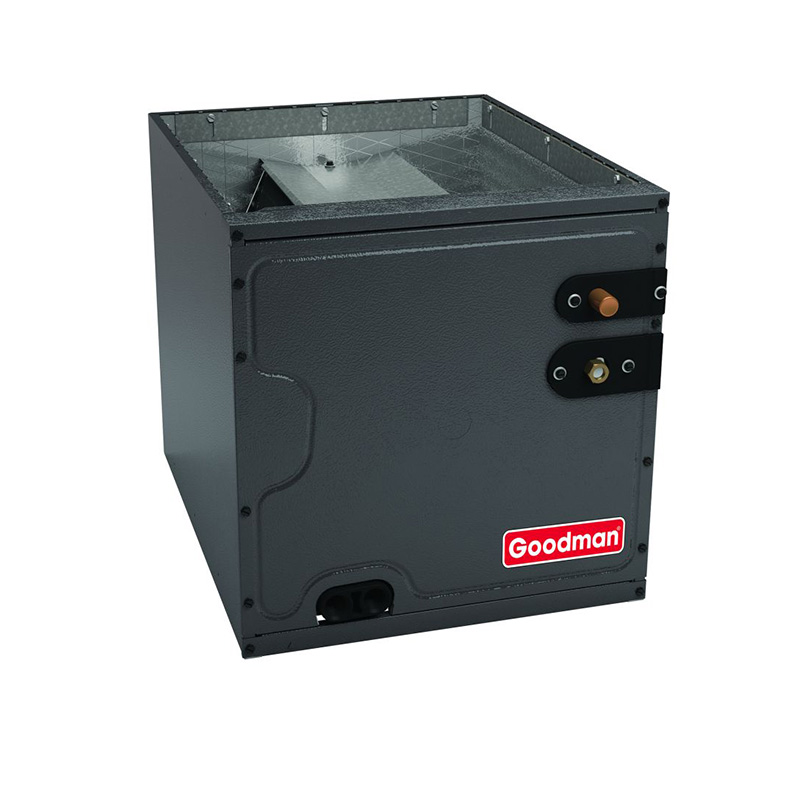
This Goodman 3.5-ton system pairs a 13.8 SEER2 R-32 air conditioner with an 80,000 BTU, 96% AFUE two-stage gas furnace in an upflow configuration. The 3.5-ton cooling capacity targets mid-to-large homes roughly in the 1,800 to 2,400 square foot range, depending on climate, insulation, and local load calculations. R-32 refrigerant carries a lower global warming potential than the R-410A it replaces, and the multi-speed ECM blower motor improves airflow efficiency and humidity control compared to single-speed alternatives.
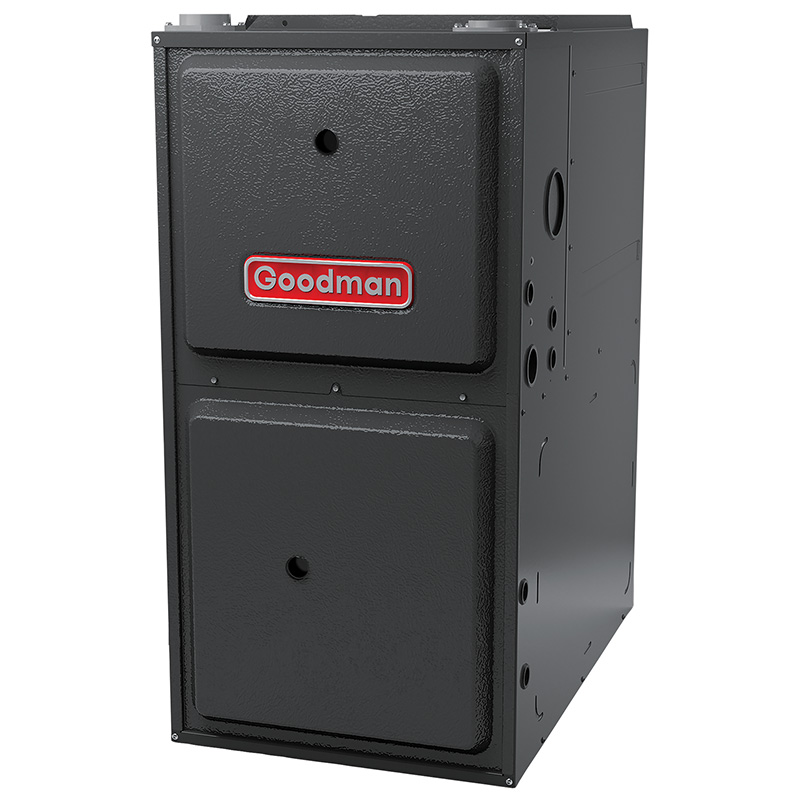
The two-stage furnace is the standout spec here. Running at low fire for most of the heating season, it cycles less often, holds more consistent temperatures, and runs quieter than a single-stage unit. Combined with the ECM motor, the system is well suited to homes where comfort consistency and utility bills both matter. The 96% AFUE rating means only 4% of the fuel you burn escapes as flue gas, placing this furnace in the high-efficiency tier. That said, hitting these efficiency numbers in practice depends heavily on proper sizing, duct condition, and installation quality.
This package makes most sense for homeowners who want a meaningful upgrade from a builder-grade system without paying premium-brand prices. It is worth noting upfront that Goodman positions itself 15 to 25 percent below Trane, Lennox, and Carrier on comparable equipment, and that price gap reflects both brand positioning and the trade-offs in long-term component durability documented in owner feedback over the years.
This Goodman system delivers genuinely strong efficiency specs at a price point 15 to 25 percent below comparable premium-brand equipment, making it a reasonable choice for budget-conscious buyers who prioritize upfront cost. The two-stage furnace and ECM blower are real comfort upgrades, but Goodman's documented history of capacitor failures, evaporator coil leaks, and compressor lifespans averaging 10 to 14 years means ongoing maintenance costs should be factored into the total ownership picture. Install quality will determine as much about this system's longevity as the hardware itself.
Overall score is the average of the five ratings above.
What we like
- Two-stage furnace reduces temperature swings and short-cycling compared to single-stage units
- 96% AFUE places the furnace in the high-efficiency tier, limiting fuel waste
- ECM blower motor improves humidity control and lowers blower energy use
- R-32 refrigerant is a forward-looking choice with lower environmental impact
- Priced 15 to 25 percent below Trane, Lennox, and Carrier for comparable specs
Trade-offs
- Dual-run capacitors are the most commonly reported failure point, typically requiring a repair costing $300 to $600 around years 5 to 8
- Evaporator coil leaks appear in a meaningful share of owner reviews and can be a significant repair cost
- Compressor lifespan averages 10 to 14 years versus 15 to 20 years for premium brands, affecting long-term cost of ownership
- A minority of owners report refrigerant leaks within year one, most often tied to install or initial charge issues rather than the unit itself
What homeowners and pros say about Goodman
Homeowners who have lived with Goodman equipment for several years tend to echo what the numbers suggest: the value at purchase is real, the comfort from a two-stage furnace is noticeable, and the first several years are often uneventful. On Google dealer reviews, Goodman systems average around 3.8 out of 5, with affordability cited most consistently as the reason buyers chose the brand. Where sentiment shifts is around years 7 to 10. On ConsumerAffairs, Goodman sits at roughly 2.5 out of 5, and while that channel skews toward owners motivated to complain, the recurring theme is climbing repair costs in the back half of the system’s life. The specific failure modes that show up repeatedly are dual-run capacitor failures (a nuisance repair in the $300 to $600 range but one that needs prompt attention), evaporator coil leaks, and compressor end-of-life arriving closer to the 10 to 14 year mark rather than the 15 to 20 years owners of Trane or Carrier equipment often report.
HVAC technicians tend to hold a more pragmatic view. Many installers will tell you that Goodman systems installed with care, properly sized, and maintained on a regular schedule perform well enough to justify the price. The concern they raise more consistently is that buyers attracted by the lower upfront cost sometimes defer maintenance or delay small repairs, which accelerates the failure timeline on components that were already on the shorter end of the durability spectrum. For this specific system, the two-stage furnace and ECM blower are genuine selling points that technicians do not dismiss, and the R-32 refrigerant transition is seen as a sensible forward-looking choice. The honest professional consensus is that this is a solid budget system, not a bargain version of a premium one, and that the total cost of ownership gap between Goodman and premium brands narrows meaningfully over a 12 to 15 year horizon once service calls are counted.
Sources: ConsumerAffairs Goodman owner reviews, AHRI Directory of Certified Product Performance, U.S. DOE appliance and equipment efficiency standards, Goodman product specification sheets.
What it costs to run
At 13.8 SEER2, cooling this 3.5-ton system for a typical 1200-hour cooling season at the U.S. average electricity rate of $0.17/kWh works out to roughly $621 per year in cooling, about $18 less per year than a minimum-efficiency 13.4 SEER2 unit of the same size. Your real cost depends on your climate and local rate.
Method: (42,000 BTU/hr ÷ 13.8 SEER2) × 1200 hours ÷ 1000 × $0.17/kWh. Rate source: U.S. EIA average; cooling hours: moderate-climate estimate.
How it compares
| Brand | Comparable model | SEER2 | Stage | Price position |
|---|---|---|---|---|
| Goodman | 3.5 Ton 13.8 SEER2 96% AFUE Two-Stage ECM Upflow R-32 System | 13.8 | Two-stage | Value pick |
| Carrier | Comfort 15 Series (24ACC636) with 58MVC Performance furnace | 15+ | Two-stage | 15 to 25 percent higher than Goodman |
| Trane | XR15 (4TTR5042) with S9X2 furnace | 15+ | Two-stage | 20 to 30 percent higher than Goodman |
| Lennox | Merit 14ACX with ML296V furnace | 13.8 to 14.3 | Single-stage / two-stage | 10 to 20 percent higher than Goodman |
Competitor rows are comparable single-stage units at similar efficiency; price is relative position, not a quote.
Questions about this system
Is 3.5 tons the right size for my home, or should I go up to 4 tons?
Tonnage should always be determined by a Manual J load calculation specific to your home, not square footage rules of thumb. Oversizing a two-stage system reduces the efficiency and comfort benefits the two-stage operation is designed to provide, so resist the urge to upsize without a professional calculation.
What does the switch to R-32 refrigerant mean for service and repairs?
R-32 requires technicians with specific certification and equipment designed for it, since it is mildly flammable. Most established HVAC service companies are already equipped for R-32 work, but it is worth confirming with your service provider before booking a maintenance visit.
Goodman reviews mention capacitor failures. How worried should I be, and what does it cost to fix?
Dual-run capacitor failure is the most commonly documented issue across Goodman equipment and typically shows up after several years of use. It is generally a straightforward repair in the $300 to $600 range when addressed promptly, so catching it early during annual maintenance visits limits the damage.
Does the upflow configuration mean I cannot install this in an attic or crawlspace?
Correct. Upflow units are designed for installations where the air handler sits below the duct system, typically in a basement or ground-floor mechanical closet. Attic or horizontal installations require a different configuration, such as a downflow or horizontal unit.
How does Goodman's warranty on this system compare to what Trane or Lennox offer?
Goodman offers a 10-year parts warranty on registered units, which is competitive on paper with many premium brands. The distinction is that premium brands have a documented track record of fewer warranty claims due to longer component lifespans, so the warranty coverage and the likelihood of needing it are two separate considerations when comparing brands.
Specifications
| Cooling capacity | 3.5 Ton |
| Efficiency | 13.8 SEER2 |
| Furnace output | 80000 BTU |
| Furnace efficiency | 96% AFUE |
| Configuration | Upflow |
| Refrigerant | R-32 |