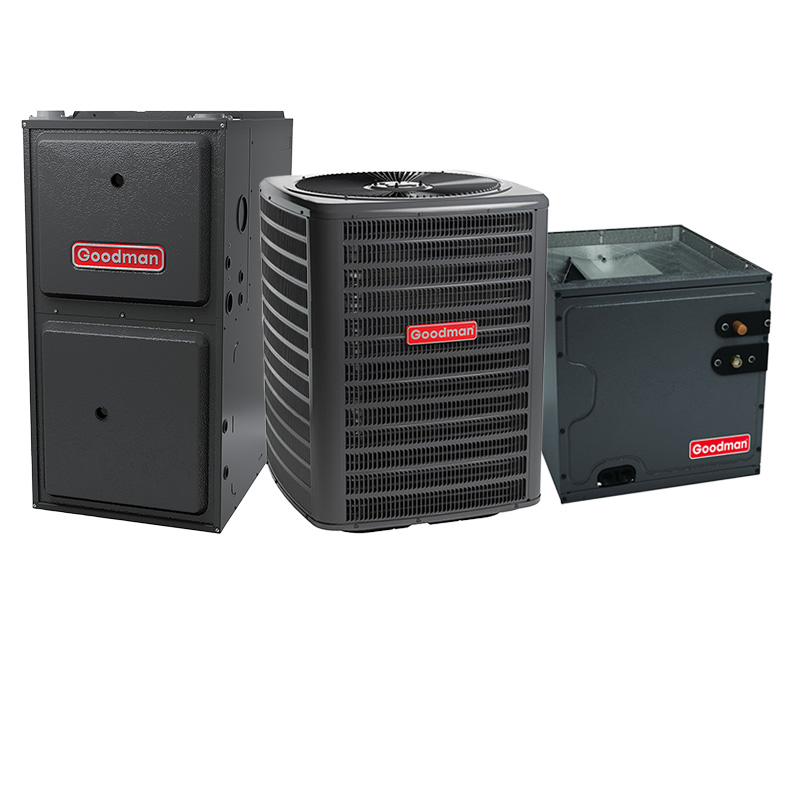
Goodman 3.5 Ton 13.8 SEER2 120000 BTU 96% AFUE Two Stage Multi-Speed ECM Gas Furnace System – Upflow | R32
View on AC Direct see your lowest price →Check current price on AC Direct →
Key features
- 13.8 SEER2 cooling efficiency meets current federal minimum standards for most U.S. climate regions
- 96% AFUE two-stage gas furnace reduces fuel waste and smooths temperature control on mild days
- ECM multi-speed blower motor lowers operating electricity draw versus PSC motors
- R-32 refrigerant offers a lower global warming potential than R-410A
- Upflow cabinet design suits basement and closet installations feeding overhead ductwork
- 120,000 BTU heating capacity serves larger homes or high-load cold-climate applications
About this system
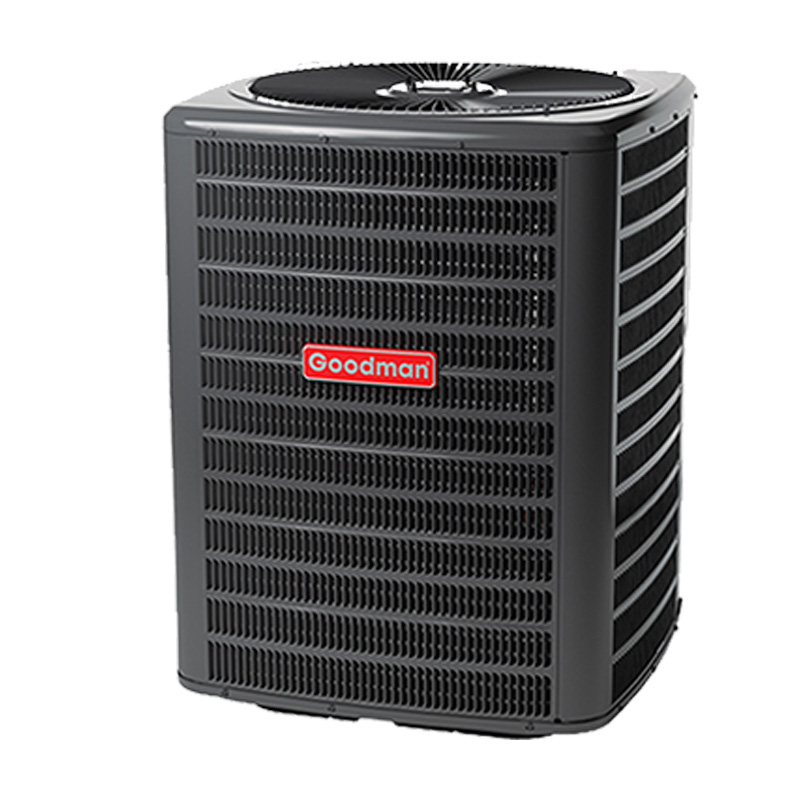
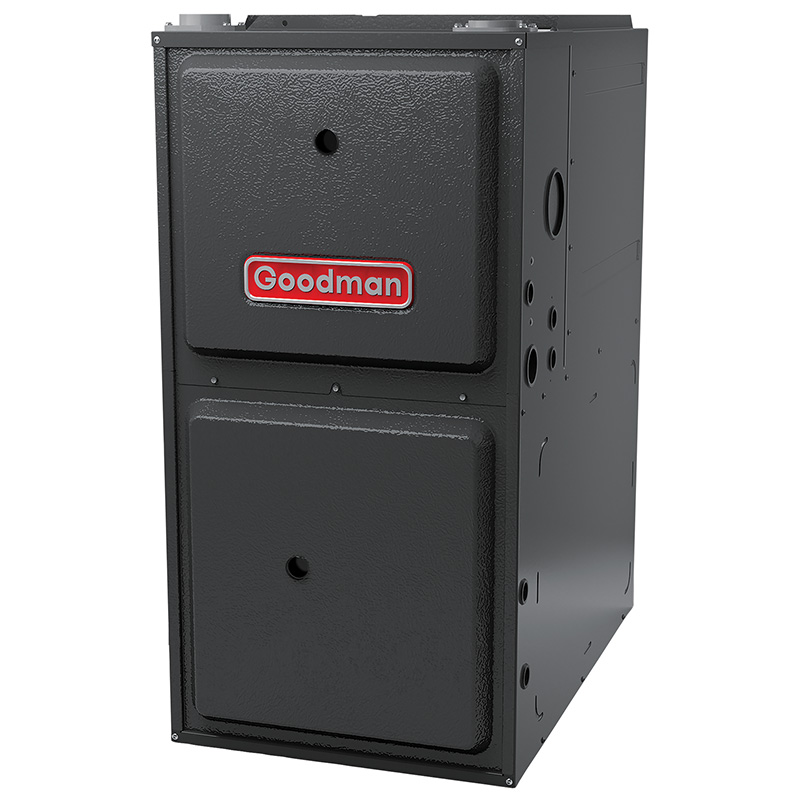
This Goodman bundle pairs a 3.5-ton R-32 split-system air conditioner rated at 13.8 SEER2 with a 120,000 BTU, 96% AFUE two-stage gas furnace in an upflow configuration. The combination is aimed at larger homes in climates that demand serious heating capacity alongside dependable summer cooling. The 96% AFUE rating means the furnace converts 96 cents of every fuel dollar into usable heat, putting it solidly in the high-efficiency tier and qualifying it for many utility rebate programs. Two-stage operation lets the furnace run at a lower output on moderate days, which smooths temperature swings and can trim gas bills compared with single-stage equipment.
R-32 refrigerant is a meaningful upgrade over the R-410A that dominated the market for the past two decades. It carries a lower global warming potential and is slightly more efficient as a heat-transfer medium, while also being easier to reclaim and recycle. The ECM (electronically commutated motor) blower adjusts airflow in small increments rather than switching between fixed speeds, which improves comfort, reduces electricity draw at the air handler, and tends to be quieter during normal operation. The upflow configuration suits the most common North American installation scenario: a basement or closet install where conditioned air rises into the duct system above.
At 3.5 tons this system is sized for roughly 1,600 to 2,400 square feet depending on insulation, window area, and local climate. Pairing 120,000 BTU of heating with 3.5 tons of cooling is on the heavier end of the heating-to-cooling ratio, which suits colder regions where winter loads drive equipment sizing. Buyers should confirm that Manual J load calculations support both numbers before purchasing, since oversizing either side hurts efficiency and comfort regardless of equipment quality.
This Goodman system delivers genuine high-efficiency heating and respectable cooling performance at a price point that undercuts comparable Carrier, Trane, and Lennox bundles by a meaningful margin. The two-stage furnace and ECM blower are real comfort upgrades, not spec-sheet padding. The trade-off is a brand track record that shows higher-than-average repair frequency after roughly year seven and compressor longevity that trails premium competitors, so the value equation depends heavily on how long you plan to stay in the home and how confident you are in the installing contractor.
Overall score is the average of the five ratings above.
What we like
- 96% AFUE two-stage furnace is genuinely high-efficiency and eligible for many utility rebates
- ECM blower reduces electricity consumption and improves airflow consistency versus fixed-speed motors
- R-32 refrigerant is a forward-looking choice with lower environmental impact than R-410A
- Priced 15 to 25 percent below comparable Carrier, Trane, and Lennox systems, leaving room in the budget for a quality install or extended labor warranty
- Two-stage operation provides quieter partial-load cycles on moderate weather days
Trade-offs
- Dual-run capacitors are the most frequently reported failure point and, while affordable to fix, add to long-term maintenance costs
- Compressor lifespan averages 10 to 14 years versus 15 to 20 years for premium-brand compressors, which matters on a 3.5-ton unit where replacement is a significant expense
- A minority of owners report refrigerant leaks within the first year, typically tied to installation quality rather than a factory defect, but the risk underscores the importance of contractor selection
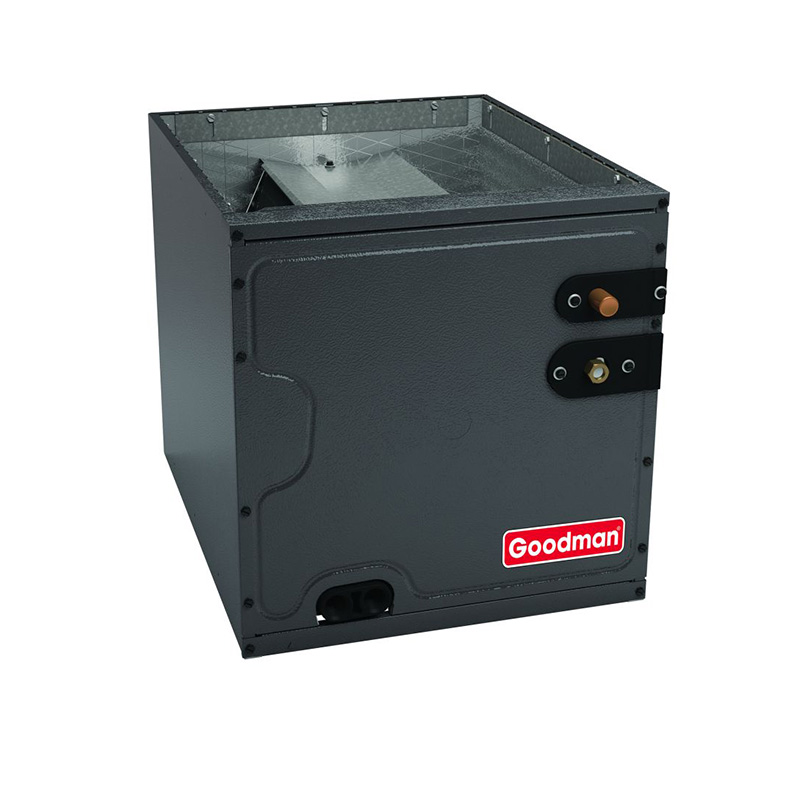
- Evaporator coil leaks appear in a meaningful share of long-term owner feedback, a failure mode worth factoring into the total cost of ownership
What homeowners and pros say about Goodman
Homeowners shopping Goodman most often lead with the price. Google dealer reviews across multiple locations settle around 3.8 out of 5 stars, and affordability is the word that comes up most in positive feedback, with buyers noting they got equipment that checked the efficiency boxes without the premium-brand markup. The picture gets more complicated over time. ConsumerAffairs scores land near 2.5 out of 5, and while that platform skews toward people motivated to leave complaints, the recurring pattern is worth noting: repair costs start climbing after roughly year seven, which is earlier than owners of premium brands tend to report similar friction.
HVAC technicians are generally candid about Goodman in the field. The consensus is that the equipment performs adequately when installed with care, and that install quality is the single biggest variable separating a trouble-free decade from an expensive one. The specific failure modes that show up in real-world feedback are dual-run capacitor failures (a low-cost fix in the 300 to 600 dollar range but a recurring one), evaporator coil leaks in a meaningful share of older units, and compressor lifespans that tend to average 10 to 14 years rather than the 15 to 20 years seen with Carrier, Trane, or Lennox compressors. A small number of owners also report refrigerant leaks in the first year, which technicians generally attribute to installation or charge issues rather than factory defects. For this two-stage, high-AFUE bundle specifically, the furnace side draws fewer complaints than the cooling side, which is consistent with Goodman’s broader pattern in owner reviews.
Sources: ConsumerAffairs Goodman owner reviews, AHRI Directory of Certified Product Performance, U.S. DOE appliance and equipment efficiency standards, Goodman product specification sheets.
What it costs to run
At 13.8 SEER2, cooling this 3.5-ton system for a typical 1200-hour cooling season at the U.S. average electricity rate of $0.17/kWh works out to roughly $621 per year in cooling, about $18 less per year than a minimum-efficiency 13.4 SEER2 unit of the same size. Your real cost depends on your climate and local rate.
Method: (42,000 BTU/hr ÷ 13.8 SEER2) × 1200 hours ÷ 1000 × $0.17/kWh. Rate source: U.S. EIA average; cooling hours: moderate-climate estimate.
How it compares
| Brand | Comparable model | SEER2 | Stage | Price position |
|---|---|---|---|---|
| Goodman | GLXS4-3.5T / GCVC961205DN (this system) | 13.8 | Two-stage | Value pick |
| Carrier | Performance 17 / 59TP6 Two-Stage | 14.3 | Two-stage | Roughly 20 to 25 percent higher than this Goodman bundle |
| Trane | XR17 / S9X2 Two-Stage | 14.3 | Two-stage | Roughly 20 to 25 percent higher than this Goodman bundle |
| Lennox | Merit ML17XC1 / ML196E Two-Stage | 14.0 | Two-stage | Roughly 15 to 20 percent higher than this Goodman bundle |
Competitor rows are comparable single-stage units at similar efficiency; price is relative position, not a quote.
Questions about this system
Does the 120,000 BTU furnace mean this system will be oversized for my home?
Possibly, yes. A 120,000 BTU furnace typically suits homes with very high heating loads or in cold climate zones, and pairing it with a 3.5-ton cooling system is on the aggressive side of the heating-to-cooling ratio. A Manual J load calculation by your HVAC contractor before purchase is the only reliable way to confirm whether both numbers match your actual home. Oversizing the furnace causes short-cycling, which reduces comfort and increases wear.
How does R-32 refrigerant affect service and future refrigerant costs?
R-32 is mildly flammable (A2L classification), which means technicians need specific training and tools to service it safely, but certified HVAC contractors are increasingly equipped for it as the industry transitions away from R-410A. R-32 is generally available and not subject to the phase-down pressures that have driven R-22 prices sky-high, so long-term refrigerant costs should be reasonable. Confirm your service contractor is R-32 certified before installation.
What is the Goodman warranty on this system and what does it actually cover?
Goodman typically offers a 10-year parts limited warranty on registered equipment, which covers the compressor, heat exchanger, and other named components against defects. It does not cover labor, refrigerant, or consequential costs, so a repair in year eight still means paying a service call and labor out of pocket. Registration must be completed within a set window after installation to activate the full term, so confirm the process with your installer.
How much does the documented capacitor failure issue actually cost to fix?
Dual-run capacitor replacement is among the least expensive HVAC repairs, generally landing in the 300 to 600 dollar range including a service call and the part. It is a common failure across many brands, not unique to Goodman, but owner feedback suggests it shows up with some regularity in Goodman equipment. Keeping a service contract or setting aside a small maintenance fund covers this type of repair without financial stress.
Can I pair this upflow system with a horizontal or downflow duct configuration?
No. The furnace in this bundle is specifically an upflow cabinet, meaning the blower draws air in from the bottom and discharges it upward into ductwork above the unit. Using it in a horizontal attic run or a downflow closet configuration requires a different cabinet orientation. If your installation requires downflow or horizontal airflow, you would need to select a different Goodman model matched to that configuration.
Specifications
| Cooling capacity | 3.5 Ton |
| Efficiency | 13.8 SEER2 |
| Furnace output | 120000 BTU |
| Furnace efficiency | 96% AFUE |
| Configuration | Upflow |
| Refrigerant | R-32 |